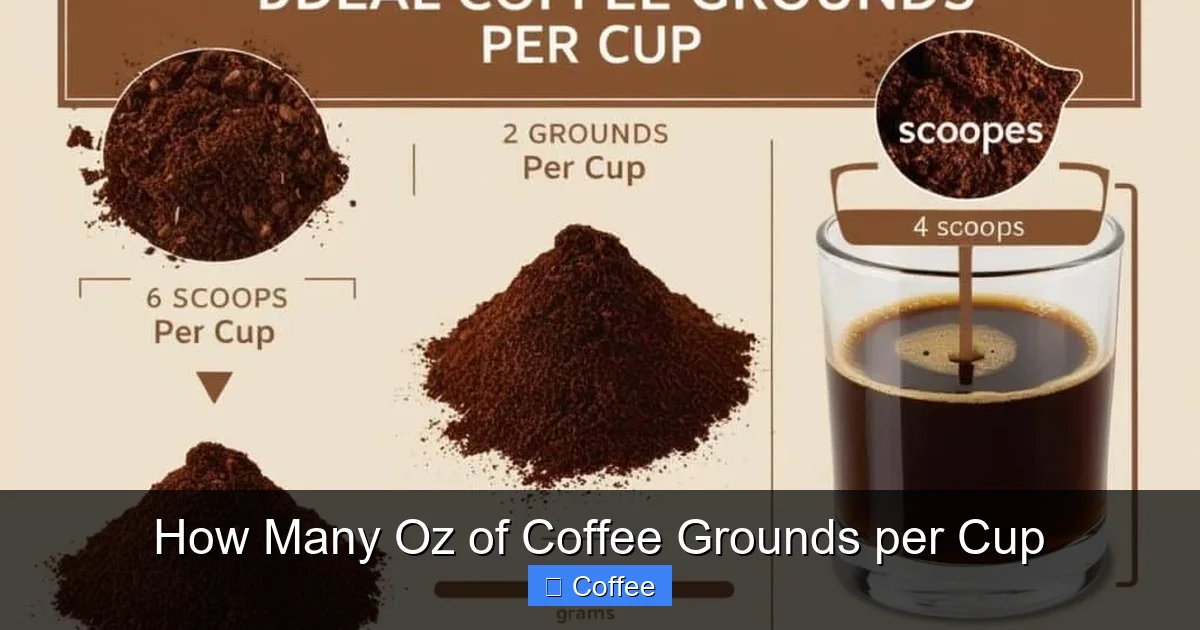
Finding the right amount of coffee grounds per cup is crucial for perfect brew strength. Most experts recommend a 1:16 coffee-to-water ratio, meaning about 0.5 oz (14g) of grounds for every 8 oz cup. This golden rule ensures rich flavor without bitterness, but you can adjust based on your taste and brewing method.
Key Takeaways
- The Golden Ratio is Key: Aim for a 1:16 coffee-to-water ratio (by weight). This means roughly 0.5 oz (14g) of coffee grounds for every 8 oz (240ml) cup of water for balanced flavor.
- Weight Beats Volume: Measuring coffee by weight (ounces or grams) is far more accurate than using scoops or spoons, which vary wildly in size and compaction.
- Grind Size Matters: Finer grinds extract faster and may require slightly less coffee; coarser grinds (like for French press) often need more grounds to achieve the same strength.
- Start Standard, Then Adjust: Begin with the 1:16 ratio. If your coffee is too weak, use more grounds next time; if too bitter/sour, use slightly less.
- Brewing Method Changes Everything: Espresso needs a much finer grind and higher coffee concentration (often 1:2 ratio), while cold brew uses a much higher coffee-to-water ratio (1:4 or 1:5).
- Water Quality Impacts Taste: Even perfect coffee measurements can’t fix bad water. Use filtered water for the best results.
- Freshness is Non-Negotiable: Stale coffee grounds won’t extract properly, making it impossible to achieve the right strength regardless of measurement.
Quick Answers to Common Questions
What’s the easiest way to measure coffee without a scale?
Use level tablespoons. Aim for roughly 2.5 level tablespoons of medium-ground coffee per 8oz cup of water. But know this is less accurate than weighing – consistency with the *same* spoon is key.
Can I use the same ratio for all coffee makers?
Most drip, pour-over, and French press makers work well with 1:16. Espresso and cold brew need much stronger ratios (1:2 for espresso yield, 1:4 for cold brew concentrate). Always check your method’s specifics.
Why is my coffee bitter even with the right ratio?
Bitterness often comes from over-extraction due to too fine a grind, water that’s too hot, or brewing too long – not necessarily too much coffee. Check your grind size and water temperature first.
How much coffee for a 12oz mug?
For a 12oz (360g) mug using the 1:16 ratio, you need 22.5g (approximately 0.8 oz) of coffee grounds. Scale the ratio up proportionally: 360g water / 16 = 22.5g coffee.
Is “scoops per cup” on coffee bags accurate?
Rarely. Bag scoops are often based on volume and vary. They’re a rough estimate at best. Weighing your coffee is always more reliable than trusting the bag’s scoop guideline.
📑 Table of Contents
- Why the “How Many Oz of Coffee Grounds Per Cup” Question Matters More Than You Think
- The Golden Ratio: Your Foundation for Perfect Coffee
- Measuring by Weight: The Non-Negotiable Secret to Consistency
- Measuring by Volume: When You Absolutely Must (and How to Do It Better)
- Adjusting the Ratio: Making It Your Own Perfect Cup
- Brewing Method Matters: Ratios Aren’t One-Size-Fits-All
- Beyond the Ratio: Other Factors Impacting Your Brew
- Conclusion: Your Journey to Coffee Mastery Starts Here
Why the “How Many Oz of Coffee Grounds Per Cup” Question Matters More Than You Think
You wake up craving that perfect cup of coffee. You measure your water, add your “usual” scoop of grounds, press brew… and end up with something either disappointingly weak and watery or shockingly bitter and harsh. Sound familiar? This frustrating cycle happens because most home brewers are guessing. They’re relying on vague terms like “a scoop” or “a heaping tablespoon,” which are wildly inconsistent. The real secret to consistently great coffee isn’t some mystical barista trick – it’s nailing the fundamental ratio: how many oz of coffee grounds per cup.
Think of coffee brewing like baking. You wouldn’t just dump “some” flour into a cake recipe and hope for the best. Precision matters. The coffee-to-water ratio is the bedrock of extraction. Too little coffee, and you get under-extracted brew – sour, thin, and lacking depth. Too much coffee, and you get over-extracted brew – bitter, astringent, and unpleasant. Finding that sweet spot where the coffee’s sugars, acids, and oils are perfectly balanced is the goal. And it all starts with knowing exactly how much coffee you’re using relative to your water. This isn’t about being overly rigid; it’s about having a reliable starting point you can confidently adjust from. Once you master this core principle, every other aspect of your brew – grind size, water temperature, brew time – becomes infinitely easier to fine-tune.
The Golden Ratio: Your Foundation for Perfect Coffee
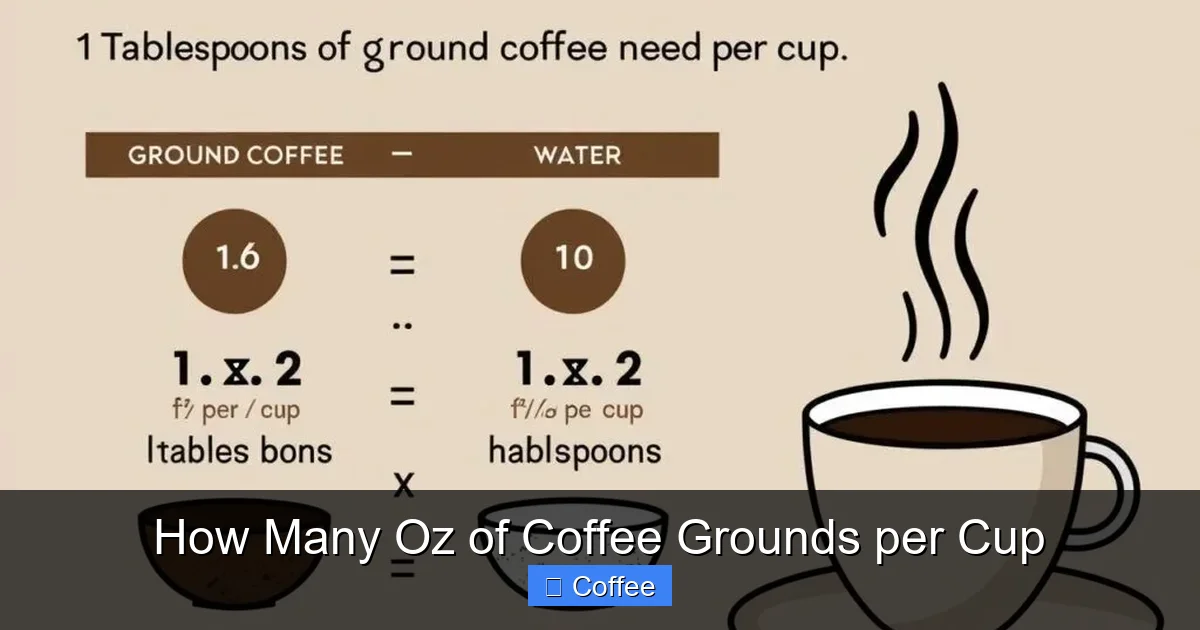
So, what’s the magic number for how many oz of coffee grounds per cup? The Specialty Coffee Association (SCA), the gold standard for coffee professionals, endorses the 1:16 coffee-to-water ratio as the ideal starting point for most brew methods (like drip, pour-over, and French press). But what does this actually mean in practical terms for your morning cup?
Visual guide about How Many Oz of Coffee Grounds per Cup
Image source: coffeaalchemy.com
Decoding the 1:16 Ratio
This ratio is almost always expressed by weight, not volume. Why? Because coffee beans and grounds have varying densities. A scoop of light roast might weigh significantly less than a scoop of dark roast, even if they look the same size. Water, however, is consistent – 1 gram of water equals 1 milliliter. So, the 1:16 ratio means:
- 1 part coffee (by weight)
- 16 parts water (by weight/volume)
For a standard 8 oz (240 ml) cup of coffee:
- Water: 8 oz (240 grams)
- Coffee needed: 240 grams / 16 = 15 grams (approximately 0.53 oz)
So, the answer to “how many oz of coffee grounds per cup” for an 8oz cup is roughly 0.5 oz (or 14-15 grams). This is your baseline. It’s the point where most people find a harmonious balance of flavor – not too strong, not too weak, with pleasant acidity and sweetness.
Why This Ratio Works
The 1:16 ratio isn’t arbitrary. It’s the result of decades of research and sensory evaluation by coffee experts. At this proportion:
- Optimal Extraction Occurs: Water has enough contact time and surface area to dissolve the desirable compounds (sugars, acids, oils) from the coffee grounds without pulling out excessive bitter tannins.
- Flavor Balance is Achieved: The coffee’s inherent sweetness and pleasant acidity shine through, complementing rather than being overwhelmed by bitterness.
- It’s Adaptable: While 1:16 is the sweet spot, it’s a starting point. If you prefer stronger coffee, you might move to 1:15 (e.g., 16g coffee for 240g water). If you like it milder, try 1:17 (e.g., 14g coffee for 240g water). The key is knowing *how* to adjust systematically.
Ignoring this ratio is like driving without a speedometer. You might get somewhere, but you won’t know if you’re going too fast, too slow, or just right. Mastering the 1:16 ratio gives you control.
Measuring by Weight: The Non-Negotiable Secret to Consistency
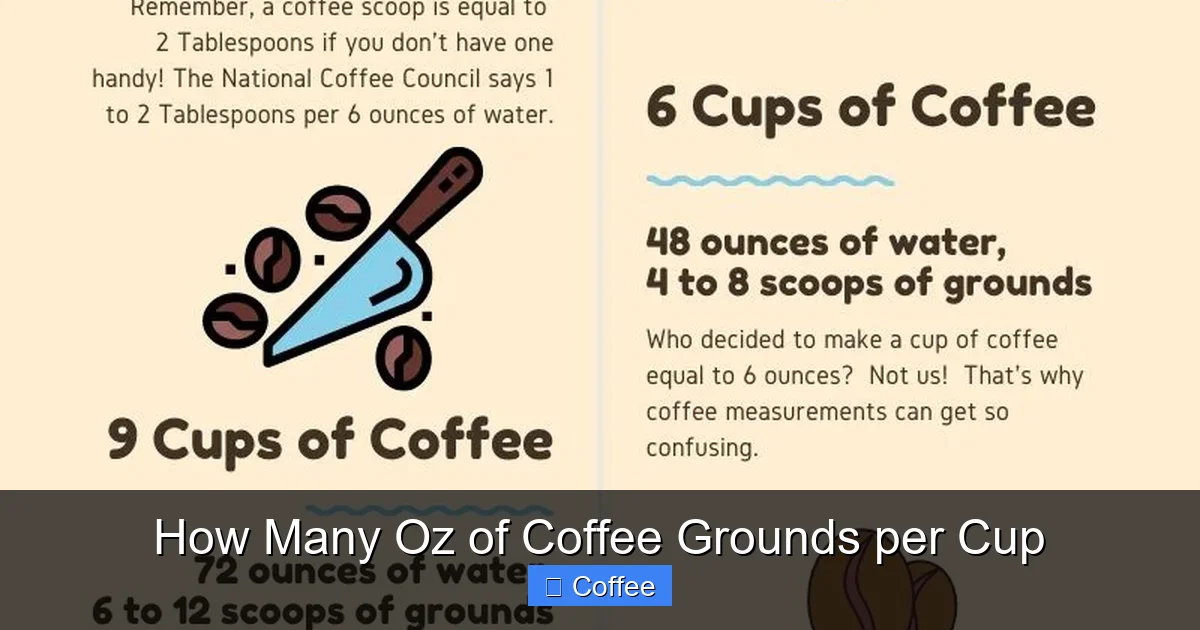
Remember that “scoop” you’ve been using? That’s likely the root of your inconsistency. Coffee scoops come in all shapes and sizes – some hold 2 tablespoons, some hold 3, some are heaping, some are level. Compaction also varies wildly; one person’s “heaping” is another’s “level.” This is why measuring by weight (ounces or grams) is the single most important step you can take to answer “how many oz of coffee grounds per cup” accurately and consistently.
Visual guide about How Many Oz of Coffee Grounds per Cup
Image source: coffeeloverscup.com
Why Weight Trumps Volume Every Time
- Density Variations: As mentioned, light roast beans are less dense than dark roast beans. A level scoop of light roast might weigh 10g, while the same scoop of dark roast might weigh 14g. Using volume alone means you’re using significantly more coffee with dark roasts, often leading to bitterness.
- Grind Size Impact: Finely ground coffee packs much more densely into a scoop than coarsely ground coffee. A scoop of espresso grind might contain 20g, while a scoop of French press grind might only contain 12g. Volume measurements become meaningless with different grinds.
- Consistency Brew-to-Brew: A digital scale gives you the same precise measurement every single time. No more guessing if the scoop was “heaping enough” today.
Investing in a simple, affordable digital kitchen scale (look for one that measures in 0.1g increments and has a tare function) is the best coffee upgrade you can make. It costs less than a bag of good beans and pays for itself in consistently better coffee immediately.
How to Measure Coffee by Weight Like a Pro
- Place your empty carafe or mug on the scale. Turn the scale on.
- Tare the scale to zero. This resets the weight to ignore the carafe/mug.
- Add your water to the desired amount (e.g., 240g for an 8oz cup). Note the weight.
- Tare the scale again to zero. Now it’s only measuring the coffee.
- Add coffee grounds until you reach your target weight. For 1:16 with 240g water, add 15g (0.53 oz) of coffee.
This method is foolproof. You can easily scale it up for a full carafe: for 4 cups (960g water), use 60g (2.1 oz) of coffee. The ratio stays perfect regardless of batch size.
Measuring by Volume: When You Absolutely Must (and How to Do It Better)
We get it. Maybe you don’t have a scale yet, or you’re in a pinch. While weight is king, understanding volume measurements can be a temporary crutch. However, you need to know the pitfalls and how to minimize them when answering “how many oz of coffee grounds per cup” using spoons.
Visual guide about How Many Oz of Coffee Grounds per Cup
Image source: i0.wp.com
The Scoop Conundrum: Why “One Scoop” is Meaningless
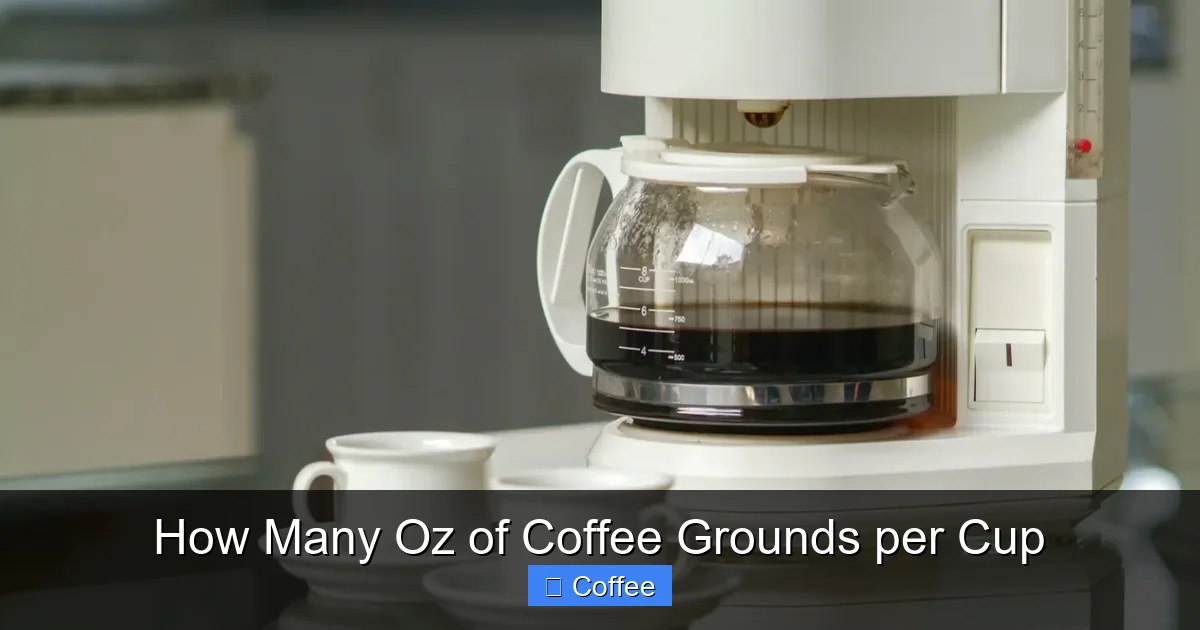
That standard coffee scoop that came with your machine? It’s likely designed to hold 2 level tablespoons, which is approximately 10-12 grams (0.35 – 0.42 oz) of *medium-ground* coffee. But here’s the catch:
- Manufacturer Variance: Scoop sizes aren’t standardized. Some hold 1.5 tbsp, some hold 2.5 tbsp.
- Level vs. Heaping: A level scoop is drastically different from a heaping scoop. Heaping can add 25-50% more coffee.
- Grind Dependency: As discussed, the same scoop holds vastly different weights depending on grind size.
If you *must* use a scoop, aim for 1 level scoop (2 tbsp) per 6 oz (180ml) cup of water as a rough approximation of 1:16. For an 8oz cup, that’s about 1.33 level scoops. But be prepared for inconsistency, especially if you change roasts or grind settings.
Tablespoons: A Slightly Better (But Still Flawed) Option
Using standard measuring spoons (like you’d use for cooking) is marginally better than a random scoop because tablespoon sizes are standardized (1 US tbsp = 14.8ml). However, coffee density still varies.
- A level tablespoon of medium grind coffee typically weighs 5-7 grams (0.18 – 0.25 oz).
- For an 8oz (240g) cup targeting 1:16 (15g coffee), you’d need roughly 2.5 level tablespoons.
Pro Tip for Volume Users: If you’re stuck with volume, always use level measurements (scrape off excess with a knife). Consistently use the *same* spoon or scoop. Weigh that spoonful *once* with a scale to know its approximate weight (e.g., “My scoop holds 11g”), then use that as your reference point. It’s not perfect, but it’s a huge improvement over random heaping.
Adjusting the Ratio: Making It Your Own Perfect Cup
The 1:16 ratio is the expert-recommended starting point, not a rigid commandment. Your perfect “how many oz of coffee grounds per cup” might be slightly different based on your taste buds, the specific coffee, and your brewing method. The key is knowing *how* to adjust intelligently.
Too Weak? Not Enough Coffee!
If your coffee tastes watery, thin, sour, or lacks body, you’re likely under-extracting. This usually means you need more coffee grounds relative to water.
- Adjustment: Increase the coffee amount by 5-10% next brew. For your 8oz cup, instead of 15g, try 16g or 16.5g (0.56 – 0.58 oz).
- Why it Works: More coffee provides more surface area for the water to extract flavor compounds from, leading to a stronger, more robust cup.
- Check Grind Too: Under-extraction can also be caused by too coarse a grind. If increasing coffee doesn’t help, try a slightly finer grind.
Example: You brewed with 14g coffee for 240g water (1:17 ratio). It tasted weak. Next time, use 15.5g (a ~10% increase). Taste and adjust again if needed.
Too Bitter or Harsh? Too Much Coffee!
If your coffee tastes overly bitter, astringent (drying mouthfeel), burnt, or just generally unpleasant, you’re likely over-extracting. This often means you have too much coffee relative to water, or the grind is too fine.
- Adjustment: Decrease the coffee amount by 5-10% next brew. For your 8oz cup, instead of 15g, try 14g or 13.5g (0.49 – 0.48 oz).
- Why it Works: Less coffee means the water extracts the desirable compounds before pulling out excessive bitter tannins.
- Check Grind Too: Over-extraction is very commonly caused by too fine a grind. If decreasing coffee doesn’t fix it, try a slightly coarser grind.
Example: You brewed with 16g coffee for 240g water (1:15 ratio). It tasted bitter. Next time, use 14.5g (a ~9% decrease). Taste and adjust.
Finding *Your* Sweet Spot
Don’t be afraid to experiment! Make small adjustments (5-10%) one variable at a time:
- Start with 1:16 (15g coffee / 240g water).
- Brew and taste critically. Is it perfect? Too weak? Too strong?
- If imperfect, adjust *only* the coffee amount (more for weak, less for strong) by 1g (0.035 oz).
- Brew again and taste.
- Repeat until you find your personal ideal. Note your final ratio!
This methodical approach takes the guesswork out of “how many oz of coffee grounds per cup” for *your* preferences and equipment.
Brewing Method Matters: Ratios Aren’t One-Size-Fits-All
While the 1:16 ratio is a great baseline for immersion (French press) and filter (drip, pour-over) methods, other brewing techniques require significantly different coffee-to-water ratios. Ignoring this is a major reason people struggle with methods like espresso or cold brew.
Espresso: High Concentration, Tiny Yield
Espresso is fundamentally different. It’s a concentrated shot, not a full cup of coffee. The ratio is much higher coffee-to-water because the brew time is extremely short (25-30 seconds) and pressure is applied.
- Typical Ratio: 1:1.5 to 1:2.5 (coffee:espresso yield).
- Example: Using 18g (0.63 oz) of coffee to produce 36g (1.27 oz) of espresso liquid is a common 1:2 ratio.
- Why So Different? The fine grind and high pressure force rapid extraction. A 1:16 ratio would produce a tiny, weak puddle in seconds. Espresso needs high coffee density to extract enough flavor quickly.
Key Takeaway: Don’t try to make a “cup of espresso” using drip ratios. Espresso is a distinct beverage. If you’re pulling shots, focus on the coffee-to-espresso *yield* ratio, not coffee-to-water-for-a-cup.
Cold Brew: Long Steep, High Coffee Load
Cold brew coffee uses room temperature or cold water and a very long steep time (12-24 hours). Because cold water extracts much slower and less efficiently than hot water, you need a much higher coffee-to-water ratio to achieve a strong concentrate.
- Typical Ratio: 1:4 to 1:8 (coffee:water) for the concentrate.
- Example: Using 100g (3.5 oz) of coarse coffee grounds for 400g (14 oz) of water (1:4 ratio) is common. This concentrate is then diluted with water or milk (often 1:1) to make a drinkable cup.
- Why So Different? Cold extraction is inefficient. More coffee compensates for the slower extraction rate, resulting in a smooth, low-acid, highly caffeinated concentrate.
Key Takeaway: If you’re making cold brew, don’t use your drip coffee ratio. Start with 1:4 or 1:5 and adjust to taste. The “cup” you drink is usually diluted concentrate.
French Press vs. Pour-Over: Subtle Differences
Both immersion (French press) and filter (pour-over) methods generally thrive around the 1:16 ratio, but nuances exist:
- French Press: Uses a coarser grind and full immersion. Some prefer a slightly stronger ratio (1:15) to account for the metal filter allowing more oils and fines through, which can add body but also potential bitterness if overdone. Start with 1:16 and adjust.
- Pour-Over (V60, Chemex): Uses a finer grind than French press and a paper filter that removes oils and fines. Many find the 1:16 ratio perfect here, as the paper filter produces a cleaner cup. The bloom phase (initial water pour) is crucial for even extraction.
Key Takeaway: While 1:16 is a universal starting point for these methods, pay attention to grind size and filter type. A finer grind might need slightly less coffee; a coarser grind might need slightly more to hit the same strength.
Beyond the Ratio: Other Factors Impacting Your Brew
While mastering “how many oz of coffee grounds per cup” is fundamental, it’s not the only piece of the puzzle. Ignoring these factors can sabotage even perfectly measured coffee.
Grind Size: The Extraction Governor
Grind size is arguably as important as the coffee-to-water ratio. It directly controls the surface area exposed to water and thus the extraction rate.
- Too Fine: Water flows too slowly (or not at all in drip), leading to over-extraction and bitterness. Requires *less* coffee to avoid excessive strength/bitterness.
- Too Coarse: Water flows too quickly, leading to under-extraction and sourness. Requires *more* coffee to achieve strength.
- The Sweet Spot: For your chosen method (drip, French press, pour-over), use the grind size recommended for that method. A burr grinder is essential for consistent particle size.
Pro Tip: If adjusting the coffee amount doesn’t fix weak/bitter coffee, your grind size is likely the culprit. Consult your grinder’s guide for your brew method.
Water Quality: The Silent Flavor Killer
Even with perfect coffee measurements, bad water ruins everything. Tap water high in minerals (hard water) or chlorine can mute flavors or add off-tastes.
- Use Filtered Water: A simple pitcher filter or under-sink filter makes a massive difference. Aim for clean, neutral-tasting water.
- Temperature Matters: Water should be off-boil (195°F – 205°F / 90°C – 96°C). Too cool = under-extraction (sour). Too hot = over-extraction (bitter).
Don’t let poor water quality mask your perfectly measured coffee!
Freshness: Stale Coffee = Bad Coffee
Coffee stales rapidly after roasting due to oxidation and loss of volatile aromatics. Stale grounds won’t extract properly, no matter how precisely you measure them.
- Buy Fresh: Look for roast dates on bags. Use coffee within 2-4 weeks of roasting for peak flavor.
- Store Properly: Keep coffee in an airtight container at room temperature, away from light, heat, and moisture. Avoid the freezer/fridge (causes condensation).
- Grind Fresh: Grind beans just before brewing. Pre-ground coffee loses volatile compounds incredibly fast.
Measuring stale coffee precisely won’t save your brew. Freshness is non-negotiable.
Conclusion: Your Journey to Coffee Mastery Starts Here
So, how many oz of coffee grounds per cup? The scientifically backed, expert-approved answer for a standard 8oz cup of drip, pour-over, or French press coffee is approximately 0.5 oz (14-15 grams), based on the 1:16 coffee-to-water ratio. This isn’t just a number; it’s the key to unlocking consistent, delicious coffee in your own kitchen.
Remember, this ratio is your foundation, not a cage. The true magic happens when you combine this precise measurement with an understanding of your brewing method, grind size, water quality, and coffee freshness. Stop guessing with scoops. Invest in a simple scale. Start with 1:16. Taste critically. Make small, deliberate adjustments. Experiment to find *your* perfect strength. That slightly stronger cup you crave might only need an extra 0.03 oz of grounds. That bitterness you hate might vanish with just 0.02 oz less.
Mastering “how many oz of coffee grounds per cup” transforms coffee from a daily chore into a ritual of precision and pleasure. It empowers you to replicate your favorite cup every single morning and confidently explore new beans and methods. The journey to coffee nirvana begins with a single, perfectly measured gram. Grab your scale, weigh those grounds, and brew the best cup of your life today. Your taste buds will thank you.
Frequently Asked Questions
What is the standard coffee-to-water ratio?
The standard Specialty Coffee Association (SCA) ratio for most brew methods is 1:16 (coffee to water by weight). This means 1 gram of coffee for every 16 grams (or milliliters) of water. For an 8oz cup, this translates to roughly 15 grams (0.53 oz) of coffee grounds.
Should I measure coffee by weight or volume?
Always measure coffee by weight (grams or ounces) for accuracy and consistency. Volume measurements (scoops, tablespoons) are unreliable because coffee density varies significantly based on roast level, grind size, and compaction. A digital scale is essential for perfect coffee.
How many tablespoons of coffee per cup?
Approximately 2.5 level tablespoons of medium-ground coffee per 8oz cup. However, this is an estimate. A level tablespoon typically weighs 5-7 grams, so 2.5 tbsp is roughly 12.5-17.5g – close to the 15g target for 1:16. Remember, weight measurement is far superior.
Why does my coffee taste weak?
Weak, sour, or watery coffee usually indicates under-extraction. The most common cause is using too little coffee relative to water (a ratio weaker than 1:16). Other causes include too coarse a grind, water that’s too cool, or not enough brew time. Increase your coffee amount slightly (by 5-10%) as a first step.
How much coffee for a French press?
For a standard 32oz (950g) French press, use about 60g (2.1 oz) of coarsely ground coffee with 950g of water (1:16 ratio). Some prefer a slightly stronger 1:15 ratio (63g coffee). Always use a coarse grind to prevent sludge and bitterness.
Can I use the same ratio for cold brew?
No, cold brew requires a much stronger ratio due to the cold, slow extraction process. Use a 1:4 to 1:5 coffee-to-water ratio (by weight) for the concentrate. For example, 100g (3.5 oz) coffee to 400g (14 oz) water. This concentrate is then diluted (usually 1:1 with water or milk) before drinking.