
Used coffee grounds can benefit azaleas when applied correctly, but they’re not a magic solution. They offer mild acidity and nutrients, yet overuse risks mold, nitrogen imbalance, and soil compaction. Always compost grounds first and test your soil pH for best results.
Key Takeaways
- Moderate acidity boost: Coffee grounds provide slight soil acidification (pH ~6.5), helpful for azaleas needing pH 5.0-6.0, but aren’t strong enough to fix alkaline soil alone.
- Nutrient source, not fertilizer: They add small amounts of nitrogen, potassium, and magnesium during decomposition, but won’t replace balanced fertilizer.
- Compost first, always: Fresh grounds can cause mold, nitrogen lock-up, and compaction. Always compost used grounds for 2-3 months before applying.
- Apply sparingly: Limit to 1/2 cup per mature plant monthly mixed into topsoil. Never pile directly against stems.
- Soil testing is essential: Test pH annually. If soil is already acidic (below 5.5), skip coffee grounds to avoid over-acidification.
- Alternatives exist: Pine needles, peat moss, or sulfur are more reliable acidifiers. Use coffee grounds as a supplemental boost, not primary solution.
- Watch for warning signs: Yellowing leaves or stunted growth may indicate over-application. Flush soil with water if issues arise.
Quick Answers to Common Questions
Can I use fresh coffee grounds directly on azaleas?
No, never apply fresh coffee grounds directly. They cause mold, nitrogen lock-up, and soil compaction. Always compost them for 2-3 months first to eliminate these risks and stabilize nutrients.
How much composted coffee grounds should I use per azalea?
For a mature azalea, use no more than 1/2 cup of composted coffee grounds per month during the growing season. Sprinkle evenly within the drip line and gently mix into the top 1-2 inches of soil. Less is better.
Will coffee grounds make my soil too acidic for azaleas?
Composted coffee grounds have a very mild acidifying effect and won’t drastically lower pH. However, if your soil is already below pH 5.5, adding them (or any amendment) could push it too low. Always test soil pH first.
Can coffee grounds replace fertilizer for azaleas?
Absolutely not. Coffee grounds provide minimal, slow-release nutrients and can even tie up nitrogen initially. Azaleas need a balanced, acid-forming fertilizer for optimal growth and blooming.
What are the first signs I’ve used too many coffee grounds?
Watch for yellowing older leaves (nitrogen deficiency), stunted growth, white mold on the soil surface, or fungus gnats. These indicate over-application or using fresh grounds. Flush soil with water and stop using grounds if symptoms appear.
📑 Table of Contents
- Are Coffee Grounds Good for Azaleas? The Truth Behind the Gardening Myth
- Understanding Azaleas: Why Soil pH Matters Most
- What’s Actually in Coffee Grounds? Debunking the Chemistry
- Potential Benefits: When Coffee Grounds Can Help Azaleas
- Significant Risks: Why Coffee Grounds Can Harm Azaleas
- How to Use Coffee Grounds for Azaleas: The Right Way
- Better Alternatives for Acidifying and Feeding Azaleas
- Conclusion: Coffee Grounds for Azaleas – A Cautious “Yes”
Are Coffee Grounds Good for Azaleas? The Truth Behind the Gardening Myth
Picture this: You’re savoring your morning coffee, staring at your lush azalea bushes. A quick internet search suggests tossing those used grounds around the plants for “instant acidity” and “free fertilizer.” It sounds almost too good to be true – and honestly, it often is. As a gardener who’s tested this trick myself (and learned from some crispy leaves!), I get why the idea is appealing. Coffee grounds are free, eco-friendly, and azaleas famously crave acidic soil. But the reality is more nuanced than a simple “yes” or “no.” Let’s dig into the science and practicalities to answer the burning question: Are coffee grounds good for azaleas?
The allure is understandable. Azaleas (Rhododendron spp.) are acid-loving plants, thriving in soil with a pH between 5.0 and 6.0. Coffee itself is acidic, so the leap to thinking spent grounds will acidify soil seems logical. Plus, coffee contains nitrogen – a key nutrient for leafy growth. Social media is flooded with anecdotal success stories. But gardening rarely works on simple assumptions. What works for blueberries might backfire for azaleas. The truth lies in understanding how coffee grounds interact with soil chemistry, microbial activity, and your specific azalea’s needs. It’s not about whether coffee grounds can help, but when and how they should be used – if at all.
Understanding Azaleas: Why Soil pH Matters Most
Azaleas aren’t just pretty faces; they’re pH-sensitive divas. Their entire nutrient uptake system depends on acidic soil. When pH rises above 6.5, they struggle to absorb iron, manganese, and phosphorus. This leads to classic iron deficiency: vibrant green veins against yellowing leaves (interveinal chlorosis). Left unchecked, growth stalls, blooms dwindle, and the plant becomes vulnerable to pests and disease. Healthy azaleas need consistently acidic conditions, not just a quick pH dip.

Visual guide about Are Coffee Grounds Good for Azaleas
Image source: shuncy.com
The Acidic Soil Requirement Explained
Think of soil pH as a master key unlocking nutrients. In alkaline soil (pH >7.0), iron and other micronutrients bind tightly to soil particles, becoming unavailable. Azaleas’ shallow roots can’t access them, even if the nutrients are physically present. Acidic soil (pH <6.0) keeps these nutrients soluble and ready for uptake. This isn't just about coffee – it's about creating an environment where your azalea's roots can actually eat. While organic matter like compost improves soil structure, it doesn't reliably lower pH. True acidifiers like elemental sulfur or aluminum sulfate work slowly but effectively. Coffee grounds? Their acidifying power is often overestimated.
Beyond pH: Other Azalea Needs
While pH is king, azaleas also need well-draining, organic-rich soil. They hate “wet feet,” so heavy clay or compacted soil is a death sentence. Good drainage prevents root rot. Nutritionally, they prefer moderate nitrogen for foliage, balanced with phosphorus for blooms and potassium for overall health. Over-fertilizing, especially with high-nitrogen products, can burn roots and reduce flowering. Coffee grounds offer trace nutrients, but they’re inconsistent and slow-release. Relying solely on them for nutrition is like trying to feed a family with just saltine crackers – technically food, but lacking balance.
What’s Actually in Coffee Grounds? Debunking the Chemistry
Before tossing grounds into your garden, let’s unpack what’s really in that soggy filter. Fresh coffee grounds are acidic (pH 4.0-5.0), but used coffee grounds – the kind you’d recycle – tell a different story. During brewing, most acids (like chlorogenic acid) are extracted into your cup. What’s left is primarily organic matter, minerals, and residual compounds. Studies show used grounds have a near-neutral pH (6.5-6.8). This is crucial: They aren’t inherently acidic once brewed.
Visual guide about Are Coffee Grounds Good for Azaleas
Image source: i.pinimg.com
Nutrient Profile: More Hype Than Substance?
Used coffee grounds contain about 2% nitrogen by weight, plus small amounts of potassium, phosphorus, magnesium, and trace micronutrients. Sounds promising, right? But context matters. That 2% nitrogen is mostly in organic forms (like proteins), not the readily available ammonium or nitrate plants crave. Microbes must break it down first – a process that can temporarily tie up soil nitrogen as they work. For a mature azalea needing consistent nutrition, coffee grounds provide minimal immediate benefit. A balanced, slow-release fertilizer (like one formulated for acid-lovers) delivers far more reliable nutrients without the microbial competition.
The Microbial Factor: A Double-Edged Sword
Coffee grounds are microbial candy. They’re rich in carbon, feeding beneficial soil bacteria and fungi. This boosts soil biology, improving structure and nutrient cycling over time – a definite plus! However, this microbial feast has a catch. As microbes devour the carbon-rich grounds, they consume soil nitrogen to build their own bodies. This “nitrogen immobilization” can last weeks, potentially starving your azalea of nitrogen just when it needs it most (during spring growth). Fresh, uncomposted grounds are the biggest culprit here. Composting allows microbes to do their work before application, minimizing this risk.
Potential Benefits: When Coffee Grounds Can Help Azaleas
Despite the caveats, coffee grounds can play a supportive role – if used wisely. Think of them as a minor supplement, not a cornerstone of azalea care. Their real value lies in soil conditioning and very mild, slow acidification.

Visual guide about Are Coffee Grounds Good for Azaleas
Image source: i.pinimg.com
Mild, Slow Acidification (For Already Slightly Acidic Soil)
While not a strong acidifier, composted coffee grounds can contribute to maintaining a slightly lower pH over time. As they decompose, organic acids are released gradually. This is most beneficial if your soil is already in the 5.5-6.0 range and you’re trying to prevent gradual alkalization (common in areas with hard water or limestone soils). Crucially, they cannot correct significantly alkaline soil (pH >7.0). For that, you need dedicated acidifiers like sulfur. Used coffee grounds are like a gentle nudge, not a shove, for pH.
Soil Structure and Moisture Retention
This is where coffee grounds shine brightest for azaleas. Mixed into the topsoil or compost, they improve aeration and water retention – critical for azaleas’ shallow roots. They prevent compaction, allowing roots to breathe and water to penetrate evenly. In sandy soils, they help hold moisture; in clay, they create space for drainage. Imagine them as tiny sponges and scaffolding for your soil. This physical improvement benefits overall root health far more than any marginal nutrient boost.
Organic Matter and Microbial Boost
As mentioned, coffee grounds feed soil microbes. A thriving microbial community suppresses disease pathogens, makes nutrients more available, and creates stable humus. Healthier soil means a more resilient azalea better equipped to handle stress, pests, and nutrient uptake. This long-term soil health benefit is often overlooked but is arguably the most significant advantage of using composted coffee grounds.
Significant Risks: Why Coffee Grounds Can Harm Azaleas
Ignoring the risks is where many gardeners go wrong. Used incorrectly, coffee grounds can do more harm than good. The biggest dangers stem from misunderstanding their properties and over-application.
The Mold and Fungus Gnat Nightmare
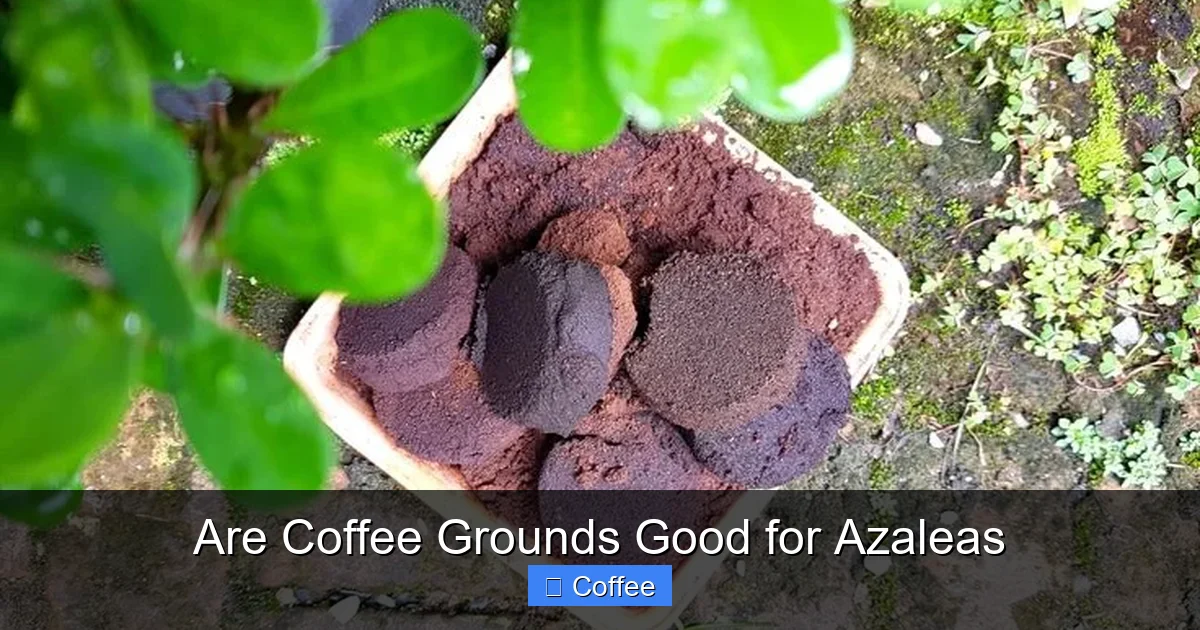
Fresh coffee grounds piled on the soil surface create a perfect, moist breeding ground for mold (like white, fuzzy saprophytic fungi) and fungus gnats. These gnats lay larvae that feed on organic matter and can damage young roots. Mold looks unsightly and indicates overly wet conditions azaleas dislike. Composting grounds eliminates this risk by drying them out and allowing decomposition to occur off-plant. Never apply wet, fresh grounds directly to azalea beds.
Nitrogen Lock-Up and Nutrient Imbalance
This is the silent killer. When you apply large amounts of fresh, high-carbon coffee grounds, soil microbes go into a nitrogen-hungry frenzy. They pull nitrogen from the surrounding soil to break down the carbon, making it temporarily unavailable to your azalea. Symptoms mimic nitrogen deficiency: pale green or yellowing older leaves, stunted growth. It can take 4-8 weeks for nitrogen to become available again as microbes die off. This is especially problematic in spring when azaleas need nitrogen for new growth. Composting prevents this lock-up.
Soil Compaction and Water Repellency
Fresh coffee grounds are fine and powdery. When dry, they can form a dense, water-repellent crust on the soil surface. Water beads up and runs off instead of soaking in, leaving roots dry. Even when mixed in, excessive amounts can clog soil pores, reducing aeration – disastrous for oxygen-loving azalea roots. Composted grounds have a coarser, more crumbly texture that integrates well without causing compaction.
Over-Acidification (Yes, It’s Possible!)
While coffee grounds aren’t strong acidifiers, consistent over-application combined with other acidifying practices (like frequent acid fertilizer use) can push soil pH too low (below 5.0). Extremely acidic soil locks up phosphorus, calcium, and magnesium. Azaleas show this as dark green or purple-tinged leaves, poor flowering, and tip dieback. If your soil test shows pH below 5.5, adding coffee grounds is counterproductive. Always test before adding any soil amendment.
How to Use Coffee Grounds for Azaleas: The Right Way
So, are coffee grounds good for azaleas? Yes, but only when used correctly as a supplemental soil conditioner, not a primary fertilizer or acidifier. Follow this protocol to harness benefits and avoid pitfalls.
Step 1: Compost Religiously (Non-Negotiable!)
Never apply fresh grounds directly. Compost them for 2-3 months first. Mix used grounds with “brown” materials (shredded leaves, cardboard, straw) at a 1:2 ratio (1 part grounds to 2 parts browns). Keep the pile moist but not soggy, and turn it weekly. Finished compost should be dark, crumbly, earthy-smelling, and unrecognizable as coffee. This process eliminates mold risk, prevents nitrogen lock-up, and stabilizes nutrients. Think of it as “pre-digesting” the grounds for your plants.
Step 2: Apply Sparingly and Strategically
For a mature azalea (3+ feet tall), use no more than 1/2 cup of composted coffee grounds per month during the growing season (spring-fall). Sprinkle them evenly over the soil surface within the drip line (the area under the outermost branches), not piled against the stem. Gently scratch them into the top 1-2 inches of soil with a hand fork. Water thoroughly after application. Less is more – exceeding 1 cup per plant monthly significantly increases risks.
Step 3: Prioritize Soil Testing
Before adding any amendment, test your soil pH (kits are $10-$15 at garden centers). If pH is below 5.5, skip coffee grounds entirely – you’re already acidic enough. If pH is 5.5-6.5, coffee grounds can help maintain acidity. If pH is above 6.5, use a dedicated acidifier (like 1 tbsp elemental sulfur per sq ft) first, then consider coffee grounds as a minor supplement later. Re-test annually.
Step 4: Combine with Proven Azalea Care
Coffee grounds are just one piece of the puzzle. Ensure your azaleas get:
- Partial shade: Morning sun, afternoon shade (especially in hot climates).
- Consistent moisture: Water deeply 1-2 times weekly, avoiding soggy soil. Mulch with pine straw or bark.
- Balanced fertilizer: Use an acid-forming fertilizer (like Espoma Holly-Tone) in early spring and after blooming.
- Good drainage: Amend heavy soil with compost or plant in raised beds.
Coffee grounds support this foundation; they don’t replace it.
Better Alternatives for Acidifying and Feeding Azaleas
While composted coffee grounds have a role, these options are often more effective and reliable for core azalea needs.
Superior Acidifiers
For lowering pH, coffee grounds are weak tea. These work better:
- Elemental Sulfur: The gold standard. Works slowly (3-6 months) but reliably. Apply based on soil test results (typically 1-2 tbsp per sq ft for sandy soil, more for clay).
- Aluminum Sulfate: Works faster than sulfur (weeks) but requires careful dosing to avoid aluminum toxicity. Use sparingly.
- Peat Moss: Mix into planting holes or top-dress. Naturally acidic (pH 3.0-4.5) but environmentally controversial due to harvesting impacts. Coconut coir is a more sustainable (though less acidic) alternative.
- Pine Needles/Oak Leaves: Acidic mulches that gradually lower pH as they decompose. Excellent for moisture retention too.
Use these for significant pH adjustments; coffee grounds for gentle maintenance.
Superior Nutrient Sources
For feeding, skip the coffee:
- Acid-Loving Fertilizers: Formulated specifically for azaleas, rhododendrons, and blueberries (e.g., Miracle-Gro Miracid, Espoma Holly-Tone). Provide balanced NPK and micronutrients in plant-available forms.
- Compost: High-quality, finished compost (not just coffee grounds!) is the best all-around soil conditioner and slow-release nutrient source. Apply 1-2 inches annually.
- Fish Emulsion or Seaweed Extract: Gentle, organic liquid fertilizers for quick boosts during growth season.
Coffee grounds add minimal nutrients compared to these options.
Conclusion: Coffee Grounds for Azaleas – A Cautious “Yes”
So, are coffee grounds good for azaleas? The answer is a qualified yes – but with major asterisks. They are not a miracle acidifier or fertilizer. Used recklessly (fresh, in excess, without composting), they can cause mold, nitrogen deficiency, compaction, and even harm your plants. However, when composted thoroughly and applied sparingly as a soil conditioner to already slightly acidic soil, they offer tangible benefits: improved soil structure, moisture retention, and a gentle boost to microbial life that supports overall azalea health.
The key is perspective. Don’t view coffee grounds as a solution to alkaline soil or a replacement for proper fertilization. See them as a small, eco-friendly supplement within a holistic azalea care routine. Prioritize soil testing, use proven acidifiers when needed, feed with balanced fertilizer, and ensure perfect drainage and light conditions. If you have composted coffee grounds on hand and your soil pH is in the sweet spot (5.5-6.0), sprinkling a small amount monthly can be a helpful cherry on top. But if you’re chasing vibrant blooms and deep green leaves, focus on the fundamentals first. Your azaleas will thank you with a spectacular spring show – no coffee required, but a little composted grounds won’t hurt when used wisely.
Frequently Asked Questions
Do coffee grounds really acidify soil for azaleas?
Used coffee grounds have a near-neutral pH (6.5-6.8) and provide only very mild, slow acidification as they compost. They cannot correct alkaline soil. For significant pH reduction, use elemental sulfur or aluminum sulfate based on a soil test.
Can I use instant coffee instead of grounds?
No, instant coffee is highly concentrated and can burn roots. It also lacks the organic matter benefits of grounds. Stick to composted used coffee grounds if you choose to use them at all.
How often should I apply coffee grounds to azaleas?
Apply composted coffee grounds no more than once per month during the active growing season (spring through fall). Over-application increases risks of mold, nitrogen issues, and compaction. Less frequent application is safer.
Are coffee grounds good for potted azaleas?
Use extreme caution with potted azaleas. Composted grounds can improve drainage slightly, but pots dry out faster and nutrients leach quickly. It’s safer to use a quality potting mix formulated for acid-lovers and fertilize regularly. Avoid fresh grounds entirely in containers.
What’s the best time of year to apply coffee grounds?
Apply composted coffee grounds in early spring as new growth begins or after the main blooming period in late spring/early summer. Avoid applying in late fall or winter when decomposition slows and moisture retention could promote root rot.
Can coffee grounds attract pests to azaleas?
Fresh, wet coffee grounds piled on the soil surface attract fungus gnats and encourage mold growth, which can indirectly harm plants. Composted, properly incorporated grounds pose minimal pest risk and may even support beneficial microbes that suppress soil diseases.