
Discover the foolproof method for cooking basmati rice in a pressure cooker: just 5-7 minutes on high pressure yields perfectly separate, fragrant grains every single time. This guide covers essential prep, precise water ratios, resting techniques, and fixes for common issues, ensuring your basmati turns out restaurant-quality without the guesswork.
Key Takeaways
- 5-7 Minutes is Magic: High pressure for 5-7 minutes (depending on cooker & altitude) is the core timing for fluffy basmati.
- Water Ratio is Crucial: Use a 1:1.25 rice-to-water ratio (e.g., 1 cup rice to 1.25 cups water) for ideal texture; adjust slightly for altitude.
- Rinse & Soak for Perfection: Always rinse basmati until water runs clear and soak for 20-30 minutes to remove excess starch and ensure even cooking.
- Natural Release is Non-Negotiable: Let pressure drop naturally for 10-15 minutes after cooking before quick releasing to prevent mushiness.
- Rest Before Fluffing: Allow rice to rest, covered, for 5 minutes after pressure release for grains to firm up and absorb residual moisture.
- Altitude Adjusts Timing: Increase cook time by 1-2 minutes per 1000 feet above 3000 ft elevation due to lower boiling points.
- Troubleshoot Smartly: Mushy rice? Use less water next time. Undercooked? Add 1-2 tbsp water & re-pressurize for 1-2 minutes.
📑 Table of Contents
- The Pressure Cooker Secret to Perfect Basmati Rice Every Time
- Why Pressure Cookers Excel with Basmati Rice
- Essential Prep: The Foundation for Flawless Basmati
- The Perfect Pressure Cooker Basmati Method: Step-by-Step
- Troubleshooting Common Pressure Cooker Basmati Problems
- Pro Tips and Variations for Pressure Cooker Basmati
- Conclusion: Your Foolproof Path to Flawless Basmati
The Pressure Cooker Secret to Perfect Basmati Rice Every Time
Let’s be honest: cooking basmati rice stovetop can feel like a high-wire act. One minute it’s promising fluffy perfection, the next it’s a sticky, gummy mess. You measure water meticulously, watch the heat like a hawk, and still… inconsistency reigns. But what if I told you there’s a simpler, faster, and far more reliable way? Enter the pressure cooker – your new basmati best friend. This humble kitchen hero transforms the delicate art of rice cooking into a near-guaranteed science. Forget constant monitoring and anxiety; the pressure cooker creates a controlled environment where steam and pressure work magic on those long, slender grains.
The beauty lies in its speed and consistency. While traditional methods take 15-20 minutes of active attention, the pressure cooker delivers restaurant-quality basmati in a fraction of the time, primarily hands-off. Imagine coming home after a long day, tossing rinsed rice and water into your cooker, and having perfectly cooked, aromatic basmati ready in under 20 minutes total. No more rushing to time the stove or rescuing overcooked batches. The pressure cooker locks in moisture and heat, ensuring every grain cooks evenly from the outside in, preserving basmati’s signature fragrance and delicate, separate texture. It’s not just convenient; it’s a game-changer for anyone who loves this iconic rice but dreads the stovetop struggle.
Why Pressure Cookers Excel with Basmati Rice
You might wonder, “Why fix what isn’t broken?” But the pressure cooker offers distinct advantages over the saucepan method, especially for finicky basmati. Basmati’s unique structure – long, slender grains with a higher starch content than short-grain varieties – makes it prone to becoming mushy if overcooked or exposed to too much water. The pressure cooker solves this beautifully. By sealing in steam and increasing the internal pressure, it raises the boiling point of water significantly. This means the rice cooks at a much higher temperature (around 250°F/121°C instead of 212°F/100°C) than possible in an open pot.

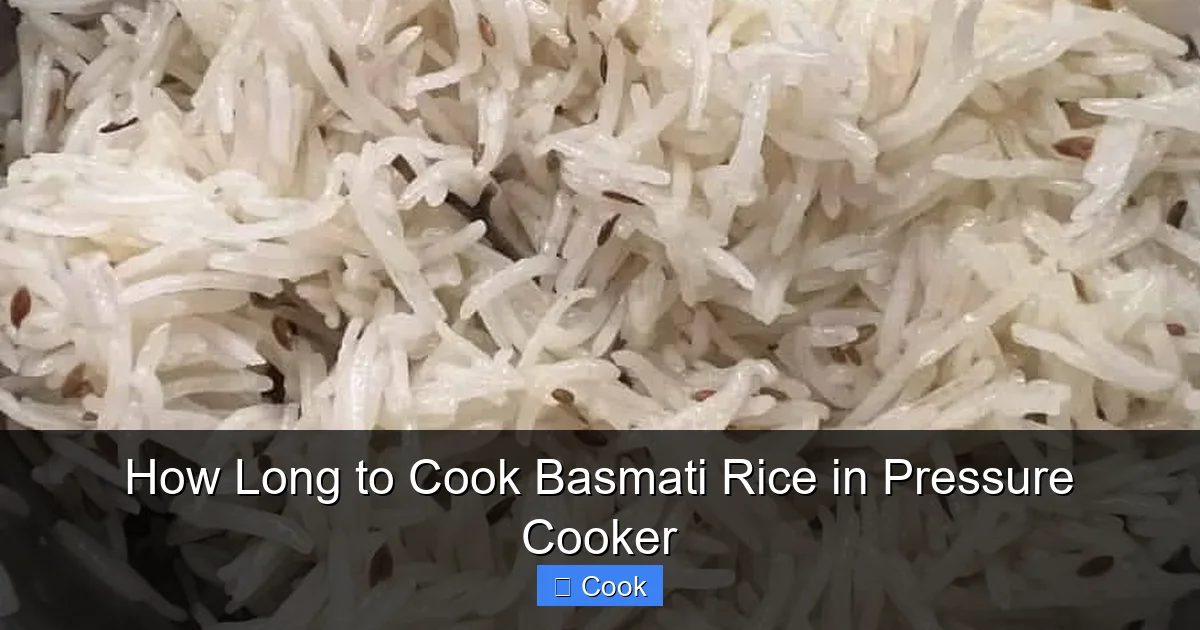
Visual guide about How Long to Cook Basmati Rice in Pressure Cooker
Image source: howtocookguides.com
Faster, More Even Cooking
This elevated temperature drastically reduces cooking time. Where stovetop might take 15-20 minutes, pressure cooking achieves the same result in 5-7 minutes. Crucially, the high pressure forces moisture deep into each grain simultaneously. There’s no risk of the bottom grains scorching while the top remain undercooked – a common stovetop pitfall. The intense, uniform heat ensures every single grain reaches the perfect tender-but-firm “al dente” stage at exactly the same moment. Think of it like a gentle, powerful hug for your rice, cooking it evenly from all sides.
Consistency You Can Count On
Perhaps the biggest win is reliability. Once you nail the basic formula (rice, water, timing), the pressure cooker delivers identical results every single time. No more worrying about fluctuating stove heat, pot size, or ambient humidity throwing off your water ratio. The sealed environment is incredibly stable. This consistency is invaluable for meal prep, dinner parties, or simply knowing your side dish will be perfect without last-minute stress. Plus, the hands-off nature frees you up to focus on the rest of your meal. Set it, forget it (safely, of course!), and return to perfectly cooked basmati.
Preserving Flavor and Nutrition
The sealed environment also helps lock in basmati’s prized aroma and delicate flavor compounds, which can sometimes dissipate with prolonged stovetop simmering. Furthermore, the shorter cooking time means less nutrient loss compared to longer boiling methods. Vitamins and minerals are better preserved when exposure to heat and water is minimized. So, you’re not just getting faster, fluffier rice; you’re also getting a more flavorful and potentially more nutritious dish. It’s a win-win-win for your taste buds, your schedule, and your health.
Essential Prep: The Foundation for Flawless Basmati
Before you even think about hitting the “pressure” button, proper preparation is non-negotiable for perfect pressure cooker basmati. Skipping these steps is the fastest route to disappointment, no matter how precise your timing is. Think of prep as setting the stage for success – it ensures the pressure cooker can do its job optimally.
Visual guide about How Long to Cook Basmati Rice in Pressure Cooker
Image source: secondrecipe.com
Rinsing: Removing the Starch Barrier
Basmati rice is coated in a fine layer of surface starch. If left unwashed, this starch turns gluey during cooking, causing grains to stick together in a clumpy mass instead of remaining beautifully separate. Rinsing is simple but critical. Place your measured rice in a fine-mesh strainer under cool running water. Use your fingers to gently agitate the grains, swishing them around. Keep rinsing, changing the water several times, until the water runs almost completely clear. This usually takes 3-5 minutes of vigorous rinsing. Don’t rush this! Clear water means most of the excess starch is gone, paving the way for fluffy, distinct grains.
Soaking: The Secret to Even Cooking
This step is often overlooked but makes a massive difference. Soaking the rinsed basmati for 20-30 minutes (or up to 1 hour) allows the grains to absorb some water *before* hitting the intense heat of the pressure cooker. Why is this important? Dry rice grains heat unevenly. The outside cooks faster than the inside, leading to grains that are mushy on the surface but hard and undercooked at the core. Soaking equalizes the moisture content throughout each grain. After soaking, drain the rice *very* thoroughly in your strainer. Excess surface water will throw off your carefully measured liquid ratio. Give it a gentle shake or pat dry with a clean kitchen towel if needed. This pre-hydration step is key to achieving that perfect, consistent texture pressure cooker basmati is known for.
Measuring Matters: Rice and Water
Precision here prevents disaster. Always use the same dry measuring cup for both rice and water – don’t eyeball it. The standard, foolproof ratio for pressure cooker basmati is **1 part rice to 1.25 parts water**. So, for 1 cup of *rinsed and soaked* basmati rice, you need 1.25 cups of water. This ratio accounts for the rice’s absorption during soaking and the efficient cooking under pressure. Using too much water (like the common 1:2 stovetop ratio) guarantees mush. Too little water leaves grains hard and undercooked. Stick to 1:1.25 as your baseline. Remember, the rice expands significantly – 1 cup dry yields about 3 cups cooked. Don’t overfill your pressure cooker; never exceed the manufacturer’s max fill line (usually 1/2 to 2/3 full for rice).
The Perfect Pressure Cooker Basmati Method: Step-by-Step
Now for the magic! This method works for most electric pressure cookers (like Instant Pot) and stovetop models. The core principle is high pressure for a short time, followed by a natural pressure release. Deviating significantly from this usually leads to problems.

Visual guide about How Long to Cook Basmati Rice in Pressure Cooker
Image source: cookclickndevour.com
Step 1: Prep Your Cooker
Ensure your pressure cooker’s sealing ring is clean and properly seated in the lid groove. Check the float valve is clear and moves freely. Place the inner pot on the cooker base. Add the *thoroughly drained* soaked basmati rice to the pot. Pour in the precisely measured water (1.25 cups water per 1 cup rice). Give it one very gentle stir with a fork or spoon – just enough to ensure no grains are stuck to the bottom, but *do not* stir vigorously as this can break grains and release starch. Add a tiny pinch of salt if desired (about 1/4 tsp per cup of rice), but it’s optional as basmati has a lovely natural flavor.
Step 2: Sealing and Pressurizing
Securely lock the lid onto the pressure cooker according to your model’s instructions. Ensure the steam release valve is set to the “Sealing” position (for electric) or the lid is properly aligned (for stovetop). Select the “Manual” or “Pressure Cook” function on your electric cooker. Set the time: **5 minutes for most standard conditions**. For stovetop models, bring to high heat until full pressure is reached (you’ll hear steady hissing or see the weight jiggling vigorously).
Step 3: The Critical Cook Time
This is where the “how long to cook basmati rice in pressure cooker” question gets its definitive answer. **Cook on HIGH pressure for exactly 5 minutes.** This is the sweet spot for most modern pressure cookers at sea level. Why 5 minutes? It’s long enough for the intense pressure and heat to fully cook the pre-soaked grains through, but short enough to prevent them from becoming soft or losing their distinct shape. Some older stovetop models or very high altitudes might need 6-7 minutes – we’ll cover adjustments later. Resist the urge to peek! Opening the cooker during this phase releases precious pressure and heat, ruining the timing.
Step 4: Natural Pressure Release (NPR) – DO NOT SKIP!
Once the 5-minute timer ends, **DO NOT** immediately quick-release the pressure. This is arguably the *most important* step for fluffy rice. Allow the pressure to drop *naturally* for **10-15 minutes**. You’ll know it’s ready when the float valve drops down completely and no steam hisses out when you gently nudge it. During this NPR, the rice continues to cook gently in the residual heat and steam, finishing the process perfectly. Quick-releasing too soon causes a violent rush of steam that agitates the grains, leading to mushiness and uneven texture. Patience here is rewarded with pristine grains.
Step 5: Quick Release & Resting
After the 10-15 minute NPR, carefully perform a quick pressure release (QPR) by turning the steam release valve to “Venting” (electric) or carefully moving the weight/lid (stovetop). Stand back to avoid steam burns! Once all pressure is released (float valve fully down), unlock and remove the lid, tilting it away from you to avoid condensation dripping onto the rice. **Do not fluff immediately!** Cover the pot with a clean kitchen towel or the lid (propped open) and let the rice rest for **5 minutes**. This final resting allows any remaining moisture to distribute evenly and the grains to firm up slightly, resulting in the perfect, separate texture.
Step 6: Fluff and Serve
Finally, gently fluff the rice with a fork, using a light lifting motion from the bottom up. Avoid stirring vigorously, which can break grains. You should see beautiful, long, separate, fluffy grains ready to accompany your curry, stew, or enjoy simply with a pat of butter. Serve immediately for the best texture and aroma.
Troubleshooting Common Pressure Cooker Basmati Problems
Even with the best method, hiccups can happen. Don’t panic! Most issues have simple fixes, often related to water ratio, timing, or the NPR step. Here’s how to diagnose and solve the most frequent frustrations.
Mushy or Gummy Rice
This is the #1 complaint, usually caused by too much water or skipping the natural pressure release. **Solution:** Next time, strictly adhere to the 1:1.25 rice-to-water ratio. Ensure you rinsed the rice *very* well until water ran clear. **Crucially, always do the full 10-15 minute Natural Pressure Release.** If you accidentally quick-released too soon this time, spread the rice thinly on a baking sheet and let it sit uncovered for 10-15 minutes; some excess moisture may evaporate, but it won’t be perfect. For future batches, consider reducing water by 1-2 tablespoons per cup of rice if you live in a very humid climate.
Undercooked or Hard Rice
Grains are crunchy or have a hard core. This typically means not enough water or insufficient cook time (often due to high altitude or an older cooker). **Solution:** First, check your water ratio – did you use exactly 1.25 cups per cup of rice? If yes, and you’re at high altitude (see next section), increase cook time by 1-2 minutes next time. If it happened once, you can often rescue it: add 1-2 tablespoons of water to the pot, reseal, and cook on high pressure for 1-2 more minutes, followed by 5 minutes NPR. Ensure your pressure cooker is reaching full pressure properly – older stovetop models might need slightly longer.
Burnt or Stuck Rice at the Bottom
A distinct burnt smell or charred bits stuck to the pot. This is less common with the short cook time but can happen if rice wasn’t stirred *very gently* initially, causing grains to stick, or if the pot was overfilled. **Solution:** Always give the rice that one gentle stir after adding water to prevent sticking. **Never** exceed the manufacturer’s max fill line (usually 1/2 full for rice). If it happens, carefully scrape off any burnt bits (discard them) and rinse the pot thoroughly before the next use. Avoid using the “Sauté” function immediately before adding water/rice, as residual heat can cause sticking.
Rice is Too Dry or Crumbly
Grains seem dry, separate, and lack cohesion. This is almost always due to too little water. **Solution:** Double-check your measurement – did you use 1.25 cups water per cup of *rinsed and soaked* rice? If you accidentally used less (e.g., 1:1 ratio), it will be dry. Next time, stick precisely to 1:1.25. You can sometimes add a tiny splash of hot water (1-2 tbsp) and let it steam covered for a few minutes to rehydrate slightly, but prevention is best.
Weird Texture or Off-Flavor
Rice tastes bland, starchy, or has an odd texture. **Solution:** This usually points to inadequate rinsing. Did you rinse until the water was truly clear? Basmati *must* be rinsed well to remove surface starch. Also, ensure your pressure cooker sealing ring is clean and not absorbing old food odors – replace it if necessary. Using old or low-quality basmati can also be a factor; ensure your rice is fresh.
Pro Tips and Variations for Pressure Cooker Basmati
Mastered the basic method? Elevate your pressure cooker basmati with these expert tips and creative variations. These small tweaks unlock even more flavor and versatility.
Flavor Infusion Techniques
Transform plain basmati into a aromatic side dish. Add flavor *before* pressurizing:
- Whole Spices: Toss in 1-2 green cardamom pods, 1 small cinnamon stick, 2-3 whole cloves, or a bay leaf with the rice and water. Remove before serving.
- Aromatics: Sauté 1 finely chopped small onion or 1-2 minced garlic cloves in 1 tsp oil/ghee using the “Sauté” function for 2-3 minutes *before* adding rice and water. This adds incredible depth.
- Citrus Zest: Add the finely grated zest of 1/2 lemon or lime with the water for a bright, fresh note.
- Herbs: Stir in 1-2 tbsp chopped fresh cilantro or mint *after* cooking and resting, just before fluffing.
- Butter or Ghee: Replace 1-2 tbsp of the water with melted unsalted butter or ghee for richness.
Remember: Strong liquid flavors (like broth) can sometimes make the rice gummier. Stick to water for the base liquid and add solids for infusion.
Cooking Different Quantities
The 5-minute high-pressure time generally holds true whether you’re cooking 1 cup or 2 cups of *rinsed and soaked* basmati rice in a standard 6-8 quart cooker. **However, the water ratio remains critical:** Always use 1.25 cups water per 1 cup rice, regardless of quantity. The main adjustment is ensuring you don’t overfill the pot – never exceed 1/2 full for rice. Cooking 3 cups or more usually requires a larger cooker (8qt+). The NPR time (10-15 min) and resting time (5 min) stay the same. Larger quantities might benefit from an extra minute of cook time at very high altitudes, but 5 minutes is usually sufficient for standard amounts.
Altitude Adjustments: The High-Altitude Hack
Living above 3,000 feet? Lower atmospheric pressure means water boils at a lower temperature, slowing cooking. **You MUST increase cook time.** As a general rule:
- 3,000 – 5,000 ft: Add 1 minute (Cook for 6 minutes)
- 5,000 – 7,000 ft: Add 2 minutes (Cook for 7 minutes)
- 7,000+ ft: Add 3 minutes (Cook for 8 minutes)
You might also need to increase the water slightly (by 1-2 tbsp per cup of rice) as evaporation happens faster. Start with the time adjustment and monitor results. The NPR (10-15 min) remains essential.
Stovetop vs. Electric Pressure Cooker Nuances
The core method (5 min high pressure, 10-15 min NPR) works for both, but there are subtle differences:
- Stovetop: Requires more attention to reach and maintain *full* pressure (steady, vigorous hissing/jiggling). Timing starts *only* once full pressure is achieved. Heat control is manual – keep it steady. May need 6-7 minutes at sea level for some older models.
- Electric (e.g., Instant Pot): Easier to use. Set time and walk away. Reaches pressure consistently. The “Manual” or “Pressure Cook” function defaults to high pressure. The 5-minute time is generally reliable for modern models at sea level. Ensure the “Keep Warm” function is off after cooking to prevent overcooking.
Regardless of type, the NPR step is equally vital for both.
Using Broth or Other Liquids
While water is best for pure basmati flavor, you *can* substitute some water with low-sodium vegetable or chicken broth for extra taste. **Proceed with caution:** Broth contains salt and solids that can increase stickiness. If using broth:
- Use a 50/50 mix of broth and water (e.g., 0.625 cups broth + 0.625 cups water per 1 cup rice).
- Ensure the broth is low-sodium to control saltiness.
- Be extra vigilant about rinsing the rice well.
- Consider reducing the NPR time slightly (8-10 min) as broth can sometimes cook rice a touch faster, but monitor closely.
Avoid strongly flavored liquids like coconut milk for basic basmati – they overpower its delicate aroma. Save those for specific dishes like coconut rice (which has its own ratio).
Conclusion: Your Foolproof Path to Flawless Basmati
Cooking basmati rice in a pressure cooker isn’t just a shortcut; it’s a revelation in consistency and ease. By embracing the simple, science-backed method – rinsing thoroughly, soaking diligently, using the precise 1:1.25 water ratio, cooking on high pressure for that magic 5-7 minute window, and crucially, honoring the natural pressure release – you unlock the door to perfect, restaurant-quality basmati every single time. No more anxiety, no more guesswork, just reliably fluffy, fragrant, separate grains that form the ideal foundation for countless delicious meals.
The beauty of this method lies in its adaptability. Whether you’re a beginner seeking foolproof results or an experienced cook looking to elevate your side dishes with infused flavors, the pressure cooker delivers. It handles different quantities gracefully, adjusts for altitude with simple time tweaks, and integrates seamlessly into busy schedules. Remember, the key pillars are preparation (rinse, soak, measure) and patience (NPR, resting). Master these, and you’ll transform a potentially tricky staple into a guaranteed success. So, ditch the stovetop stress. Grab your pressure cooker, follow these steps, and discover why this is truly the best way to cook basmati rice. Your taste buds – and your future self, grateful for the extra time saved – will thank you.
Frequently Asked Questions
Can I skip rinsing and soaking the basmati?
Skipping rinsing will almost certainly result in sticky, gummy rice due to excess surface starch. Soaking is highly recommended for even cooking and perfect texture; while you *can* cook unsoaked rice (increase time to 7-8 minutes), the results won’t be as consistently fluffy. Both steps are worth the minimal extra effort.
What if my rice is still hard after cooking?
First, ensure you used the correct 1:1.25 water ratio. If correct, add 1-2 tablespoons of hot water to the pot, reseal, and cook on high pressure for 1-2 more minutes, followed by 5 minutes natural release. High altitude often requires longer cook times (add 1-2 minutes per 1000 ft above 3000 ft).
Can I use the “Rice” button on my electric cooker?
It’s not recommended. The “Rice” button often uses lower pressure or different timing profiles designed for short-grain rice, which can lead to undercooked or mushy basmati. Always use the “Manual” or “Pressure Cook” function set to high pressure for 5 minutes for best results.
How much water do I need for 2 cups of basmati?
Stick strictly to the ratio: 1 part rice to 1.25 parts water. For 2 cups of *rinsed and soaked* basmati rice, you need exactly 2.5 cups of water. Never exceed your cooker’s maximum fill line (usually 1/2 full for rice).
Why is natural pressure release so important?
Quick-releasing pressure too soon causes a violent rush of steam that agitates the delicate grains, breaking them and releasing starch, leading to mushiness. The 10-15 minute natural release allows gentle, residual heat to finish cooking the rice evenly without disturbing the grains, ensuring perfect separation.
Can I cook basmati rice with other ingredients like vegetables?
Yes, but add quick-cooking veggies (like peas, diced carrots, or green beans) *after* the pressure cook cycle, during the 5-minute resting phase. The residual heat will steam them perfectly without overcooking. Avoid adding dense vegetables (like potatoes) directly with the rice as they require different cooking times.