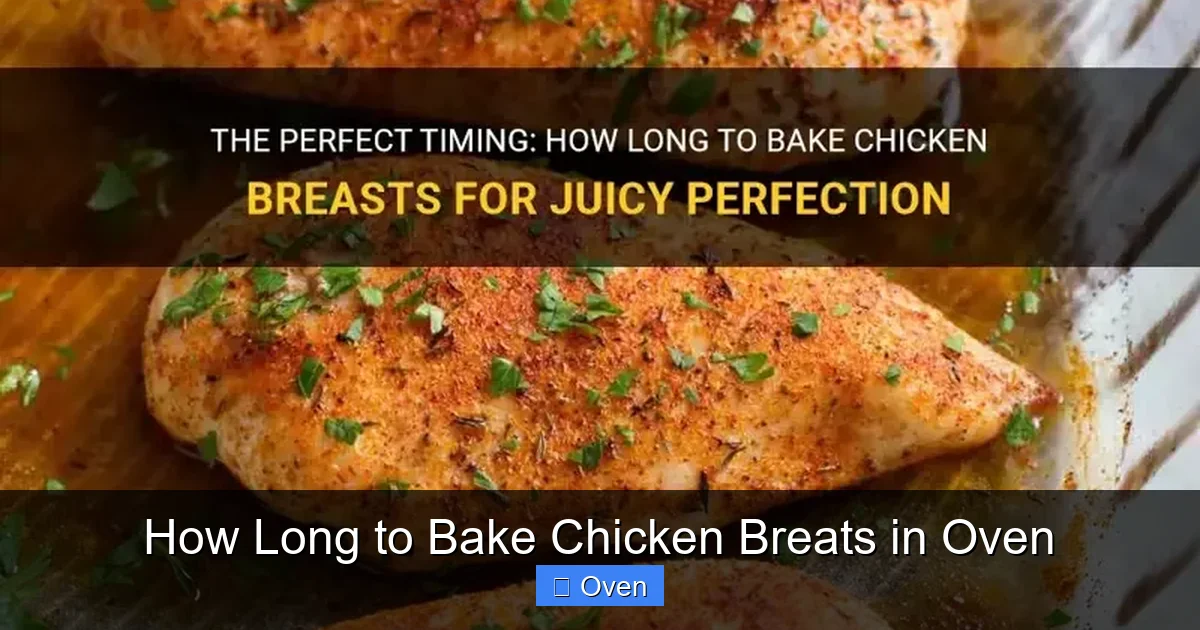
Mastering how long to bake chicken breasts in oven ensures juicy, flavorful results every time. Key factors are oven temperature, breast thickness, and using a meat thermometer to hit 165°F internally. Always rest chicken 5-10 minutes before slicing to lock in moisture.
Key Takeaways
- Internal temperature is king: Always cook chicken breasts to 165°F (74°C) measured at the thickest part for safety and juiciness.
- Thickness dictates time: Thin breasts (½-inch) bake in 12-18 mins; standard (1-inch) need 20-25 mins; thick (1.5-inch+) require 25-35 mins at 375°F.
- Resting is non-negotiable: Let chicken rest 5-10 minutes after baking to allow juices to redistribute, preventing dryness.
- Oven temp matters: 375°F is ideal for even cooking. Higher temps (400-425°F) cook faster but risk drying edges; lower temps (350°F) take longer but are more forgiving.
- Thermometer > timer: Relying solely on time leads to guesswork. An instant-read thermometer is the most reliable tool.
- Prep affects outcome: Patting breasts dry and seasoning generously (salt 30+ mins ahead) significantly improves flavor and texture.
- Frozen requires adjustment: Add 50% more baking time for frozen breasts and ensure they reach 165°F internally.
Quick Answers to Common Questions
Can I bake frozen chicken breasts without thawing?
Yes, but you must significantly increase baking time (add about 50%) and always verify the internal temperature reaches 165°F. Pat them very dry before seasoning. Thawing in the fridge is safer and yields better texture.
Is it safe to bake chicken breasts at 450°F?
You can, but it’s risky for standard thickness breasts. The high heat can easily dry out the exterior before the center cooks through. It’s best reserved for very thin cutlets or skin-on breasts where you want extra crispy skin. Always use a thermometer.
Why does my chicken breast sometimes cook unevenly?
Uneven thickness is the most common cause. Butterfly thick breasts next time. Also, ensure your oven is fully preheated and consider rotating the baking pan halfway through cooking for even heat distribution.
Can I use a convection oven for baking chicken breasts?
Yes! Convection cooks faster due to the fan circulating hot air. Reduce the oven temperature by 25°F (e.g., use 350°F instead of 375°F) and start checking for doneness 5-7 minutes earlier than the standard time. The thermometer is still essential.
How do I know if chicken is done without a thermometer?
While not recommended, you can check if juices run clear when pierced deeply with a knife, and the meat is no longer pink. However, color and juice clarity are unreliable indicators. A thermometer is the only safe and accurate method to ensure chicken reaches 165°F internally.
📑 Table of Contents
- Why Baking Chicken Breasts is a Game-Changer (and Why Timing is Everything)
- The Golden Rule: Internal Temperature Trumps Everything
- Factors That Seriously Impact Baking Time (It’s Not One-Size-Fits-All!)
- Your Step-by-Step Guide to Perfectly Baked Chicken Breasts
- Beyond the Basics: Flavor Boosters and Creative Twists
- Avoiding the #1 Mistake: Dry Chicken Breasts (and Other Pitfalls)
- Conclusion: Bake with Confidence, Every Single Time
Why Baking Chicken Breasts is a Game-Changer (and Why Timing is Everything)
Hey there! Let’s talk about one of the most versatile, healthy, and downright delicious proteins in your kitchen: chicken breasts. Whether you’re meal prepping for the week, whipping up a quick weeknight dinner, or impressing guests with a simple yet elegant dish, baked chicken breasts are a go-to. But here’s the thing that trips up even experienced cooks: how long to bake chicken breasts in oven. Get it wrong, and you’re left with dry, rubbery disappointment. Get it right, and you have tender, juicy, flavorful perfection every single time.
Unlike frying or grilling, baking in the oven offers incredible consistency and hands-off convenience. You set the temperature, pop the dish in, and let the oven do its magic. No flipping, no constant monitoring (well, almost!). But the secret sauce – pun intended – lies in understanding the variables that affect baking time. It’s not just about setting a timer and hoping for the best. Factors like the actual thickness of your chicken, the oven temperature you choose, whether it’s fresh or frozen, and even the type of pan you use all play crucial roles. Mastering these elements transforms baking from a gamble into a guaranteed success. In this guide, we’ll dive deep into the specifics so you never serve dry chicken again.
The Golden Rule: Internal Temperature Trumps Everything
Let’s cut through the noise right now. The absolute, non-negotiable answer to “how long to bake chicken breasts in oven” isn’t found on a recipe card or a timer. It’s found in the internal temperature of the chicken itself. The USDA and food safety experts universally agree: chicken must reach an internal temperature of 165°F (74°C) at its thickest part to be safe to eat. This is the critical threshold where harmful bacteria are destroyed.
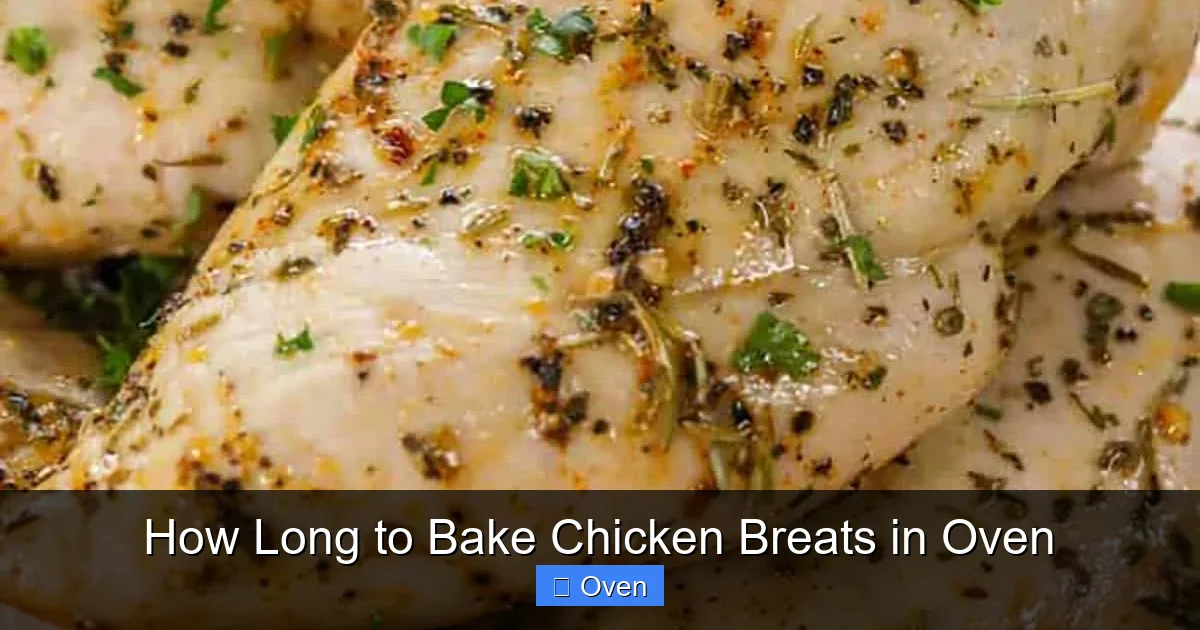
Visual guide about How Long to Bake Chicken Breats in Oven
Image source: spendwithpennies.com
Why 165°F is Your Best Friend
Hitting 165°F isn’t just about safety; it’s the sweet spot for juiciness. Chicken breast meat is lean. Overcook it by even a few degrees past 165°F, and proteins tighten excessively, squeezing out precious moisture. Undercook it, and you risk foodborne illness. A reliable instant-read meat thermometer is your single most important tool here. Don’t guess! Insert the probe horizontally into the very center of the thickest breast, avoiding bone if present. Pull the chicken out of the oven when it reads 160-162°F. Why? Because carryover cooking will raise the temperature another 3-5°F as it rests. This resting phase is crucial – more on that in a moment.
The Thermometer: Your Secret Weapon Against Dry Chicken
Seriously, if you don’t own a good instant-read thermometer (like Thermapen or ThermoPro), get one today. They’re inexpensive and transform your cooking. Oven thermostats can be inaccurate. Timers are guesses based on averages. Your eyes can’t tell if the center is truly cooked through. The thermometer gives you real-time, precise data. Think of it as your personal chicken whisperer. Using it takes the stress out of “how long to bake chicken breasts in oven” and puts you in complete control. It’s the difference between consistently perfect results and crossing your fingers every time.
Factors That Seriously Impact Baking Time (It’s Not One-Size-Fits-All!)
Here’s where most people go wrong. They see a recipe saying “bake for 20 minutes” and assume it applies to *their* chicken. But reality is messier. Several key factors dramatically change how long to bake chicken breasts in oven:
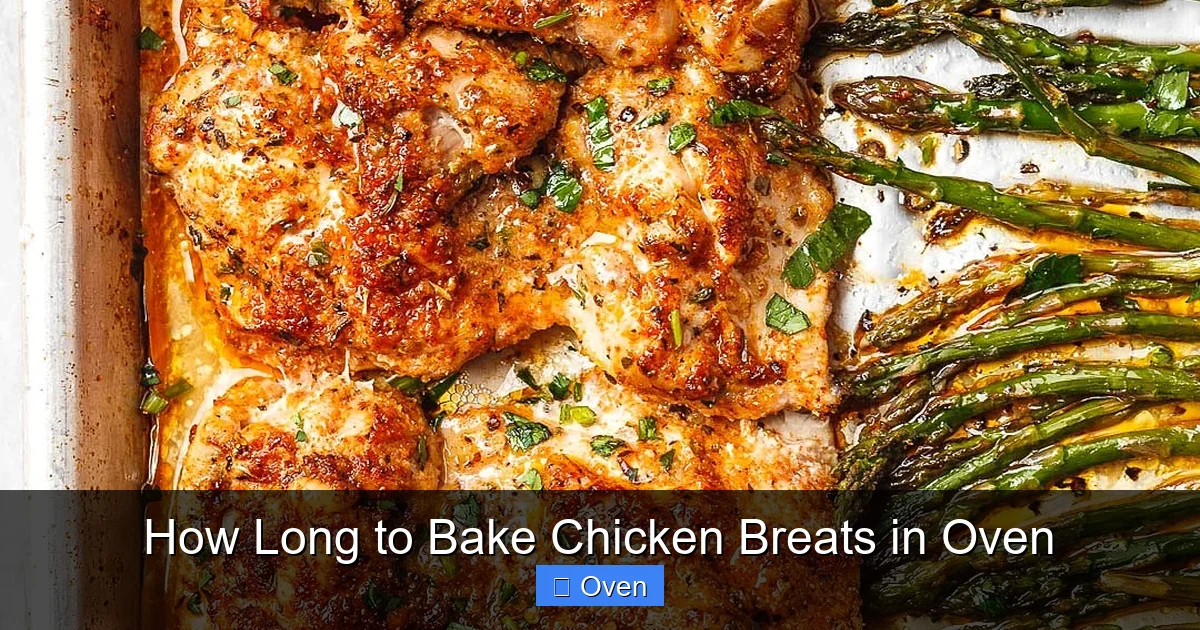
Visual guide about How Long to Bake Chicken Breats in Oven
Image source: eatwell101.com
Breast Thickness: The #1 Variable
This is the heavyweight champion of baking time factors. A thin, pounded cutlet cooks incredibly fast. A thick, bone-in breast takes much longer. Here’s a rough guide for standard boneless, skinless breasts baked at 375°F (190°C):
- Thin (½ inch / 1.25 cm): 12-18 minutes. Often sold as “cutlets” or pounded flat. Watch closely – they go from perfect to dry in seconds!
- Standard (1 inch / 2.5 cm): 20-25 minutes. This is the most common size found in stores.
- Thick (1.5+ inches / 3.8+ cm): 25-35+ minutes. Often found as “jumbo” or “family pack” breasts. Consider butterflying them for even cooking.
Pro Tip: If your breasts vary wildly in size, bake the thicker ones for 5-10 minutes first, then add the thinner ones to finish together. Or, butterfly the thick ones to create more uniform thickness.
Oven Temperature: Finding Your Sweet Spot
The temperature you choose directly impacts cooking speed and texture:
- 350°F (175°C): Lower and slower. Takes longer (add 5-10 mins to standard times) but is very forgiving, great for thicker breasts or if you’re worried about drying out. Promotes even browning.
- 375°F (190°C): The Goldilocks zone. Most recipes use this. Offers a great balance of reasonable cooking time (20-25 mins for standard breasts) and good moisture retention. Ideal for most home cooks.
- 400°F-425°F (200°C-220°C): High heat. Cooks faster (subtract 3-7 mins from standard times) and gives a nice sear/browning, especially if you start them in a hot oven-safe pan. Higher risk of drying out the edges before the center cooks through. Best for thinner breasts or when you want crispy skin (if skin-on).
Consistency matters! Preheat your oven fully (at least 15-20 mins) before putting chicken in. An oven thermometer is wise to check accuracy.
Fresh vs. Frozen: A Major Time Difference
Frozen chicken breasts are convenient, but they need special handling. Never bake partially frozen chicken straight from the freezer without adjusting time. Ice crystals slow heat penetration significantly.
- Thawed (Refrigerator): Use standard timing based on thickness and temp.
- Frozen: Add approximately 50% more baking time. A standard 1-inch frozen breast might take 30-38 minutes at 375°F. Crucially, always verify with a thermometer. The outside might look done long before the frozen center reaches 165°F. Pat frozen breasts *very* dry before seasoning – ice prevents proper browning.
For best results, thaw frozen breasts in the fridge overnight. It’s safer and yields better texture.
Skin-On vs. Boneless/Skinless: Flavor and Fat Factor
Skin-on breasts add richness and help keep meat moist during baking due to the fat layer. They generally take slightly longer than boneless/skinless of the same thickness because the skin insulates the meat. Expect to add 3-7 minutes to standard boneless times. The skin will render fat and become crispy at higher temps (400°F+). If you prefer boneless, consider adding a tablespoon of olive oil or melted butter brushed on top to help retain moisture.
Your Step-by-Step Guide to Perfectly Baked Chicken Breasts
Ready to put it all together? Follow this foolproof method for consistently juicy, flavorful results. This answers the core question: how long to bake chicken breasts in oven – but with the flexibility to adapt.

Visual guide about How Long to Bake Chicken Breats in Oven
Image source: shungrill.com
Prep is Paramount: Setting Up for Success
Don’t skip these steps! They make a huge difference.
- Pat Dry: Use paper towels to thoroughly dry the surface of each breast. Moisture is the enemy of browning. Wet chicken steams instead of searing.
- Season Generously (and Early!): Season both sides liberally with salt, pepper, and your favorite herbs/spices (garlic powder, paprika, dried thyme, etc.). For maximum flavor penetration, season at least 30 minutes ahead (or up to 24 hours refrigerated). Salt draws out moisture initially, but it gets reabsorbed, seasoning the meat deeply.
- Consider Oil: Lightly brush or rub breasts with olive oil, avocado oil, or melted butter. This aids browning, prevents sticking, and adds richness, especially important for lean boneless breasts.
- Choose Your Pan: A rimmed baking sheet lined with foil or parchment (for easy cleanup) works great. A broiler pan allows fat to drip away. For extra flavor, sear breasts first in a hot oven-safe skillet (like cast iron) for 2-3 mins per side, then transfer the skillet directly to the oven.
The Baking Process: Temperature, Time, and the Magic Rest
- Preheat: Get your oven to the desired temperature (375°F is recommended) and let it fully preheat.
- Arrange: Place seasoned breasts in your prepared pan, leaving space between them for air circulation (don’t crowd!). If using a skillet sear, do that now.
- Bake: Place in the center rack of the oven. Set a timer for the *minimum* time based on your breast thickness and oven temp (e.g., 20 mins for standard at 375°F).
- Check Early & Often (with Thermometer!): Start checking internal temperature 5-7 minutes BEFORE the minimum time is up. Insert the thermometer into the thickest part. Remove chicken from oven when it reaches 160-162°F. Remember carryover cooking!
- The Essential Rest: Transfer chicken to a clean plate or cutting board. Tent loosely with foil and let rest for 5-10 minutes. This is VITAL. Resting allows juices to redistribute throughout the meat. Cutting too soon = juices flowing out = dry chicken. Seriously, don’t skip this!
- Serve: Slice against the grain (for tenderness) and enjoy! The internal temp will now be safely at 165°F+.
Realistic Timing Examples (Using 375°F)
Let’s make it concrete. Here are approximate bake times *before resting*, based on common scenarios. ALWAYS VERIFY WITH A THERMOMETER!
- Thin Cutlets (½ inch), Boneless/Skinless: 12-15 minutes. Check at 10 mins.
- Standard Breasts (1 inch), Boneless/Skinless: 20-25 minutes. Check at 18 mins.
- Thick Breasts (1.5 inch), Boneless/Skinless: 28-35 minutes. Check at 25 mins. (Butterflying recommended).
- Standard Breasts (1 inch), Skin-On: 23-28 minutes. Check at 20 mins.
- Frozen Standard Breasts (1 inch), Boneless/Skinless: 30-38 minutes. Check at 25 mins. (Pat VERY dry first).
These are starting points. Your oven, pan, and exact breast size will cause variation. The thermometer is your guide.
Beyond the Basics: Flavor Boosters and Creative Twists
Mastering the bake time is step one. Now, let’s make your chicken breasts truly shine with incredible flavor. Baking is a fantastic canvas for creativity.
Simple & Classic: Herb & Garlic
timeless combination. Toss dried herbs (rosemary, thyme, oregano) with olive oil, minced garlic, salt, and pepper. Rub all over breasts. Bake as usual. For fresh herbs, add them in the last 5 minutes of baking or sprinkle on after resting.
Global Inspiration: Quick Marinades & Glazes
Marinades add depth, but even a quick 15-30 minute soak makes a difference. Try these:
- Asian-Inspired: Soy sauce, rice vinegar, honey, grated ginger, garlic. Brush on last 5-10 mins of baking to prevent burning sugar.
- Mediterranean: Lemon juice, olive oil, oregano, garlic, a pinch of red pepper flakes.
- Mexican Spice: Chili powder, cumin, smoked paprika, garlic powder, lime juice.
- Honey Mustard: Dijon mustard, honey, apple cider vinegar, garlic powder. Great glaze for the last 5 mins.
Always pat marinated chicken dry before baking for better browning.
Adding Moisture & richness: The Power of Liquids
Placing a small amount of liquid in the bottom of your baking pan creates gentle steam, helping keep chicken moist, especially at lower temps or for longer bakes. Don’t submerge the chicken! Use:
- Chicken or vegetable broth (½ cup)
- White wine (⅓ cup)
- Lemon juice + water (¼ cup each)
- Coconut milk (light, ⅓ cup)
This liquid also makes a fantastic base for a quick pan sauce after baking – just simmer it on the stove with a cornstarch slurry or a pat of butter.
Butterflying & Stuffed Breasts: Leveling Up
For thick breasts, butterflying is a game-changer. Lay breast flat, slice horizontally through the thickest part (don’t cut all the way through), open like a book, and pound gently to even thickness (about ¾ inch). This ensures even cooking in 18-22 mins at 375°F. Stuffed breasts (like chicken cordon bleu) require slightly longer baking (add 5-8 mins) as the filling needs to heat through. Always use a thermometer!
Avoiding the #1 Mistake: Dry Chicken Breasts (and Other Pitfalls)
Even with the best intentions, things can go sideways. Let’s troubleshoot the most common issues related to how long to bake chicken breasts in oven.
The Dry Chicken Dilemma: Causes & Cures
Dry chicken is almost always due to overcooking. Here’s why it happens and how to fix it:
- Cause: Ignoring Internal Temp. Relying solely on time or color (chicken can brown before it’s cooked through, or look done when it’s not).
- Cause: Skipping the Rest. Cutting immediately releases all the juices.
- Cause: Oven Temp Too High. Especially for thicker breasts, high heat cooks the outside too fast before the center heats up.
- Cause: Under-Seasoning. Salt is crucial for moisture retention and flavor. Bland chicken often gets overcooked trying to add taste.
- Cure: Thermometer + Rest. Non-negotiable. Remove at 160-162°F, rest 5-10 mins.
- Cure: Adjust Temp/Time. For thick breasts, try 350°F for longer. For thin cutlets, use 400°F for shorter time.
- Cure: Brine (Optional but Effective). Soak breasts in a solution of 1 cup salt + 1 cup sugar dissolved in 4 cups water for 30-60 mins before patting dry and seasoning. Adds moisture and flavor.
Other Common Baking Blunders
- Rubbery or Tough Texture: Usually severe overcooking. Stick to the thermometer!
- Pale, Unappetizing Color: Chicken wasn’t patted dry enough before seasoning/oiling, or oven temp was too low. Ensure dry surface and adequate oven heat (375°F+).
- Uneven Cooking (One End Done, Other Raw): Breasts weren’t uniform thickness. Butterfly thick ones next time. Or, rotate the pan halfway through baking.
- Sticking to the Pan: Pan wasn’t properly greased or lined. Use parchment, foil, or a light oil coating.
- Smoke in the Oven: Fat dripping onto the oven floor (common with skin-on at high heat). Use a broiler pan or place a foil-lined baking sheet on the rack below to catch drips.
Remember, practice makes perfect. Each time you bake chicken, you’ll get a better feel for your oven and your preferred doneness.
Conclusion: Bake with Confidence, Every Single Time
So, how long to bake chicken breasts in oven? The honest answer is: it depends. But armed with the knowledge of internal temperature being the ultimate guide, understanding how thickness and oven temp affect timing, and committing to that crucial resting period, you’ve got everything you need to succeed. Ditch the guesswork. Ditch the dry chicken.
Baking chicken breasts is supposed to be simple, healthy, and delicious. It shouldn’t be a source of stress. By focusing on the 165°F target, using your thermometer religiously, and adapting the timing based on your specific chicken and oven, you transform this basic protein into a consistently fantastic meal. Whether you’re cooking for one or feeding a crowd, these principles hold true. Experiment with flavors, master the technique, and enjoy the satisfaction of perfectly juicy, tender chicken breasts emerging from your oven every single time. Now go bake something amazing!
Frequently Asked Questions
What is the absolute minimum internal temperature for chicken?
The USDA mandates 165°F (74°C) as the safe minimum internal temperature for all poultry, including chicken breasts. This temperature instantly destroys harmful bacteria like salmonella. Cooking to lower temperatures requires precise time and temperature control to be safe, which is not practical for home ovens.
Can I bake chicken breasts covered with foil?
Yes, covering with foil for part of the baking time (usually the first 15-20 minutes) can help prevent the top from drying out or browning too quickly, especially for thicker breasts. Remove the foil for the last 5-10 minutes to allow the surface to brown and crisp up if desired.
How long can baked chicken breasts sit in the oven after cooking?
It’s best to remove chicken from the oven as soon as it reaches 160-162°F internally. Leaving it in a hot oven, even with the door closed, will continue cooking it rapidly and likely dry it out. The resting phase happens outside the oven.
Why is resting chicken so important after baking?
Resting allows the juices, which have been driven to the center of the meat by the heat, to redistribute evenly throughout the breast. Cutting too soon causes these precious juices to spill out onto the cutting board, leaving the chicken dry. Resting for 5-10 minutes makes a noticeable difference in moisture.
Can I bake chicken breasts from cold (straight from the fridge)?
While possible, it’s better to let chicken breasts sit at room temperature for 20-30 minutes before baking. Cold chicken straight from the fridge takes longer to cook through and can result in uneven cooking, with the outside overcooking before the center reaches temperature.
What’s the best way to store leftover baked chicken breasts?
Cool completely within 2 hours of cooking, then store in an airtight container in the refrigerator for up to 3-4 days. Reheat gently in the oven (325°F) or microwave with a splash of broth or water to prevent drying out. Avoid reheating multiple times.