
Air fryers don’t magically turn your oven into a combo unit, but standalone air fryers *can* perform many oven tasks with key differences. They excel at crisping and reheating small batches quickly using intense convection, but lack the even, ambient heat for large roasts or delicate baking. Understanding these nuances is crucial for deciding if an air fryer complements or replaces your oven.
Key Takeaways
- Air Fryers ≠ Ovens: They use a powerful fan for rapid convection, not ambient radiant heat, leading to different cooking results and limitations.
- Speed & Crispness Win: Air fryers cook small items (fries, wings, reheated pizza) significantly faster and crispier than a traditional oven.
- Capacity is Key: Most air fryers handle 2-5 servings max; large roasts, whole chickens, or big casseroles still need the oven.
- Energy Efficiency: Air fryers preheat faster and use less energy for small jobs, saving money on frequent small-batch cooking.
- Texture Trade-offs: They can dry out delicate items (cakes, custards) and may not brown evenly on large, dense foods like roasts.
- Best as a Complement: An air fryer shines alongside your oven, handling quick crisping tasks while the oven manages larger, slower cooks.
- Know Your Recipe: Success depends on adapting oven recipes – often lowering temp by 25°F and reducing time by 25-30%.
Quick Answers to Common Questions
Can I bake a cake in an air fryer?
It’s possible but challenging. Air fryers often produce dense, dry cakes with tough crusts due to intense surface drying. Significant recipe adaptation (smaller pan, lower temp, shorter time) is needed, and results rarely match an oven. For reliable cakes, stick with the oven.
Is an air fryer worth it if I already have a convection oven?
Yes, for dedicated crisping tasks. While convection ovens help, a countertop air fryer’s concentrated airflow in a small chamber delivers superior crispness and speed on small batches (fries, wings, reheating) compared to even a convection oven’s “air fry” mode.
Why does my air fryer food sometimes come out soggy?
Sogginess is almost always caused by overcrowding the basket. Food needs space for air to circulate. Cook in a single layer, shake/flip halfway, and avoid piling items on top of each other. Patting food dry before cooking also helps.
Can I cook a whole chicken in an air fryer?
Yes, in larger models (8+ quarts), but it’s tricky. Cook time is shorter (45-60 mins at 375°F), but results can be uneven (legs done before breast) or skin overly dark. The oven is generally more reliable for consistent whole-chicken roasting.
Do I need to preheat my air fryer?
Yes, always preheat for 3-5 minutes. Starting with a cold chamber leads to longer cook times, less crispness, and potential sogginess as food steams initially instead of searing.
📑 Table of Contents
- Does Air Fryer in Oven Work 2? Let’s Cut Through the Hype
- How an Air Fryer Actually Works (It’s Not Magic, It’s Physics)
- Air Fryer vs. Traditional Oven: The Head-to-Head Showdown
- Real-World Testing: Putting “Air Fryer in Oven Work 2” to the Test
- Making it Work: Tips for Using Your Air Fryer Like a Pro (Oven Replacement or Not)
- The Verdict: Complement, Don’t Replace (But Embrace the Power!)
Does Air Fryer in Oven Work 2? Let’s Cut Through the Hype
Walk into any kitchen these days, and you’re likely to find a sleek, countertop air fryer humming away next to the trusty old oven. Marketing screams “oven replacement!” and “crispy perfection in half the time!” But the real question burning in home cooks’ minds is: **Does air fryer in oven work 2?** Spoiler alert: It’s not quite that simple. That “2” in your query? It probably hints at the confusion surrounding whether an air fryer *function* built *into* some modern ovens (often called “air fry mode” or “convection crisp”) actually delivers the same results as a dedicated countertop air fryer. Or, it might stem from wondering if a standalone air fryer can truly *do* what your oven does. Let’s ditch the jargon and get real about what an air fryer *actually* does, how it compares to your oven, and whether it can genuinely take over oven duties – especially for that elusive “work 2” scenario.
The core confusion often lies in terminology. When people ask “Does air fryer in oven work 2?”, they’re usually grappling with one of two things: First, the effectiveness of the “air fry” setting found on many newer convection ovens. Second, whether buying a separate air fryer appliance is worth it *instead of* using their oven, or if it genuinely complements it. The answer isn’t a simple yes or no. It hinges entirely on understanding the fundamental differences in *how* these appliances generate and distribute heat, and what you’re trying to cook. Forget the hype; let’s break down the science and the practical reality, step by step, so you can decide if that air fryer (built-in or standalone) deserves prime real estate in your kitchen.
How an Air Fryer Actually Works (It’s Not Magic, It’s Physics)
Before we can answer “does air fryer in oven work 2?”, we need to grasp the core mechanism. Forget the name “fryer” – it rarely uses oil like a deep fryer. An air fryer is essentially a **high-powered convection oven in a compact, super-efficient package.** Here’s the breakdown:
The Power of the Turbo Fan
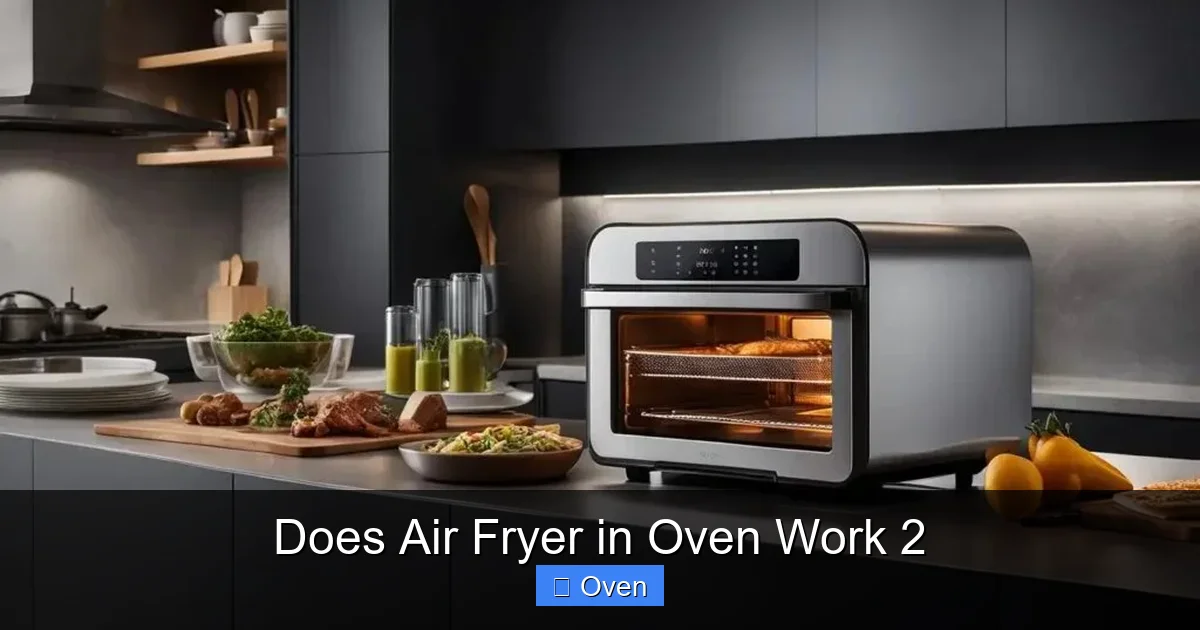
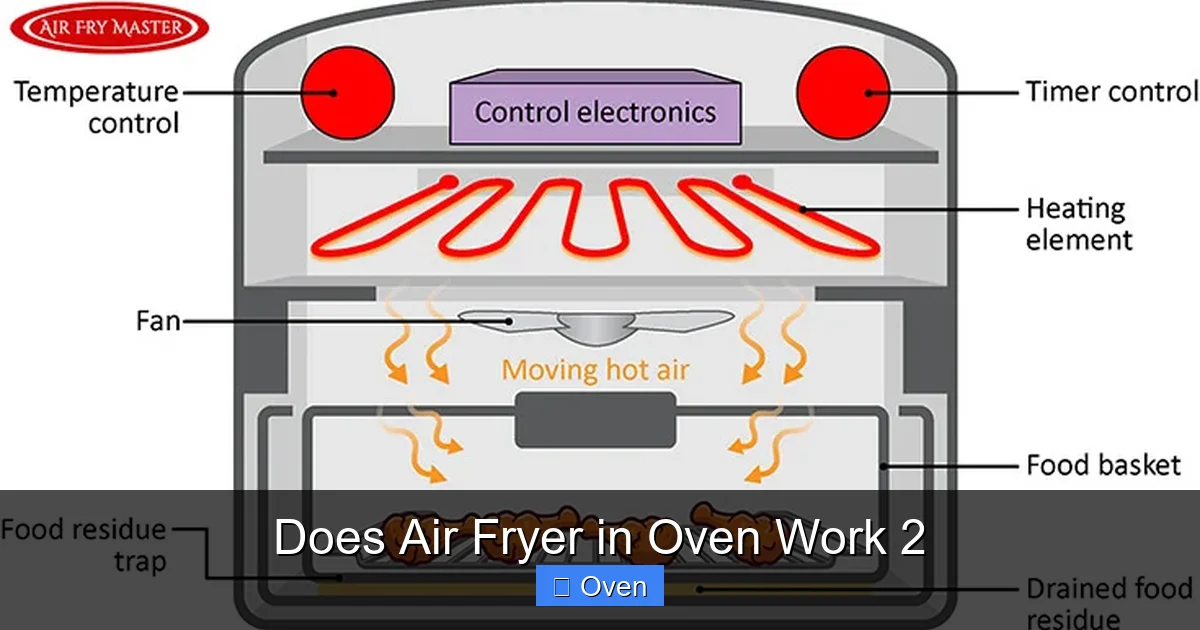
At the heart of every air fryer (standalone or built-in mode) is a powerful heating element, usually located near the top, and a large, fast-spinning fan directly behind it. This fan isn’t just for show; it’s the star of the show. It pulls in hot air from the heating element and **forces it down onto the food at high velocity** through the cooking chamber. This creates an intense, focused stream of hot air that circulates rapidly around the food.

Visual guide about Does Air Fryer in Oven Work 2
Image source: airfryeraid.com
Why This Creates “Frying” Results
This rapid, forced convection is the key. The intense airflow:
- Strips away moisture instantly: As the hot air hits the food’s surface, it evaporates surface moisture incredibly quickly. This is crucial for achieving that coveted crispy, fried-like exterior without submerging food in oil.
- Promotes the Maillard reaction: The rapid drying and high heat (typically 350°F – 400°F) accelerate the browning and flavor-developing chemical reaction that gives fried foods their delicious taste and color.
- Cooks from the outside in fast: The intense surface heat penetrates inward relatively quickly for small, thin items, leading to faster overall cook times compared to a standard oven.
Think of it like a mini, hyper-efficient wind tunnel of heat focused directly on your food. This is fundamentally different from how a traditional oven works, which relies on ambient radiant heat filling the entire cavity more slowly.
Built-in “Air Fry” Mode vs. Standalone Air Fryer
This is where the “air fryer in oven” question gets critical. Many modern ovens (especially convection models) now include a specific “Air Fry” or “Convection Crisp” setting. Does this setting make the oven work like a dedicated air fryer? Mostly, yes – but with caveats:
- Similar Principle: These modes typically activate the convection fan at a higher speed than standard convection and often use the top heating element more aggressively, mimicking the intense airflow of a countertop unit.
- The Capacity Catch: The biggest difference is **space**. A countertop air fryer has a small, enclosed chamber (usually 3-6 quarts) where the hot air is concentrated directly onto a single rack of food. An oven’s “air fry” mode uses the *entire* oven cavity. While the fan is faster, the air has to circulate through a much larger volume, diluting its intensity. You also often need to use the oven rack, which can block airflow compared to the basket design of a countertop fryer.
- Performance Difference: Generally, a dedicated countertop air fryer will produce slightly crispier results on small batches faster than an oven’s “air fry” mode because of that concentrated airflow in a smaller space. However, the oven mode is still vastly superior to standard baking for crisping tasks and avoids needing another appliance. So, does air fryer in oven work 2? For the built-in function, it *works*, but it’s not *identical* to a standalone unit’s performance due to physics and size.
Air Fryer vs. Traditional Oven: The Head-to-Head Showdown
Now, let’s directly compare the core functions to answer the burning question: **Can an air fryer (standalone or built-in mode) truly replace or replicate what your oven does?** The answer is nuanced – it excels in specific areas but falls short in others.
Cooking Speed: Air Fryer Takes the Cake (Mostly)
This is where the air fryer shines brightest. That intense, focused convection means:
Visual guide about Does Air Fryer in Oven Work 2
Image source: airfryeraid.com
- Preheating: Air fryers preheat in 3-5 minutes. Ovens often take 10-15 minutes or more.
- Cooking Time: For small, thin items, air fryers are significantly faster. Frozen french fries? 12-15 minutes in an air fryer vs. 20-25+ in a standard oven. Chicken wings? 20-25 minutes vs. 35-45 minutes. Reheating pizza? 3-5 minutes for perfect crispness vs. 10+ minutes in the oven.
- Why it Matters: This speed is a game-changer for weeknight dinners, quick snacks, or when you’re short on time. It makes “crispy” a feasible option more often.
Verdict: For speed on small batches, the air fryer (standalone or built-in mode) wins hands-down. Does air fryer in oven work 2 for speed? Absolutely, especially the standalone unit.
Texture & Crispness: The Air Fryer’s Superpower
If you crave that shatteringly crisp exterior – think golden fries, crackly chicken skin, or perfectly reheated fried rice – the air fryer is your best friend. The rapid moisture removal and intense surface heat deliver results that are incredibly difficult, often impossible, to achieve consistently in a standard oven without excessive oil.
- Examples: Frozen mozzarella sticks come out gooey inside and perfectly crisp outside. Leftover fried chicken regains its glory. Roasted vegetables get beautifully caramelized edges without becoming soggy. Baked potatoes develop a surprisingly crispy skin.
- The Oven Limitation: Standard ovens rely on slower, ambient heat. Moisture evaporates more gradually, often leading to steaming or less defined crispness, especially on items with high surface moisture. Convection ovens help but still lack the sheer intensity of a dedicated air fryer’s airflow.
Verdict: For achieving deep-fryer-like crispness with minimal oil on suitable items, the air fryer is unmatched. This is its primary reason for existence. Does air fryer in oven work 2 for crispness? Yes, it’s the champion here.
Capacity & Versatility: The Oven’s Domain
This is where the air fryer’s biggest weakness shows. Its compact size is great for speed and efficiency but becomes a major limitation:
- Small Batch Specialist: Most countertop air fryers max out at cooking for 2-4 people effectively. Trying to cook a whole chicken (over 4 lbs), a large casserole, a full sheet pan of roasted veggies for a crowd, or a multi-layer cake is simply impossible or results in overcrowding (which kills crispness).
- Oven’s Strength: Ovens are designed for volume and variety. Roast a turkey. Bake a large lasagna. Cook a big batch of cookies. Proof bread dough. Simmer a large pot of soup (on the stovetop, but the oven cavity is free). The oven handles tasks requiring even, ambient heat over larger areas or longer periods.
- Built-in Mode Limitation: While an oven’s “air fry” mode *can* handle larger items than a countertop fryer, it still struggles with the *very* large roasts or dishes where even browning across a vast surface is critical. The airflow just can’t penetrate and circulate as effectively as ambient heat in a large cavity.
Verdict: For large quantities, whole roasts, baking delicate items (cakes, soufflés), or dishes requiring gentle, even heat, the oven is irreplaceable. An air fryer cannot replicate this core oven function. Does air fryer in oven work 2 for capacity? No, it fundamentally cannot.
Energy Efficiency: The Air Fryer’s Quiet Victory
For small jobs, the air fryer is significantly more energy-efficient:
- Smaller Space to Heat: Heating a 4-quart chamber vs. a 5+ cubic foot oven cavity requires far less energy.
- Faster Preheat & Cook Times: Less time running = less energy consumed.
- Real-World Impact: Using an air fryer for reheating leftovers, cooking a few servings of fries, or roasting a small tray of veggies can save noticeable energy (and money on your bill) compared to firing up the whole oven, especially in warmer months when you want to avoid heating the kitchen.
Verdict: For frequent small-batch cooking, the air fryer is the clear energy winner. This is a strong practical argument for having one alongside your oven.
The Texture Trade-Off: When Air Fryers Struggle
Air fryers aren’t perfect for everything. Their intense, drying heat can be detrimental for certain oven tasks:
- Delicate Baking: Cakes, muffins, quick breads, and custards often turn out dry, dense, or unevenly cooked. The rapid surface drying can prevent proper rising or lead to a tough crust before the inside is done. Ovens provide the gentle, ambient heat these items need.
- Large, Dense Roasts: While great for chicken pieces, air fryers can struggle with a large beef roast or whole turkey. The intense exterior heat can cause the outside to overcook and dry out before the interior reaches the desired temperature, as the heat penetration isn’t as even as in a slow-roasting oven. The Maillard reaction might be excessive on the surface.
- Moist Dishes: Casseroles or bakes that rely on retained moisture (like a good lasagna) can sometimes become overly dry on the top layer in an air fryer if not carefully monitored or covered.
Verdict: For tasks requiring gentle, even heat and moisture retention, the oven remains superior. Don’t expect your air fryer to perfectly replicate a slow-roasted prime rib or a moist chocolate cake.
Real-World Testing: Putting “Air Fryer in Oven Work 2” to the Test
Theory is great, but what happens in your kitchen? Let’s look at common oven tasks and see how an air fryer (standalone) performs:
Frozen French Fries: The Ultimate Test
Oven (Standard Bake): 20-25 mins at 425°F. Often come out somewhat limp or inconsistently crisp, especially the ones touching the pan. May require shaking halfway.
Visual guide about Does Air Fryer in Oven Work 2
Image source: airfrymaster.com
Air Fryer: 12-15 mins at 380-400°F. Consistently golden, shatteringly crisp on the outside, fluffy inside. Minimal shaking needed due to basket design. **Winner: Air Fryer (by a landslide).** This is where it proves its worth daily.
Does air fryer in oven work 2 for fries? Absolutely, and it’s superior.
Chicken Thighs (Bone-in, Skin-on)
Oven (Roast): 35-45 mins at 400°F. Good crispness achievable, but skin can sometimes be less consistent, and meat might dry out slightly if overcooked.
Air Fryer: 25-30 mins at 375°F. Skin gets incredibly crispy and golden. Meat stays juicy due to faster cook time. Easier to achieve perfect doneness. **Winner: Air Fryer (for speed, crispness, juiciness on this cut).**
Pro Tip: Pat skin *very* dry before cooking for maximum crispness in either appliance.
Reheating Pizza
Oven: 10-15 mins at 350°F. Can revive pizza, but often leaves the crust slightly chewy or the toppings dried out.
Air Fryer: 3-5 mins at 350°F. Crust regains its crispness beautifully, toppings reheat without drying out excessively. **Winner: Air Fryer (transforms leftovers).** This alone might justify the appliance for pizza lovers.
Roasting a Whole Chicken (4-5 lbs)
Oven: 60-80 mins at 375°F. Even cooking, juicy meat, good browning. Reliable results.
Air Fryer: Possible in larger models (8+ quarts), but challenging. Cook time might be 45-60 mins at 375°F. Risk of uneven cooking (legs done before breast), potential for overly dark skin before meat is cooked through, and limited space for trussing. Results can be good but less consistent than the oven. **Winner: Oven (for reliability and evenness on large roasts).** This highlights the capacity/texture limitation.
Does air fryer in oven work 2 for a whole chicken? It *can*, but the oven is still the better tool for guaranteed results.
Baking a Cake
Oven: Perfectly risen, moist crumb, even browning. The standard method.
Air Fryer: Often results in a dense, dry cake with a tough crust. Rising can be inhibited by the rapid surface drying. Requires significant recipe adaptation (smaller pan, lower temp, shorter time) and is generally not recommended. **Winner: Oven (by a massive margin).** This is a clear case where the air fryer cannot replicate the oven’s function.
Making it Work: Tips for Using Your Air Fryer Like a Pro (Oven Replacement or Not)
Whether you’re using a standalone air fryer or your oven’s “air fry” mode, these tips will maximize your success and help answer “does air fryer in oven work 2” positively for your needs:
Master the Temperature & Time Conversion
This is the #1 rule for adapting oven recipes:
- Lower the Temperature: Reduce the oven temperature by 25°F (15°C). Air fryers cook hotter and faster due to the intense convection.
- Reduce the Time: Start checking for doneness 25-30% sooner than the oven recipe suggests. Things happen fast!
- Example: A recipe calling for 400°F for 20 minutes in the oven? Try 375°F in the air fryer and start checking at 14-15 minutes.
- Use a Thermometer: Especially for meats, an instant-read thermometer is essential. Don’t rely solely on time.
Pro Tip: When in doubt, err on the side of lower temp and shorter time. You can always cook a bit longer, but you can’t uncook overdone food.
Don’t Overcrowd the Basket (or Rack)
This is critical for achieving crispness:
- Single Layer is Key: Food needs space for air to circulate *all around* it. Piling food on top of itself creates steam, leading to soggy, steamed results instead of crispiness.
- Shake or Flip: For even cooking and browning, shake the basket (or flip items on a rack) halfway through the cook time. Most air fryers have a convenient pause function for this.
- Built-in Mode: Use the oven rack position recommended for convection (usually the middle rack). Avoid blocking the fan vents at the back.
Consequence of Overcrowding: Soggy fries, steamed chicken, uneven browning. This is the most common reason air fryer results disappoint.
Prep is Paramount
Small steps make a big difference:
- Dry the Surface: Pat proteins (chicken, fish) and veggies *thoroughly* dry with paper towels before cooking. Moisture is the enemy of crispness.
- Oil Lightly: While air fryers use less oil, a *very light* spray or brush of oil (avocado, canola) on foods like fries, veggies, or chicken skin significantly enhances browning and crispness. Don’t skip it!
- Season Generously: Don’t be shy with salt, pepper, and spices. The intense heat can mute flavors slightly.
Know When to Cover (or Not)
- Don’t Cover for Crispness: For fries, wings, roasted veggies – leave uncovered to allow moisture to escape.
- Cover for Moisture: For dishes prone to drying out (like certain casseroles or when reheating very moist leftovers), loosely tent with foil for the first half of cooking, then remove to crisp the top.
- Built-in Mode: Use oven-safe foil or lids similarly.
Clean Immediately (Mostly)
Grease and food particles burn onto the basket and heating element, causing smoke and off-flavors. While not always practical mid-cook, rinsing the basket right after use (when safe) makes cleaning infinitely easier. Avoid harsh abrasives on non-stick coatings.
The Verdict: Complement, Don’t Replace (But Embrace the Power!)
So, circling back to the core question: **Does air fryer in oven work 2?** The answer is a resounding **”Yes, but…”** with crucial context.
It Works Spectacularly For:
- Small-batch crisping: Frozen fries, wings, nuggets, mozzarella sticks.
- Reheating leftovers: Pizza, fried foods, roasted veggies – restoring crispness perfectly.
- Quick roasting: Small cuts of meat (chicken pieces, pork chops), vegetables (asparagus, broccoli, Brussels sprouts).
- Energy-efficient small jobs: When firing up the whole oven feels wasteful.
In these scenarios, a dedicated countertop air fryer often outperforms both a standard oven *and* an oven’s built-in “air fry” mode due to its concentrated airflow and speed. It absolutely “works” and excels.
It Does NOT Work As A True Oven Replacement For:
- Large quantities: Whole turkeys, large casseroles, big batches of cookies.
- Delicate baking: Cakes, muffins, soufflés, yeast breads (without significant adaptation and often subpar results).
- Gentle, even roasting: Large, dense roasts where slow, ambient heat penetration is key to juicy results.
- Tasks requiring oven-specific features: Proofing dough, slow braising, keeping food warm for extended periods.
Here, the traditional oven remains the indispensable workhorse. The air fryer simply cannot replicate the oven’s capacity, even heat distribution for large items, or gentle baking environment.
The Smart Kitchen Strategy
The most effective approach isn’t “air fryer OR oven,” but **”air fryer AND oven.”** Think of them as specialized tools in your culinary toolbox:
- Reach for the Air Fryer When: You want speed, maximum crispness on small items, or energy efficiency for a quick meal/snack. It’s your go-to for weeknight wings, crispy roasted veggies for two, or reviving last night’s pizza.
- Reach for the Oven When: You’re cooking large quantities, baking delicate items, roasting a whole bird, or need the even, ambient heat for slow-cooked dishes. It’s your foundation for Sunday roasts, holiday feasts, and baking projects.
If your oven has a dedicated “Air Fry” mode, it’s a fantastic bonus that eliminates the need for a separate appliance *for those specific crisping tasks*, especially if counter space is tight. However, a standalone unit will generally deliver slightly better crispness on small batches due to its design. Does air fryer in oven work 2 effectively? The built-in mode works well enough for most home cooks, but a dedicated unit offers peak performance for air frying.
Final Thoughts: It’s About Right Tool, Right Job
The air fryer isn’t a magic oven-replacer, nor is it just a fad. It’s a powerful, specialized appliance that solves specific problems (slow oven crisping, soggy reheated food) exceptionally well. Understanding its strengths (speed, crispness, efficiency for small batches) and limitations (capacity, delicate baking) is the key to unlocking its value. Don’t expect it to bake your birthday cake, but do embrace it for making crispy, delicious food faster and with less oil for countless everyday meals. Used wisely alongside your oven, it becomes an indispensable part of a modern, efficient kitchen. So, does it “work”? For its intended purpose – delivering incredible crispness quickly on suitable foods – absolutely, and often better than your oven ever could for those specific tasks. Just know when to let the oven take the lead.
Frequently Asked Questions
What is the main difference between an air fryer and a convection oven?
The core difference is intensity and scale. Both use convection (fan-forced hot air), but an air fryer concentrates this airflow in a very small chamber, creating much higher velocity and surface heat on the food. A convection oven circulates air through a larger cavity, providing more even ambient heat but less intense surface drying and browning power.
Can I use aluminum foil in my air fryer?
Yes, you can use aluminum foil in most air fryers, but avoid covering the entire basket bottom as it can block airflow. Use it to line the basket for easy cleanup with saucy foods or to loosely tent items prone to drying out. Never cover the heating element or block the fan vents.
Why does my air fryer smoke?
Smoke usually occurs from grease or food particles burning on the heating element or basket. This often happens if you use too much oil, cook very fatty foods without cleaning properly, or have leftover residue from previous use. Clean the basket and tray thoroughly after each use, especially if greasy, and avoid excessive oil.
How do I clean my air fryer basket?
Always unplug and let the air fryer cool completely. Remove the basket and tray. Wash with warm, soapy water and a non-abrasive sponge or brush. For stuck-on grease, soak in hot, soapy water or use a baking soda paste. Avoid harsh scouring pads on non-stick coatings. Dry thoroughly before reassembling.
Can I put a lid on my air fryer?
Generally, no. Air fryers rely on rapid, unrestricted airflow for cooking. Putting a lid on traps steam, leading to soggy food and preventing the crisping effect. Some models have specific lids for steaming functions, but these are exceptions, not for standard air frying.
Is air frying healthier than oven baking?
Air frying isn’t inherently “healthier” than oven baking, but it often uses significantly less oil to achieve similar (or better) crispness on foods like fries or wings. The health benefit comes from reducing added fats. For items that don’t require oil (like roasting veggies), both methods are comparable. The key is the overall recipe and ingredients used.