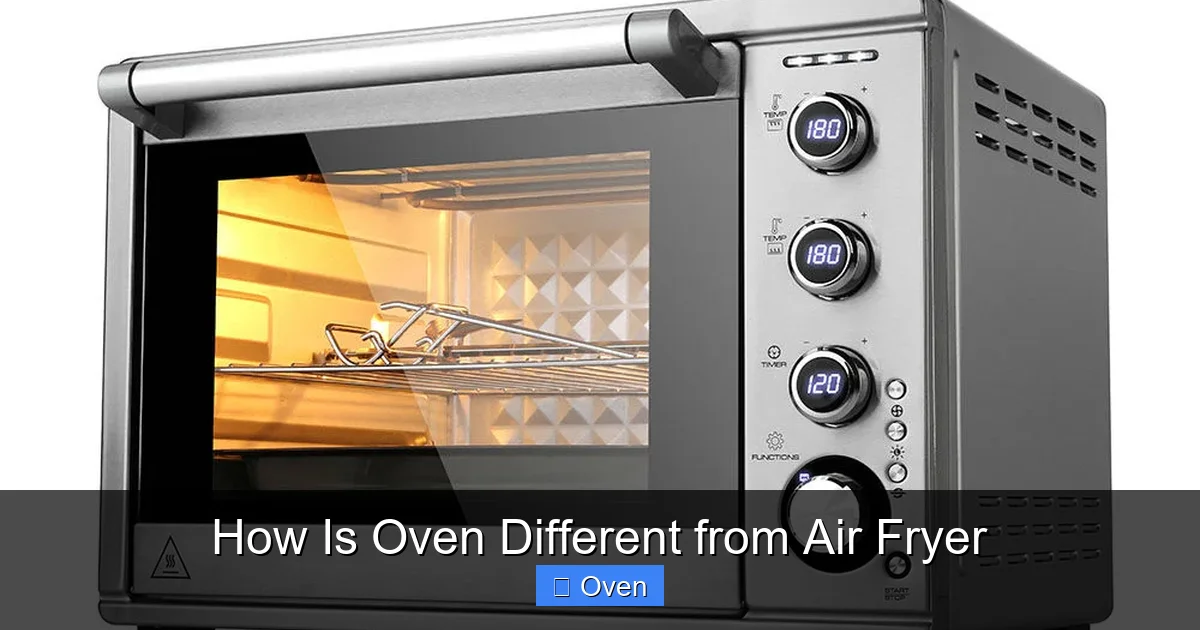
Ovens use radiant heat from top/bottom elements for even baking, while air fryers circulate superheated air rapidly for crispy results. Air fryers cook faster with less oil but have smaller capacity; ovens handle large batches and diverse cooking methods better.
Key Takeaways
- Heat Source: Ovens rely on radiant heat from heating elements, while air fryers use a powerful fan to circulate hot air at high speed.
- Cooking Speed: Air fryers preheat and cook 20-40% faster than conventional ovens due to their compact size and intense airflow.
- Capacity: Ovens handle large roasts, multiple dishes, and baking sheets; air fryers are ideal for 1-4 servings with limited space.
- Texture & Health: Air fryers create crispier exteriors with 70-80% less oil; ovens offer more even browning for delicate items like cakes.
- Versatility: Ovens excel at baking, roasting, and broiling; air fryers shine for reheating, frying alternatives, and quick weeknight meals.
- Energy Use: Air fryers consume 15-25% less energy for small batches; ovens are more efficient for large, long cooks.
- Learning Curve: Air fryers require temperature/time adjustments (often 25-50°F lower and 20% less time than oven recipes).
Quick Answers to Common Questions
Can I put aluminum foil in an air fryer?
Yes, but with caution. Use only small pieces that don’t block airflow or touch the heating element. Avoid covering the entire basket, as this traps steam and prevents crispness. Parchment paper with holes is safer for lining.
Why does my air fryer smoke?
Smoke usually means grease or food debris is hitting the heating element. Clean the basket and tray after every use. Avoid overfilling, and never cook excessively fatty foods (like bacon) without a drip tray. Preheat with the basket empty for 2 minutes to burn off residue.
Can I bake a cake in an air fryer?
Yes, but adjust expectations. Use a smaller pan (6-inch), reduce baking time by 25%, and lower the temperature by 25°F. Dense cakes (like chocolate or carrot) work best; delicate sponge cakes may collapse. Always check early with a toothpick.
Do air fryers use radiation?
No. Air fryers use convection (hot air circulation), not radiation like microwaves. The heating element warms the air, and the fan circulates it—similar to a convection oven but more intense.
How do I prevent food from sticking in the air fryer?
Always lightly coat the basket with oil (avocado or canola work best) before adding food. Avoid overcrowding—cook in batches if needed. For baked goods, use parchment paper or a silicone liner. Never force food out; let it release naturally when crisp.
📑 Table of Contents
- Why Your Kitchen Needs Both (But They’re Not the Same!)
- How They Actually Work: The Science Behind the Sizzle
- Cooking Results: Crispy vs. Consistent—What Wins?
- Practical Differences: Size, Speed, and Daily Use
- Versatility: What Each Appliance Does Best
- Maintenance and Longevity: Keeping Them Happy
- Which One Should YOU Buy? The Real Answer
- Conclusion: Your Kitchen, Your Rules
Why Your Kitchen Needs Both (But They’re Not the Same!)
Picture this: It’s 6 PM, you’re starving, and you’ve got frozen chicken tenders staring back from the fridge. Do you fire up the big oven? Or grab that sleek countertop gadget you impulse-bought last month? If you’ve ever hesitated between your oven and air fryer, you’re not alone. These two appliances look like distant cousins but work in totally different ways. Understanding how an oven is different from an air fryer isn’t just technical trivia—it’s the secret to faster meals, crispier fries, and never drying out your Thanksgiving turkey again.
Let’s cut through the confusion. At first glance, both make things hot and delicious. But peek under the hood (or the lid!), and you’ll find completely different cooking philosophies. Your oven is like a patient artist, slowly radiating heat to transform raw ingredients. Your air fryer? It’s a turbocharged chef, blasting food with hurricane-force hot air to create that addictive crunch we all crave. This isn’t about which is “better”—it’s about knowing which tool wins for your specific craving. Whether you’re reheating pizza, baking cookies, or trying to make “healthy” fried chicken, choosing the right appliance saves time, energy, and disappointment. So grab a snack (cooked however you prefer!), and let’s dive into the delicious details.
How They Actually Work: The Science Behind the Sizzle
Here’s where things get fascinating—and where the core difference lies. Forget brand names or fancy features for a second. The magic (or science!) happens in how heat reaches your food.
Visual guide about How Is Oven Different from Air Fryer
Image source: bhg.com
The Oven: Radiant Heat, Slow and Steady
Your standard oven—whether gas or electric—works like a cozy campfire. Heating elements at the top and bottom glow red-hot, emitting infrared radiation. This radiant heat warms the air inside the cavity, which then slowly transfers heat to your food. Think of it like standing near a fireplace: you feel warmth on your skin even before the air around you gets hot. This method is perfect for gentle, even cooking. When you bake a cake, the radiant heat ensures the center sets without the edges burning. Roasting a chicken? The slow penetration renders fat beautifully while keeping meat juicy. But this process takes time—ovens need 10-20 minutes to preheat, and cooking itself is often measured in hours. It’s reliable, yes, but not exactly speedy when you’re hangry.
The Air Fryer: Turbocharged Convection on Steroids
Now, imagine that campfire got a jet engine. An air fryer is essentially a mini convection oven on overdrive. It has a heating element (like an oven) but adds a powerful fan that spins at high speed—often 1,500+ RPM. This fan blasts superheated air (usually 350-400°F) directly onto your food in a tight, circular path. The result? Intense, focused heat that cooks food incredibly fast. Why? Two reasons: First, the small cooking chamber (typically 3-6 quarts) means heat doesn’t have to travel far. Second, the rapid airflow creates a “boundary layer” effect—constantly stripping away cooler air around your food so heat penetrates faster. That’s why your air-fried zucchini chips go from soggy to crispy in 12 minutes flat, while the oven might take 25. It’s not actually “frying”—it’s high-velocity convection that mimics deep-frying results with minimal oil.
Cooking Results: Crispy vs. Consistent—What Wins?
So, how does this heat difference translate to your plate? Let’s break it down with real-world examples. The winner depends entirely on what you’re cooking.

Visual guide about How Is Oven Different from Air Fryer
Image source: yourchoicesonline.com.au
Texture Showdown: Crisp Factor
If you live for that shatteringly crisp exterior—think french fries, chicken wings, or roasted Brussels sprouts—the air fryer is your undisputed champion. That intense, targeted airflow dehydrates the surface of your food rapidly, creating a perfect Maillard reaction (that magical browning process) without overcooking the inside. Try air-frying frozen french fries: they emerge golden and crunchy in 15 minutes, often needing just a light oil spray. In the oven? They’ll be tender but rarely achieve that addictive crisp, even at high heat. But here’s the catch: delicate items like fish fillets or stuffed mushrooms can dry out or cook unevenly in the air fryer’s aggressive environment. The oven’s gentler radiant heat handles these with finesse, giving you flaky fish and juicy fillings without constant monitoring.
Browning & Evenness: The Subtle Art
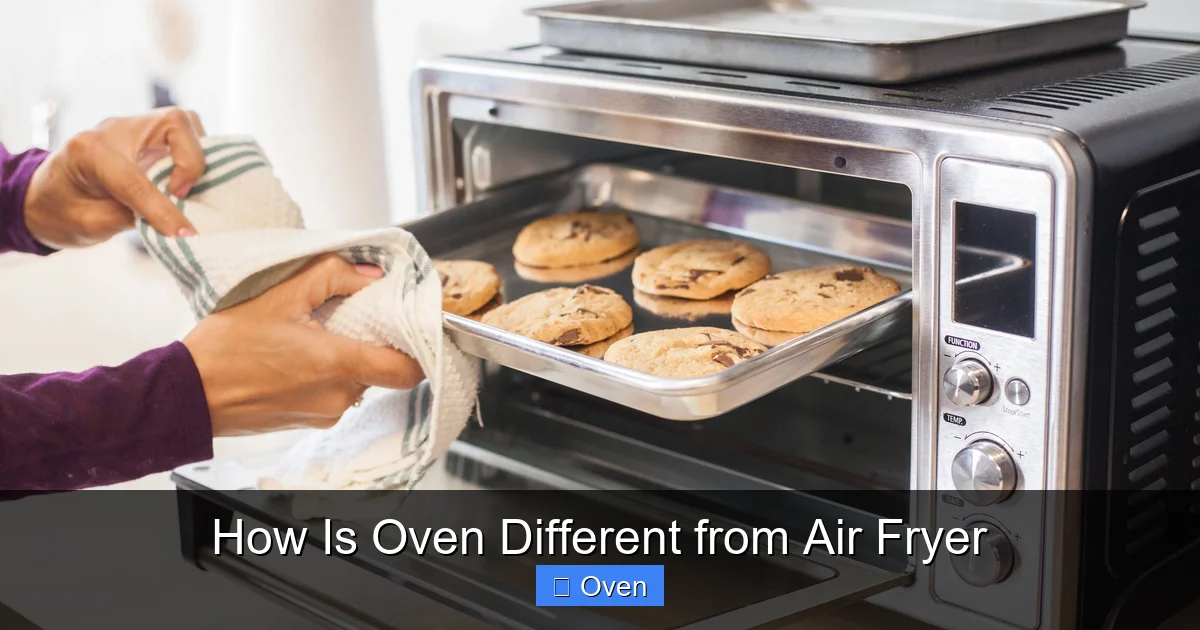
For baked goods—cookies, cakes, or bread—the oven is irreplaceable. Its stable, ambient heat ensures even rising and browning. Ever tried making chocolate chip cookies in an air fryer? They often spread too much or burn on the bottom before the center sets. The oven’s larger cavity allows heat to circulate more uniformly, giving you that perfect chewy-center, crisp-edge cookie we all dream about. Similarly, roasting a whole chicken in the oven yields beautifully even color and tenderness from breast to thigh. In the air fryer, smaller cuts like chicken thighs or drumsticks excel (crispy skin in 25 minutes!), but larger roasts can cook unevenly—darker on top, underdone underneath. Pro tip: If using the air fryer for roasts, rotate the basket halfway and shield thinner edges with foil.
Moisture Retention: Juicy vs. Dry
Air fryers can sometimes overdo it on the dryness, especially with lean proteins. That intense airflow pulls moisture from surfaces quickly. While great for crispness, it means chicken breasts or fish can turn out tougher than in the oven. Ovens retain more ambient moisture, making them better for braising, steaming (with a lid), or cooking dishes with sauces. However, air fryers shine when you want dryness—like dehydrating apple slices for chips or reviving stale crackers. The key is knowing your goal: maximum juiciness? Lean toward the oven. Maximum crunch? Air fryer takes the crown.
Practical Differences: Size, Speed, and Daily Use
Beyond the science, real-life factors make or break your choice. Let’s talk about what actually matters when you’re standing in your kitchen at 7 AM.

Visual guide about How Is Oven Different from Air Fryer
Image source: d3c7odttnp7a2d.cloudfront.net
Capacity: For One or For a Crowd?
This is a game-changer. Standard ovens hold multiple baking sheets, a 12-inch pizza, or a whole turkey—ideal for families, holidays, or meal prep. Air fryers? Most max out at 3-6 quarts. That’s enough for 1-4 servings: a small bag of fries, 2 chicken breasts, or a single-layer cake. Trying to cook for six people in an air fryer means multiple batches (and cold food by the third round). But for solo diners, couples, or quick snacks, the air fryer’s compact size is a superpower. No waiting for a giant oven to heat up just for a handful of mozzarella sticks. Pro tip: If you bake weekly or host often, prioritize oven capacity. For quick weeknight dinners or reheating leftovers, the air fryer saves the day.
Speed: From Fridge to Table
Time is precious, and air fryers win hands-down here. Preheating takes 3-5 minutes versus 10-20 for an oven. Cooking itself is often 20-40% faster. Example: Frozen chicken nuggets take 12 minutes in an air fryer but 20+ in the oven. Reheating pizza? Air fryer revives it in 3 minutes with a crisp crust; the oven takes 10 and often leaves it soggy. Why? The small space and direct airflow mean less energy is wasted heating air. But for long, slow cooks—like a 4-hour pot roast—the oven’s steady heat is more efficient. Air fryers aren’t magic; they just excel at short, high-heat tasks.
Energy Efficiency: Saving Pennies (and the Planet)
Air fryers typically use 1,200-1,800 watts, while ovens guzzle 2,000-5,000+ watts. For small batches, the air fryer is a clear winner—using 15-25% less energy. Cooking a single baked potato? Air fryer: 45 minutes, oven: 60+ minutes (and heating a whole cavity for one potato is wasteful). But for large roasts or multiple dishes, the oven becomes more efficient per item. Also, air fryers cook faster, so even with similar wattage, total energy use drops. Bottom line: If you’re cooking for 1-2 people regularly, an air fryer can lower your electric bill. For big families, keep the oven humming.
Versatility: What Each Appliance Does Best
Neither is a one-trick pony, but their strengths diverge sharply. Knowing these saves you from kitchen fails.
Oven Superpowers: Beyond Baking
Your oven is the ultimate multitasker. It handles:
- Baking: Cakes, bread, casseroles—anything needing precise, even heat.
- Roasting: Whole chickens, turkeys, large veggie trays (think sheet-pan dinners).
- Broiling: Melting cheese on nachos, browning casserole tops, or quick-searing steaks.
- Proofing: Creating a warm environment for yeast dough to rise.
- Dehydrating: Low-and-slow drying for jerky or fruit leather (with the door ajar).
It’s also essential for dishes requiring multiple stages—like lasagna (bake, rest, bake again) or dishes needing a water bath (crème brûlée). No air fryer can replicate this depth.
Air Fryer Superpowers: Speed and Crisp
The air fryer dominates in these areas:
- Reheating: Revives fries, pizza, and fried leftovers better than a microwave.
- “Frying” Alternatives: Crispy tofu, zucchini chips, or “fried” chicken with minimal oil.
- Quick Roasting: Small veggie batches (asparagus, broccoli) in 10-15 minutes.
- Toasting: Revives stale bread or makes perfect croutons.
- Small-Batch Baking: Mug cakes, single-serve cookies, or mini quiches.
It’s also fantastic for cooking from frozen—no thawing needed for most items. But avoid anything liquid-heavy (like stews) or delicate pastries that need gentle heat.
Maintenance and Longevity: Keeping Them Happy
Both need care, but their designs affect cleanup and lifespan.
Cleaning: Basket Battles vs. Oven Grime
Air fryers win for easy cleanup—usually. The cooking basket and tray are dishwasher-safe (check your manual!), and food rarely sticks if you use a light oil spray. Spills? Wipe with a damp cloth. But if grease splatters inside the heating element area (common with fatty foods), it can smoke or cause odors—requiring a deeper clean. Ovens, meanwhile, battle baked-on grease and spills that turn into stubborn carbon over time. Self-cleaning cycles help but can be harsh on older models. For daily use, the air fryer is lower maintenance; for heavy oven users, regular degreaser sessions are inevitable.
Durability: Built to Last?
Quality ovens last 10-15+ years with proper care—they’re built like tanks. Air fryers, being newer tech, have more variation. Cheaper models (under $60) may have plastic parts that warp or fans that fail in 1-2 years. Mid-to-high-end units ($80-$150) with metal construction and robust fans often last 3-5 years with regular use. Tip: Avoid overfilling the basket (blocks airflow), don’t use metal utensils (scratches non-stick coating), and let it cool before cleaning to prevent warping.
Which One Should YOU Buy? The Real Answer
Here’s the truth: You don’t need to choose one over the other. They’re teammates, not rivals. But if budget or counter space forces a decision, here’s how to decide.
Choose an Oven If…
- You bake bread, cakes, or casseroles weekly.
- Your household has 3+ people regularly.
- You cook large roasts or host gatherings.
- You prioritize even, gentle cooking for delicate dishes.
- You already have a functional oven (most homes do!).
Ovens are non-negotiable for serious home bakers or large families. They’re the backbone of your kitchen.
Choose an Air Fryer If…
- You’re cooking for 1-2 people most nights.
- You crave crispy fried foods with less oil.
- You reheat leftovers often (pizza, fries, etc.).
- You want faster cooking for weeknight dinners.
- You have limited oven space or hate preheating.
Air fryers shine for speed, health-conscious crispness, and small-batch efficiency. They’re the ultimate sidekick for modern, busy cooks.
The Hybrid Solution: Having Both
For most home cooks, the ideal setup is both. Use the oven for baking, large roasts, and slow cooks. Deploy the air fryer for quick meals, reheating, and achieving that perfect crunch. Example: Roast a whole chicken in the oven Sunday for meals all week. Then, use the air fryer Tuesday to crisp up leftovers or make speedy roasted veggies. This combo maximizes efficiency without compromising results. If counter space is tight, opt for a toaster oven with an air fry function—it bridges the gap beautifully.
Conclusion: Your Kitchen, Your Rules
So, how is an oven different from an air fryer? It boils down to heat delivery, speed, capacity, and purpose. Ovens are the steady, versatile workhorses perfect for baking, large roasts, and even cooking. Air fryers are the turbocharged specialists for crispy results, small batches, and lightning-fast meals. Neither is “better”—they’re tools designed for different jobs. Understanding their strengths means you’ll never again wonder why your air-fried cookies spread like pancakes or why oven-roasted fries lack crunch.
The real win? Knowing when to reach for each. Keep your oven for the big, slow, or delicate tasks. Let your air fryer handle the quick, crispy, and small-portion magic. If you’re starting from scratch, an oven is essential—but adding an air fryer later will transform your weeknight routine. And if you already have both? Master the art of using them together. Your future self (and your taste buds) will thank you. Now go forth and cook—confidently!
Frequently Asked Questions
Can I cook a whole chicken in an air fryer?
It depends on the size. Most standard air fryers (3-6 quarts) can handle chickens up to 3-4 pounds. You’ll need to truss it tightly, cook at 360°F for 45-60 minutes, and rotate halfway. Smaller chickens work best—larger ones may not cook evenly. For turkeys or big roasts, stick to the oven.
Is air frying healthier than oven baking?
Air frying often uses less oil, making it healthier for fried foods like fries or wings. However, oven baking is equally healthy for most dishes—it just takes longer. The health benefit comes from reducing oil, not the appliance itself. Both methods preserve nutrients better than deep-frying.
Why do my air-fried foods come out dry?
This usually happens with lean proteins (chicken breast, fish) or when cooking too long. Air fryers dehydrate surfaces quickly. Solutions: Brush with oil or marinade, cook at slightly lower temps (350°F vs. 375°F), and check food 5 minutes early. Cover thinner edges with foil during cooking.
Can I use my air fryer to reheat pizza?
Absolutely! This is one of its best uses. Place pizza in the basket, cook at 350°F for 3-5 minutes. The crust gets crispy while the cheese melts—no more soggy microwave pizza. Works great for fried leftovers too.
Do I need to preheat my air fryer?
Yes, for best results. Preheating (3-5 minutes) ensures immediate crispness and even cooking. Skipping it can lead to uneven textures or longer cook times. Most models have a preheat indicator light—wait for it!
Can air fryers replace toaster ovens?
They overlap but aren’t identical. Air fryers cook faster and crispier but have smaller capacity. Toaster ovens handle larger items (like 12-inch pizzas) and offer more functions (toasting, broiling). If you want one appliance, a toaster oven with air fry mode is a versatile compromise. For pure speed and crispness, choose an air fryer.