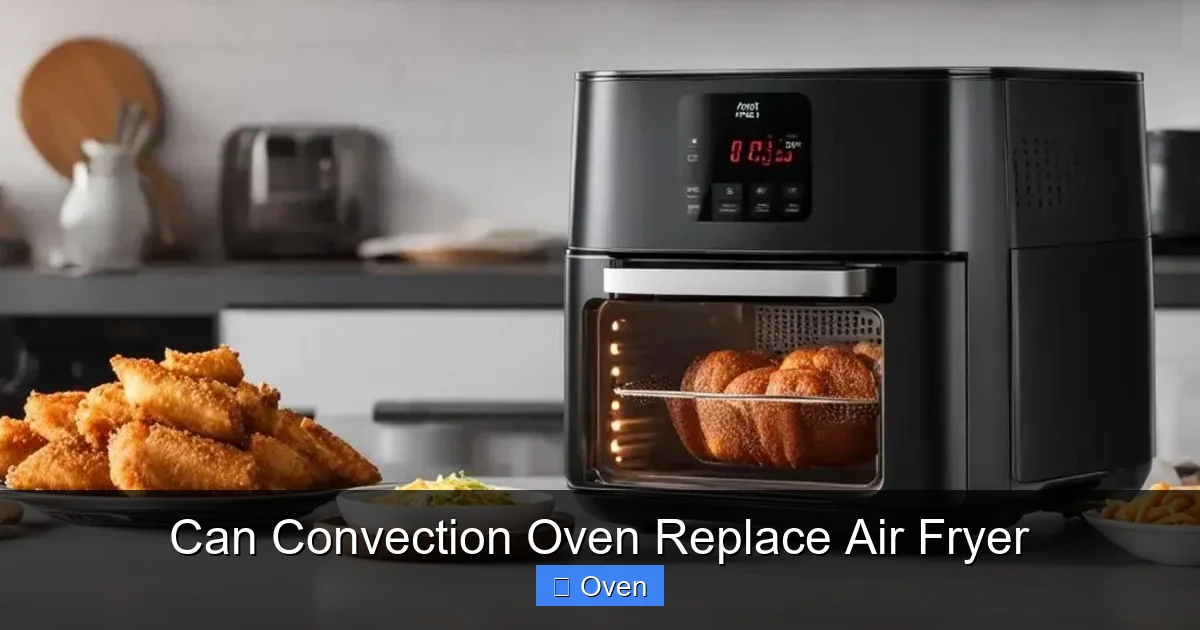
While convection ovens can mimic some air fryer functions, they generally cannot fully replace them for achieving the signature ultra-crispy texture on small batches of food. Convection excels at roasting larger items and baking, but air fryers win for speed, efficiency, and crispness on favorites like fries and wings. Choosing depends on your primary cooking needs and kitchen space.
Key Takeaways
- Convection ovens offer versatility for baking, roasting, and reheating larger quantities, but lack the intense, focused airflow of air fryers for perfect small-batch crispness.
- Air fryers deliver superior crispness and speed for small portions (like fries, wings, or reheated pizza) due to their compact size and powerful, concentrated fan.
- Energy efficiency favors air fryers for small jobs, as they preheat faster and use less power than heating a large convection oven cavity.
- Convection ovens win for capacity and multi-tasking, allowing you to cook large roasts, multiple trays of cookies, or a full meal simultaneously.
- Air fryers are ideal for small households or limited counter space, while convection ovens are better suited for families or those who bake/roast frequently.
- You can adapt convection oven recipes for air frying (and vice versa) with adjustments to time, temperature, and rack position, but results may vary.
- The best choice depends on your specific needs: prioritize air frying for crispy small bites, convection for versatile larger cooking, or consider both if your budget and space allow.
Quick Answers to Common Questions
Can I use my convection oven exactly like an air fryer?
You can adapt recipes, but not exactly. Use the lowest rack, a wire rack on a baking sheet, single layer, light oil spritz, and expect longer cook times. Results for small-batch crispness won’t match an air fryer’s intensity.
Which uses less electricity: convection oven or air fryer?
For small batches (like fries for 2 people), the air fryer wins significantly. It preheats faster and uses less power heating its tiny chamber. For large roasts or baking, the convection oven is more efficient.
Is an air fryer just a small convection oven?
Not quite. While both use convection, the air fryer’s compact size, powerful top-mounted fan, and intense focused airflow create a unique cooking environment optimized for rapid surface dehydration and crispness, unlike a larger convection oven.
Can I bake a cake in an air fryer?
Some smaller cakes or mug cakes work in larger air fryers, but it’s not ideal. The intense top-down heat can cause uneven baking or over-browning. Convection ovens provide the stable, even heat needed for most baking.
Do I really need both if I have a convection oven?
It depends on your needs. If you frequently cook small portions and prioritize ultra-crispy results (fries, wings, reheated pizza), an air fryer is a valuable addition. If you mainly cook large roasts, bake, or roast veggies for families, your convection oven likely suffices.
📑 Table of Contents
- Can Your Convection Oven Actually Replace an Air Fryer? The Honest Kitchen Showdown
- How They Work: The Fan is Just the Beginning
- Performance Face-Off: Crispness, Speed, and Results
- Beyond the Hype: Practical Considerations for Your Kitchen
- When Your Convection Oven *Can* Stand In (and When It Can’t)
- The Verdict: It’s About Your Needs, Not a Universal Replacement
- Conclusion: Match the Tool to the Task
Can Your Convection Oven Actually Replace an Air Fryer? The Honest Kitchen Showdown
Let’s be honest: the kitchen gadget aisle can feel like a never-ending rabbit hole. One minute you’re perfectly content with your trusty oven and stovetop, and the next, you’re scrolling through endless ads for the latest “must-have” appliance promising crispy fries without the oil. Air fryers have exploded in popularity, but if you already own a convection oven, a crucial question pops up: **Can convection oven replace air fryer**? Or are you doomed to double up on counter space and electricity bills?
It’s a smart question. Convection ovens have been around for decades, touted for their faster, more even cooking compared to traditional ovens. Air fryers feel like the shiny new kid on the block, promising deep-fried taste with minimal oil. The overlap seems obvious – both use fans to circulate hot air. So, is the air fryer just a gimmicky mini-convection oven? Or does it offer something truly unique that your full-sized convection oven simply can’t replicate? The answer isn’t a simple yes or no. It depends heavily on *what* you’re cooking, *how much* you’re cooking, and *what result* you’re chasing. Let’s dive deep into the mechanics, performance, and practical realities to settle this kitchen debate once and for all.
Forget the marketing hype for a moment. Understanding *how* each appliance works is the key to figuring out if one can truly step into the other’s shoes. At their core, both convection ovens and air fryers rely on forced hot air circulation. But the similarities often stop there, and the differences are what make the real impact on your food.
How They Work: The Fan is Just the Beginning
Visual guide about Can Convection Oven Replace Air Fryer
Image source: microwaveplaza.com
The Convection Oven: Powerful but Spread Out
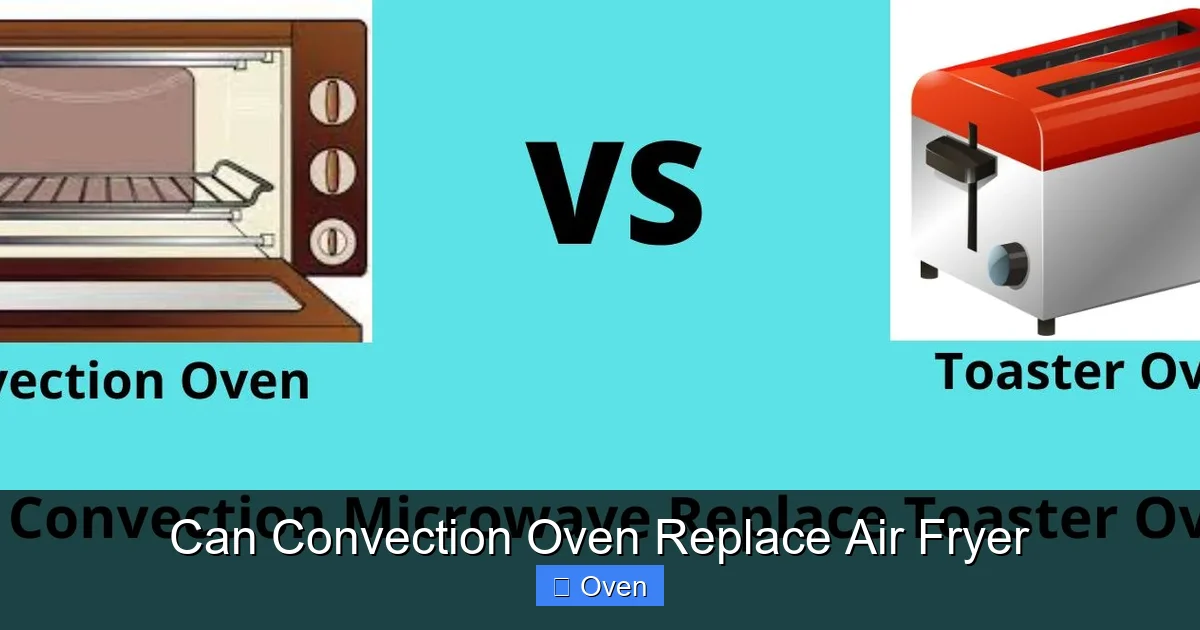
Your standard convection oven is essentially a traditional oven upgraded with a fan and often a dedicated heating element surrounding that fan, usually located at the back of the oven cavity. When you turn on convection mode, this fan kicks in, actively pulling hot air from the heating elements and blasting it *around* the entire oven space. This constant circulation does several important things:
- Eliminates hot and cold spots: No more rotating pans constantly! The moving air ensures more uniform cooking.
- Speeds up cooking: Food generally cooks 25% faster than in a conventional oven because the moving air transfers heat more efficiently to the food’s surface.
- Promotes browning and crisping: The dry, moving air helps evaporate surface moisture faster, leading to better Maillard reaction (that delicious browning) on roasts, casseroles, and baked goods.
Think of it like a gentle, powerful breeze flowing through a large room. It’s effective for heating the whole space evenly, but the force isn’t intensely concentrated on any single point. This makes convection ovens fantastic for:
- Roasting large cuts of meat (whole chickens, turkeys, prime rib)
- Baking multiple trays of cookies or pastries evenly
- Reheating large portions of leftovers without drying them out completely
- Cooking casseroles and baked dishes more consistently
However, because the hot air is distributed across a large cavity (often 30+ liters), the intensity of the airflow hitting your food isn’t as fierce as in a smaller appliance. Preheating also takes longer since you’re heating a big volume of air and the oven walls.
The Air Fryer: Intense, Focused Blast
An air fryer, in its most common countertop form, is a compact, enclosed unit with a powerful fan mounted directly *above* the food basket. Here’s the critical difference: the fan sits very close to the food, and the entire cooking chamber is small (typically 3-6 quarts). When it runs, the fan creates a powerful vortex of super-heated air that circulates *rapidly* and *intensely* around the food.
- Extreme air velocity: The fan moves air much faster and with more force directly onto the food surface than a convection oven fan can achieve in its larger space.
- Small chamber = high heat concentration: Heating a tiny volume of air to high temperatures (often 400°F/200°C+) happens incredibly quickly. The close proximity means that heat hits the food almost instantly.
- Rapid moisture evaporation: This intense, focused blast of hot air strips surface moisture from food incredibly fast. This is the *secret sauce* for achieving that deep-fried-like crispness with minimal oil.
Imagine standing directly in front of a powerful hairdryer on the hottest setting – that’s the effect the air fryer has on your food, but contained and controlled. This design is laser-focused on one primary task: creating ultra-crispy exteriors on relatively small portions of food very quickly. It’s less about gentle, even baking and more about aggressive surface dehydration and browning.
Performance Face-Off: Crispness, Speed, and Results
Visual guide about Can Convection Oven Replace Air Fryer
Image source: m.media-amazon.com
So, how do these different approaches translate to actual food on your plate? Let’s put them head-to-head on the tasks people most often use air fryers for.
The Crispness Challenge: Fries, Wings, and Reheated Pizza
This is where the air fryer typically shines and the convection oven often falls short, especially for small batches.
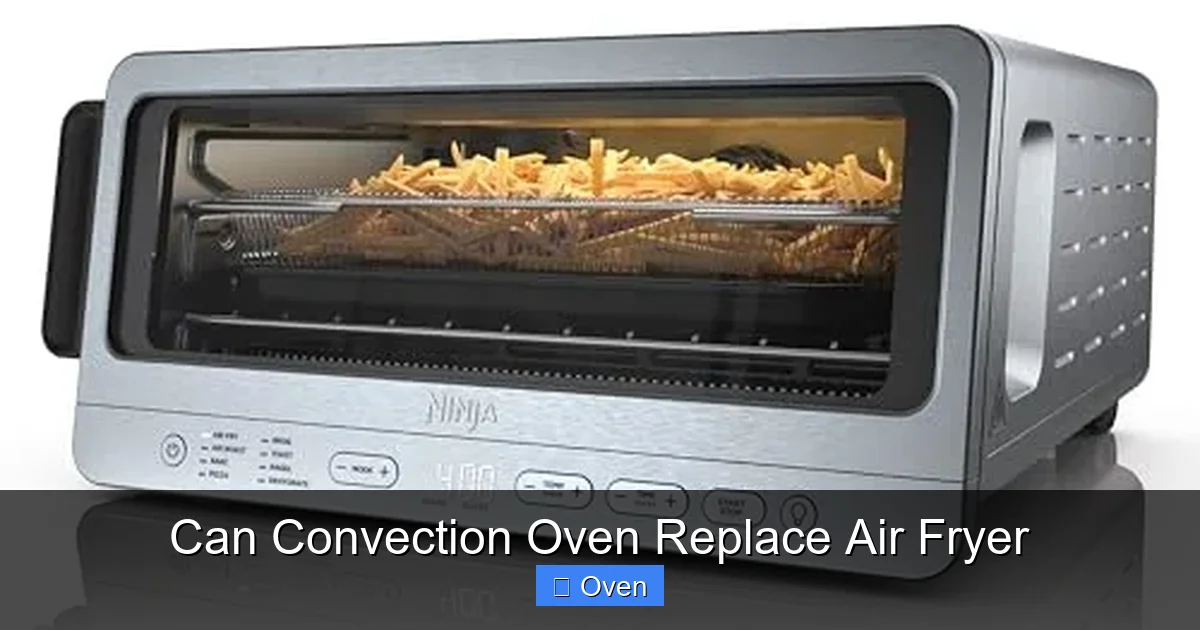
- Air Fryer: Toss some frozen french fries in a *tiny* bit of oil (or even just spray them), pop them in the basket, and in 12-15 minutes, you get fries with a shatteringly crisp exterior and fluffy interior. Chicken wings emerge with skin that’s crackly and golden, not soggy. Reheated pizza? The crust gets revitalized, crisping up beautifully without the topping getting dried out. The intense, focused airflow is key here – it rapidly removes the surface moisture that causes sogginess, creating that coveted crunch.
- Convection Oven: You *can* get crispy results in a convection oven, but it’s usually a compromise for small portions. Fries might take 20-25 minutes and can end up drier overall or less uniformly crispy, especially if spread too thin on a large baking sheet where air circulation isn’t as concentrated. Wings might cook through but lack that intense, even crackle; the skin can sometimes steam in spots if not perfectly spaced. Reheated pizza often ends up with a tougher, less appealing crust. The larger cavity means the hot air isn’t as aggressively focused on the small surface area of your fries or wings, leading to slower moisture removal and potentially less dramatic crispness.
Practical Tip: If you *must* use your convection oven for air-fryer-like tasks, use the *lowest* rack position (closest to the fan), ensure food is in a *single layer* with space between pieces (use a wire rack on a baking sheet for even better airflow underneath), and don’t overcrowd the oven. You might need to spritz food lightly with oil and expect slightly longer cook times. But honestly? For that perfect air-fryer crisp on a small batch, the convection oven often just can’t match the intensity.
Speed and Energy: The Small Batch Advantage
Time is precious, especially on weeknights. Here’s how they compare for typical “air fryer” jobs:
- Air Fryer: Wins hands-down for speed on small portions. Preheating takes 2-5 minutes. Cooking frozen fries? 12-15 minutes. A single serving of mozzarella sticks? 8-10 minutes. It heats the tiny chamber almost instantly and cooks rapidly due to the intense heat transfer.
- Convection Oven: Preheating a large convection oven cavity takes significantly longer – often 10-15 minutes or more. Cooking that same small batch of fries takes longer (20-25 mins) *and* you’re heating a massive amount of air and metal just to cook a handful of food. This translates to higher energy consumption for these small tasks.
Real-World Example: Need to quickly crisp up 4 chicken tenders for a snack while your main dish roasts in the convection oven? Firing up the air fryer for 10 minutes uses far less energy and gets the job done faster than preheating the whole convection oven cavity just for the tenders. If you’re cooking a large roast *and* want crispy potatoes simultaneously, the convection oven is perfect. But for solo crispy snacks? The air fryer is the efficiency king.
Capacity and Versatility: When Convection Takes the Crown
This is where the convection oven absolutely dominates and the air fryer simply cannot compete.
- Convection Oven: This is its superpower. Need to roast a 12-pound turkey? Bake a double batch of holiday cookies? Cook a casserole for 8 people? Reheat a large lasagna? A convection oven handles large volumes and multiple dishes simultaneously with ease. Its versatility extends far beyond “frying” – it’s your go-to for baking bread, roasting vegetables for a crowd, making pizza (on a stone!), slow-roasting meats, and even dehydrating. It’s the workhorse of the oven world.
- Air Fryer: Its compact size is its biggest limitation for anything beyond 1-4 servings. Trying to cook a whole chicken? Impossible in most models. Baking a cake? Not really feasible. Roasting a large tray of vegetables for a family dinner? You’ll need multiple batches, defeating the purpose of speed. While some larger models exist (8+ quarts), they still lack the true multi-rack capacity and consistent baking environment of a full convection oven.
Practical Tip: If your primary cooking involves feeding a family, baking regularly, or preparing large roasts, a convection oven isn’t just sufficient – it’s essential. An air fryer simply can’t replace that core functionality. The question of “can convection oven replace air fryer” becomes almost irrelevant here because the convection oven is doing fundamentally different, larger-scale tasks.
Beyond the Hype: Practical Considerations for Your Kitchen
Visual guide about Can Convection Oven Replace Air Fryer
Image source: i.ytimg.com
Performance is crucial, but real life involves other factors. Let’s look at the practicalities that might sway your decision.
Space, Cost, and Counter Real Estate
- Convection Oven: This is usually your built-in or freestanding range/oven, taking up permanent floor or cabinet space. You likely already have one. The “cost” is sunk into your existing appliance. No extra counter space needed beyond what your oven occupies.
- Air Fryer: Requires dedicated counter space (or cabinet storage when not in use). Prices range from budget-friendly ($50-$80) to premium models ($150+). While not exorbitant, it’s an additional expense. For small kitchens or limited counter space, this is a significant consideration. Can you *fit* it comfortably alongside your other essentials?
The Verdict: If counter space is at a premium and you already have a convection oven, adding an air fryer might feel like clutter. However, if you have the space and the budget, the air fryer’s specialized performance for small, crispy tasks can be worth the footprint.
Ease of Use and Cleanup
- Convection Oven: Cleaning a large oven cavity (especially if grease splatters during roasting) can be a chore. Racks and baking sheets need washing. Using convection mode is usually just a button press, but managing multiple dishes requires more attention.
- Air Fryer: Generally easier and faster to clean. Most baskets and trays are non-stick and dishwasher safe (check your manual!). The small size means less surface area to wipe down. Operation is typically very simple – set time and temp, press start. Less mess from splatters due to the enclosed basket.
Practical Tip: Line your air fryer basket with parchment paper (with holes for airflow) or use silicone mats designed for air fryers to make cleanup nearly effortless for messy foods like battered items or saucy wings. For convection ovens, using disposable aluminum pans for roasting can simplify cleanup significantly.
Health and Oil Usage: Not as Different as You Might Think
Both appliances promote healthier cooking compared to deep frying by using significantly less oil. However, the *amount* needed differs:
- Air Fryer: Often requires only a light spritz or toss with 1/2 to 1 teaspoon of oil per serving for optimal crispness, especially on foods that aren’t naturally fatty (like fries or veggies).
- Convection Oven: May require a bit more oil (1-2 teaspoons) spread over a larger surface area (like a baking sheet) to achieve similar browning and prevent drying out, particularly for leaner foods. The larger cavity can sometimes lead to slightly drier results if oil isn’t used adequately.
The Bottom Line: Both are excellent tools for reducing oil consumption. The air fryer’s efficiency often means you use *less* oil overall for small batches because the intense heat achieves crispness faster with minimal lubrication. Neither is inherently “healthier” – it’s about using less oil than deep frying, and both excel at that.
When Your Convection Oven *Can* Stand In (and When It Can’t)
It’s not all or nothing. There are scenarios where your convection oven does a perfectly adequate job, blurring the lines:
Good Candidates for Convection Oven “Air Frying”
- Roasting Large Quantities of Vegetables: Toss broccoli, cauliflower, Brussels sprouts, or potatoes with oil, salt, and spices. Spread in a *single layer* on a baking sheet (use a wire rack for even better results). Roast on the convection setting at 400-425°F (200-220°C). You’ll get beautifully caramelized, tender-crisp veggies. While maybe not *quite* as intensely crispy as an air fryer on a small batch, it’s excellent for feeding a crowd.
- Reheating Large Portions of Leftovers: Got a big dish of pasta, casserole, or fried rice? Spread it evenly in an oven-safe dish, cover loosely with foil for the first part of reheating, then uncover to crisp the top if desired. Convection reheats more evenly than a microwave and can restore some texture better than a stovetop pan for large amounts.
- Cooking Larger Cuts of Meat with Crispy Skin: Think whole chicken, duck, or pork belly. Convection is fantastic for rendering fat and crisping skin evenly on larger roasts. Pat the skin *very* dry, score it, and roast on convection. You’ll get superb results, though the process takes longer than air frying smaller pieces.
- Baking Certain Items: Cookies, pastries, and even some quick breads often benefit from convection’s even heat and slight drying effect, leading to better spread and browning. Just remember to reduce the temp by 25°F (15°C) from the conventional recipe as convection cooks faster.
Where the Air Fryer is Truly Irreplaceable
- Ultra-Crispy Small Batches: Frozen french fries, tater tots, mozzarella sticks, or chicken nuggets for 1-2 people. The air fryer delivers that addictive, shatteringly crisp texture consistently and quickly. Convection often results in drier or less uniformly crispy outcomes for these specific items in small quantities.
- Reviving Leftover Pizza: That single slice of pizza? The air fryer brings back a crisp, almost fresh-baked crust in minutes. The convection oven usually makes it tough or leathery.
- Cooking Small, Delicate Items: Things like stuffed mushrooms, jalapeño poppers, or small portions of fish benefit from the air fryer’s precise, intense heat without overcooking. The convection oven’s larger cavity makes it harder to control the environment for these.
- Speed for Solo Cooking: Need a quick, crispy snack or side *right now* while your main dish is already in the convection oven? The air fryer is your instant solution. Firing up the convection oven just for this would be inefficient.
Pro Adaptation Tip: If you’re determined to use convection for air-fryer tasks, treat it like a mini-oven:
- Use the lowest rack position (closest to the fan).
- Always use a wire rack set inside a baking sheet – this allows hot air to circulate *underneath* the food, crucial for even crispness.
- Don’t overcrowd! Leave space between pieces. Cook in batches if needed.
- Spritz lightly with oil for better browning and crispness.
- Expect longer cook times (add 25-50% time) and potentially slightly lower temps (reduce by 25°F/15°C) compared to air fryer instructions.
- Check frequently towards the end, as convection can sometimes cook faster than expected once it’s fully preheated.
But be prepared: the results, while good, might not hit that air-fryer “wow” factor every time.
The Verdict: It’s About Your Needs, Not a Universal Replacement
So, circling back to the burning question: **Can convection oven replace air fryer**? The most honest answer is: **It depends entirely on what you cook and how you cook.**
Choose the Convection Oven If…
- You primarily cook for a family or larger groups.
- Baking, roasting large cuts of meat, or cooking casseroles are your main oven activities.
- You value versatility and capacity above ultra-crispy small-batch results.
- Counter space is extremely limited, and you’re not willing to add another appliance.
- You’re happy adapting recipes and accepting that small-batch “air frying” might be slightly less perfect (but still very good).
Your convection oven is a powerhouse for the big jobs. It *can* handle many tasks people use air fryers for, especially with the right techniques (wire rack, single layer, lower rack). But it won’t magically transform into a device that replicates the *specific*, intense crispness of an air fryer on a single serving of fries.
Choose the Air Fryer If…
- You live alone, have a small household, or frequently cook just for 1-2 people.
- Achieving that deep-fried-like crispness on small portions (fries, wings, reheated pizza, snacks) is a top priority.
- Speed for small tasks and energy efficiency for those tasks matter to you.
- You have the counter space (or storage space) and budget for an additional appliance.
- You want the easiest possible cleanup for messy, crispy foods.
The air fryer isn’t a replacement for your convection oven’s core functions. It’s a specialized tool that excels at a specific niche: small-batch, ultra-crispy cooking with incredible speed and efficiency. It fills a gap that the convection oven, despite its strengths, simply isn’t designed to fill perfectly.
The Ideal Scenario? Having Both (If You Can)
For many home cooks, the dream kitchen includes both:
- Use the convection oven for your main roasting, baking, and large-batch cooking.
- Use the air fryer for quick crispy sides, reheating leftovers to perfection, cooking small portions of frozen appetizers, or adding that final crisp to items started in the oven.
They complement each other beautifully. The convection oven handles the heavy lifting, while the air fryer takes care of the speedy, crispy finishing touches and small-batch tasks. If your budget and counter space allow, this combination offers the ultimate flexibility and best results across the widest range of cooking scenarios.
Conclusion: Match the Tool to the Task
The quest to answer “can convection oven replace air fryer” reveals a fundamental truth about kitchen appliances: they are tools, each designed with specific strengths. Your convection oven is a versatile workhorse, capable of handling everything from a Sunday roast to a batch of cookies with impressive efficiency thanks to its fan. It *can* produce crispy results, especially for larger quantities or adapted recipes, making it a capable stand-in for *some* air fryer tasks.
However, the air fryer’s genius lies in its compact, high-intensity design. It delivers a level of crispness, speed, and energy efficiency for small batches that a full-sized convection oven struggles to match consistently. It’s not a gimmick; it solves a specific problem (perfect small-batch crispness) exceptionally well.
Don’t ask if one replaces the other. Ask what you need to cook most often. If your life revolves around feeding a family with roasts and bakes, your convection oven is irreplaceable, and an air fryer might feel like an unnecessary extra. If you’re often cooking for one or two and crave that addictive crispy texture on quick snacks and sides, the air fryer is a game-changer that your convection oven simply can’t replicate with the same ease and results.
The smartest approach is to understand the unique superpowers of each. Leverage your convection oven for its unparalleled capacity and versatility. Embrace the air fryer for its unmatched speed and crispness on small portions. If you can afford both, you’ll have a kitchen arsenal ready for anything. If you must choose one, let your most frequent cooking habits guide you. After all, the best appliance is the one that makes *your* cooking easier, more enjoyable, and consistently delicious. Stop wondering if one replaces the other, and start using the right tool for the delicious job at hand.
Frequently Asked Questions
Can a convection oven make food as crispy as an air fryer?
For larger quantities or certain foods (like roasted vegetables), convection ovens can achieve excellent crispness. However, for small batches of items like french fries or chicken wings, air fryers consistently deliver a shatteringly crisp exterior due to their intense, focused airflow that convection ovens can’t replicate in their larger cavity.
Is it worth buying an air fryer if I already have a convection oven?
It’s worth it if you regularly cook small portions (1-4 servings) and prioritize speed and ultra-crispy results for foods like fries, wings, or reheated pizza. If you mainly cook large roasts, bake, or feed a family, your convection oven likely covers your needs, and the air fryer might not justify the counter space.
Can I air fry in a convection oven?
You can adapt air fryer recipes for a convection oven by using the lowest rack position, a wire rack on a baking sheet, ensuring single-layer cooking with space between pieces, lightly oiling food, and increasing cook time by 25-50%. However, expect slightly less intense crispness and longer cooking times compared to a dedicated air fryer.
Which is better for health: convection oven or air fryer?
Both are significantly healthier than deep frying as they require minimal oil. Air fryers often use slightly less oil for small batches due to their efficiency, but the difference is marginal. The health benefit comes from drastically reducing oil consumption compared to traditional frying methods, which both appliances achieve effectively.
Do air fryers cook faster than convection ovens?
For small batches of food, yes, air fryers cook much faster. They preheat in 2-5 minutes and cook items like fries in 12-15 minutes. Convection ovens take 10-15+ minutes to preheat and cook the same small batch in 20-25 minutes. For large roasts or baking, convection ovens are faster than conventional ovens but not necessarily faster than air fryers for their intended small tasks.
Can I use metal pans in an air fryer?
Yes, you can use oven-safe metal pans (like small cake pans or loaf pans) in most air fryers, as long as they fit comfortably with space for air circulation around the sides and don’t block the fan at the top. Always check your specific model’s manual for size restrictions and avoid pans that are too tall.