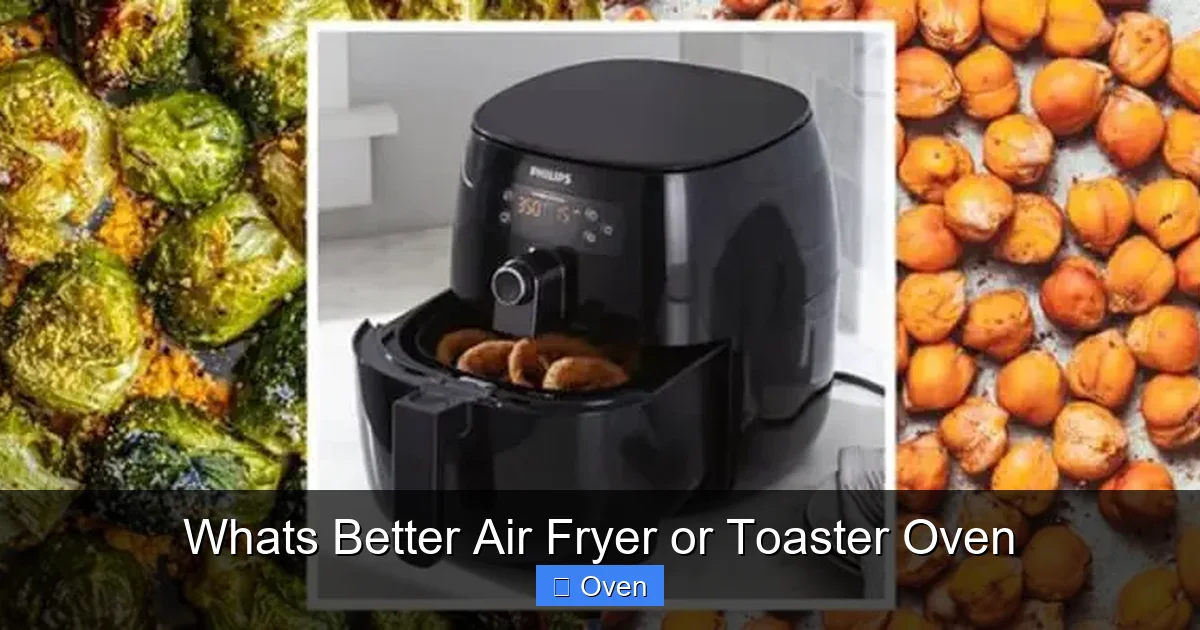
Choosing between an air fryer and toaster oven depends entirely on your cooking habits and kitchen space. Air fryers excel at rapid crisping and small-batch frying with less oil, while toaster ovens offer superior versatility for baking, roasting, and larger meals. For most home cooks, the toaster oven’s broader functionality makes it the smarter primary appliance, but air fryers are unbeatable for specific crispy tasks.
Key Takeaways
- Speed & Crisping: Air fryers win for speed and achieving ultra-crispy textures (like fries or wings) using minimal oil, thanks to intense, focused convection.
- Capacity & Versatility: Toaster ovens generally have larger cavities and handle diverse tasks (baking, roasting, broiling, toasting) better, making them more versatile for everyday cooking.
- Counter Space: Air fryers are typically more compact, ideal for small kitchens, while larger toaster ovens need significant real estate.
- Health Factor: Both promote healthier cooking than deep frying, but air fryers often require even less oil for similar crispy results.
- Best for Reheating: Air fryers revitalize leftovers (pizza, fries) faster and crispier than toaster ovens, which can dry them out.
- Ease of Use: Toaster ovens usually have simpler controls and more intuitive cooking modes for beginners.
- The Verdict: Get a toaster oven for all-around versatility; add an air fryer if you crave frequent ultra-crispy small-batch foods and have the space.
Quick Answers to Common Questions
Can I put aluminum foil in an air fryer?
Yes, but with caution. Use heavy-duty foil and ensure it doesn’t block the airflow vents or touch the heating element. Avoid covering the entire basket bottom, as this prevents proper circulation and can cause uneven cooking or even fire hazards. It’s generally safer to use the provided basket or parchment paper designed for air fryers.
Which appliance uses less electricity?
For very small batches (like 1-2 servings of fries), air fryers are often slightly more energy-efficient due to their speed and smaller cavity. For larger meals, the difference is minimal. Both are significantly more efficient than heating a full-sized oven for small tasks.
Can I bake a cake in an air fryer?
It’s possible but challenging. Air fryers can bake small cakes or muffins, but their intense airflow often causes uneven rising, dryness, or collapsed centers. You’ll need to significantly reduce baking time and temperature, and use a smaller pan. A toaster oven is far more reliable for consistent baking results.
Do air fryers make food taste like it’s deep-fried?
They create a remarkably similar *crispy texture* with far less oil, but the flavor profile isn’t identical. Deep frying imparts unique flavors from the oil itself. Air frying gives a cleaner, often slightly drier (on the surface) crispness. For texture replication with less fat, air fryers excel; for authentic deep-fried flavor, nothing beats the real thing.
Is a toaster oven with air fry function as good as a dedicated air fryer?
For most home cooking needs (1-4 servings), a high-quality toaster oven with a true air fry mode (strong wattage, powerful fan) performs very well, often matching dedicated air fryers. It may be slightly slower for massive batches, but its versatility makes it the superior single-appliance choice for most kitchens.
📑 Table of Contents
- Staring at Your Countertop? The Great Air Fryer vs. Toaster Oven Dilemma
- How They Work: The Science Behind the Sizzle
- Cooking Performance Showdown: Crisp, Bake, Reheat & More
- Space, Size & Practicality: Counter Real Estate Matters
- Health, Nutrition & Cooking Style: Beyond the Hype
- Cost, Value & Long-Term Investment
- Making Your Decision: Which One is YOUR Kitchen Hero?
- Conclusion: Your Kitchen, Your Rules
Staring at Your Countertop? The Great Air Fryer vs. Toaster Oven Dilemma
So, you’re standing in the kitchen, maybe after another disappointing batch of soggy frozen fries or a pizza that just won’t crisp up properly. You’ve heard the buzz: air fryers are magic, toaster ovens are versatile workhorses. But which one deserves precious counter space in *your* kitchen? It’s a question plaguing home cooks everywhere, and the answer isn’t a simple “one is better.” It’s about *your* needs, *your* cooking style, and *your* available space. Forget the hype – let’s cut through the noise and figure out which appliance truly earns its spot on your counter.
Both the air fryer and the toaster oven are countertop convection champions, but they achieve their goals in subtly different ways. Understanding this core difference is key. Think of the toaster oven as a mini conventional oven – it heats the air *inside* the cavity, which then cooks your food. The air fryer, however, takes convection to an extreme. It uses a powerful fan to blast *superheated* air *directly* onto the food at high speed, creating that signature intense crispness incredibly fast. This fundamental difference in how they move and apply heat shapes everything else: speed, texture, capacity, and best uses. It’s not about which technology is superior, but which one aligns with *your* most common cooking challenges.
How They Work: The Science Behind the Sizzle
The Toaster Oven: Your Mini Conventional Oven
A toaster oven is essentially a scaled-down version of your full-sized oven, packing heating elements (usually top and bottom) and a fan for convection (though not all models have convection). When you turn it on, the elements heat up, warming the air inside the cavity. This hot air circulates, cooking food from the outside in, similar to a traditional oven but on a much smaller scale. The convection fan, if present, helps move this hot air more efficiently, leading to faster, more even cooking and better browning than a non-convection model. It’s designed to mimic the broad functionality of your main oven – baking cookies, roasting a chicken breast, toasting bread, broiling fish – just in a compact package. Think of it as your oven’s versatile little sibling.
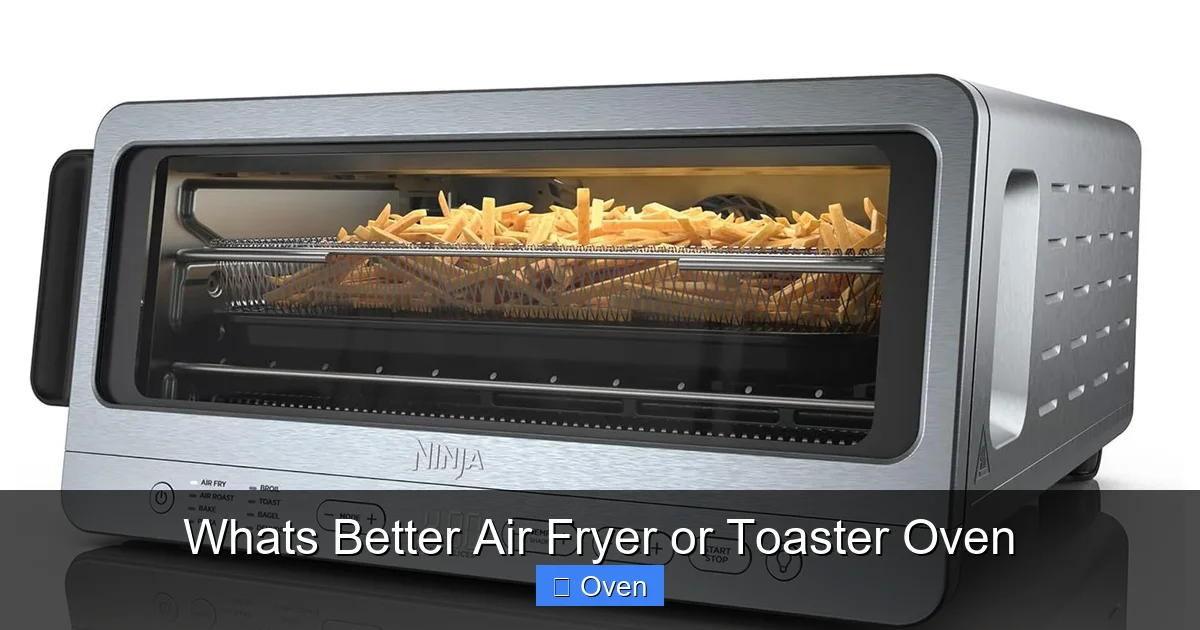
Visual guide about Whats Better Air Fryer or Toaster Oven
Image source: foodandwine.com
The Air Fryer: Turbocharged Convection for Maximum Crisp
An air fryer operates on a principle of intense, rapid convection. It features a powerful heating element (usually located near the top) and a large, high-speed fan directly above the food basket. This fan forcefully circulates the superheated air *downwards* onto the food at high velocity. This concentrated blast of hot air rapidly dehydrates the surface of the food, creating that coveted crispy, fried-like texture incredibly quickly – often in half the time of a conventional oven or toaster oven. The key difference is the *intensity* and *direction* of the airflow. While a toaster oven gently circulates hot air, the air fryer aggressively targets the food surface. This is why it excels at replicating the crispness of deep-frying with minimal oil, but it’s less ideal for tasks requiring gentle, even heat throughout, like baking a delicate cake.
Why the Difference Matters for Your Cooking
Understanding this core mechanism explains their strengths and weaknesses. The toaster oven’s broader, gentler convection is perfect for tasks needing even heat distribution over a larger area or for longer durations (roasting veggies, baking a small casserole). The air fryer’s focused, high-velocity blast is unmatched for quickly crisping the *surface* of foods, especially those with a high moisture content like frozen fries, chicken wings, or reheated pizza. If your primary goal is achieving deep-fried texture without the oil and time, the air fryer’s method is superior. If you need to bake a batch of muffins or slowly roast a large cut of meat, the toaster oven’s approach is more suitable. It’s about matching the tool to the specific thermal task.
Cooking Performance Showdown: Crisp, Bake, Reheat & More
The Crisp Factor: Who Reigns Supreme?
This is the air fryer’s undisputed kingdom. Need perfectly crisp french fries from the freezer in under 15 minutes? Crispy chicken wings with a fraction of the oil? Reviving day-old pizza so the crust is shatteringly crisp and the cheese is bubbly? The air fryer delivers consistently superior results here. Its intense, direct airflow rapidly removes surface moisture, creating that fried-food texture we crave. A toaster oven *can* crisp things, but it generally takes longer and often requires more oil or a higher temperature to achieve a similar level of crispness, sometimes drying out the food in the process. For the ultimate “fried” taste and texture with minimal fuss and fat, the air fryer is the clear winner.
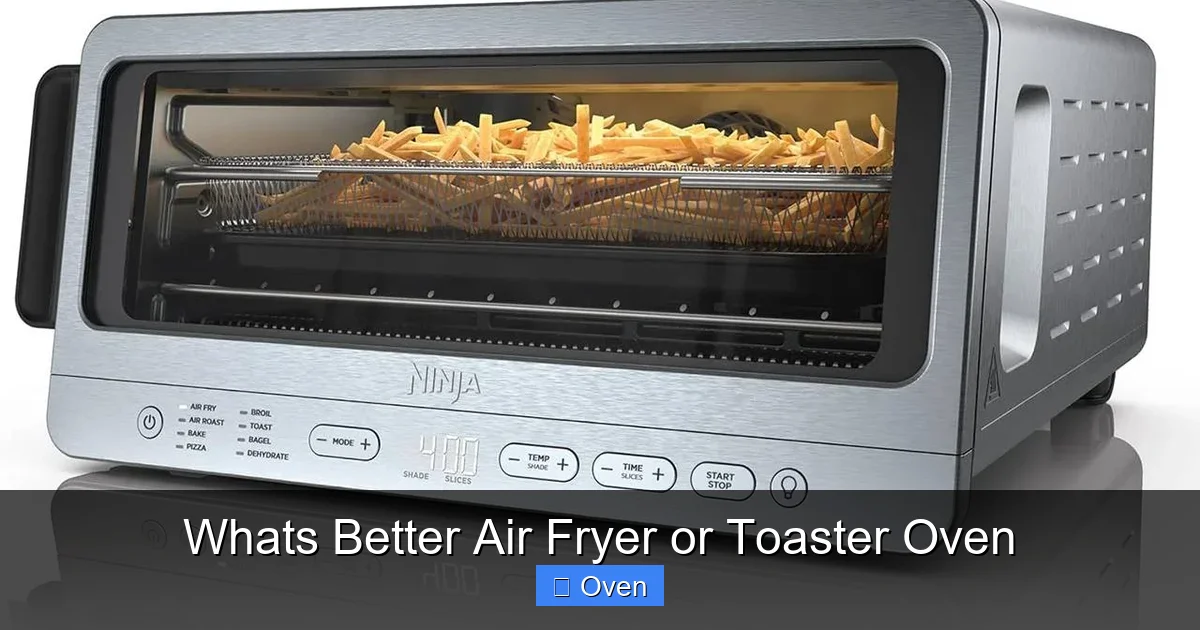
Visual guide about Whats Better Air Fryer or Toaster Oven
Image source: featurelens.com
Baking & Roasting: The Toaster Oven’s Domain
When it comes to baking cookies, small cakes, or roasting a whole chicken, vegetables, or a casserole, the toaster oven shines. Its larger cavity (compared to most air fryers) accommodates standard baking sheets and roasting pans. The gentler, more even convection heat ensures food cooks thoroughly from the inside out without burning the exterior. Baking a delicate soufflé or a batch of evenly browned cookies requires stable, consistent heat – something the air fryer’s intense, turbulent airflow often disrupts, leading to uneven cooking or collapsed baked goods. While some air fryers have baking functions, they are generally less reliable and require significant recipe adjustments. For reliable baking and roasting, the toaster oven is the go-to.
Reheating Leftovers: Air Fryer’s Secret Weapon
Forgot to finish your pizza? Got soggy fried chicken from last night’s takeout? The air fryer is a leftovers magician. Its rapid, intense heat crisps up pizza crust, revives french fries, and reheats fried foods far better than a microwave (which makes things soggy) or even a toaster oven (which can dry them out). In just 3-5 minutes, you can transform limp leftovers into something that tastes freshly cooked. The toaster oven *can* reheat, but it’s slower and less effective at restoring crispness. If you frequently deal with leftovers, the air fryer is a game-changer.
Toasting & Broiling: Toaster Oven’s Namesake Strengths
Let’s be honest: toaster ovens earned their name for a reason. They toast bread, bagels, and English muffins perfectly, with adjustable browning settings and slots designed specifically for bread. While some air fryers have a “toast” setting, it’s often an afterthought and less effective. Similarly, broiling – cooking with direct top heat for melting cheese or browning tops – is a standard feature on most toaster ovens with a dedicated broil element. Air fryers lack this specific function; their top heating element is primarily for convection, not direct radiant broiling. For reliable toasting and broiling, the toaster oven is unmatched.
Real-World Examples: Putting Them to the Test
Imagine making a weeknight dinner. For crispy salmon skin or quick roasted Brussels sprouts with a caramelized edge, the air fryer gets them done in 10-12 minutes, perfectly crisp. For baking a small lasagna or roasting a whole chicken for Sunday dinner, the toaster oven provides the necessary space and even heat. Need to reheat last night’s fried rice without making it mushy? The air fryer brings back texture in minutes. Want to toast garlic bread for your pasta? The toaster oven handles it effortlessly. Understanding these specific scenarios helps pinpoint which tool fits your regular menu.
Space, Size & Practicality: Counter Real Estate Matters
Footprint & Counter Space: The Compact Contender
If counter space is at a premium (and let’s be honest, for most of us, it is), the air fryer often has a significant advantage. Most standard air fryers (3-5 quart capacity) have a smaller overall footprint than comparable toaster ovens. They tend to be taller and narrower, fitting into tighter spots. Larger toaster ovens (12-18L capacity), while more versatile, can be substantial counter hogs. Measure your available space! An air fryer might slip neatly beside your coffee maker, while a large toaster oven might require its own dedicated zone. For tiny kitchens, studios, or RVs, the air fryer’s compactness is a major plus.
Cavity Capacity: How Much Can You Actually Cook?
This is where the toaster oven typically pulls ahead. While air fryers are great for 1-2 servings of crispy items, their baskets are often awkwardly shaped and limit what you can cook at once. Trying to roast a large batch of vegetables or bake a 9×13 pan of brownies? Good luck fitting it in most air fryers. Toaster ovens, especially larger models (12L+), accommodate standard baking sheets, 9×13 pans, and even small roasting chickens. If you regularly cook for a family, entertain, or like to batch-cook, the toaster oven’s larger, more usable cavity is a crucial advantage. An air fryer is fantastic for singles, couples, or small portions.
Ease of Cleaning: Basket vs. Interior
Cleaning is a practical consideration often overlooked. Air fryers typically have a non-stick basket and crisper tray that are dishwasher safe (check your manual!), making cleanup for greasy foods like fries relatively easy. However, grease can splatter onto the interior walls and heating element, requiring occasional wiping. Toaster ovens usually have a removable crumb tray and interior surfaces that are easy to wipe down, but baked-on grease or food splatters inside the cavity can be trickier to clean, especially around the heating elements. Both require regular cleaning, but the air fryer’s removable basket often makes post-fry cleanup slightly simpler.
Energy Efficiency: Smaller Batch, Smaller Bill?
Both appliances are generally more energy-efficient than heating a full-sized oven for small tasks. However, the air fryer often has a slight edge here due to its speed and smaller cavity. Because it heats up incredibly fast and cooks food much quicker, the total energy used for a single serving of fries or wings is often less than using a toaster oven for the same task. For very small batches, the air fryer wins on efficiency. For larger meals where the toaster oven runs longer but handles more food at once, the difference might be negligible. Both are smart choices for energy-conscious cooking compared to the big oven.
Health, Nutrition & Cooking Style: Beyond the Hype
The “Healthier” Claim: Oil Reduction is Key
Both appliances promote healthier cooking compared to deep frying, primarily by drastically reducing the amount of oil needed. The air fryer often takes this a step further for crispy foods. Achieving that fried texture in a deep fryer requires submerging food in several cups of oil. In an air fryer, you typically need just a light spritz or teaspoon of oil for similar results. A toaster oven might require a bit more oil to prevent drying out and achieve browning, especially for items like fries. While neither is a “health food” maker per se, both significantly cut fat and calories compared to traditional frying methods. The air fryer generally has the edge for *minimal* oil usage on crispy items.
Cooking Techniques & Dietary Needs
Your preferred cooking style heavily influences which is better. If your diet revolves around lots of roasted vegetables, baked proteins, or casseroles, the toaster oven’s versatility is ideal. If you love crispy snacks, fried chicken alternatives, or frequently reheat leftovers, the air fryer is indispensable. For gluten-free or low-carb diets focusing on roasted meats and veggies, the toaster oven handles larger portions well. For keto diets emphasizing crispy proteins and low-carb “fries” (like zucchini sticks), the air fryer is a superstar. Consider what you actually eat most often.
Texture & Flavor Nuances
It’s not just about health; it’s about taste and texture. The air fryer’s intense heat can sometimes lead to slightly drier results on the *interior* of foods if not monitored closely, as it focuses on surface dehydration. The toaster oven’s gentler convection often yields more evenly moist results for baked goods or roasted meats. However, for foods where a dry interior is acceptable or desired (like certain roasted veggies or crispy skin), the air fryer excels. Flavor development can also differ; the slower roast in a toaster oven might allow for more complex caramelization in some cases, while the air fryer’s speed preserves freshness but might lack deep Maillard reaction development.
Cost, Value & Long-Term Investment
Initial Purchase Price: Budget Considerations
Generally, you can find excellent entry-level air fryers starting around $50-$70. Basic toaster ovens (without convection) can be found similarly priced. However, for comparable *functionality* (i.e., a convection toaster oven with decent capacity), prices often start around $80-$100 and can easily climb to $150-$250+ for larger, feature-rich models (like those with air fry functions). High-end air fryers with large capacities or multiple baskets can also reach $150-$200. So, for a basic crisping task, an air fryer might be cheaper. For a versatile appliance that replaces multiple functions (toaster, oven, broiler), a good convection toaster oven often represents better overall value for the price.
Long-Term Value & Replacement Costs
Consider durability and potential replacement. Both appliances have similar lifespans (typically 3-7 years with regular use), depending heavily on build quality and usage. However, the toaster oven’s broader utility means you’re less likely to *need* to replace it for core functions – it handles more of your daily cooking needs. If you only buy an air fryer and find you still need to use your main oven constantly for baking and roasting, you might end up buying a toaster oven later anyway, doubling your investment. A good convection toaster oven often serves as a more complete countertop solution long-term, potentially saving money by avoiding a second purchase.
The Hybrid Option: Toaster Ovens with Air Fry Functions
This is a game-changer for many! Many modern toaster ovens now include a dedicated “Air Fry” setting or even a separate air fry basket. These models attempt to bridge the gap, offering the versatility of a toaster oven *plus* the intense convection of an air fryer in one unit. While they might not match a *dedicated* large-capacity air fryer for pure speed on massive batches of fries, they are incredibly effective for most home cooking needs. If counter space is limited but you want both functionalities, a high-quality toaster oven with a true air fry mode (look for strong wattage and a powerful fan) is often the smartest single-appliance investment. It eliminates the need to choose!
Making Your Decision: Which One is YOUR Kitchen Hero?
Choose an Air Fryer If…
- Your top priority is ultra-fast, ultra-crispy results (fries, wings, reheated pizza) with minimal oil.
- You primarily cook for 1-2 people and need small-batch cooking.
- Counter space is extremely limited – you need the most compact option.
- You frequently reheat leftovers and want them to taste freshly cooked.
- You don’t need to bake, roast large items, or toast bread regularly.
Think of the air fryer as your specialist for crispy, quick tasks. It’s not a replacement for an oven, but a fantastic supplement for specific cravings.
Choose a Toaster Oven If…
- You want one versatile appliance that can toast, bake, roast, broil, and reheat.
- You cook for a family or larger portions regularly.
- You bake cookies, small cakes, or casseroles often.
- You need to roast a whole chicken or large batch of veggies.
- You value simplicity and intuitive controls for everyday cooking.
The toaster oven is the workhorse. It handles the widest range of everyday cooking tasks reliably, making it the more practical primary countertop oven for most households.
The Winning Strategy: Why You Might Need Both (or a Hybrid!)
Here’s the truth many discover: the *best* solution isn’t always choosing one over the other. For many home cooks, especially those with the counter space, **owning both is ideal**. Use the toaster oven for your daily baking, roasting, and toasting needs. Keep the air fryer handy for those moments when only lightning-fast, shatteringly crisp results will do – like a last-minute batch of crispy tater tots or reviving takeout. However, if space or budget is tight, **prioritize the convection toaster oven, ideally one with a true air fry function.** This single appliance covers 90% of the use cases of both devices, offering incredible value and versatility. It solves the core dilemma for most people.
Conclusion: Your Kitchen, Your Rules
So, what’s better: air fryer or toaster oven? The unsatisfying but utterly true answer is: it depends entirely on *you*. There is no universal champion. The air fryer is a phenomenal specialist, delivering unbeatable speed and crispness for specific foods with minimal oil, perfect for small households and crisp-obsessed cooks. The toaster oven is the versatile generalist, handling a vast array of cooking tasks – from toasting bread to baking casseroles to roasting a chicken – making it the more practical primary countertop oven for most families and everyday cooking needs.
Don’t get swept up in the hype of one over the other. Honestly assess your cooking habits. Do you live for crispy fries and reheated pizza, or do you bake weekly and roast Sunday dinners? How much counter space do you realistically have? What’s your budget? For the majority of home cooks seeking a single, do-it-all countertop solution, a **high-quality convection toaster oven, especially one with a dedicated air fry function, is the smartest investment.** It offers the broadest utility and eliminates the need for a separate air fryer in most cases. But if your heart (and stomach) yearns for that perfect, quick crisp and you have the space, adding a dedicated air fryer to your toaster oven creates a powerhouse kitchen duo. Ultimately, the “better” appliance is the one that gets used most often and makes *your* cooking life easier and more delicious. Choose wisely, cook happily!
Frequently Asked Questions
What’s the main difference between an air fryer and a toaster oven?
The core difference lies in how they apply heat. Toaster ovens use convection (a fan circulating hot air) similar to a mini conventional oven, ideal for even baking and roasting. Air fryers use intense, high-speed convection focused directly on the food surface, excelling at rapid crisping with minimal oil. Think gentle even heat vs. aggressive surface drying.
Which is better for a small kitchen?
Generally, a standard air fryer has a smaller footprint and is better for very tight spaces. However, a compact convection toaster oven (especially one with air fry function) might offer more overall utility in a small kitchen by replacing multiple appliances (toaster, small oven). Measure your space – air fryers are often narrower, toaster ovens sometimes shorter.
Can I use my toaster oven as an air fryer?
Standard toaster ovens without a dedicated air fry function cannot replicate the intense, focused convection of a true air fryer. They will cook food, but it won’t achieve the same level of rapid, deep crispness, especially for frozen items or reheating. Look for models specifically labeled with an “Air Fry” setting for this capability.
Which appliance is easier to clean?
Air fryers typically have a removable, dishwasher-safe non-stick basket and crisper tray, making cleanup after greasy foods easier. Toaster ovens have a removable crumb tray and wipeable interior, but baked-on splatters inside the cavity can be trickier. Both require regular cleaning, but the air fryer’s basket is often simpler for fry-related messes.
Is an air fryer healthier than a toaster oven?
Both are healthier than deep frying as they use significantly less oil. For achieving crispy textures, air fryers often require *less* oil than toaster ovens, giving them a slight edge for minimal oil usage on specific foods. Neither is inherently “healthier” overall; it depends on *what* you cook and *how much oil* you use in either appliance.
Do I really need both an air fryer and a toaster oven?
Not necessarily. For most people, a high-quality convection toaster oven with a dedicated air fry function covers the vast majority of uses for both appliances, making it the most practical single purchase. Dedicated air fryers shine for frequent, small-batch ultra-crispy tasks, but if you rarely make fries or wings, the toaster oven alone is likely sufficient. Assess your actual cooking habits first.