
Ever wonder how coffee beans transform from vibrant red cherries into your morning brew? This article reveals the meticulous journey of coffee bean production, covering harvesting, processing, drying, roasting, and grinding. Understanding these steps unlocks a deeper appreciation for your daily cup and the craftsmanship behind it.
Key Takeaways
- Harvesting is Crucial: Coffee cherries are hand-picked or mechanically harvested at peak ripeness (bright red), usually once a year, ensuring only the best beans are selected.
- Processing Defines Flavor: Methods like washed (clean, bright), natural (fruity, sweet), and honey (balanced) remove the cherry pulp and significantly impact the bean’s final taste profile.
- Drying & Milling Prepare for Market: Beans are dried to 10-12% moisture, then hulled to remove the parchment layer, revealing the green coffee bean ready for export.
- Roasting is Transformative: Applying controlled heat (350°F-500°F) triggers chemical reactions (Maillard, caramelization), developing color, aroma, flavor, and oiliness – light roasts are acidic, dark roasts are bold.
- Grinding Fresh is Essential: Grinding beans just before brewing maximizes flavor and aroma; grind size must match your brewing method (coarse for French press, fine for espresso).
- Storage Matters: Store whole beans in an airtight container away from light, heat, and moisture to preserve freshness; avoid the freezer for daily use.
Quick Answers to Common Questions
Why are coffee cherries red when ripe?
Coffee cherries turn red (or sometimes yellow/purple) due to the accumulation of anthocyanin pigments as they ripen. This color change signals peak sugar content and readiness for harvesting, ensuring the bean inside has developed fully.
What’s the main difference between washed and natural processing?
Washed processing removes the cherry pulp before drying, using water and fermentation, resulting in cleaner, brighter flavors. Natural processing dries the whole cherry, allowing the bean to absorb fruity flavors from the pulp during drying, creating a sweeter, fruitier cup.
Why is roasting temperature so important?
Roasting temperature controls the rate of chemical reactions (Maillard, caramelization). Too low, and beans taste grassy/sour; too high, and they become burnt/bitter. Precise temperature management develops the desired balance of acidity, body, and flavor notes.
How long do roasted coffee beans stay fresh?
Whole roasted beans are best within 2-4 weeks of the roast date for peak flavor. Ground coffee loses freshness rapidly – use within 15-30 minutes of grinding. Store beans airtight, away from light, heat, and moisture.
Can I roast coffee beans at home?
Yes! Home roasting is accessible using popcorn poppers, dedicated home roasters, or even a skillet/oven. It requires practice to control heat and time, but offers incredible freshness and the chance to experiment with roast profiles.
📑 Table of Contents
The Journey Begins: From Seed to Cherry
That perfect cup of coffee starts long before it hits your mug. It begins with a tiny seed planted in rich, volcanic soil on a mountainside, often thousands of feet above sea level. Coffee plants, primarily Coffea arabica (known for its nuanced flavors) and Coffea canephora (Robusta, higher caffeine, bolder taste), take 3-5 years to mature and produce their first harvest. These plants thrive in the “Coffee Belt,” a narrow band around the equator with ideal temperatures, rainfall, and altitude.
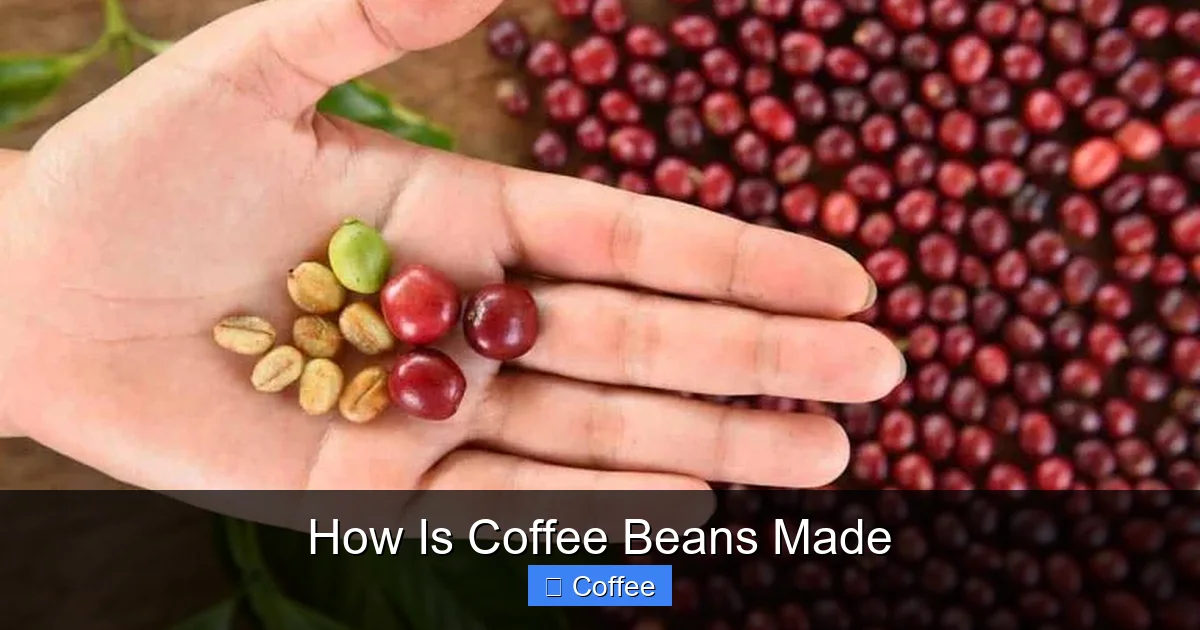
After flowering with fragrant white blossoms, the plant develops small green cherries. Over months, these cherries ripen, changing color from green to yellow, then finally to a deep, vibrant red (or sometimes yellow or purple, depending on the varietal). This ripeness is critical. Picking too early yields underdeveloped, sour beans. Picking too late risks overripe or fermented cherries. The journey of how is coffee beans made truly hinges on harvesting these cherries at their absolute peak. Imagine walking through a coffee farm in Colombia or Ethiopia during harvest season – the air is thick with the sweet, almost berry-like scent of ripe coffee cherries, and workers move carefully through the rows, selecting only the reddest fruit. This initial step sets the stage for everything that follows.
Harvesting: The Critical First Step
Harvesting is where human skill or machine precision meets nature’s timing. It’s not a one-time event but often occurs in multiple passes over several weeks, as cherries ripen at different rates on the same branch. There are two primary methods:

Visual guide about How Is Coffee Beans Made
Image source: shuncy.com
Hand-Picking: The Art of Selectivity
This traditional method, still dominant in high-quality specialty coffee regions like Ethiopia, Kenya, and much of Central America, involves skilled laborers meticulously selecting only the ripest, reddest cherries. They use a technique called “strip picking” (grabbing a branch and pulling to remove multiple cherries at once, less selective) or, for premium lots, “selective picking” (picking only one perfectly ripe cherry at a time). Selective picking is labor-intensive but ensures the highest quality, as only the best cherries make it to the next stage. Think of it like hand-picking the ripest strawberries at a farm – it takes time but guarantees quality. This careful selection is fundamental to how is coffee beans made well.
Mechanical Harvesting: Efficiency on Flat Terrain
In larger plantations, especially in Brazil where vast, flat fields are common, mechanical harvesters are used. These machines shake the branches, causing cherries to fall onto collection belts. While much faster and cheaper, this method indiscriminately collects ripe, unripe, and even overripe or damaged cherries. The harvested cherries then require extensive sorting (often using flotation tanks where unripe cherries float and ripe ones sink) before processing. Mechanical harvesting is efficient but sacrifices the selectivity crucial for top-tier specialty coffee. It’s a trade-off between volume and peak quality in the coffee bean production process.
Processing: Unlocking the Bean’s Potential
Once harvested, the clock starts ticking. The sugary, mucilaginous pulp surrounding the bean begins to ferment quickly, especially in warm, humid climates. Processing is the method used to remove this pulp and mucilage before the bean dries. This step is arguably the most influential on the final cup’s flavor profile, defining how is coffee beans made distinctively. There are three main methods, each creating a unique sensory experience:

Visual guide about How Is Coffee Beans Made
Image source: fnb.coffee
The Washed (Wet) Process: Clarity and Brightness
This method, popular in Central America and East Africa, emphasizes the bean’s inherent characteristics. Harvested cherries are first pulped using a machine that squeezes out the beans, leaving them coated in sticky mucilage. The beans are then placed in fermentation tanks filled with clean water for 12-72 hours. Natural enzymes and bacteria break down the mucilage. The length of fermentation is carefully monitored – too short, and mucilage remains; too long, and undesirable sour or vinegary notes develop. Finally, the beans are thoroughly washed with clean water to remove all residue before drying. The result? Clean, bright, acidic coffees with pronounced fruit and floral notes, like a vibrant Ethiopian Yirgacheffe. This method requires significant water access but produces incredibly consistent, high-quality beans.
The Natural (Dry) Process: Fruit-Forward Intensity
Common in Ethiopia and Brazil, this ancient method is simpler but requires ideal drying conditions (low humidity, consistent sun). Whole, intact cherries are spread out in thin layers on raised beds, patios, or tarps. They are raked frequently for 2-4 weeks as they dry slowly in the sun. During this time, the cherry ferments around the bean, infusing it with intense fruit sugars and flavors. Once the moisture content drops sufficiently, the dried cherry “husk” is mechanically hulled off, revealing the green bean. Natural process coffees are known for their explosive fruitiness (berry, tropical), heavier body, and wine-like complexity. A natural-processed Brazilian coffee might taste like blueberry jam, while an Ethiopian natural could burst with strawberry and citrus. It’s a riskier method – uneven drying or rain can cause mold, but when done right, it creates uniquely delicious cups.
The Honey (Pulped Natural) Process: Balanced Sweetness
Originating in Costa Rica, the honey process is a hybrid. Cherries are pulped like in the washed process, removing the skin and most pulp, but a significant amount of sticky mucilage (“honey”) is intentionally left on the bean. The beans, coated in this sugary layer, are then dried. The amount of mucilage left (white honey = little, yellow = medium, red = much, black = most) dramatically affects the outcome. Drying takes longer than washed but shorter than natural. The mucilage ferments slowly on the bean, imparting sweetness and body without the intense fruitiness of natural processing. Honey process coffees often offer a balanced cup with notes of honey, brown sugar, stone fruit, and a smooth, syrupy mouthfeel. It’s a fantastic middle ground, showcasing how is coffee beans made with nuanced sweetness.
Drying, Milling, and the Green Bean
Regardless of the processing method, the goal after removing the pulp/mucilage is the same: reduce the bean’s moisture content to a stable 10-12% for safe storage and transport. This is the drying phase.
Visual guide about How Is Coffee Beans Made
Image source: caffestreets.com
Sun-Drying: Patience Under the Sky
Most commonly, beans are dried slowly on raised beds (allowing air circulation underneath) or patios. They are raked constantly for even drying, which can take 1-3 weeks depending on weather. This slow drying is crucial – rushing it with high heat can “bake” the beans, ruining flavor potential. Think of it like sun-drying tomatoes; slow and gentle preserves the best qualities. Consistent moisture levels are vital to prevent mold or over-fermentation. Quality control involves regularly checking moisture content with a meter.
Milling: Revealing the Green Bean
Once dried, the beans are still encased in a tough, papery layer called the parchment (endocarp). Milling, or hulling, uses machinery to remove this parchment layer, revealing the smooth, pale green coffee bean inside – the “green coffee.” This green bean is the raw product exported globally. It’s remarkably stable at 10-12% moisture, allowing it to be stored and shipped for months without significant quality loss. After hulling, beans are sorted rigorously. This involves removing broken beans, sticks, stones, and any discolored or defective beans using screens, air jets, and often skilled workers on conveyor belts. Only the highest quality beans (Specialty Grade) make it to roasters. This meticulous sorting is a key part of how is coffee beans made to meet specialty standards.
Roasting: Where Magic Happens
Green coffee beans are hard, grassy-smelling, and completely unpalatable. Roasting is the transformative step that unlocks coffee’s true potential. It’s a precise science of applying controlled heat to trigger complex chemical reactions.
The Roasting Journey: Stages of Transformation
A typical roast lasts 8-15 minutes, with temperatures rising from ambient up to 400°F-500°F (200°C-260°C). Key stages include:
- Drying Phase (250°F-350°F / 120°C-175°C): Beans lose remaining moisture, turning yellow and smelling like toasted hay.
- Browning Phase (350°F-400°F / 175°C-200°C): The Maillard reaction begins – amino acids and sugars react, creating hundreds of flavor compounds and turning beans brown. Caramelization of sugars also starts.
- First Crack (Around 385°F / 196°C): A distinct, popping sound as beans expand and release steam. This marks the start of light roasts. Flavors are bright, acidic, and retain origin characteristics.
- Development Phase (Post-First Crack): Roasters carefully control time and temperature here. Stopping shortly after first crack yields light roasts (cinnamon color). Continuing to 410°F-430°F (210°C-220°C) produces medium roasts (city roast), balancing acidity and body. Pushing further to 435°F-450°F (225°C-230°C) creates medium-dark (full city) and dark roasts (high, continental, French, Italian), where oils appear on the surface and roasty, bitter notes dominate.
Roasters constantly monitor time, temperature, and the bean’s color and smell, making split-second decisions. It’s equal parts art and science, defining how is coffee beans made uniquely by each roaster.
Roast Levels: Finding Your Preference
The roast level dramatically changes the cup:
- Light Roast: Light brown, dry surface. Highest acidity, lightest body. Pronounced origin flavors (floral, fruity, tea-like). Best for pour-over or drip.
- Medium Roast: Medium brown, balanced acidity and body. Nutty, chocolatey notes emerge alongside origin characteristics. Versatile for drip, pour-over, Aeropress.
- Medium-Dark Roast: Rich, dark brown, slight oiliness. Lower acidity, fuller body. Pronounced roast flavors (caramel, spice), origin notes muted. Great for drip, French press, espresso.
- Dark Roast: Dark brown to black, shiny with oil. Very low acidity, heavy body. Dominant roast flavors (bitter, smoky, charred), origin character largely lost. Primarily for espresso blends.
Specialty coffee often favors light to medium roasts to showcase the bean’s inherent qualities, while darker roasts are common in commercial blends. Experiment to find your perfect roast!
Grinding and Brewing: The Final Act
Roasted coffee beans are at their peak flavor for about 2-4 weeks. However, once ground, they begin to lose volatile aromatic compounds rapidly – within minutes. This is why grinding fresh is non-negotiable for the best cup.
The Grind Size Imperative
Grind size must match your brewing method. Surface area exposed to water determines extraction rate:
- Coarse Grind (Sea Salt): For immersion brews like French press or cold brew. Allows slow, even extraction over minutes/hours.
- Medium Grind (Sand): For pour-over (V60, Chemex), drip coffee makers, and Aeropress (standard method). Balances extraction speed and clarity.
- Medium-Fine Grind (Table Salt): For Aeropress (faster brew), Siphon brewers.
- Fine Grind (Powdered Sugar): For espresso machines, Moka pots. High pressure requires fine particles for proper resistance and extraction.
- Extra Fine Grind (Flour): For Turkish coffee. Very fine powder for boiling.
Using the wrong grind size leads to under-extraction (sour, weak coffee) or over-extraction (bitter, harsh coffee). A burr grinder provides consistent particle size, crucial for even extraction. Blade grinders create uneven particles, causing inconsistent flavor. This final step is vital in how is coffee beans made enjoyable.
Brewing: Extracting the Essence
Brewing is the controlled extraction of soluble compounds from the ground coffee using hot water (ideally 195°F-205°F / 90°C-96°C). Key factors include:
- Water Quality: Use filtered water; minerals affect taste.
- Coffee-to-Water Ratio: A standard starting point is 1:15 to 1:18 (e.g., 20g coffee to 300g water). Adjust to taste.
- Brew Time: Varies by method (e.g., 4 mins French press, 2-3 mins pour-over, 25-30 secs espresso).
- Agitation: Stirring can ensure even saturation.
Whether you prefer the clarity of a pour-over, the richness of a French press, or the intensity of espresso, understanding these elements transforms ground beans into your perfect cup. The journey from cherry to cup is complete!
Conclusion: Savoring the Craft
The journey of how is coffee beans made is a remarkable testament to human ingenuity and nature’s bounty. It starts with careful cultivation on distant mountainsides, moves through the critical artistry of harvesting and processing, undergoes the alchemy of roasting, and culminates in the simple yet precise act of grinding and brewing. Each step – the selective hand-picking, the choice between washed, natural, or honey processing, the roaster’s careful watch during the first crack, the grind size matched to your brewer – leaves an indelible mark on the final cup.
Understanding this process deepens your appreciation immensely. That bright, floral Ethiopian pour-over? It likely came from cherries hand-picked at peak ripeness and processed naturally. The smooth, chocolatey medium roast from your local roaster? It resulted from precise control during the browning and development phases. Next time you enjoy coffee, take a moment to consider the months of work, the skilled hands, and the complex chemistry that brought it to your mug. It’s not just a beverage; it’s a global story of dedication, science, and flavor, transformed from a simple red cherry into the world’s favorite morning ritual. Savor it fully!
Frequently Asked Questions
How is decaffeinated coffee made?
Decaffeination removes caffeine from green beans before roasting using water, organic solvents (like ethyl acetate), or supercritical CO2. The Swiss Water Process uses only water and osmosis. Beans are soaked, caffeine is extracted, and the flavor compounds are reintroduced. It’s done pre-roast to preserve structure.
What makes coffee “organic”?
Organic coffee is grown without synthetic pesticides, herbicides, or fertilizers, using natural compost and pest control methods. Farms must be certified by accredited bodies (like USDA Organic or EU Organic) after a 3-year transition period, ensuring soil health and environmental sustainability.
How should I store coffee beans for maximum freshness?
Store whole beans in an opaque, airtight container at room temperature, away from direct sunlight, heat sources (like stoves), and moisture. Avoid the freezer for daily use (condensation ruins beans); freeze only for long-term storage (months) in vacuum-sealed portions. Never store in the fridge.
What’s the difference between Arabica and Robusta beans?
Arabica (Coffea arabica) is the premium bean, grown at higher altitudes, with lower caffeine, complex flavors (fruity, floral), and higher acidity. Robusta (Coffea canephora) has higher caffeine, grows faster at lower altitudes, tastes stronger, more bitter, and nutty, with less acidity. It’s often used in espresso blends for crema and body.
Where do coffee beans get their flavor from?
Flavor originates from the bean’s inherent compounds developed during growth (soil, altitude, varietal), amplified by processing method (washed vs. natural), and transformed during roasting (Maillard reaction, caramelization). Brewing then extracts these compounds into your cup.
Can I make good coffee without a grinder?
While pre-ground coffee is convenient, it stales quickly due to increased surface area. For significantly better flavor, invest in a burr grinder (even a budget one). If you must use pre-ground, buy small quantities from a roaster who grinds to order and use it immediately. Freshness is paramount.