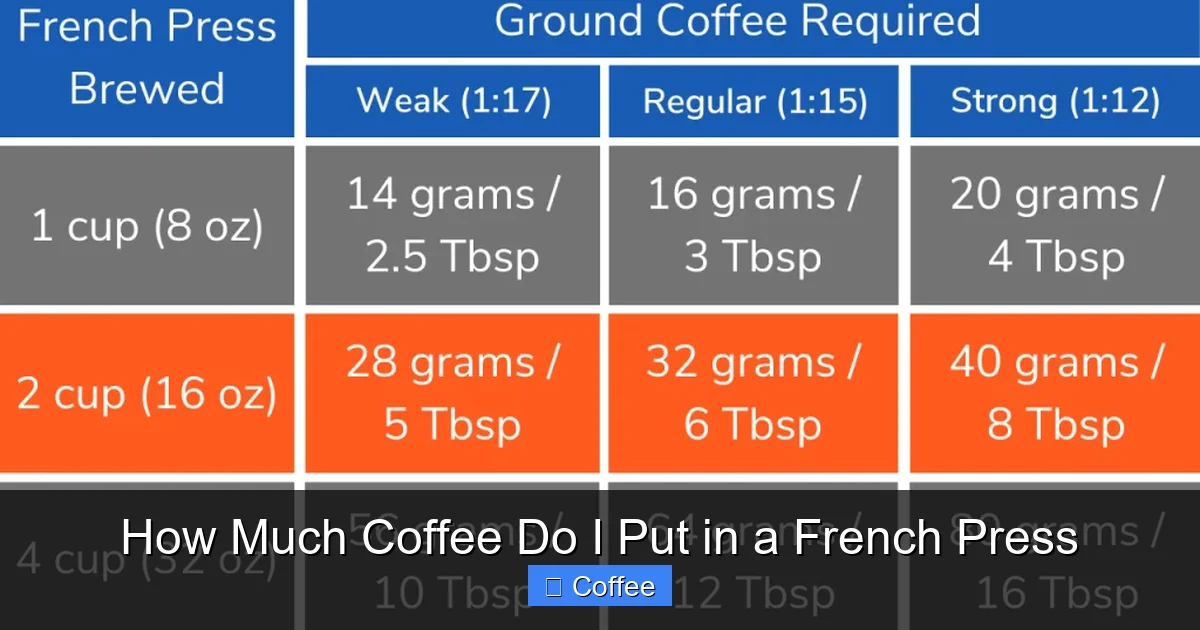
Mastering French press coffee starts with the right coffee-to-water ratio. This guide reveals why 1:15 is the sweet spot for most beans, plus how to adjust for personal taste. Stop guessing and start brewing perfection!
Key Takeaways
- The Golden Ratio: Use 1 gram of coffee per 15 grams of water (1:15) for balanced flavor. This is the industry standard for French press.
- Weigh, Don’t Scoop: Volume measurements (like scoops) are unreliable. A digital scale ensures precision and consistency every brew.
- Grind Size Matters: Coarse grounds prevent sludge and over-extraction. Aim for sea-salt texture – finer grinds muddy your coffee.
- Water Temperature is Key: Heat water to 195–205°F (90–96°C). Boiling water scalds coffee; cooler water under-extracts.
- Steep Time Control: 4 minutes is ideal for most beans. Longer steeping = bitter coffee; shorter = weak coffee.
- Customize to Taste: Prefer stronger? Try 1:13. Like it milder? Go 1:17. Adjust one variable at a time.
- Quality Water Wins: Filtered water makes a huge difference. Tap water minerals can ruin your brew.
Quick Answers to Common Questions
Can I use pre-ground coffee in a French press?
Yes, but only if it’s labeled “coarse” or “French press.” Pre-ground coffee loses freshness fast, so use it within 2 weeks. For best results, grind beans fresh at home.
How much coffee for a 32oz French press?
For a standard 32oz (950ml) press, use 60–65 grams of coffee and 900–975 grams of water. Stick to the 1:15 ratio for perfect balance.
Why is my French press coffee oily?
Oils are natural in coffee and a sign of fresh beans! They add body and aroma. If it’s excessive, your grind might be too fine, or you could be using dark roast beans which release more oil.
Can I make cold brew in a French press?
Absolutely! Use a 1:8 ratio (e.g., 50g coffee to 400g water), coarser grind, and steep 12–24 hours in the fridge. Press slowly and enjoy over ice.
How often should I clean my French press?
Rinse after every use. Deep clean weekly: disassemble, soak parts in vinegar-water solution, and scrub the mesh filter. Oils build up and affect flavor!
📑 Table of Contents
- Why Your French Press Coffee Tastes Off (And How to Fix It)
- The Science Behind the Perfect Ratio: Why 1:15 is Magic
- Step-by-Step: Measuring Coffee Like a Pro
- Grind Size: The Hidden Ratio Killer
- Water Quality and Temperature: The Unsung Heroes
- Steeping Time: Your Flavor Control Knob
- Troubleshooting: Fixing Common French Press Fails
- Conclusion: Your Perfect Cup Awaits
Why Your French Press Coffee Tastes Off (And How to Fix It)
Hey coffee lover! You’ve got a French press – that beautiful, simple brewer promising rich, full-bodied coffee. But lately, your cup’s been… disappointing. Maybe it’s weak and watery. Or perhaps it’s so strong it could wake the dead. Sound familiar? You’re not alone. Most French press frustrations boil down to one thing: how much coffee do I put in a French press?
It’s the question that haunts every home brewer. Scoop too little? You get dishwater. Scoop too much? You’re sipping liquid tar. And let’s be real – those “1 scoop per cup” instructions on coffee bags? They’re wildly inconsistent. A “scoop” could be anywhere from 8 to 15 grams depending on the bean, roast, and who’s holding the spoon. No wonder your brew is unpredictable!
The good news? Nailing the perfect French press coffee is simpler than you think. It’s not about magic tricks or expensive gear. It’s about understanding one core principle: the coffee-to-water ratio. Get this right, and you’ll unlock deep, smooth, aromatic coffee that makes you wonder why you ever settled for weak drip. In this guide, we’ll cut through the confusion. No jargon, no fluff – just clear, actionable steps to brew like a pro. Ready to transform your mornings? Let’s dive in.
The Science Behind the Perfect Ratio: Why 1:15 is Magic
You might be wondering: “Why does the ratio even matter?” Great question! Coffee brewing is chemistry. When hot water meets coffee grounds, it dissolves flavor compounds. Too little coffee? Not enough flavor extracts – you get weak, sour coffee. Too much coffee? Over-extraction happens – bitter, astringent flavors dominate. The sweet spot balances acidity, sweetness, and body.

Visual guide about How Much Coffee Do I Put in a French Press
Image source: i2.wp.com
What Does “1:15” Actually Mean?
The 1:15 ratio means 1 part coffee to 15 parts water by weight. For example:
- 30 grams of coffee + 450 grams of water = 1:15 ratio
- 40 grams of coffee + 600 grams of water = 1:15 ratio
This isn’t arbitrary. Specialty coffee associations worldwide (like the SCA) endorse 1:15 to 1:18 as the “golden range” for optimal extraction. Why weight? Because coffee density varies. A dark roast bean is less dense than a light roast. Weighing ensures you get the same amount of coffee every time, regardless of bean type.
What Happens If You Get It Wrong?
Let’s break it down:
- Too little coffee (e.g., 1:20): Watery, sour, lacking body. You’ll taste mostly hot water with a hint of coffee.
- Too much coffee (e.g., 1:12): Bitter, harsh, muddy. Over-extraction pulls out tannins that taste like pennies.
- The 1:15 sweet spot: Balanced acidity, rich mouthfeel, clean finish. You taste the bean’s origin – fruity, nutty, chocolatey notes shine.
Pro tip: Start with 1:15. If it’s too strong, move to 1:16 or 1:17. Too weak? Try 1:14. Small tweaks make big differences!
Step-by-Step: Measuring Coffee Like a Pro
Now that you know why the ratio matters, let’s talk how to measure it right. Forget scoops, tablespoons, or “eyeballing it.” Precision is your friend.

Visual guide about How Much Coffee Do I Put in a French Press
Image source: freshcoffeehouse.com
Why Volume Measurements Fail (And Why You Need a Scale)
Imagine two scoops of coffee: one from a light, fluffy Ethiopian bean, another from a dense, dark Sumatran roast. The Sumatran scoop packs way more coffee by weight. If you use “1 scoop per cup,” your Ethiopian brew will be weak, while your Sumatran will be overpowering. Volume measurements simply don’t account for bean density.
That’s where a $10–$15 digital kitchen scale saves the day. It’s the single best investment for better coffee. Here’s how to use it:
- Place your empty French press carafe on the scale. Tare it to zero.
- Add coffee beans. Aim for your target weight (e.g., 30g for a 12oz press).
- Grind directly into the carafe (or weigh beans first, then grind).
- Tare the scale again. Add hot water until you hit your water weight (e.g., 450g).
Example for a standard 12oz (350ml) French press:
- Coffee: 22 grams
- Water: 330 grams (≈330ml)
No scale? Use this rough guide (but weigh ASAP!):
- 12oz press: 3–4 tablespoons (level, not heaped)
- 32oz press: 8–10 tablespoons
Warning: This is less accurate. A tablespoon of coffee can range from 5g to 10g!
Pro Measuring Tips for Consistency
Want café-quality results every morning? Try these:
- Weigh beans, not grounds: Beans are denser and more consistent. Grind after weighing.
- Use “bloom” water: Pour just enough water to saturate grounds (twice the coffee weight). Wait 30 seconds. Then add remaining water. This releases CO2 for better extraction.
- Track your brews: Note coffee weight, water weight, steep time, and taste. Adjust next time!
- Clean your scale: Coffee oils can throw off readings. Wipe it weekly.
Remember: Consistency beats perfection. Once you find your happy ratio, stick with it for a week. Your taste buds will thank you.
Grind Size: The Hidden Ratio Killer
You’ve nailed the 1:15 ratio… but your coffee still tastes off. What’s missing? Grind size. It’s the silent partner to your coffee-to-water ratio. Get it wrong, and even perfect ratios taste bad.
Visual guide about How Much Coffee Do I Put in a French Press
Image source: m.media-amazon.com
Why Coarse Grind is Non-Negotiable
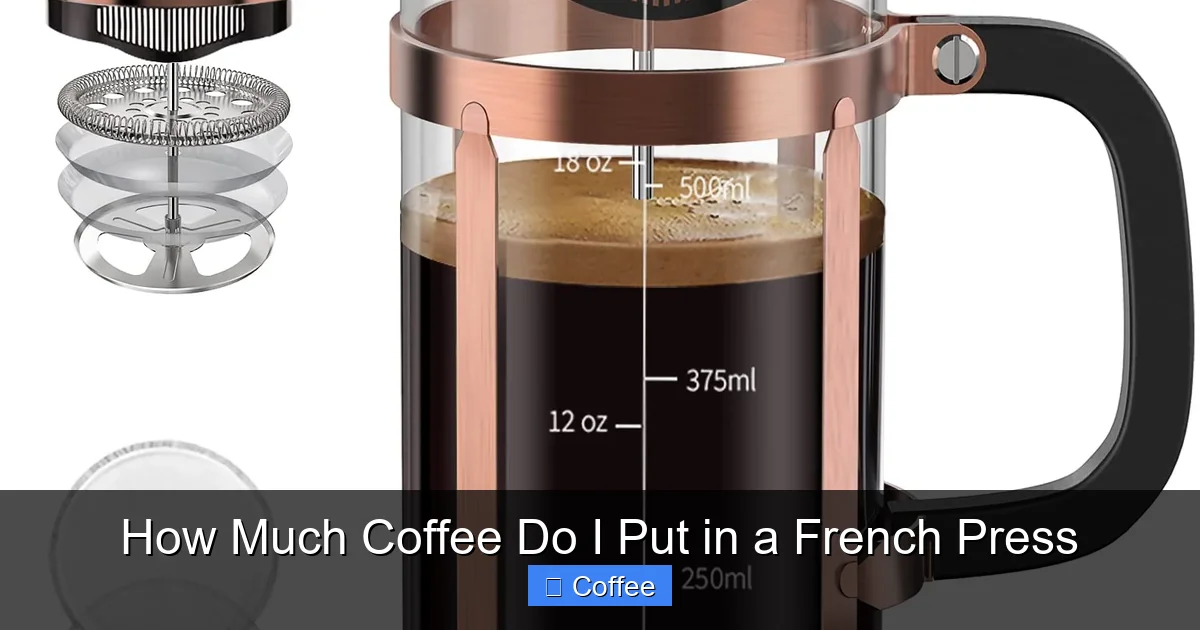
French press uses immersion brewing – coffee steeps in water for minutes. Fine grounds act like sand in water: they over-extract quickly, creating bitterness and sludge. Coarse grounds (think sea salt or breadcrumbs) let water flow freely, extracting flavor slowly and evenly.
Here’s what happens with wrong grind sizes:
- Too fine: Muddy coffee, bitter taste, grounds sneak through the filter. You’ll feel grit in your teeth.
- Too coarse: Weak, sour coffee. Water flows through too fast, under-extracting flavors.
- Just right (coarse): Smooth, full-bodied coffee with zero grit. The filter works perfectly.
Pro tip: If you’re buying pre-ground coffee, look for “French press” or “coarse” on the label. But grinding fresh at home is always best!
How to Grind Perfectly Coarse Coffee
Blade grinders? Avoid them. They create uneven particles (dust + boulders). A burr grinder is ideal, but even a decent blade grinder can work if you pulse carefully:
- Burr grinder: Set to the coarsest setting. Aim for uniform, chunky particles.
- Blade grinder: Pulse in short bursts (2–3 seconds). Shake between pulses. Stop when it looks like coarse sand.
- Test it: Rub grounds between fingers. Coarse should feel gritty, not powdery.
No grinder? Ask your local roaster to grind for French press. Tell them “coarse, like sea salt.” Most are happy to help!
Water Quality and Temperature: The Unsung Heroes
You measured your coffee perfectly. Your grind is coarse. But your brew still lacks “wow.” What’s the secret ingredient? Water. Seriously – 98% of your coffee is water. If it tastes bad, your coffee will too.
Why Filtered Water Makes a Difference
Tap water contains minerals (calcium, magnesium) and chemicals (chlorine). These interact with coffee:
- Hard water (high minerals): Mutes coffee’s bright acidity. Can make it taste flat or soapy.
- Chlorinated water: Adds a chemical aftertaste. Ruins delicate floral notes.
- Filtered water: Removes impurities. Lets coffee’s true flavors shine.
Don’t have a filter? Bottled spring water works (avoid distilled – it lacks minerals coffee needs). Pro tip: Use water you’d happily drink cold!
The Perfect Water Temperature (It’s Not Boiling!)
Boiling water (212°F/100°C) scalds coffee, causing bitter, burnt flavors. Too cool? Under-extraction = sour, weak coffee. The magic range is 195–205°F (90–96°C).
How to hit it:
- Electric kettle with temp control: Set to 200°F. Ideal!
- Stovetop kettle: Bring to boil, then remove from heat. Wait 30 seconds.
- No thermometer? Watch for “shrimp eyes” – small bubbles at the pot’s edge (not rolling boil).
Why this range? Coffee’s best flavors extract between 195–205°F. Higher temps pull harsh compounds; lower temps miss sweet notes.
Steeping Time: Your Flavor Control Knob
You’ve got the ratio, grind, and water dialed in. Now comes the waiting game: steeping time. This is where most French press users go wrong. Too short? Weak coffee. Too long? Bitter sludge. Let’s get it right.
The 4-Minute Rule (And When to Break It)
For most beans, 4 minutes is the sweet spot. Here’s why:
- 0–60 seconds: Water saturates grounds. CO2 releases (the “bloom”).
- 1–3 minutes: Sweetness and acidity extract.
- 3–4 minutes: Body and complexity build.
- 4+ minutes: Bitterness takes over.
But 4 minutes isn’t universal. Adjust based on:
- Bean roast: Light roasts? Try 4:30. Dark roasts? 3:30 to avoid bitterness.
- Personal taste: Prefer bold? Steep 4:30. Like it mellow? 3:45.
- Grind size: Slightly finer grind? Reduce time by 30 seconds.
Pro tip: Set a timer. Don’t guess!
The Plunge: Gentle Is Best
After steeping, it’s time to press. But don’t slam that plunger down! Aggressive pressing forces fine grounds into your coffee, making it muddy.
Do this instead:
- Place the lid on top with the plunger pulled all the way up.
- Press down slowly and steadily over 20–30 seconds.
- Stop when you feel resistance (grounds are compacted).
- Serve immediately. Don’t let coffee sit in the press – it keeps extracting!
Why slow pressing? It creates a “filter cake” that traps fines. Fast pressing breaks this barrier, letting grit into your cup.
Troubleshooting: Fixing Common French Press Fails
Even with perfect ratios, things can go sideways. Let’s fix your worst coffee nightmares.
My Coffee is Weak and Watery
Likely cause: Too little coffee or too coarse grind.
How to fix:
- Increase coffee by 10% (e.g., from 1:15 to 1:14).
- Check grind size – it should be coarse, but not gravelly.
- Ensure water is hot enough (195–205°F).
- Steep 30 seconds longer.
Still weak? Your beans might be stale. Coffee loses CO2 over time, leading to poor extraction.
My Coffee is Bitter and Harsh
Likely cause: Too much coffee, too fine grind, or over-steeping.
How to fix:
- Decrease coffee by 10% (e.g., from 1:15 to 1:16).
- Use a coarser grind.
- Shorten steep time by 30 seconds.
- Check water temperature – don’t use boiling water.
Bitter coffee can also mean your beans are over-roasted. Try a lighter roast next time.
There’s Grit in My Cup
Likely cause: Grind too fine or plunging too fast.
How to fix:
- Grind coarser (aim for sea-salt texture).
- Press the plunger slower (20–30 seconds).
- Let coffee settle for 1 minute after pressing before pouring.
- Use a paper filter on top of the mesh screen (controversial but effective).
If grit persists, your French press mesh might be worn out. Time for a new one!
Conclusion: Your Perfect Cup Awaits
So, how much coffee do I put in a French press? The answer is beautifully simple: 1 gram of coffee for every 15 grams of water. But as you’ve discovered, it’s not just about the numbers. It’s about understanding the dance between ratio, grind, water, and time. It’s about respecting the craft while making it your own.
Remember: Coffee is personal. That 1:15 ratio is a starting point – your passport to experimentation. Like it bolder? Try 1:13. Prefer it delicate? Go 1:17. Adjust one variable at a time, and soon you’ll have a brew that’s unmistakably yours. No more guesswork. No more disappointment. Just rich, smooth, aromatic coffee that makes every morning feel like a gift.
Now grab your scale, heat that water, and press play on your best cup yet. You’ve got this. And when that first sip hits? You’ll know every gram was worth it. Happy brewing!
Frequently Asked Questions
What’s the best coffee-to-water ratio for French press?
The ideal ratio is 1:15 (1 gram coffee to 15 grams water). This balances strength and flavor for most beans. Adjust slightly based on taste preferences – 1:13 for stronger, 1:17 for milder.
Why shouldn’t I use boiling water?
Boiling water (212°F) scalds coffee, extracting bitter compounds. Aim for 195–205°F. This range optimally extracts sweetness and acidity without harshness.
How coarse should French press coffee be ground?
Grind to a coarse, sea-salt-like texture. Too fine causes sludge and bitterness; too coarse leads to weak coffee. Consistency matters more than exact size.
Can I reuse coffee grounds for a second brew?
Not recommended. Most flavor extracts in the first brew. Reusing grounds produces weak, sour coffee with little aroma. Fresh grounds are always best.
Why does my French press coffee taste sour?
Sourness usually means under-extraction. Causes include too little coffee, coarse grind, cool water, or short steep time. Increase coffee ratio, check grind size, or steep 30 seconds longer.
How long can I leave coffee in the French press?
Serve immediately after pressing. Coffee continues extracting in the carafe, turning bitter within 20–30 minutes. Pour into a thermal carafe if not drinking right away.