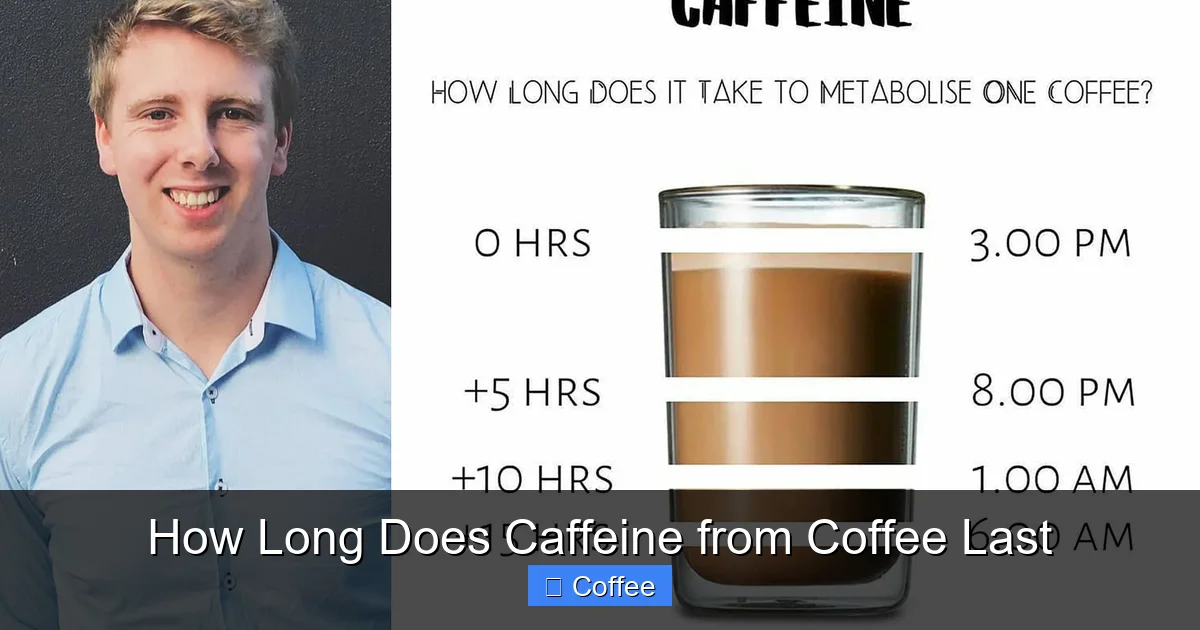
Most people feel caffeine’s effects for 3-5 hours, but it can linger in your system for up to 10 hours or more. Individual factors like metabolism, genetics, and liver health dramatically change how long caffeine impacts you. Understanding this helps you time your coffee for energy without disrupting sleep.
Key Takeaways
- Caffeine’s half-life is typically 5-6 hours: This means half the caffeine is eliminated from your body in this timeframe, but effects can last longer.
- Individual variation is huge: Genetics, liver function, pregnancy, medications, and even gut health cause significant differences in caffeine processing.
- Peak effects hit in 30-60 minutes: You feel the strongest buzz shortly after drinking, but the tail end of caffeine can subtly affect you for hours.
- Complete elimination takes much longer: While effects fade, it can take 10+ hours for all caffeine to leave your system, potentially impacting sleep if consumed late.
- Decaf isn’t caffeine-free: Most decaf coffee still contains 2-15mg of caffeine per cup, which adds up.
- Hydration and food matter: Drinking water and having food with coffee can slightly slow absorption but won’t drastically shorten duration.
- Listen to your body: If afternoon coffee keeps you awake, your personal caffeine sensitivity likely requires an earlier cutoff time.
Quick Answers to Common Questions
How long until caffeine makes you feel alert?
You typically start feeling caffeine’s effects within 15-45 minutes after drinking coffee, with peak alertness hitting around 30-60 minutes.
Does drinking water flush out caffeine faster?
Water helps with hydration and overall kidney function, but it doesn’t significantly speed up the metabolic breakdown of caffeine in your liver.
Can you build a tolerance to caffeine’s duration?
You can build tolerance to caffeine’s *effects* (needing more for the same buzz), but your body’s metabolic rate (half-life) generally stays the same unless factors like liver health or medications change.
Why does coffee keep me awake even if I’m tired?
Caffeine blocks adenosine receptors in your brain. Adenosine builds up while you’re awake, making you feel sleepy. Caffeine prevents this signal, masking your true fatigue level.
Is cold brew stronger and does it last longer?
Cold brew often has higher caffeine concentration per ounce than hot brewed coffee, meaning a typical serving might contain more caffeine. Since duration depends on total caffeine consumed, a high-caffeine cold brew will generally last longer than a same-sized cup of regular coffee.
📑 Table of Contents
- How Long Does Caffeine from Coffee Last? The Real Timeline Explained
- The Caffeine Journey: From First Sip to Final Exit
- Half-Life vs. Total Elimination: What’s the Difference?
- Why Does Caffeine Last Longer for Some People? Key Factors
- Practical Effects: How Duration Impacts Your Day (and Night)
- Managing Caffeine Duration: Smart Strategies for Better Energy & Sleep
- Special Cases: Pregnancy, Medications, and Health Conditions
- Conclusion: Master Your Caffeine Clock for Better Days and Nights
How Long Does Caffeine from Coffee Last? The Real Timeline Explained
You pour that second cup of coffee, savoring the rich aroma, knowing it’s the fuel you need to power through the afternoon slump. But have you ever wondered, as the initial buzz fades, just how long that caffeine is actually hanging around in your system? Maybe you’ve had the experience of lying awake at 11 PM, staring at the ceiling, wondering if that 3 PM latte is to blame. The truth about how long caffeine from coffee lasts isn’t as simple as “a few hours.” It’s a complex dance between your biology, the coffee itself, and your daily habits. Understanding this timeline is key to harnessing caffeine’s benefits without letting it sabotage your sleep or leave you feeling jittery.
Forget the myth that caffeine “wears off” completely in 2 or 3 hours for most people. While the strongest, most noticeable effects – the alertness, the focus boost – might peak and start to decline within that window, the caffeine molecule itself is still actively working its way through your body for much longer. This lingering presence is why timing your last cup matters more than you might think. It’s not just about the immediate energy kick; it’s about how that afternoon coffee might be silently influencing your ability to fall asleep or stay asleep hours later. Getting a grip on this timeline empowers you to make smarter coffee choices that align with your energy needs and your sleep goals.
The Caffeine Journey: From First Sip to Final Exit
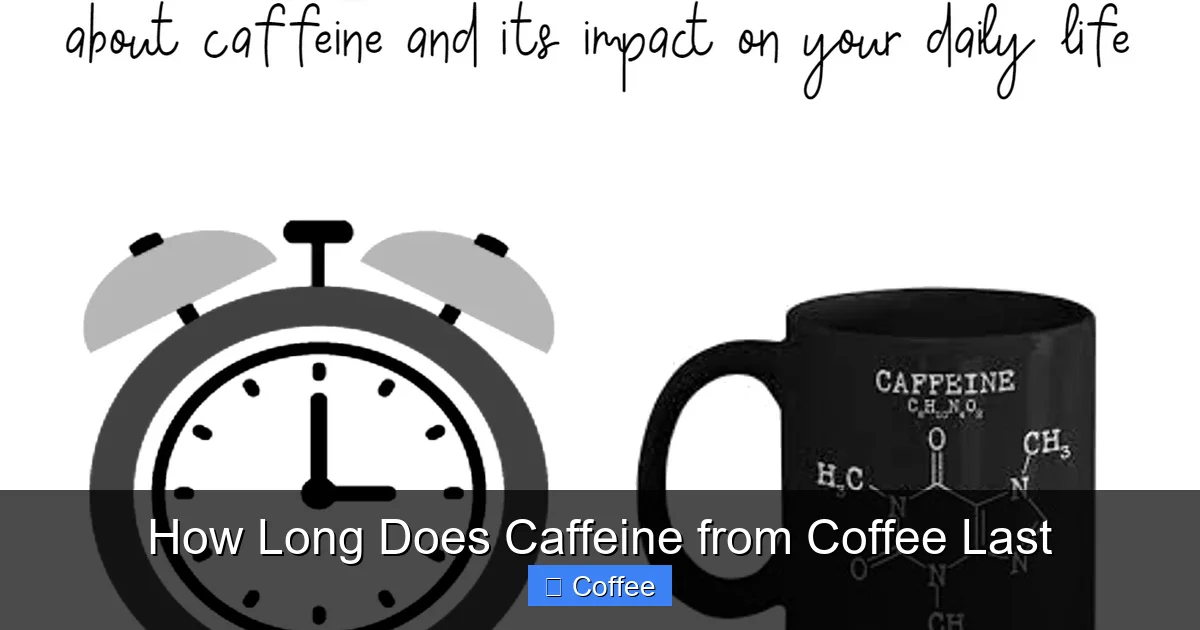
To understand how long caffeine lasts, we need to follow its path through your body. It’s not a simple on/off switch; it’s a process with distinct phases.
Visual guide about How Long Does Caffeine from Coffee Last
Image source: caffeinepark.com
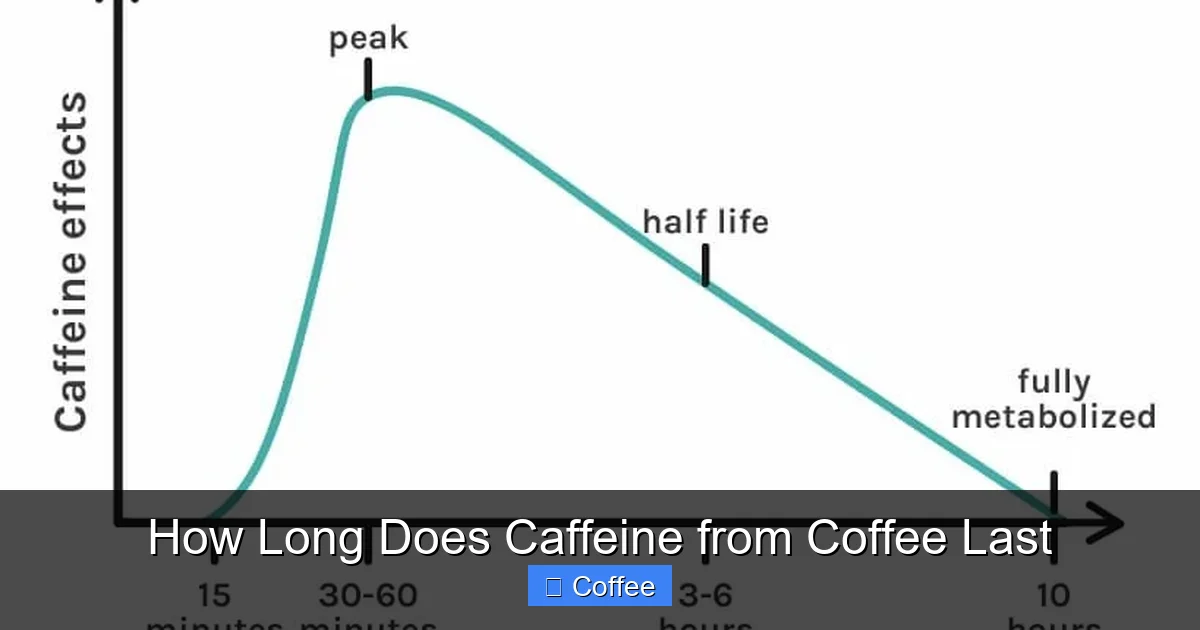
Absorption: The Quick Uptake (15-45 Minutes)
Once you swallow that coffee, caffeine doesn’t waste time. It’s rapidly absorbed through the lining of your small intestine and stomach. Within just 15 to 45 minutes, caffeine levels in your blood start to rise significantly. This is when you typically feel that initial “wake-up” or “buzz.” The speed of absorption can be influenced by whether your stomach is empty (faster) or full (slower), but generally, caffeine gets into your bloodstream pretty quickly.
Peak Concentration: Hitting the High Point (30-60 Minutes)
For most people, blood caffeine levels reach their peak about 30 to 60 minutes after consumption. This is the height of caffeine’s effects. You feel most alert, focused, and energetic during this window. Your heart rate might increase slightly, and you might feel a surge of motivation. This peak is what we chase with that morning cup, but it’s also the point where the clock really starts ticking on how long the effects will linger.
Distribution: Spreading Through the Body
Once in the bloodstream, caffeine doesn’t just stay put. It travels throughout your body, crossing the blood-brain barrier where it does its main work by blocking adenosine receptors. Adenosine is a neurotransmitter that builds up as you’re awake, making you feel sleepy. By blocking it, caffeine tricks your brain into feeling alert. Caffeine also affects other parts of the body, contributing to increased heart rate, mild diuretic effects (though not dehydrating like once thought), and even influencing muscle function.
Metabolism: The Liver’s Crucial Role
This is where the big variable kicks in: how fast your liver breaks down caffeine. The liver uses enzymes, primarily CYP1A2, to metabolize caffeine into other compounds (like paraxanthine, theobromine, and theophylline) that are eventually excreted by the kidneys. The speed of this process is the single biggest factor determining how long caffeine affects *you* personally. Some people are “fast metabolizers,” clearing caffeine efficiently. Others are “slow metabolizers,” meaning caffeine sticks around much longer.
Elimination: The Long Goodbye
The final phase is excretion. The metabolized byproducts of caffeine are filtered out by your kidneys and leave your body in urine. However, the caffeine molecule itself takes time to be fully processed and eliminated. This is where the concept of “half-life” becomes crucial to understanding the overall duration.
Half-Life vs. Total Elimination: What’s the Difference?
This is where confusion often sets in. People frequently mix up the “half-life” of caffeine with how long they *feel* its effects or how long it takes to be completely gone. Let’s clarify these important distinctions.
Visual guide about How Long Does Caffeine from Coffee Last
Image source: app.dropinblog.com
Understanding Half-Life: The 5-6 Hour Benchmark
The half-life of a substance is the time it takes for the concentration in your blood to reduce by half. For caffeine in a healthy adult, this half-life is typically 5 to 6 hours. What does this mean in practice?
- If you drink a cup of coffee containing 100mg of caffeine at 8 AM, by 1 PM (5 hours later), roughly 50mg is still circulating in your system.
- By 6 PM (10 hours later), about 25mg remains.
- By 11 PM (15 hours later), approximately 12.5mg is left.
- By 4 AM (20 hours later), only about 6mg remains.
This gradual decline explains why the *intensity* of caffeine’s effects lessens over time, even though traces are still present.
When Do Effects *Actually* Fade? (3-5 Hours for Most)
While the half-life is 5-6 hours, the *noticeable effects* of caffeine – the strong alertness, the jitteriness, the intense focus – usually become much less pronounced within 3 to 5 hours for the average person. This is because your brain adapts somewhat, and the caffeine concentration drops below the threshold needed to produce those strong sensations. You might feel “normal” again, but that doesn’t mean caffeine is gone. The lower levels can still subtly influence your nervous system, potentially making it harder to fall asleep deeply or causing minor restlessness.
Complete Elimination: The 10+ Hour Reality
For caffeine to be *completely* eliminated from your body, it takes significantly longer than the half-life. It generally requires about 4 to 6 half-lives for a substance to be virtually gone (less than 3% remaining). For caffeine, with a 5-6 hour half-life, this means:
- Full elimination typically takes 10 to 12 hours for most healthy adults.
- In some individuals (especially slow metabolizers), it can take up to 15 hours or more.
This is the critical point for sleep: if you drink a cup of coffee (100mg) at 2 PM, even if you feel “fine” by 6 PM, a significant amount (around 25mg) is still active in your system at 10 PM bedtime. For sensitive individuals, this can be enough to interfere with sleep onset or quality.
Why Does Caffeine Last Longer for Some People? Key Factors
The 5-6 hour half-life is just an average. Your personal caffeine timeline can be dramatically shorter or longer due to several key factors. Understanding these helps explain why your friend can drink espresso after dinner and sleep like a baby, while you’re wide awake after a midday latte.
Visual guide about How Long Does Caffeine from Coffee Last
Image source: homegrounds.co
Genetics: The Metabolism Master Switch
Your genes, specifically variations in the CYP1A2 gene, are the biggest determinant of whether you’re a fast or slow caffeine metabolizer. Roughly half the population carries a gene variant that makes them slow metabolizers. For these individuals:
- The half-life of caffeine can stretch to 8, 10, or even 12+ hours.
- Effects linger much longer, and even moderate afternoon consumption can severely disrupt sleep.
- They may also experience stronger cardiovascular effects (like increased heart rate) from the same amount of caffeine.
Fast metabolizers, on the other hand, might clear caffeine in 3-4 hours, feeling minimal effects beyond the initial few hours.
Liver Health: The Processing Plant
Since the liver is responsible for metabolizing caffeine, any condition affecting liver function will slow down the process. This includes:
- Liver disease (e.g., cirrhosis, hepatitis): Significantly prolongs caffeine half-life.
- Medications processed by the liver: Many common drugs (like some antibiotics, antifungals, heart medications, and even birth control pills) compete with caffeine for the liver’s CYP1A2 enzyme. This competition slows down caffeine metabolism, effectively extending its duration in your body. Always check medication interactions!
If you have liver concerns or take regular medications, be extra mindful of your caffeine timing.
Pregnancy: A Major Slowdown
Caffeine metabolism slows down considerably during pregnancy, especially in the second and third trimesters. The half-life can double or even triple, reaching 10-15 hours or more. This is why health organizations recommend strict limits on caffeine intake during pregnancy (usually 200mg per day max). What might be a harmless afternoon cup for a non-pregnant person could have prolonged effects for an expectant mother.
Other Influencing Factors
- Age: Metabolism generally slows with age. Older adults may process caffeine slightly slower than younger adults.
- Smoking: Interestingly, smoking *induces* the CYP1A2 enzyme, making smokers fast metabolizers of caffeine. Quitting smoking can suddenly make you a slow metabolizer, causing caffeine to last much longer than before.
- Hormonal Fluctuations: Some research suggests caffeine metabolism might vary slightly across the menstrual cycle.
- Gut Health: Emerging science indicates gut bacteria might play a role in caffeine processing, though this is less understood than liver metabolism.
Practical Effects: How Duration Impacts Your Day (and Night)
Knowing the science is great, but how does the actual duration of caffeine translate to your daily life? It affects far more than just your afternoon energy levels.
The Sleep Saboteur: Timing is Everything
This is the most significant practical consequence. Caffeine’s ability to block adenosine receptors directly interferes with your sleep drive. Even if you *feel* tired, residual caffeine can:
- Make it harder to fall asleep (increased sleep latency).
- Reduce total sleep time.
- Decrease the amount of deep, restorative slow-wave sleep.
- Lead to more fragmented, lighter sleep.
Real-Life Example: Sarah, a slow metabolizer, drinks a 16oz cold brew (200mg caffeine) at 3 PM. By her 11 PM bedtime, roughly 50mg is still active. She tosses and turns for 45 minutes before falling asleep and wakes up feeling unrested, despite getting 7 hours in bed. Her fast-metabolizing colleague, Mark, has the same cold brew at 3 PM. By 11 PM, only about 12.5mg remains – likely not enough to disrupt his sleep significantly.
Actionable Tip: A general rule of thumb is to stop consuming caffeine at least 6-8 hours before bedtime. For sensitive individuals or heavy consumers, 10-12 hours might be necessary. Track your sleep and coffee timing for a week to find *your* personal cutoff.
The Afternoon Slump & Crash Cycle
Relying on multiple cups of coffee throughout the day to combat fatigue can backfire. Each dose adds to the total caffeine load in your system. While the initial cup provides a boost, subsequent cups might lead to:
- Diminishing returns (less alertness per cup).
- Increased jitteriness or anxiety as levels build.
- A more pronounced “crash” as the combined effects wear off later.
Real-Life Example: David drinks coffee at 8 AM (100mg), 11 AM (100mg), and 2 PM (100mg). By 5 PM, his total caffeine load is still high (around 150mg+ remaining), contributing to evening restlessness and poor sleep. He wakes up tired, restarting the cycle.
Actionable Tip: Space out caffeine intake. Aim for no more than 400mg total per day (about 4 cups of brewed coffee). Consider alternatives like a short walk, hydration, or a protein-rich snack for the 2-3 PM slump instead of another coffee.
Anxiety and Jitters: Sensitivity Matters
For those sensitive to caffeine or slow metabolizers, even moderate amounts consumed later in the day can cause lingering anxiety, restlessness, or a racing heart hours after drinking. This isn’t just the initial buzz; it’s the prolonged presence of caffeine keeping your nervous system slightly elevated.
Actionable Tip: If you’re prone to anxiety, be extra cautious with afternoon/evening caffeine. Opt for lower-caffeine options (like half-caf) or switch to herbal tea after noon. Pay attention to how you feel 4-6 hours after your last cup.
Managing Caffeine Duration: Smart Strategies for Better Energy & Sleep
You don’t have to give up coffee! The key is strategic consumption based on your personal sensitivity and goals.
Find *Your* Cutoff Time
This is non-negotiable for good sleep. As mentioned, start with a 6-8 hour buffer before bed. But experiment:
- Try stopping caffeine at 2 PM for a week. Notice sleep quality.
- If sleep improves, 2 PM might be your limit.
- If not, try 12 PM or even 10 AM.
- Keep a simple log: “Coffee time: ___, Bedtime: ___, Sleep quality (1-5): ___”.
Don’t rely on feeling “tired” – residual caffeine can mask true sleepiness.
Know Your Brew’s Strength
Not all coffee is created equal! Caffeine content varies wildly:
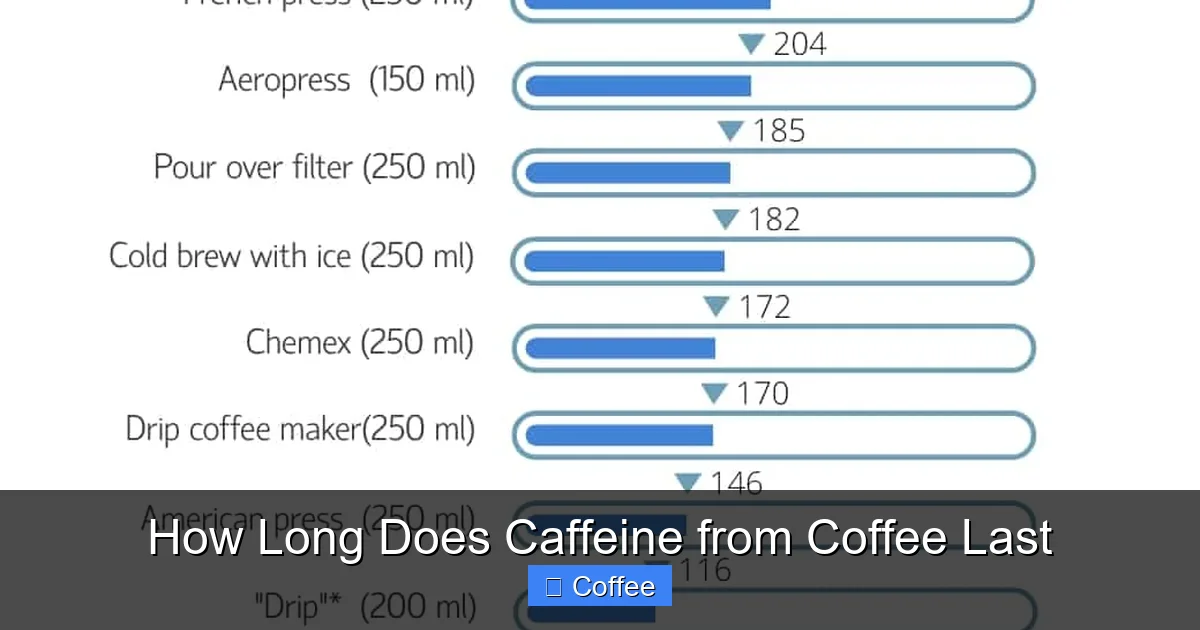
- Brewed Coffee (8oz): 80-100mg (average)
- Espresso (1oz): 60-75mg
- Latte/Cappuccino (16oz): 60-150mg (depends on espresso shots)
- Cold Brew (8oz): 100-200mg (often higher concentration)
- Decaf (8oz): 2-15mg (yes, it’s not zero!)
Actionable Tip: If you’re sensitive, switch to a single shot in your afternoon latte instead of a double. Choose regular brewed coffee over high-caffeine cold brew later in the day. Remember, decaf isn’t a free pass – factor in that 2-15mg!
Hydrate and Eat Wisely
While water and food won’t drastically shorten caffeine’s *duration*, they help manage its impact:
- Drink water: Counteracts mild diuretic effect, prevents dehydration (which worsens fatigue), and helps flush metabolites.
- Have coffee with food: Slows absorption slightly, preventing a massive spike and crash. A balanced meal/snack with protein and fat is ideal.
Avoid sugary coffee drinks – the sugar crash combined with fading caffeine is brutal.
Consider Half-Caf or Gradual Reduction
If you love the ritual of afternoon coffee but struggle with sleep:
- Mix regular and decaf beans (half-caf).
- Gradually reduce the amount of regular coffee in your afternoon cup over a week or two.
- Switch to lower-caffeine alternatives like black tea (20-60mg) or green tea (20-45mg) after noon.
This maintains the habit while reducing the caffeine load.
Listen to Your Body (and Your Genes)
Pay attention to how you feel hours after your last cup. Do you have trouble falling asleep? Feel restless at night? Experience afternoon crashes? These are clues you’re consuming too much, too late. If you suspect you’re a slow metabolizer (strong family history of caffeine sensitivity, known liver issues, on certain meds), be extra conservative with timing and amount.
Special Cases: Pregnancy, Medications, and Health Conditions
Caffeine metabolism doesn’t operate the same for everyone. Certain situations require extra caution.
Pregnancy and Breastfeeding
As mentioned, caffeine metabolism slows significantly during pregnancy. Health authorities (ACOG, NHS) recommend limiting caffeine to 200mg per day maximum (about one 12oz cup of brewed coffee). This isn’t just about the mother’s sleep; high caffeine intake has been associated with increased risk of miscarriage and low birth weight. The prolonged half-life means even this limited amount can have effects throughout the day. During breastfeeding, caffeine passes into breast milk. While newborns metabolize it very slowly, older infants handle it better. Moderation (sticking to the 200mg limit) and timing (avoiding caffeine right before feeds) are key.
Medication Interactions
This is critical. Many medications interact with caffeine by either speeding up or, more commonly, slowing down its metabolism:
- Birth Control Pills: Significantly inhibit CYP1A2, doubling or tripling caffeine’s half-life.
- Some Antibiotics (e.g., Ciprofloxacin, Norfloxacin): Strongly inhibit metabolism.
- Antifungals (e.g., Fluconazole): Inhibit metabolism.
- Heart Medications (e.g., Theophylline): Caffeine can increase levels or effects.
- Stimulants (e.g., ADHD meds): Can amplify side effects like anxiety and heart palpitations.
Actionable Tip: ALWAYS check with your doctor or pharmacist about potential interactions between your medications and caffeine. Don’t assume it’s safe.
Liver Disease
Individuals with liver conditions like cirrhosis or hepatitis should be extremely cautious with caffeine. The liver’s reduced capacity to metabolize means caffeine can accumulate to toxic levels much more easily, even with normal consumption. Consult your hepatologist for personalized advice, which may involve strict limitation or avoidance.
Anxiety Disorders and Heart Conditions
People with anxiety disorders, panic attacks, or certain heart conditions (like arrhythmias) are often more sensitive to caffeine’s stimulating effects. The prolonged duration can mean symptoms like racing heart, restlessness, or heightened anxiety last much longer. Limiting intake, especially later in the day, is usually recommended. Work with your doctor to find a safe level.
Conclusion: Master Your Caffeine Clock for Better Days and Nights
So, how long does caffeine from coffee last? The simple answer is: it depends – significantly – on you. While the average half-life is 5-6 hours, meaning effects often fade within 3-5 hours, traces can linger for 10-12 hours or more, especially if you’re a slow metabolizer, pregnant, or on certain medications. This isn’t just trivia; it’s crucial information for managing your energy and your sleep.
The key takeaway isn’t to fear caffeine, but to respect its staying power. That afternoon cup you enjoy might be the invisible reason you’re staring at the ceiling at midnight. By understanding your personal sensitivity (are you a fast or slow metabolizer?), knowing the caffeine content of your brew, and implementing a strategic cutoff time (often 6-12 hours before bed), you can harness coffee’s benefits without sacrificing rest. Pay attention to how you feel hours after your last sip – your body is giving you the best data. Experiment with timing, consider half-caf options later in the day, and never underestimate the power of that 2-15mg in your decaf.
Coffee is a beloved ritual for good reason. It fuels productivity, sparks conversation, and delivers a moment of comfort. But true mastery comes from aligning this ritual with your body’s natural rhythms. When you time your caffeine intake wisely, you unlock sustained energy throughout the day and reclaim deep, restorative sleep at night. It’s not about drinking less coffee; it’s about drinking it smarter. So, pour your next cup with intention, knowing exactly how long its effects will last – and how to make them work for you, not against you.
Frequently Asked Questions
Does decaf coffee have caffeine, and how long does it last?
Yes, decaf coffee contains caffeine, typically 2-15mg per 8oz cup. While much less than regular coffee (80-100mg), this small amount can still affect highly sensitive individuals, especially if consumed late in the day. Its duration follows the same metabolic rules as regular caffeine.
Can I speed up how fast my body gets rid of caffeine?
There’s no reliable way to significantly speed up caffeine metabolism. Time is the main factor. Staying hydrated supports overall kidney function for elimination, but it won’t drastically shorten the liver’s processing time. Avoiding factors that slow metabolism (like certain medications) is the best approach.
Why do I feel tired after the caffeine wears off?
This “crash” happens because caffeine was blocking adenosine, the chemical that makes you feel sleepy. When caffeine levels drop, the built-up adenosine floods your receptors, causing a sudden wave of fatigue. It can also be linked to the body’s effort to rebalance after the stimulant effect.
How does pregnancy affect how long caffeine lasts?
Caffeine metabolism slows dramatically during pregnancy, especially in the second and third trimesters. The half-life can double or triple to 10-15+ hours. This means caffeine stays in the system much longer, increasing the risk of sleep disruption and potential effects on the developing baby, which is why intake is strictly limited.
Do medications really change how long caffeine affects me?
Absolutely. Many common medications, including birth control pills, some antibiotics (like ciprofloxacin), and antifungals, inhibit the liver enzyme (CYP1A2) responsible for breaking down caffeine. This can double or even triple caffeine’s half-life, making its effects last much longer and potentially causing stronger side effects.
Is it true that smokers process caffeine faster?
Yes, smoking induces the liver enzyme CYP1A2, making smokers fast metabolizers of caffeine with a shorter half-life (around 3-4 hours). When someone quits smoking, their metabolism suddenly slows, meaning caffeine lasts much longer than before, which can cause unexpected jitters or sleep issues until the body adjusts.