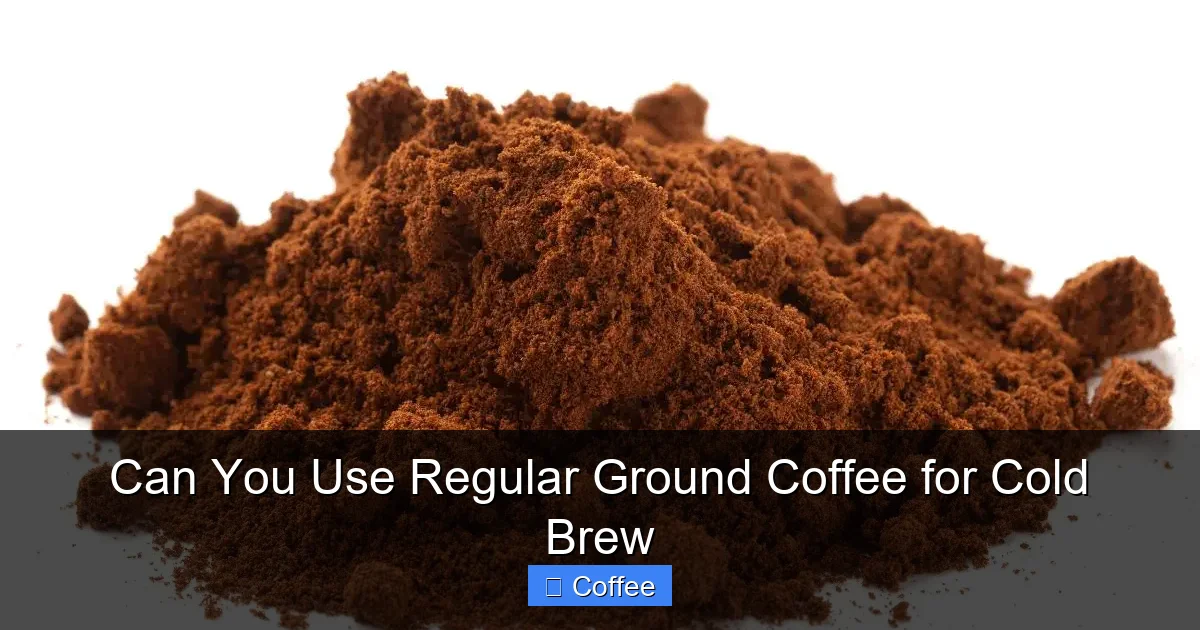
Yes, you can absolutely use regular ground coffee for cold brew, but it requires adjustments for best results. While pre-ground coffee works in a pinch, fresh coarse grounds yield superior flavor and strength. Key factors are grind size, brew time, and proper filtering to avoid bitterness and sediment.
Key Takeaways
- Regular ground coffee works for cold brew: Pre-ground coffee is usable, but coarse grind size is critical to prevent over-extraction and bitterness.
- Grind size is non-negotiable: Fine or medium grounds (like drip coffee) will make muddy, bitter cold brew; always opt for coarse grounds.
- Brew time must be extended: Using regular grounds often requires 18-24 hours (vs. 12-16 for coarse) to achieve proper strength without harshness.
- Filtering is essential: Double-straining through a fine-mesh sieve and paper filter removes fine particles that cause cloudiness and off-flavors.
- Flavor profile differs: Regular grounds may yield a slightly less smooth, more acidic brew compared to purpose-made coarse cold brew grounds.
- Freshness matters most: Stale pre-ground coffee produces flat, dull cold brew; use recently roasted beans ground just before brewing.
Quick Answers to Common Questions
Can I use instant coffee to make cold brew?
No, instant coffee won’t work for traditional cold brew. Cold brew requires steeping coffee *grounds* in water to extract flavor. Instant coffee is already dissolved solids; mixing it with cold water just makes weak, watery coffee, not cold brew concentrate.
How long does cold brew made with regular grounds last?
Properly strained and stored in an airtight container in the fridge, cold brew concentrate (made with regular grounds or coarse) lasts 10-14 days. Discard if you see mold, smell sourness, or notice off-flavors.
Should I use hot water to “bloom” regular grounds before adding cold water?
No, avoid hot water. The bloom (releasing CO2) happens naturally during the long cold steep. Adding hot water defeats the purpose of cold extraction and can cause uneven brewing or bitterness.
Can I make cold brew in a French press with regular ground coffee?
Yes, but with caveats. Use a coarse grind if possible (pulse blade grinder coarsest), 1:6 ratio, 18-24 hours steep. *Crucially*, do NOT plunge the press. Carefully decant the liquid off the top grounds to avoid sediment. Double-straining afterward is still recommended.
Why does my cold brew taste sour?
Sourness usually indicates under-extraction. With regular grounds, this means brew time was too short (less than 18 hours) or the coffee-to-water ratio was too low (too much water). Extend brew time to 20-24 hours or use slightly more coffee next time.
📑 Table of Contents
- Can You Actually Use Regular Ground Coffee for Cold Brew? The Straight Answer
- Why Grind Size is the #1 Factor (And Why Regular Grounds Need Adjustment)
- Flavor Differences: What to Expect with Regular Grounds
- How to Make Cold Brew SUCCESSFULLY with Regular Ground Coffee: A Step-by-Step Guide
- Troubleshooting Common Problems with Regular Ground Cold Brew
- The Verdict: Is Regular Ground Coffee Worth It for Cold Brew?
Can You Actually Use Regular Ground Coffee for Cold Brew? The Straight Answer
Cold brew coffee has exploded in popularity. Its smooth, low-acid profile and refreshing chill make it the ultimate summer (or anytime) drink. But here’s the question buzzing in kitchens everywhere: Can you grab that bag of regular pre-ground coffee sitting in your pantry and use it for cold brew? The short, reassuring answer is **yes**. You absolutely can. However, it’s not quite as simple as dumping those grounds into water and waiting. Using regular ground coffee – typically labeled for drip machines, French press, or pour-over – requires some know-how to avoid disappointment. Many coffee lovers assume cold brew needs special coarse grounds, leading them to buy expensive pre-packaged cold brew blends. While those blends are optimized, they’re not mandatory. Your regular coffee can work beautifully with the right approach. This article dives deep into why it’s possible, the crucial adjustments you need to make, and how to get the best results without buying new coffee. Forget the myth that you need specialty beans or grinds; let’s unlock the potential in your existing coffee stash.
The confusion often stems from misunderstanding how cold brew extraction works. Unlike hot brewing, which rapidly pulls flavors (and sometimes bitterness) from fine grounds, cold brew relies on time. Cold water extracts coffee slowly and gently over many hours, primarily capturing sugars and oils while leaving behind harsher acids and compounds. This slow process is why cold brew tastes smoother. However, the *grind size* directly impacts what gets extracted and how quickly. Fine grounds have a huge surface area, meaning even cold water can extract too much, too fast, leading to bitterness and sediment. Coarse grounds, with less surface area, allow for a controlled, gentle extraction perfect for cold water. Regular pre-ground coffee is usually medium-fine, designed for hot water to flow through quickly in a drip machine. Using it directly in cold brew without modification is like using sand instead of gravel in a slow filter – it clogs and over-extracts. But with smart tweaks, you can make it work deliciously.
Why Grind Size is the #1 Factor (And Why Regular Grounds Need Adjustment)

Visual guide about Can You Use Regular Ground Coffee for Cold Brew
Image source: eazvucieidz.exactdn.com
The Science of Extraction: Surface Area Matters
Imagine trying to dissolve sugar in cold water. A single sugar cube takes forever, while granulated sugar dissolves much faster because there’s more surface exposed to the water. Coffee extraction works the same way. Grind size determines the surface area of the coffee particles exposed to the water. Fine grounds = massive surface area = rapid extraction. Coarse grounds = minimal surface area = slow, controlled extraction. Cold brew’s magic lies in that slow extraction. It selectively pulls out the desirable sweet and chocolatey notes while minimizing the extraction of bitter compounds and harsh acids that hot water readily dissolves. Using fine or medium-fine grounds (like standard pre-ground coffee) in cold water creates a problem: the large surface area allows *too much* extraction to happen over the long brew time. This results in a brew that’s overly strong, bitter, astringent (that dry, puckering mouthfeel), and often cloudy with fine sediment. It defeats the whole purpose of cold brew’s smoothness.
Regular Grounds vs. Cold Brew Coarse Grinds: A Direct Comparison
Let’s break down the typical differences:
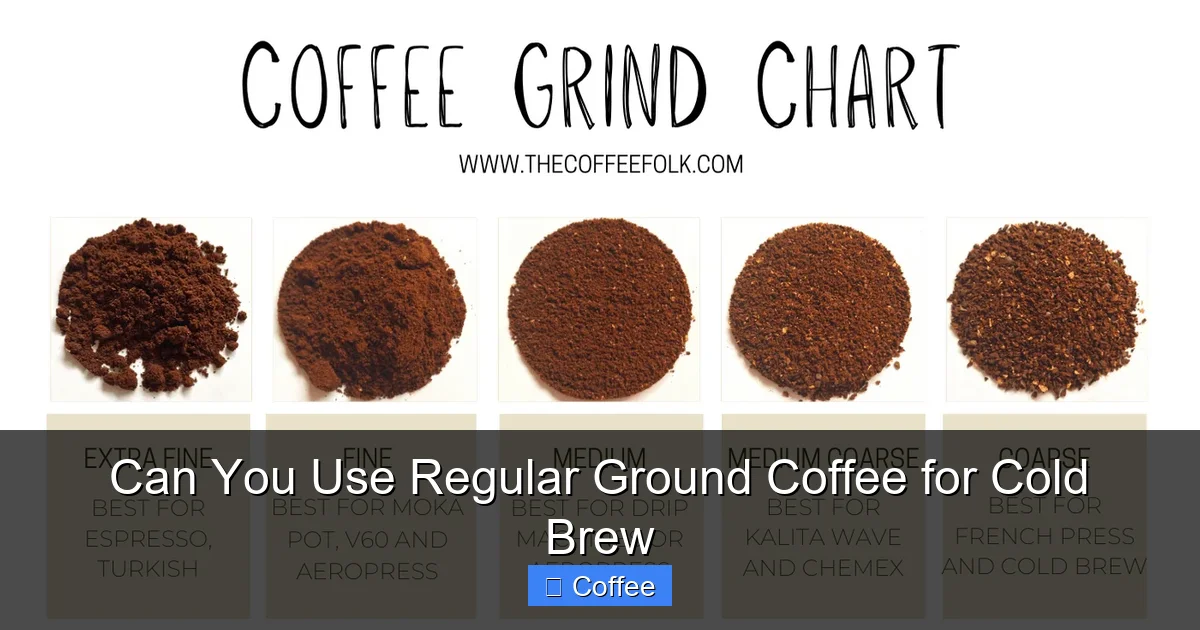
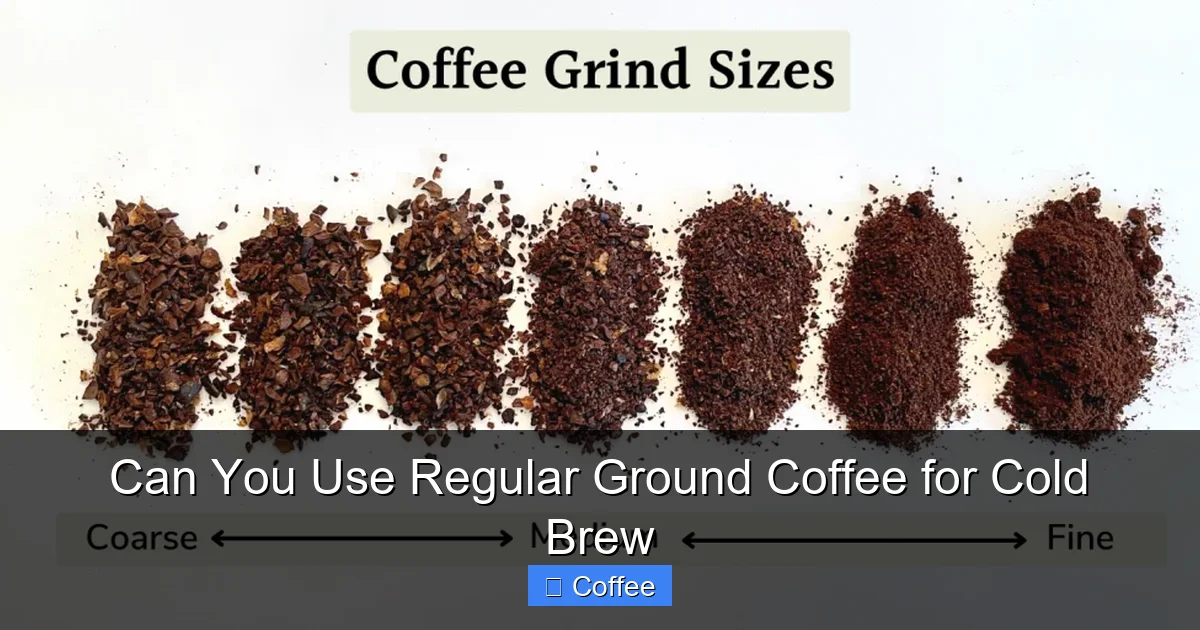
- Regular Pre-Ground Coffee (Drip/Pour-Over): Usually a medium-fine consistency, similar to coarse sand or table salt. Designed for hot water (195-205°F) to pass through in 4-6 minutes, extracting efficiently without overdoing it.
- Purpose-Built Cold Brew Grinds: Significantly coarser, resembling coarse sea salt or breadcrumbs. This large particle size is essential for the 12-24 hour cold water immersion, ensuring extraction stays gentle and balanced.
Using regular grounds without adjusting your method is like using the wrong tool for the job. The fine particles will clump together when cold water hits them, creating channels where water flows too quickly through some areas (under-extracting) while stagnating in others (over-extracting). This inconsistency leads to uneven flavor and inevitable bitterness. Furthermore, the fine particles don’t settle well and will make your final brew murky unless filtered extremely carefully. The key takeaway? **Grind size isn’t just important; it’s the foundation of good cold brew.** If you’re using regular pre-ground coffee, you *must* treat it as if it’s too fine and compensate with longer brew times and meticulous filtering.
Flavor Differences: What to Expect with Regular Grounds
Visual guide about Can You Use Regular Ground Coffee for Cold Brew
Image source: thecoffeefolk.com
The Potential Downsides: Bitterness, Acidity, and Cloudiness
Don’t expect your regular-ground cold brew to taste *exactly* like a cafe’s meticulously crafted version. There are inherent differences due to the grind size:
- Increased Bitterness: As explained, the fine particles allow more bitter compounds (like cafestol and kahweol) to leach out over the long steep. This is the most common complaint when using regular grounds without adjustments.
- Slightly Higher Perceived Acidity: While cold brew is generally low-acid, the over-extraction from fine grounds can pull out more acidic notes than desired, making it taste sharper or more “sour” than a proper coarse-grind cold brew.
- Cloudiness and Sediment: Fine particles simply don’t settle. Your brew will look murky, and even after straining, you’ll likely have fine silt at the bottom of your glass. This isn’t just aesthetic; those fines contribute to bitterness and a gritty mouthfeel.
- Potential for Staleness: Pre-ground coffee loses volatile aromatic compounds much faster than whole beans. If your regular grounds are more than a week or two old, your cold brew will taste flat and lack the vibrant top notes you’d get from freshly ground beans.
It’s crucial to manage expectations. Regular grounds won’t magically produce the ultra-smooth, syrupy-sweet profile of a perfect coarse-grind cold brew. However, with the right technique, you *can* achieve a very enjoyable, refreshing, and strong cold brew that’s far superior to iced drip coffee.
The Upsides: Convenience and Cost Savings
Let’s balance the scales! Using regular grounds has significant advantages:
- No Extra Cost: You’re using coffee you already own. No need to buy a separate bag of “cold brew blend” (though those blends often use specific bean varieties optimized for cold extraction).
- Immediate Gratification (Sort Of): If you have pre-ground coffee on hand, you can start brewing *right now* without needing to grind beans. Great for spontaneous cold brew cravings.
- Consistency with Your Favorite Brew: If you love the flavor profile of your regular drip coffee, using those same grounds for cold brew will give you a cold brew that tastes familiar and aligned with your preferences, just smoother and less acidic.
- Accessibility: Not everyone owns a burr grinder capable of producing a true coarse grind. Using pre-ground is the most accessible method for many home brewers.
The flavor might have subtle differences – perhaps a touch more complexity from the extended extraction or a slightly different balance – but it will still be distinctly delicious cold brew. Think of it as a unique expression of your favorite coffee, rather than a flawed imitation.
How to Make Cold Brew SUCCESSFULLY with Regular Ground Coffee: A Step-by-Step Guide
Visual guide about Can You Use Regular Ground Coffee for Cold Brew
Image source: craftcoffeespot.com
Essential Adjustments: Time, Ratio, and Filtering
Success hinges on counteracting the fine grind size. Here’s your battle plan:
- Embrace the Longer Steep: This is non-negotiable. While coarse cold brew often brews in 12-16 hours, **regular pre-ground coffee needs 18-24 hours.** The extra time allows the cold water to extract sufficient strength *without* pulling excessive bitterness, as the fine particles extract more slowly than you’d think in cold water compared to hot. Don’t rush it! Set a timer for 20 hours as a good starting point.
- Adjust Your Coffee-to-Water Ratio: Standard cold brew ratios are often 1:4 to 1:8 (coffee to water) for concentrate. With finer grounds, you might need slightly *less* coffee to avoid overpowering strength and bitterness. Start with a **1:6 ratio** (e.g., 1 cup coffee to 6 cups water). If your brew is too weak after 20 hours, increase the coffee slightly next time; if too strong/bitter, decrease it.
- Master the Art of Double (or Triple) Straining: This is where most attempts fail. A single pass through a paper filter often isn’t enough for fine grounds.
- Step 1: Pour the brewed coffee through a fine-mesh metal sieve or nut milk bag into a large container. This catches the bulk of the grounds and larger fines.
- Step 2: Place a paper coffee filter (like a Melitta or Chemex) inside a funnel over your final storage bottle or jar. Slowly pour the pre-strained coffee through the paper filter. This removes the tiny particles causing cloudiness and bitterness.
- Step 3 (Optional but Recommended): For absolute clarity, strain the paper-filtered coffee through a second paper filter or even a cheesecloth layer. Be patient; this takes time but is worth it.
- Use Cold, Filtered Water: Impurities in tap water can affect taste. Always use filtered or bottled water for the best flavor.
- Store Properly: Once strained, store your cold brew concentrate in an airtight container in the fridge. It will keep for up to 2 weeks. Dilute with water or milk (typically 1:1 to 1:2 concentrate to liquid) when serving over ice.
Pro Tips for Peak Performance
- Stir Gently After Adding Water: Give the coffee grounds a light stir with a spoon after adding water to ensure all grounds are saturated and there are no dry clumps. This promotes even extraction.
- Use a Large, Wide-Mouth Jar: A half-gallon mason jar or large French press (remove the plunger!) works perfectly. The wide opening makes stirring and straining easier.
- Don’t Skip the Agitation (Optional but Helpful): After the initial stir, give the mixture one more gentle stir at the 12-hour mark. This can help break up any clumps and ensure uniformity.
- Taste Test at 18 Hours: If you’re unsure, start tasting at 18 hours. Is it strong enough? Smooth enough? If not, let it go another 2-4 hours. Avoid going beyond 24 hours, as bitterness will definitely increase.
- Grind Fresh if Possible (The Game-Changer): If you *do* have a grinder, even a cheap blade one, pulse your regular beans to the coarsest setting possible. It won’t be perfect coarse, but it will be significantly better than pre-ground, reducing brew time and improving flavor dramatically. This is the single best upgrade you can make.
Following these steps transforms regular pre-ground coffee from a potential disappointment into a reliable, tasty cold brew base. It’s about working *with* the grind size, not against it.
Troubleshooting Common Problems with Regular Ground Cold Brew
My Cold Brew is Bitter and Harsh
This is the #1 issue. It almost always means **over-extraction** due to the fine grind.
- Solution 1: Shorten Brew Time (Slightly): If you brewed for 24 hours, try 18-20 hours next time. Taste at 18 hours.
- Solution 2: Use Less Coffee: Reduce your coffee-to-water ratio. Try 1:7 instead of 1:6.
- Solution 3: Improve Filtering: Ensure you’re doing that double-strain! Skipping the fine-mesh sieve step is a common culprit for bitterness from fines.
- Solution 4: Check Coffee Freshness: Stale coffee tastes bitter regardless of method. Use coffee roasted within the last 2-3 weeks.
Remember, a *little* bitterness is normal in strong coffee, but harshness means something went wrong.
My Cold Brew is Weak and Watery
This usually indicates **under-extraction**.
- Solution 1: Extend Brew Time: Go for the full 24 hours. Regular grounds need that extra time to extract fully.
- Solution 2: Use More Coffee: Increase your ratio to 1:5 (e.g., 1 cup coffee to 5 cups water).
- Solution 3: Ensure Proper Saturation: Did you stir well initially? Dry clumps won’t extract.
- Solution 4: Check Water Temperature: While cold brew uses cold water, *extremely* cold water (like straight from the fridge) can slow extraction slightly. Room temperature water is fine, but avoid hot water!
Weak cold brew is often fixable with patience – just give it more time.
My Cold Brew is Cloudy with Sediment
This is purely a filtering issue with fine grounds.
- Solution 1: Double-Strain Religiously: Fine-mesh sieve FIRST, then paper filter. Don’t skip steps.
- Solution 2: Use a High-Quality Paper Filter: Thicker filters (like Chemex) or even doubling up standard filters catch more fines.
- Solution 3: Let it Settle: After the initial coarse strain, let the coffee sit in the fridge for 1-2 hours before doing the final paper filter strain. Some fines will settle to the bottom.
- Solution 4: Consider a French Press (Carefully): Brew in a large French press, but *do not plunge*. Let it steep, then carefully pour off the top clear liquid without disturbing the grounds at the bottom. Not ideal, but works in a pinch.
Cloudiness doesn’t affect taste *as much* as bitterness, but nobody wants grit in their glass. Proper filtering is key.
My Cold Brew Tastes Flat or Stale
This points to **old coffee or poor storage**.
- Solution 1: Use Fresher Coffee: Pre-ground coffee stales fast. Buy smaller bags more frequently, or grind whole beans just before brewing.
- Solution 2: Store Coffee Properly: Keep pre-ground coffee in an airtight container, away from light, heat, and moisture. The freezer is okay for *very* short term (weeks), but the fridge introduces moisture – avoid it.
- Solution 3: Check Water Quality: Bad-tasting water makes bad-tasting coffee. Use filtered water.
- Solution 4: Clean Your Equipment: Old coffee oils in your jar or filter can impart stale flavors. Wash thoroughly with vinegar solution occasionally.
Freshness is paramount for vibrant cold brew flavor, regardless of grind size.
The Verdict: Is Regular Ground Coffee Worth It for Cold Brew?
So, can you use regular ground coffee for cold brew? Unequivocally, **yes**. It’s not just possible; it’s a practical, cost-effective method that yields delicious results when done right. The key isn’t finding a magical loophole; it’s understanding the *why* behind the adjustments and implementing them consistently. You’ve learned that grind size is the critical variable, and regular pre-ground coffee’s finer texture demands a longer brew time (18-24 hours), a potentially adjusted coffee-to-water ratio (start with 1:6), and, most importantly, meticulous double-straining to eliminate bitterness and cloudiness.
Don’t let the need for these tweaks discourage you. Think of it as mastering a specific technique within the cold brew method, rather than a limitation of the coffee itself. The convenience of using what you already have is a huge win. You avoid the expense of buying a separate “cold brew blend” (though those blends often use beans roasted specifically for cold extraction, which *can* offer nuanced flavors) and the hassle of grinding coarse if you lack the equipment. The flavor profile will be slightly different – perhaps a touch more complex or with a subtle difference in the balance of sweetness and acidity compared to a perfect coarse grind – but it will still be the smooth, refreshing, low-acid cold brew you crave. It will taste distinctly like *your* favorite coffee, transformed by the cold extraction process.
The ultimate takeaway is empowerment. You now possess the knowledge to make excellent cold brew regardless of whether you have purpose-made coarse grounds on hand. Next time you’re out of your usual cold brew coffee, don’t panic. Grab that bag of regular pre-ground, set your timer for 20 hours, prepare your double-straining setup, and brew with confidence. The result will be a testament to your understanding of the process, not a compromise. Cold brew is about patience and technique, not just ingredients. Master the technique with what you have, and you’ll never be without your favorite chilled coffee again. So, go ahead – give that regular ground coffee a chance. Your perfect pitcher of cold brew is waiting.
Frequently Asked Questions
Is it safe to drink cold brew made with regular ground coffee?
Absolutely! As long as you use clean equipment, fresh coffee, and filtered water, cold brew made with regular grounds is perfectly safe. The key is proper brewing technique (adequate time, correct ratio, thorough filtering) to ensure good flavor and avoid excessive bitterness, not safety concerns.
Can I use decaf regular ground coffee for cold brew?
Yes, decaf regular ground coffee works exactly the same way as regular coffee for cold brew. Follow the same guidelines: coarse grind (or adjust time/ratio for pre-ground), 18-24 hour steep, and double-strain. Decaf cold brew is a great low-caffeine option.
How much caffeine is in cold brew made with regular grounds?
Cold brew concentrate typically has 2-3 times more caffeine per ounce than regular drip coffee due to the higher coffee-to-water ratio and long steep. A standard 1:6 concentrate made with regular grounds will yield about 100-200mg of caffeine per 4oz serving, depending on the coffee bean type and exact ratio used.
Can I reuse the coffee grounds after making cold brew?
While technically possible, it’s not recommended. The grounds have been fully extracted of most desirable flavors and caffeine during the long steep. They will be very weak and lack complexity. Composting them is the best use, as they make excellent fertilizer.
Why is my cold brew made with regular grounds so bitter?
Bitterness almost always comes from over-extraction caused by the fine grind size. This happens if you brewed for too long (over 24 hours), used too much coffee (strong ratio like 1:4), or didn’t filter thoroughly enough, allowing fine particles to continue extracting bitterness in your cup.
Can I speed up the cold brew process with regular grounds?
No, you shouldn’t try to rush it. Cold brew’s smoothness relies on slow extraction. Using heat, agitation, or shorter times with fine grounds will almost certainly result in bitter, harsh coffee. Patience is essential – stick to 18-24 hours for the best balance of strength and smoothness with regular grounds.