Yes, coffee ice cream typically contains caffeine, but the amount varies significantly based on the brand, ingredients, and serving size. While it won’t give you the same jolt as a hot cup of coffee, a single scoop can still pack 15-50mg of caffeine. Always check labels or contact manufacturers if you’re sensitive to caffeine or monitoring your intake.
Key Takeaways
- Caffeine is usually present: Most coffee ice cream contains caffeine derived from coffee beans used in flavoring or extracts.
- Amounts vary widely: Caffeine content ranges from 15mg to over 100mg per serving, depending on the brand and recipe.
- Source matters: Ice cream made with real brewed coffee or espresso generally has more caffeine than those using artificial flavors or decaf coffee.
- Serving size is key: A single scoop might have less caffeine than a full cup of coffee, but eating a whole pint significantly increases intake.
- Decaf isn’t always caffeine-free: “Decaf” coffee ice cream may still contain trace amounts of caffeine (typically 2-15mg per serving).
- Check labels or ask: Caffeine isn’t always listed on nutrition facts; contact the manufacturer for specifics if needed.
- Be mindful of consumption: Enjoy coffee ice cream as an occasional treat, especially if you’re sensitive to caffeine or avoiding it after noon.
Quick Answers to Common Questions
How much caffeine is in a typical scoop of coffee ice cream?
A standard 1/2 cup (65g) scoop of coffee ice cream usually contains between 15mg and 60mg of caffeine. Mass-market brands often sit at the lower end (15-30mg), while premium brands using real brewed coffee or espresso tend to be higher (30-60mg).
Can decaf coffee ice cream still have caffeine?
Yes, absolutely. Decaffeinated coffee isn’t 100% caffeine-free; it typically retains 2-15mg of caffeine per 8oz cup. Ice cream made with decaf coffee or decaf extract will contain this small residual amount, usually 2-15mg per serving.
Does coffee ice cream keep you awake like coffee does?
It can, depending on the amount consumed and your sensitivity. A large serving (like a full pint) can contain 60-100mg+ of caffeine, which is enough to affect sleep for many people, especially if eaten close to bedtime. A single small scoop is less likely to cause issues.
Which coffee ice cream brands have the most caffeine?
Brands known for using significant amounts of real brewed coffee or espresso tend to be highest. Examples often cited include Starbucks Coffee Ice Cream (around 50-60mg per serving), Häagen-Dazs Coffee (approx. 40-50mg), and many local artisanal creameries that emphasize “made with real espresso.”
Is there caffeine-free coffee flavored ice cream?
Yes, but it’s less common. Look for ice creams where the primary coffee flavoring comes from “natural flavors” or “artificial flavors” that don’t use real coffee beans, or specifically labeled “caffeine-free” coffee ice cream (which uses decaf extracts or flavorings designed to be caffeine-free). Always check the ingredients.
📑 Table of Contents
- The Great Coffee Ice Cream Caffeine Conundrum: What’s Really in Your Scoop?
- Where Does the Caffeine in Coffee Ice Cream Actually Come From?
- How Much Caffeine is Actually in Your Coffee Ice Cream? (The Numbers Game)
- Factors That Influence Caffeine Levels in Your Favorite Pint
- Health Considerations: Enjoying Coffee Ice Cream Responsibly
- Making Your Own: Control the Caffeine, Craft the Perfect Scoop
- Conclusion: Savoring the Scoop with Knowledge
The Great Coffee Ice Cream Caffeine Conundrum: What’s Really in Your Scoop?
Picture this: It’s a warm summer evening. You’ve just finished a satisfying dinner, and the craving hits – something cool, creamy, and deeply satisfying. Your mind drifts to that pint of rich, dark coffee ice cream chilling in the back of your freezer. It promises the comforting aroma and complex flavor of your favorite brew, but transformed into a luscious frozen dessert. You scoop out a generous portion, anticipating that familiar coffee kick… but then you pause. A question nags at you: *Does this delicious treat actually contain caffeine?* If you’re someone who’s careful about your daily caffeine intake, maybe you’re avoiding coffee after 2 PM, or perhaps you’re just curious about what you’re consuming. You’re not alone. This is one of the most common questions people have about coffee ice cream. The answer isn’t a simple yes or no; it’s nuanced, depending on how the ice cream is made, what ingredients are used, and how much you eat. Let’s dive deep into the frothy, frozen world of coffee ice cream and uncover the caffeine truth.
It’s easy to assume that anything labeled “coffee” must contain caffeine, right? After all, coffee beans are the primary source of caffeine in our diets. But the journey from bean to ice cream pint involves several steps where caffeine levels can change dramatically. Manufacturers have choices: they can use strong brewed coffee, concentrated espresso, coffee extracts (which can be caffeinated or decaf), or even artificial coffee flavoring that contains no real coffee – and therefore, no caffeine. The type and amount of these ingredients directly impact the final caffeine content. Furthermore, the serving size makes a huge difference. That single elegant scoop at a fancy dessert shop contains far less ice cream (and thus less caffeine) than devouring half a pint straight from the container while binge-watching your favorite show. Understanding these variables is key to knowing what you’re really getting with every spoonful.
Where Does the Caffeine in Coffee Ice Cream Actually Come From?
To grasp why caffeine levels fluctuate, we need to look at the source. Coffee ice cream gets its distinctive flavor primarily from coffee-derived ingredients. Here’s the breakdown of the main culprits (or heroes, depending on your perspective!):
Brewed Coffee or Espresso: The Caffeine Powerhouses
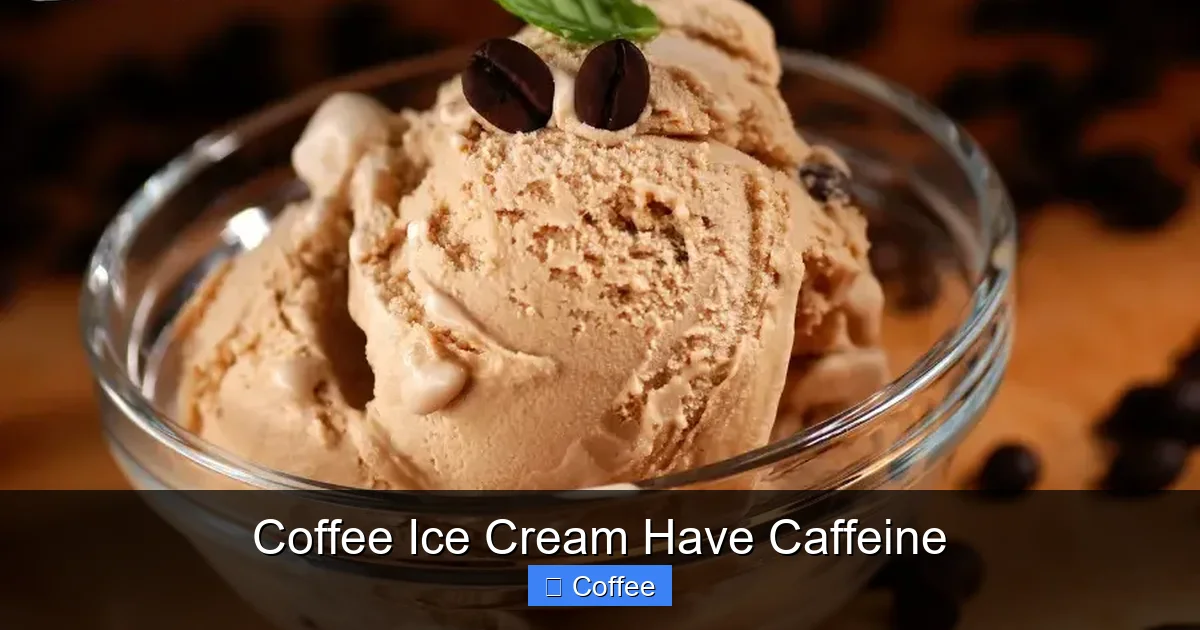
This is the most direct source of caffeine. Many premium and artisanal ice cream makers start with strong, freshly brewed coffee or even espresso. The caffeine present in the original brew carries directly into the ice cream base. The strength of the brew matters immensely. A tablespoon of robust espresso added to a batch will contribute significantly more caffeine than a cup of weak drip coffee. Some manufacturers even reduce brewed coffee by simmering it to concentrate both flavor and caffeine before folding it into the custard base. If you see “brewed coffee” or “espresso” high on the ingredient list, especially if it specifies “caffeinated,” you can be fairly confident there’s a meaningful amount of caffeine present. Think of brands like Starbucks’ own coffee ice cream or high-end local creameries known for using real espresso shots.
Visual guide about Coffee Ice Cream Have Caffeine
Image source: coffeehunger.com
Coffee Extracts and Flavors: The Variable Factor
This category is where things get tricky. Coffee extracts are highly concentrated liquids made by steeping coffee beans in alcohol or glycerin. They pack an intense coffee punch. However, extracts can be made from either regular (caffeinated) coffee beans or decaffeinated beans. A “coffee extract” label doesn’t automatically mean it’s caffeinated – you need to check if it specifies “decaf.” Similarly, “natural flavors” or “artificial flavors” listed as the coffee source often contain little to no actual caffeine. These are chemically created to mimic the taste of coffee without using real beans. If the ingredient list says “natural flavors” or “artificial flavors” as the primary coffee source, and doesn’t mention brewed coffee or espresso, the caffeine content is likely very low or negligible. This is common in many mass-market supermarket brands aiming for consistent flavor at lower cost.
Decaffeinated Coffee: Not Always Zero
Here’s a crucial point many people miss: “decaffeinated” coffee isn’t 100% caffeine-free. The decaffeination process (whether using water, solvents, or CO2) removes *most* of the caffeine, but trace amounts always remain. Regulations typically allow decaf coffee to contain up to 3% of the original caffeine content. For a typical 8oz cup of coffee that might mean 2-15mg of caffeine left. When decaf coffee or decaf coffee extract is used in ice cream, it will still contribute a small amount of caffeine. So, even if a pint is labeled “made with decaf coffee,” it’s not a guarantee of zero caffeine. It will be significantly less than its regular counterpart, but not absent. This is important for individuals with extreme caffeine sensitivity or those strictly avoiding it for medical reasons.
How Much Caffeine is Actually in Your Coffee Ice Cream? (The Numbers Game)
Now for the million-dollar question: just how much caffeine are we talking about? Unfortunately, there’s no single answer. It’s like asking “how much sugar is in fruit?” – it depends entirely on the specific fruit (or in this case, the specific ice cream). However, we can look at typical ranges based on common production methods and servings.
Typical Caffeine Ranges Per Serving
Based on analyses of popular brands and recipes, here’s a general guideline for a standard 1/2 cup (about 65g) serving:
Visual guide about Coffee Ice Cream Have Caffeine
Image source: caffeinepark.com
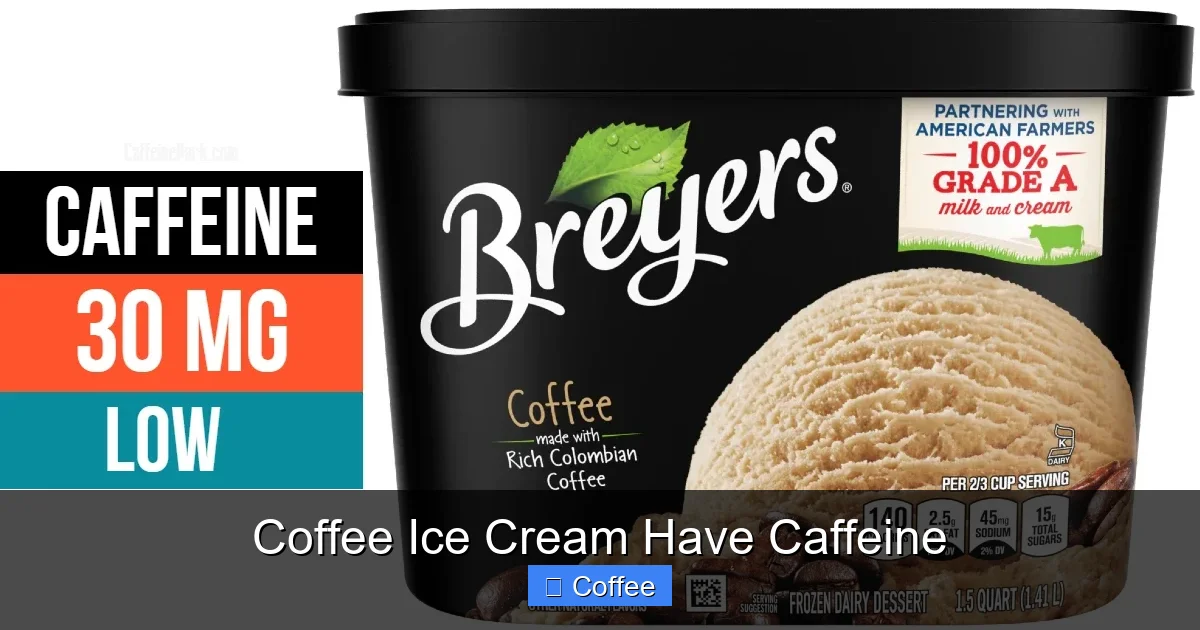
- Mass-Market Brands (using extracts/flavors): Often contain 15mg to 30mg of caffeine per serving. This is roughly equivalent to 1/4 to 1/2 a cup of brewed coffee. Examples might include some varieties from Breyers or Edy’s.
- Premium/Artisanal Brands (using brewed coffee/espresso): Typically range from 30mg to 60mg per serving. This is closer to 1/2 to 3/4 of a cup of coffee. Brands like Häagen-Dazs Coffee or local creameries using real espresso often fall here.
- High-Intensity Brands (heavy espresso use): Can reach 60mg to 100mg+ per serving. This is comparable to a full cup of coffee or more. Some specialty brands or those explicitly marketing an “espresso” flavor might hit these higher numbers. Starbucks’ Coffee Ice Cream, for instance, has been reported around 50-60mg per serving.
- Decaf Coffee Ice Cream: Usually contains 2mg to 15mg per serving. While minimal, it’s not zero.
Remember, these are estimates. Actual amounts can vary batch to batch. Crucially, **a full pint (16oz) contains two servings.** So that pint you’re eyeing could easily contain 60mg to 120mg+ of caffeine – equivalent to a strong cup of coffee or more!
Why Isn’t Caffeine Always Listed on the Label?
You might have noticed that caffeine content is rarely, if ever, listed on the standard Nutrition Facts panel of ice cream. This is because caffeine is classified as a “nutrient” only when it’s *added* as an ingredient (like in some energy drinks or sodas). In coffee ice cream, caffeine is a *naturally occurring component* of the coffee ingredient itself, not an additive. Therefore, manufacturers aren’t required to list it. This lack of transparency is why it’s so important to understand the sources (brewed coffee vs. extract) and consider contacting the company directly if you need precise information. Some forward-thinking brands are starting to include caffeine content on their websites or packaging, but it’s still the exception, not the rule.
Factors That Influence Caffeine Levels in Your Favorite Pint
Beyond the core ingredients, several other factors play a role in determining how much caffeine ends up in your bowl:
The Coffee-to-Ice-Cream Ratio
This is fundamental. How much actual coffee (brewed or extract) does the manufacturer use per batch of ice cream? A recipe calling for a cup of strong brewed coffee per quart of base will have significantly more caffeine than one using only a teaspoon of coffee extract. Premium brands often use higher ratios of real coffee to achieve a more authentic, robust flavor, which inherently means more caffeine. Conversely, brands prioritizing cost or a milder flavor might use less coffee-derived ingredient, resulting in lower caffeine.
Visual guide about Coffee Ice Cream Have Caffeine
Image source: crosslakecoffee.com
Strength of the Coffee Used
Not all coffee is created equal. A batch made with a dark roast, finely ground, brewed as espresso will be much more caffeinated than one made with a light roast, coarsely ground, brewed as weak drip coffee. The roast level itself has a minor impact (dark roasts have slightly less caffeine by weight than light roasts due to longer roasting, but the difference is small compared to brew method). The key factor is the concentration: espresso is packed with caffeine in a small volume, while a large volume of weak coffee might contribute less per ounce.
The Decaffeination Process (If Used)
As mentioned earlier, decaf isn’t zero. The specific method used (Swiss Water Process, CO2, or solvent-based) and the efficiency of the process for the beans used in the extract or brew will determine the residual caffeine level. Some decaf processes are more thorough than others, though all leave traces.
Serving Size: The Most Controllable Factor
This is where *you* have the most power. Enjoying a single, modest scoop (1/2 cup) means consuming a relatively small amount of caffeine – likely less than your morning latte. However, indulging in a large bowl, a double scoop cone, or especially eating half a pint or more significantly amplifies your caffeine intake. Be honest with yourself about how much you’re actually consuming. That “quick taste” can easily turn into a full serving without you realizing it.
Brand Philosophy and Target Market
Some brands specifically market their coffee ice cream as an “energy” treat or a dessert for coffee lovers seeking that extra kick, leading them to use high-caffeine ingredients. Others position it as a gentle, dessert-like flavor suitable for any time of day, opting for lower-caffeine extracts or decaf bases. Understanding the brand’s intent can give you clues about the likely caffeine level.
Health Considerations: Enjoying Coffee Ice Cream Responsibly
Coffee ice cream can be a delightful treat, but it’s wise to be mindful of its caffeine content, especially considering your overall daily intake and personal sensitivity.
Caffeine Sensitivity: Know Your Limits
People react to caffeine very differently. Some can drink espresso after dinner and sleep soundly, while others feel jittery after a single cup of tea. If you’re highly sensitive to caffeine, even the lower end of the coffee ice cream spectrum (15-30mg) might cause restlessness, anxiety, or disrupt your sleep if consumed in the afternoon or evening. Pay attention to how your body reacts. If you notice yourself feeling wired or having trouble sleeping after enjoying coffee ice cream later in the day, it might be a sign to switch to a caffeine-free dessert option like vanilla or chocolate (though chocolate has its own small caffeine/theobromine content) or choose a decaf coffee ice cream variety.
Daily Caffeine Budget: Don’t Go Overboard
Health authorities like the FDA suggest that up to 400mg of caffeine per day is generally safe for most healthy adults. This is roughly the amount in four 8oz cups of brewed coffee. Remember that caffeine adds up from *all* sources: your morning coffee, tea, soda, energy drinks, chocolate, and yes, coffee ice cream. If you start your day with two cups of coffee (200mg), have a caffeinated soda at lunch (40mg), and then enjoy a large bowl of coffee ice cream (50mg), you’re already at 290mg before dinner. Factor your ice cream treat into your total daily allowance, especially if you consume multiple caffeinated beverages.
Timing is Everything
Caffeine has a half-life of about 5-6 hours, meaning it takes that long for your body to eliminate half of what you consumed. Consuming significant amounts of caffeine (like a large serving of coffee ice cream) late in the day can interfere with falling asleep or reduce sleep quality. As a general rule, try to avoid caffeine-containing foods and drinks at least 6 hours before bedtime. Enjoy your coffee ice cream as an afternoon treat or after an early dinner, not as a late-night snack.
Beyond Caffeine: The Sugar and Fat Factor
While caffeine is the focus here, it’s important not to overlook the other nutritional aspects of coffee ice cream. Like most ice creams, it’s typically high in sugar and saturated fat. A standard 1/2 cup serving can easily contain 20-30 grams of sugar and 10-15 grams of fat. Enjoying it mindfully – savoring a small portion rather than mindlessly eating a whole pint – is key to making it part of a balanced lifestyle. The caffeine content is just one piece of the nutritional puzzle.
Potential Benefits? A Small Silver Lining
Coffee itself contains antioxidants. While the amount transferred to ice cream is likely minimal compared to a cup of coffee, using real coffee *does* contribute some beneficial compounds. However, it’s crucial to remember that the high sugar and fat content of ice cream generally outweighs any potential minor antioxidant benefits. Don’t view coffee ice cream as a health food, but enjoy it as the indulgent treat it is, with a slight nod to the coffee origin.
Making Your Own: Control the Caffeine, Craft the Perfect Scoop
One of the best ways to know exactly what’s in your coffee ice cream – including the caffeine content – is to make it yourself. It’s easier than you might think and gives you complete control over the ingredients and strength.
Choosing Your Coffee Base: The Caffeine Control Knob
This is where you dictate the caffeine level:
- For Maximum Caffeine: Use strong brewed coffee or, even better, espresso. Brew it extra strong (use more coffee grounds or a finer grind) to pack in the flavor and caffeine. Reduce it slightly on the stove to concentrate it further before adding to your base. A shot or two of espresso per quart of base is a great starting point.
- For Moderate Caffeine: Use standard strength brewed coffee. A cup of good drip coffee per quart of base works well.
- For Minimal Caffeine: Use high-quality decaffeinated coffee or decaf espresso. Remember, it won’t be zero, but it will be very low. Alternatively, use a high-quality *caffeine-free* coffee extract or flavoring (check the label carefully!). Some vanilla extracts have coffee notes, but true coffee flavor usually requires coffee-derived ingredients.
The beauty of homemade is you can experiment. Want a mocha twist? Add some cocoa powder along with your coffee. Prefer a cold brew base for smoother flavor? Brew a strong batch of cold brew concentrate.
Basic Homemade Coffee Ice Cream Recipe (Adjustable Caffeine)
Here’s a simple framework. Makes about 1 quart.
- Ingredients:
- 2 cups heavy cream
- 1 cup whole milk
- 3/4 cup granulated sugar (adjust to taste)
- Pinch of salt
- 4 large egg yolks
- 1.5 – 2 cups strong brewed coffee or 2-4 shots espresso (caffeinated or decaf – YOUR CHOICE!)
- 1 tsp pure vanilla extract (optional, complements coffee well)
- Method:
- In a saucepan, heat cream, milk, sugar, and salt over medium heat until steaming (do not boil).
- Whisk egg yolks in a separate bowl. Slowly whisk in about 1 cup of the hot cream mixture to temper the yolks.
- Pour the yolk mixture back into the saucepan with the remaining cream. Cook over medium-low heat, stirring constantly with a wooden spoon, until the mixture thickens enough to coat the back of the spoon (about 170-175°F / 77-80°C). Do not let it boil.
- Remove from heat. Strain the custard through a fine-mesh sieve into a clean bowl.
- Stir in the brewed coffee/espresso and vanilla extract (if using). The amount of coffee determines your caffeine level!
- Cool the mixture to room temperature, then cover and refrigerate for at least 4 hours, or preferably overnight, until thoroughly chilled.
- Churn in your ice cream maker according to the manufacturer’s instructions until it reaches a soft-serve consistency.
- Transfer to a freezer-safe container and freeze for 2-4 hours, or until firm.
Pro Tip: For an extra coffee punch without adding more liquid (which can make the ice cream icy), dissolve 1-2 tablespoons of instant espresso powder (caffeinated or decaf) in a small amount of hot water first, then whisk it into the chilled custard base before churning.
Why Homemade Wins for Caffeine Awareness
When you make it yourself, you know:
- Exactly what coffee you used: Regular, decaf, espresso strength?
- The precise amount: You measured the coffee/espresso going in.
- No hidden extracts: You control whether it’s real coffee or a flavoring.
- Perfect portion control: Scoop out exactly the amount you want.
It’s incredibly satisfying to create a dessert tailored perfectly to your caffeine tolerance and flavor preferences.
Conclusion: Savoring the Scoop with Knowledge
So, does coffee ice cream have caffeine? The resounding answer is **yes, most of the time, but the amount is far from consistent.** It’s not a myth; that rich, complex coffee flavor in your frozen treat usually comes from ingredients that naturally contain caffeine. However, the journey from coffee bean to your bowl means the caffeine content can swing dramatically – from barely detectable traces in some artificially flavored versions to a significant jolt comparable to a cup of coffee in others made with generous amounts of strong brew or espresso.
The key takeaway isn’t to avoid coffee ice cream altogether, but to enjoy it with your eyes wide open. Understand that “coffee flavor” doesn’t automatically mean “high caffeine,” but it *does* mean caffeine is likely present. Be mindful of the factors that influence the level: the type of coffee ingredient used (real brew vs. extract), the strength and amount added, whether decaf was used (and that it’s not zero), and crucially, **how much you actually eat.** That single scoop is very different from demolishing a pint.
If you’re sensitive to caffeine, actively managing your daily intake, or simply curious, take a moment to consider your coffee ice cream. Check the ingredient list – look for “brewed coffee,” “espresso,” or “coffee extract” as indicators of likely caffeine presence. Don’t hesitate to contact the manufacturer if precise information is important to you. Better yet, try making your own! Homemade coffee ice cream is a rewarding project that puts *you* in complete control of the caffeine content, allowing you to craft the perfect balance of creamy sweetness and coffee kick for your personal taste and tolerance.
Ultimately, coffee ice cream is meant to be a pleasure. Armed with this knowledge, you can savor every spoonful with confidence, knowing exactly what you’re getting. Whether it’s a small afternoon indulgence to complement your coffee habit or a decadent dessert enjoyed earlier in the day, understanding the caffeine factor ensures your treat enhances your moment, rather than disrupting your evening. So go ahead, grab that spoon, and enjoy the delicious intersection of two beloved classics – just do it wisely!
Frequently Asked Questions
Does all coffee ice cream contain caffeine?
Most coffee ice cream contains some caffeine because it’s derived from coffee beans. However, ice cream made solely with artificial coffee flavoring or specific caffeine-free extracts may contain negligible or zero caffeine. Always check the ingredients list for “brewed coffee,” “espresso,” or “coffee extract” as indicators of likely caffeine presence.
How can I find out the exact caffeine content in my coffee ice cream?
Caffeine content is rarely listed on nutrition labels as it’s a natural component, not an additive. Your best options are to check the manufacturer’s website, contact their customer service directly, or look for independent lab testing results if available. Understanding the ingredients (real coffee vs. flavor) gives the best clue.
Is coffee ice cream a good source of caffeine?
While it does contain caffeine, it’s not an efficient or recommended source. The caffeine comes bundled with high amounts of sugar and fat. If you need a caffeine boost, a cup of coffee or tea is far more effective and healthier. Enjoy coffee ice cream for its taste, not as a caffeine delivery system.
Can kids eat coffee ice cream?
Children are generally more sensitive to caffeine than adults. While a small taste is unlikely to cause harm, regular consumption of coffee ice cream (which contains caffeine and sugar) isn’t ideal for kids. It’s best to offer caffeine-free dessert options like vanilla, fruit sorbets, or chocolate (which has small amounts of caffeine/theobromine) as primary choices.
Does the caffeine in coffee ice cream affect its taste?
Caffeine itself has a slightly bitter taste, which contributes to the characteristic depth and complexity of coffee flavor. However, the primary flavor comes from the coffee oils, acids, and aromatic compounds. Decaf coffee ice cream often has a slightly different, sometimes less complex, flavor profile because some flavor compounds are also removed during decaffeination.
Can I make coffee ice cream with instant coffee to control caffeine?
Yes, instant coffee is a great option for homemade coffee ice cream and offers control. Use regular instant coffee for caffeinated ice cream, or decaffeinated instant coffee for a very low-caffeine version. Dissolve the crystals in a small amount of hot water first before mixing into your chilled custard base for even distribution. Start with 1-2 tablespoons per quart of base and adjust to taste.