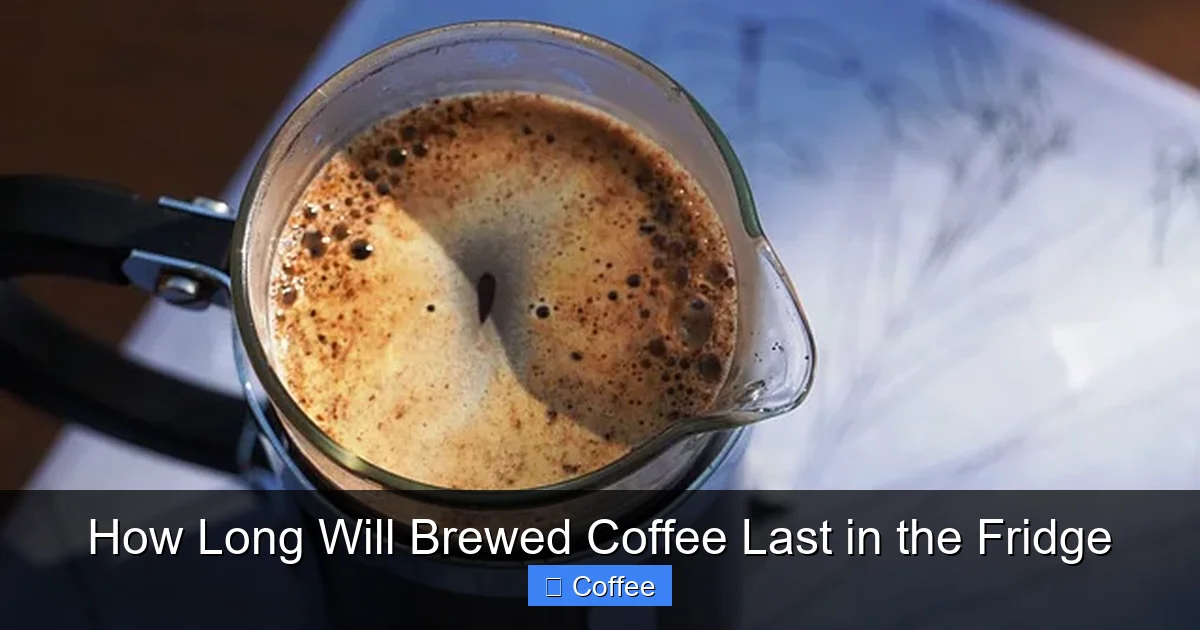
Brewed coffee lasts only 24-48 hours in the fridge before losing flavor and developing off-tastes. Proper storage in an airtight container is crucial, but refrigeration doesn’t stop staling—it just slows it down. Never drink coffee that smells sour, looks moldy, or tastes unpleasant, as it can cause stomach upset.
Key Takeaways
- Max 48 hours: Brewed coffee is best consumed within 24 hours, but absolutely no longer than 48 hours in the fridge.
- Airtight is essential: Always store coffee in a sealed, opaque container to minimize air and light exposure.
- Taste degrades fast: Flavor compounds break down quickly, leading to flat, sour, or stale tastes even before spoilage.
- Smell & look are key: Trust your senses—discard coffee with sour odors, mold, or unusual textures.
- Reheating ruins flavor: Avoid microwaving; gently warm stovetop coffee if needed, but expect diminished taste.
- Freezing is better for long-term: For coffee beyond 2 days, freeze it in ice cube trays for future iced drinks.
- Fresh brew beats stored: When possible, make smaller batches more frequently for the best flavor and safety.
Quick Answers to Common Questions
Can I drink coffee that’s been in the fridge for 3 days?
It’s not recommended. After 72 hours, coffee likely has significant flavor degradation and may develop sour or moldy notes. While it might not make you sick, it won’t taste good and could cause mild stomach upset. Discard it.
Why does my fridge coffee taste sour?
Sourness comes from oxidation and the breakdown of coffee acids. As coffee sits, compounds like chlorogenic acid turn into sharper, vinegary notes. Refrigeration slows this but doesn’t stop it—hence the sour taste after 24+ hours.
Can I add milk to coffee before refrigerating it?
Avoid it. Dairy spoils faster than black coffee and can introduce bacteria. If you prefer milk, add it fresh when reheating or drinking. Store coffee black for maximum fridge life.
Is it safe to freeze brewed coffee?
Yes! Freezing preserves flavor far better than refrigeration. Pour cooled coffee into ice cube trays or portioned bags, freeze, and thaw as needed. Use within 1-2 months for best quality.
Why does coffee taste worse after being in the fridge?
Cold temps slow bacterial growth but accelerate chemical staling. Oxidation breaks down flavor compounds, while moisture and fridge odors further degrade taste. It’s a flavor double-whammy.
📑 Table of Contents
- The Great Fridge Coffee Dilemma: How Long is Too Long?
- Why Coffee Goes Bad (Even in the Cold)
- The Real Timeline: How Long Will Brewed Coffee Last in the Fridge?
- Storage Secrets: Maximizing Freshness (Even Briefly)
- Is It Bad? How to Spot Spoiled Coffee
- Reheating Reality: Can You Revive Old Coffee?
- Beyond the Fridge: Smarter Ways to Store Coffee
- Conclusion: Freshness is Fleeting—Savor It Now
The Great Fridge Coffee Dilemma: How Long is Too Long?
Ever pulled a forgotten carafe of coffee out of the fridge on a Tuesday, only to wonder if it’s still safe to drink? You’re not alone. That leftover brew from Sunday morning seems like a convenient solution for a Monday slump. But here’s the hard truth: how long will brewed coffee last in the fridge isn’t as simple as tossing it in and forgetting it. Coffee isn’t like milk or juice with a clear expiration date. It’s a complex mix of oils, acids, and volatile compounds that start changing the moment brewing ends.
Refrigeration slows down some processes, but it doesn’t freeze time for your coffee. Many people assume cold temps keep coffee fresh for days, even weeks. This is a dangerous myth. While your fridge keeps harmful bacteria at bay for a short while, it does nothing to stop the chemical reactions that make coffee taste stale, sour, or flat. Understanding this difference between safety and quality is key. Drinking slightly “off” coffee might not make you sick immediately, but it’s definitely not the delicious cup you paid for. Let’s cut through the confusion and get real about fridge coffee lifespans.
Why Coffee Goes Bad (Even in the Cold)
Coffee staling isn’t just about bacteria—it’s a chemical rollercoaster. When coffee brews, it’s full of aromatic compounds that give it that rich, inviting smell. But exposure to air, light, and heat starts breaking these down almost instantly. Refrigeration tackles the heat part, but air and light? Those are still sneaky culprits.

Visual guide about How Long Will Brewed Coffee Last in the Fridge
Image source: wonderandtower.com
The Science of Staling: Oxidation and Volatiles
Two main processes ruin coffee in the fridge:
- Oxidation: Oxygen in the air reacts with coffee oils and acids. This turns bright, fruity notes into dull, cardboard-like flavors. Think of it like an apple turning brown after being cut—coffee does the same, just slower in the cold.
- Loss of Volatile Compounds: Coffee’s magic comes from tiny, fragrant molecules that evaporate easily. Fridge temps slow evaporation, but don’t stop it. Within hours, those complex flavors fade, leaving a one-dimensional, bitter taste.
Even in a sealed container, tiny air pockets cause oxidation. Light exposure (if your container isn’t opaque) speeds this up further. And let’s not forget moisture—fridges are humid, which can make coffee taste “watered down” over time. The result? That 2-day-old coffee isn’t just “less fresh”; it’s chemically transformed.
The Real Timeline: How Long Will Brewed Coffee Last in the Fridge?
Let’s get straight to the numbers. Forget vague advice like “a few days.” Here’s the breakdown based on food safety and flavor science:
Visual guide about How Long Will Brewed Coffee Last in the Fridge
Image source: wonderandtower.com
Golden Window: 0-24 Hours
This is coffee’s prime time. Flavors are still vibrant, though subtly changing. You might notice a slight loss of brightness compared to fresh brew, but it’s perfectly enjoyable. Ideal for iced coffee or a quick reheated cup. If you made a large batch Sunday morning, Monday’s coffee is still in this zone.
The Danger Zone: 24-48 Hours
Past the 24-hour mark, quality plummets. Oxidation accelerates, and volatile compounds vanish. Coffee tastes noticeably flatter, often developing a sour or metallic edge. While it’s usually safe from harmful bacteria (thanks to the fridge), the flavor is so degraded it’s barely recognizable as good coffee. This is the absolute outer limit for consumption—if you must drink it, use it in baking or smoothies where flavor matters less.
Beyond 48 Hours: Don’t Risk It
After two days, coffee enters “no-go” territory. Mold can grow (especially if you added dairy or sugar), and rancid oils create unpleasant, sour smells. More importantly, the cumulative chemical changes make it taste awful. That “fridge funk” you detect? It’s not your imagination—it’s coffee breaking down. How long will brewed coffee last in the fridge safely for taste? Less than two days. For safety, it’s borderline, but why gamble with a bad cup?
Real-world example: That iced coffee you brewed Saturday for a picnic? By Monday afternoon, it’s likely lost its nuance and tastes thin. By Tuesday, it’s probably sour and best poured down the drain.
Storage Secrets: Maximizing Freshness (Even Briefly)
You can’t stop time, but smart storage buys you precious hours. It’s all about minimizing enemies: air, light, moisture, and odors.
Visual guide about How Long Will Brewed Coffee Last in the Fridge
Image source: wonderandtower.com
Container Matters Most
Forget the original carafe! Transfer coffee to:
- Airtight glass or stainless steel: Plastic can absorb odors and leach chemicals. Glass is non-reactive and easy to clean.
- Opaque or dark-tinted: Light degrades coffee. If using clear glass, store it in a cabinet, not on the fridge shelf.
- Small batches: Fill the container to the top to minimize air space. A half-empty jug = more oxidation.
Pro tip: Use a mason jar with a tight lid. They’re affordable, durable, and block light if stored in a drawer.
Fridge Placement Hacks
Where you store coffee in the fridge impacts its life:
- Avoid the door: Temperature fluctuates wildly here every time the fridge opens. Store coffee on a middle shelf where temps are most stable.
- Keep it away from strong odors: Coffee absorbs smells like fish or onions. Store it sealed and away from pungent foods.
- Cool completely first: Never put hot coffee straight in the fridge—it raises the internal temp, forcing the compressor to work harder and creating condensation inside the container. Let it sit at room temp for 20-30 minutes first.
Example: Instead of leaving your French press on the counter, pour the cooled coffee into a sealed jar and tuck it in the back of the fridge. This simple swap can add 6-12 hours of decent flavor.
Is It Bad? How to Spot Spoiled Coffee
When in doubt, throw it out—but learn to recognize the signs so you don’t waste good coffee prematurely.
The Sniff Test: Your Best Tool
Fresh coffee smells rich, complex, and inviting. Spoiled coffee often has:
- Sour or vinegary notes: Like bad wine—this indicates fermentation or rancid oils.
- Musty or moldy odors: A clear red flag, especially if you added dairy.
- Flat or “stale bread” smell: Sign of advanced oxidation.
If it doesn’t smell like coffee should, don’t drink it.
Visual Clues: Look Before You Sip
Check for:
- Mold: Fuzzy spots (white, green, or black). Common if coffee sat with milk or sugar.
- Cloudiness or separation: While some oils settling is normal, excessive cloudiness can mean spoilage.
- Unusual bubbles or fizzing: Indicates fermentation.
Taste Test: The Final Check
If it passes smell and sight, take a tiny sip. Spoiled coffee often tastes:
- Sharply sour or bitter: Not the pleasant acidity of fresh coffee.
- Thin or watery: Lost its body and richness.
- Metallic or “off”: A general unpleasantness that lingers.
Trust your gut—if it tastes wrong, spit it out and discard the rest.
Reheating Reality: Can You Revive Old Coffee?
We’ve all been tempted to zap day-old coffee in the microwave. But does it work? The short answer: No—and it makes things worse.
Why Microwaving Ruins Flavor
Microwaves heat unevenly, scorching some parts while leaving others cold. This:
- Concentrates bitter compounds: Overheated coffee tastes harsh and acrid.
- Accelerates oxidation: Heat speeds up the very reactions that made the coffee stale.
- Creates “burnt” notes: Even if not visibly burnt, flavors become one-dimensional.
Better (But Still Imperfect) Alternatives
If you must reheat:
- Stovetop method: Pour coffee into a small saucepan. Warm over low heat, stirring gently. Remove just before boiling. This is gentler than a microwave.
- Dilute and refresh: Mix old coffee with a splash of fresh brew or hot water. Add new grounds to a French press for a quick “top-up.”
- Embrace it cold: Use 24-48 hour coffee for iced drinks. Cold temps mask some off-flavors, and citrus or milk can balance sourness.
Remember: Reheating doesn’t restore lost volatiles. It’s a band-aid for stale coffee, not a revival. Fresh brew is always superior.
Beyond the Fridge: Smarter Ways to Store Coffee
If you regularly have leftover brew, rethink your approach. Refrigeration is a last resort, not a solution.
Freezing for the Win
For coffee you won’t drink within 24 hours, freeze it:
- Ice cube trays: Pour cooled coffee into trays, freeze, then transfer cubes to a bag. Perfect for iced coffee—no dilution!
- Portion-sized bags: Freeze in 1-cup servings. Thaw overnight in the fridge or run under cold water.
Frozen coffee lasts 1-2 months with minimal flavor loss. It’s ideal for smoothies, baking, or future iced brews.
Brew Smaller Batches
The simplest fix: Make only what you’ll drink in 12-24 hours. Use a single-serve brewer (AeroPress, pour-over) for one perfect cup. No waste, no fridge dilemmas.
Room Temp Storage (Short-Term Only)
For coffee consumed within 4-6 hours, keep it covered at room temperature in a thermal carafe. This avoids fridge-induced staling better than refrigeration for very short periods. But beyond 6 hours, the fridge is safer—just don’t expect miracles.
Pro tip: Invest in a vacuum-insulated carafe. It keeps coffee hot for hours without a heating plate (which scorches coffee), reducing the need to refrigerate leftovers.
Conclusion: Freshness is Fleeting—Savor It Now
So, how long will brewed coffee last in the fridge? Realistically, 24 hours for enjoyable flavor, 48 hours as an absolute max for safety—but don’t expect it to taste great. Coffee is a fresh food, not a pantry staple. Refrigeration is a temporary fix, not a preservation method. By understanding why coffee stales (oxidation, volatile loss) and using smart storage (airtight, opaque, cool), you can stretch that window slightly. But the best strategy is simple: brew what you’ll drink today.
Don’t let convenience override quality. That extra cup saved for “later” often becomes a disappointing, sour sip. Embrace smaller batches, freeze what you won’t use immediately, and treat coffee like the delicate, vibrant beverage it is. Your taste buds—and your stomach—will thank you. Next time you’re tempted to stash brewed coffee for days, ask: Is it worth sacrificing that rich, complex flavor for a few extra hours? Spoiler: It’s not. Make fresh, savor it, and enjoy coffee at its absolute best.
Frequently Asked Questions
How long can I keep brewed coffee in the refrigerator?
For best flavor, consume within 24 hours. It’s generally safe up to 48 hours if stored properly in an airtight container, but taste quality declines significantly after the first day. Beyond 48 hours, discard it due to flavor loss and potential spoilage.
Can reheated coffee make you sick?
Reheated coffee itself isn’t inherently dangerous, but coffee stored too long (beyond 48 hours) can develop harmful bacteria or mold, especially if dairy was added. Always check for off smells, mold, or sour tastes before reheating.
Why does coffee get moldy in the fridge?
Mold grows when coffee is stored with dairy, sugar, or fruit, or if the container isn’t clean. Moisture and organic matter create ideal conditions. Always store coffee black in a sanitized, airtight container to prevent this.
Is iced coffee better for fridge storage?
Yes, cold-brewed iced coffee holds up slightly better due to its lower acidity and smoother profile. However, it still follows the same 24-48 hour rule. Dilution from melting ice can also accelerate flavor loss.
Can I use old coffee for baking?
Absolutely! Coffee past its prime for drinking adds great flavor to baked goods like tiramisu, chocolate cakes, or barbecue sauces. Its slight sourness enhances depth without being noticeable.
Does dark roast coffee last longer in the fridge than light roast?
Not significantly. While dark roasts have less moisture and slightly more stable oils, both roast levels degrade at similar rates due to oxidation. Storage method matters far more than roast type for fridge longevity.