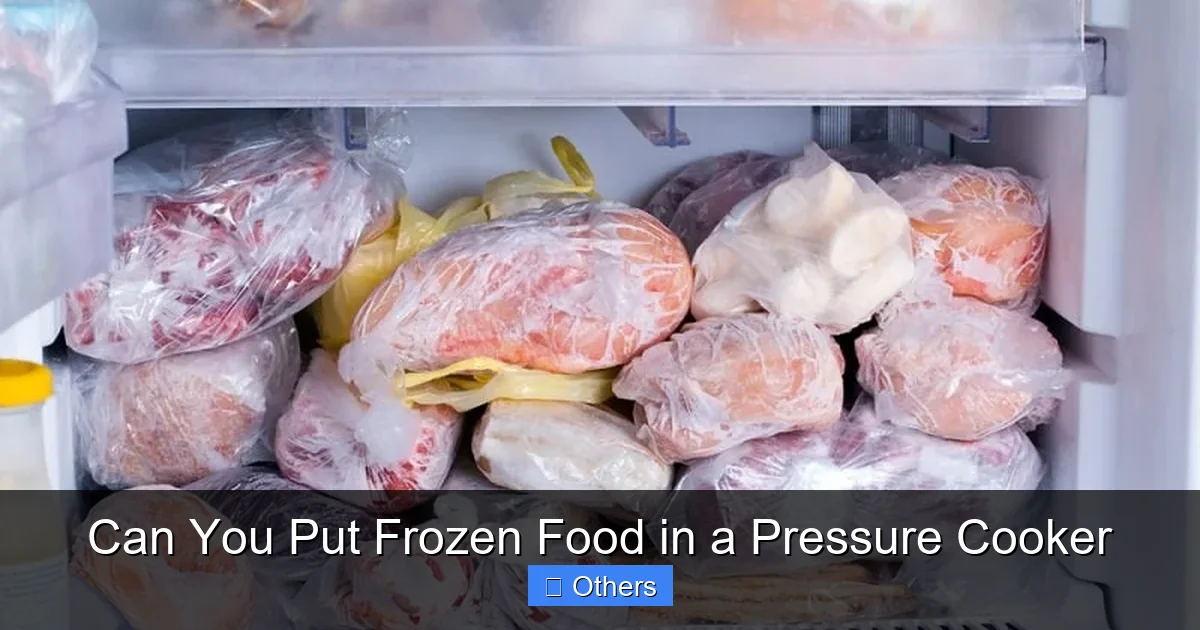
You absolutely can cook frozen food in a pressure cooker—and it’s one of the best ways to save time without sacrificing flavor or nutrition. With the right techniques, frozen meats, vegetables, and even full meals can go straight from freezer to table in minutes, thanks to the pressure cooker’s rapid cooking power.
Key Takeaways
- Yes, you can cook frozen food in a pressure cooker: Modern electric and stovetop models are designed to handle frozen ingredients safely when used correctly.
- Adjust cooking times: Frozen foods typically require 20–50% more cooking time than thawed equivalents—always check manufacturer guidelines.
- Use the right liquid: Always add at least 1 cup of liquid (water, broth, etc.) to generate steam and prevent burning, even with frozen items.
- Avoid overfilling: Frozen foods expand slightly as they thaw—never fill the pot more than halfway to prevent clogging the vent.
- Not all frozen foods are equal: Dense items like frozen chicken breasts or potatoes work well; delicate items like frozen berries or leafy greens may turn mushy.
- Safety first: Never force the lid open—always use natural or quick release properly and ensure the pressure valve is clear.
- Great for meal prep: Cooking from frozen is perfect for busy weeknights—just toss in pre-portioned frozen meals and walk away.
📑 Table of Contents
Can You Put Frozen Food in a Pressure Cooker?
Imagine this: It’s 6 p.m., you’re tired after a long day, and dinner still hasn’t been started. The thought of defrosting meat overnight or waiting 30 minutes for it to thaw in cold water sounds exhausting. But what if you could just grab that frozen chicken breast or bag of mixed vegetables straight from the freezer, toss it into your pressure cooker, and have a hot, delicious meal ready in under an hour?
Good news—you absolutely can. Cooking frozen food in a pressure cooker isn’t just possible; it’s one of the most convenient, time-saving techniques modern home cooks are embracing. Whether you’re using an Instant Pot, a stovetop pressure cooker, or another electric model, the science behind pressure cooking makes it uniquely suited to handle frozen ingredients safely and efficiently.
But before you start tossing entire frozen meals into your cooker, it’s important to understand the how, the why, and the what-not-to-do. While the pressure cooker’s high heat and steam can rapidly thaw and cook frozen foods, doing it wrong can lead to undercooked meals, burnt bottoms, or even safety hazards. The key is knowing which foods work best, how to adjust your cooking times, and what safety steps to follow.
In this guide, we’ll walk you through everything you need to know about cooking frozen food in a pressure cooker—from the science behind it to practical tips, recipe ideas, and common mistakes to avoid. By the end, you’ll be confident enough to turn your freezer into a pantry of ready-to-cook meals.
How Pressure Cooking Works with Frozen Food

Visual guide about Can You Put Frozen Food in a Pressure Cooker
Image source: powerupcook.com
To understand why frozen food works in a pressure cooker, it helps to know how these appliances function. A pressure cooker seals in steam, which increases the internal pressure and raises the boiling point of water—from the standard 212°F (100°C) at sea level to around 250°F (121°C). This higher temperature cooks food faster than conventional methods like boiling, steaming, or baking.
When you add frozen food, the cooker doesn’t just cook it—it thaws and cooks simultaneously. The steam penetrates the frozen exterior, rapidly transferring heat to the core. Because the environment is sealed and pressurized, moisture is retained, preventing the food from drying out even as it transitions from frozen to fully cooked.
This dual-action process—thawing and cooking—is what makes pressure cooking so effective for frozen ingredients. Unlike a microwave, which can leave cold spots or unevenly cooked areas, a pressure cooker ensures more uniform heating. And unlike a slow cooker, which would take hours to thaw and cook frozen meat, a pressure cooker does it in a fraction of the time.
The Science of Thawing Under Pressure
When frozen food enters a pressurized environment, the rapid rise in temperature causes ice crystals to melt quickly. The steam generated by the liquid in the pot (usually water, broth, or sauce) surrounds the frozen item, transferring heat efficiently. Because the lid is sealed, no moisture escapes, which helps keep the food tender and prevents it from drying out during the extended cooking time needed for frozen items.
This is especially beneficial for meats like chicken breasts, pork chops, or ground beef, which can become tough or rubbery if cooked from frozen in a slow cooker or oven. The pressure cooker’s moist heat environment ensures they stay juicy and flavorful.
Why It’s Faster Than Other Methods
Cooking frozen food in a pressure cooker is significantly faster than traditional methods. For example, a frozen chicken breast might take 45–60 minutes to cook thoroughly in an oven, but in a pressure cooker, it can be ready in 15–20 minutes (including pressurization time). Even compared to stovetop boiling or steaming, the pressure cooker wins on speed and energy efficiency.
This speed doesn’t come at the cost of safety. As long as you follow proper guidelines—like using enough liquid and not overfilling the pot—the pressure cooker safely handles the thermal shock of frozen ingredients.
Which Frozen Foods Work Best?

Visual guide about Can You Put Frozen Food in a Pressure Cooker
Image source: airfryeraid.com
Not all frozen foods are created equal when it comes to pressure cooking. Some thrive in the high-heat, moist environment, while others can turn mushy or lose their texture. Knowing which foods to use—and which to avoid—can make the difference between a delicious meal and a disappointing one.
Best Frozen Foods for Pressure Cooking
Frozen Meats: Chicken breasts, thighs, pork chops, and even whole chickens can be cooked directly from frozen. Ground meats like beef, turkey, or sausage also work well, especially in dishes like chili, tacos, or pasta sauces. Just be sure to break up large chunks of ground meat to ensure even cooking.
Frozen Vegetables: Dense vegetables like carrots, potatoes, corn, green beans, and peas hold up well. They soften just enough to be tender without turning to mush. These are perfect for soups, stews, or side dishes.
Frozen Seafood: Shrimp, scallops, and fish fillets can be cooked from frozen, but timing is critical. Overcooking can make seafood rubbery, so reduce cooking time slightly and use the quick-release method to stop cooking immediately.
Frozen Beans and Legumes: Pre-cooked frozen beans (like black beans or chickpeas) can be added directly to soups or stews. Dried beans should never be cooked from frozen—always use thawed or room-temperature dried beans.
Foods to Avoid or Use with Caution
Delicate Vegetables: Spinach, kale, broccoli florets, and berries can become overly soft or lose their shape. If using, add them in the last few minutes of cooking or use the quick-release method to preserve texture.
Frozen Dairy Products: Milk, cream, or cheese should not be added frozen. They can curdle or separate under high heat. Thaw them first or add at the end of cooking.
Pre-Cooked Frozen Meals: While convenient, many frozen meals (like TV dinners) are already fully cooked and only need reheating. Pressure cooking them can overcook the ingredients. Instead, use the “steam” or “warm” function for gentle reheating.
Practical Examples
– Frozen Chicken and Rice: Add 1 lb frozen chicken breasts, 1 cup rice, 1.5 cups broth, and seasonings. Cook on high pressure for 15 minutes, then natural release for 10 minutes. Shred and serve.
– Vegetable Soup: Combine frozen mixed vegetables, diced tomatoes, broth, and herbs. Cook on high pressure for 8 minutes, quick release.
– Beef Stew: Use frozen beef chunks, potatoes, carrots, and onions with broth. Cook on high pressure for 35 minutes, natural release.
Safety Tips and Best Practices

Visual guide about Can You Put Frozen Food in a Pressure Cooker
Image source: lazymealprep.com
Cooking frozen food in a pressure cooker is safe—when done correctly. But because you’re introducing a large amount of frozen material into a high-pressure environment, there are important safety steps to follow.
Always Use Enough Liquid
The most critical rule: never run a pressure cooker without liquid. Frozen foods release water as they thaw, but you still need a minimum of 1 cup of liquid (water, broth, sauce, etc.) to generate steam. Without it, the food can burn, and the cooker may not pressurize properly.
Don’t Overfill the Pot
Frozen foods expand as they thaw, and liquids can foam or bubble during cooking. Never fill the pressure cooker more than halfway when using frozen ingredients. For foods that expand a lot (like rice or beans), don’t go beyond one-third full.
Adjust Cooking Times
Frozen foods take longer to cook than thawed ones. As a general rule, add 20–50% more time. For example, if a recipe calls for 10 minutes for thawed chicken, use 12–15 minutes for frozen. Always refer to your cooker’s manual for specific guidelines.
Use the Right Release Method
– Natural Release: Let the pressure drop on its own. Best for large cuts of meat or foods that foam (like beans).
– Quick Release: Manually release pressure by turning the valve. Use for delicate foods like seafood or vegetables to prevent overcooking.
Never force the lid open. Wait until the pressure indicator drops and the lid unlocks naturally.
Check for Doneness
Use a food thermometer to ensure meats reach safe internal temperatures:
– Poultry: 165°F (74°C)
– Ground meats: 160°F (71°C)
– Pork and beef: 145°F (63°C) with a 3-minute rest
If food isn’t fully cooked, return to pressure for a few more minutes.
Step-by-Step Guide to Cooking Frozen Food
Ready to try it yourself? Follow this simple step-by-step process to cook frozen food safely and successfully in your pressure cooker.
Step 1: Prepare Your Ingredients
Remove frozen food from packaging. If using large cuts (like a whole chicken), you may want to trim excess fat. For ground meat, break it into smaller chunks to ensure even cooking.
Step 2: Add Liquid
Pour at least 1 cup of liquid into the inner pot. This can be water, broth, tomato sauce, or any cooking liquid suitable for your recipe.
Step 3: Add Frozen Food
Place the frozen ingredients into the pot. Avoid stacking or overcrowding. If cooking multiple items, layer them with denser foods (like meat) at the bottom and vegetables on top.
Step 4: Season and Seal
Add seasonings, herbs, or spices as desired. Close the lid and ensure the sealing ring is properly in place. Turn the pressure release valve to the “sealing” position.
Step 5: Set Cooking Time
Select the appropriate pressure setting (usually “high”) and adjust the time based on the food type and whether it’s frozen. Use the chart below as a guide:
| Food Type | Frozen Cooking Time (High Pressure) |
|————————-|————————————-|
| Chicken breasts | 12–15 minutes |
| Ground beef | 8–10 minutes |
| Pork chops | 10–12 minutes |
| Frozen vegetables | 3–5 minutes |
| Shrimp | 2–3 minutes |
| Potatoes (cubed) | 8–10 minutes |
Step 6: Release Pressure
After cooking, choose natural or quick release based on the food. Open the lid away from your face to avoid steam burns.
Step 7: Check and Serve
Use a thermometer to verify doneness. Stir and serve immediately.
Common Mistakes to Avoid
Even experienced cooks can make errors when cooking frozen food in a pressure cooker. Here are the most common pitfalls and how to avoid them.
Skipping the Liquid
This is the #1 mistake. Without enough liquid, the cooker can’t build pressure, and food may burn. Always use at least 1 cup.
Overfilling the Pot
Frozen foods take up more space and can block the steam vent. Stick to the halfway rule.
Ignoring Cooking Time Adjustments
Cooking frozen food with thawed times will result in undercooked meals. Always increase time by 20–50%.
Using the Wrong Release Method
Quick-releasing foamy foods like beans can cause splattering. Use natural release for these.
Not Checking Doneness
Never assume food is cooked. Use a thermometer, especially with poultry and ground meats.
Recipe Ideas Using Frozen Ingredients
Put your new skills to the test with these easy, delicious recipes.
Frozen Chicken Tacos
– 1 lb frozen chicken breasts
– 1 cup salsa
– 1 tsp cumin
– 1 tsp chili powder
– Tortillas, toppings
Add all ingredients to the pressure cooker. Cook on high pressure for 15 minutes, natural release for 10 minutes. Shred chicken and serve in tortillas.
Beef and Broccoli Stir-Fry
– 1 lb frozen beef strips
– 2 cups frozen broccoli
– 1/2 cup soy sauce
– 1/4 cup brown sugar
– 2 cloves garlic, minced
– 1 tbsp cornstarch (mixed with water)
Cook beef and sauce on high pressure for 15 minutes, quick release. Add broccoli and cornstarch slurry, simmer for 3–5 minutes until thickened.
Vegetarian Lentil Soup
– 1 cup dried lentils (thawed)
– 2 cups frozen mixed vegetables
– 4 cups vegetable broth
– 1 can diced tomatoes
– 1 tsp garlic powder
Cook on high pressure for 10 minutes, natural release. Stir and serve with crusty bread.
Conclusion
Cooking frozen food in a pressure cooker is not only possible—it’s a game-changer for busy households. With the right techniques, you can turn frozen ingredients into hot, flavorful meals in minutes, without sacrificing safety or taste. From chicken and vegetables to soups and stews, the possibilities are endless.
Just remember the golden rules: use enough liquid, don’t overfill, adjust cooking times, and always check for doneness. Avoid delicate or dairy-based frozen items, and choose the right release method for each dish.
Whether you’re meal prepping, dealing with last-minute dinner plans, or simply trying to reduce food waste, cooking from frozen in your pressure cooker is a smart, efficient, and delicious solution. So go ahead—grab that frozen chicken breast, toss it in, and let the pressure do the work.
Frequently Asked Questions
Can you put frozen meat in a pressure cooker?
Yes, you can safely cook frozen meat in a pressure cooker. Chicken, beef, pork, and ground meats all work well when cooked with adequate liquid and adjusted timing.
Do you need to add more water when cooking frozen food?
Yes, always use at least 1 cup of liquid, even with frozen food. The liquid generates steam, which is essential for pressurization and prevents burning.
How much longer should you cook frozen food in a pressure cooker?
Frozen foods typically require 20–50% more cooking time than thawed equivalents. For example, add 3–5 minutes to a 10-minute thawed recipe.
Can you cook frozen vegetables in a pressure cooker?
Yes, dense frozen vegetables like carrots, potatoes, and green beans cook well. Add them with other ingredients or cook for 3–5 minutes on high pressure.
Is it safe to pressure cook frozen food?
Yes, as long as you follow safety guidelines: use enough liquid, don’t overfill, adjust cooking times, and never force the lid open.
Can you cook a whole frozen chicken in a pressure cooker?
Yes, a whole frozen chicken can be cooked in a pressure cooker. Use 1.5–2 cups of liquid and cook on high pressure for 25–30 minutes, then natural release.