Putting tin foil in an air fryer oven is generally unsafe and strongly discouraged by manufacturers. It can cause electrical arcing, block airflow, lead to overheating, and potentially start a fire. While limited, careful use *might* be possible in specific scenarios, the risks far outweigh any convenience. Always prioritize safety and use approved alternatives like parchment paper or the basket itself.
Key Takeaways
- High Fire Hazard: Tin foil can cause dangerous electrical arcing (sparks) when it touches the heating element, posing a significant fire risk inside your air fryer oven.
- Blocks Critical Airflow: Air fryers rely on rapid, circulating hot air. Foil obstructs this flow, leading to uneven cooking, longer times, and potential overheating of the appliance.
- Manufacturer Warnings: Virtually all air fryer oven manuals explicitly prohibit using foil due to the safety hazards and potential for voiding the warranty.
- Rare Exceptions Exist (Use Extreme Caution): If absolutely necessary, *only* use small, smooth pieces placed *away* from heating elements and walls, never crumpled, and never covering the entire basket. Monitor constantly.
- Safer Alternatives Abound: Parchment paper (with holes), silicone mats, or simply cooking directly on the basket are far safer and effective options for most tasks.
- Cleaning is Easier Without Foil: Foil can tear, leaving residue stuck to the basket, making cleaning harder than using non-stick sprays or approved liners.
- When in Doubt, Skip the Foil: The potential dangers and performance issues make tin foil an unnecessary risk. Prioritize safety and optimal cooking results by avoiding it.
Quick Answers to Common Questions
Can I use foil to line the bottom of my air fryer basket for easy cleanup?
Absolutely not. Lining the basket blocks critical airflow, traps heat dangerously near the heating element, and creates a high risk of electrical arcing and fire. It’s explicitly forbidden by all manufacturers. Use parchment paper cut to size with holes instead.
What happens if foil touches the heating element in my air fryer?
If foil touches the heating element, it will almost certainly cause electrical arcing – bright sparks jumping between the foil and element. These sparks are extremely hot and can instantly ignite grease, oil, or the foil itself, potentially starting a fire inside your air fryer within seconds.
Is parchment paper safe to use in an air fryer oven?
Yes, parchment paper is the recommended safe alternative to foil. It’s heat-resistant (check the package rating, usually 420-450°F+), non-conductive (won’t cause arcing), and allows air to circulate through it. Always cut it to fit the basket, leave space around the edges, and poke holes for best airflow.
Can I use foil to wrap food like I do in a regular oven?
No. Tightly wrapping food in foil creates a steam pocket that prevents the air fryer’s hot air from crisping the food, resulting in soggy, boiled textures. More importantly, the foil can tear during cooking or removal, causing pieces to contact the heating element and spark a fire.
Why does my air fryer manual specifically say “no metal”?
Manufacturers state “no metal” because conductive materials like foil can cause dangerous electrical arcing when near the high-heat element, block the essential airflow needed for cooking, and lead to overheating or fire. This warning is a critical safety requirement, and violating it voids your warranty.
📑 Table of Contents
- Can You Put Tin Foil in an Air Fryer Oven? The Shocking Truth You Need to Know
- Why Tin Foil is a Major Safety Hazard in Air Fryer Ovens
- What Do Air Fryer Manufacturers Say? (Spoiler: It’s a Hard No)
- When *Might* Foil Be Okay? (Proceed with Extreme Caution!)
- Safer, Smarter Alternatives to Tin Foil in Your Air Fryer Oven
- Cleaning Your Air Fryer Oven Without Foil: Easier Than You Think!
- Debunking Common Myths About Foil in Air Fryers
- The Verdict: Prioritize Safety, Ditch the Foil
Can You Put Tin Foil in an Air Fryer Oven? The Shocking Truth You Need to Know
Picture this: You’ve just prepped a delicious batch of crispy Brussels sprouts or juicy chicken wings. You’re about to pop them into your air fryer oven, but then you hesitate. Maybe you’re thinking about easy cleanup, or perhaps you want to wrap something tightly to keep it moist. Your hand instinctively reaches for the roll of tin foil. Stop! That seemingly harmless sheet of aluminum could be setting the stage for a dangerous kitchen mishap. The question “can you put tin foil in an air fryer oven?” isn’t just about convenience – it’s a critical safety concern that every air fryer owner must understand.
Air fryer ovens have exploded in popularity, promising faster, healthier, and crispier results than traditional ovens. Their magic lies in a powerful fan that circulates superheated air rapidly around food. But this very mechanism that makes them so effective is also why introducing foreign materials like tin foil is such a bad idea. Unlike a conventional oven where foil might be used more freely (though still with caveats), the intense, focused heat and high-speed airflow in an air fryer create unique hazards. Ignoring the risks could lead to ruined food, a damaged appliance, or worse – a fire in your kitchen. It’s a risk that simply isn’t worth taking when safer, equally effective alternatives exist. Let’s dive deep into why foil and air fryers are a dangerous combination and what you *should* use instead.
Why Tin Foil is a Major Safety Hazard in Air Fryer Ovens
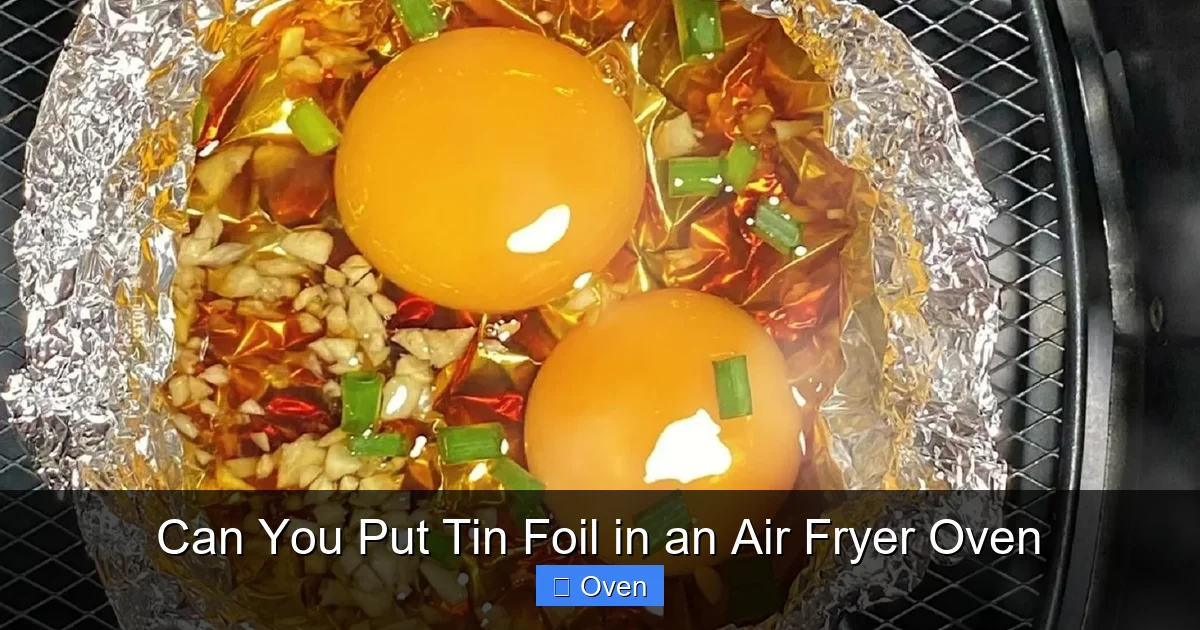
Visual guide about Can You Put Tin Foil in an Air Fryer Oven
Image source: i0.wp.com
The core problem with using tin foil in an air fryer oven boils down to physics and the appliance’s design. Air fryers generate intense heat (often up to 400°F/200°C or higher) from a powerful heating element located very close to where you place your food. This element gets extremely hot, very quickly. Tin foil, being a thin, conductive metal, interacts with this environment in ways that are fundamentally unsafe.
The Arcing Nightmare: Sparks and Fire Risk
This is the single biggest danger. When tin foil comes into contact with the heating element – even accidentally – it can cause a phenomenon called electrical arcing. Imagine tiny, intense lightning bolts jumping from the foil to the element. These sparks are incredibly hot and can instantly ignite grease, oil splatters, or even the foil itself. The confined space of the air fryer basket acts like a furnace, potentially turning a small spark into a significant fire within seconds. User reports and manufacturer warnings consistently cite arcing as the primary reason foil is banned. It’s not a “might happen” scenario; it’s a high-probability risk whenever foil is present near the element.
Blocking the Lifeline: Airflow Obstruction
Air fryers don’t work like regular ovens. They don’t just radiate heat downwards; they rely on a powerful fan forcing hot air *around* and *through* the food at high speed. This rapid circulation is what creates the signature crispy exterior without needing excessive oil. Tin foil is a solid barrier. If you line the basket with foil, crumple it around food, or even place a large sheet loosely on top, you severely disrupt this critical airflow. The result? Food cooks unevenly – some parts might be burnt while others remain soggy. More importantly, the blocked airflow causes heat to build up in unintended areas. The appliance’s internal temperature can soar dangerously high, potentially damaging the fan motor, melting components, or triggering safety cut-offs (if they exist). It also forces the air fryer to work much harder, shortening its lifespan.
Heat Reflection and Uneven Cooking
Tin foil is highly reflective. While this property is useful in a conventional oven for browning the top of a casserole, in an air fryer it becomes problematic. The foil can reflect intense heat back onto the heating element itself or onto the walls of the basket. This concentrated heat can cause localized overheating, warping the basket or damaging the non-stick coating. Furthermore, the foil creates a barrier between the hot air and your food. Instead of the air directly crisping the surface, the foil heats up first and then conducts heat to the food underneath. This leads to steaming or boiling effects rather than the desired crispy texture, especially for foods you want to be crunchy. Think of trying to get crispy fries wrapped tightly in foil – they’ll just turn out soggy and pale.
What Do Air Fryer Manufacturers Say? (Spoiler: It’s a Hard No)
Visual guide about Can You Put Tin Foil in an Air Fryer Oven
Image source: i0.wp.com
If you’re still wondering “can you put tin foil in an air fryer oven?” after hearing about the risks, the definitive answer lies in your appliance’s manual. Virtually every major air fryer oven manufacturer – including Ninja, Instant Pot, Cosori, Philips, Cuisinart, and Breville – explicitly prohibits the use of aluminum foil in their units. This isn’t just a suggestion; it’s a critical safety instruction.
Reading the Fine Print: Warranty and Safety Warnings
Flip open your air fryer’s user manual (or find it online if you’ve misplaced the physical copy). In the “Important Safeguards,” “Safety Instructions,” or “Cleaning and Care” sections, you will almost certainly find a statement similar to: “Do not use aluminum foil, metal utensils, or any other metal objects in the air fryer basket.” They often elaborate, warning specifically about the risk of fire, electrical shock, or damage to the appliance. Why is this so prominent? Because manufacturers have seen the consequences firsthand – returned units damaged by foil, customer reports of near-misses, and the inherent engineering incompatibility. Crucially, using foil in violation of these instructions will almost certainly void your warranty. If a fire *does* start and it’s traced back to foil use, you’ll be solely responsible for the damage to your appliance and potentially your home.
Why the Universal Ban?
Manufacturers aren’t being overly cautious; they’re responding to the fundamental design of the appliance. The proximity of the heating element to the food basket, the high-speed fan creating potential for foil to shift or flap, and the intense localized heat make foil an unacceptable risk in their testing and engineering validation. They design their units to work optimally with the included basket and approved accessories (like crisper plates or skewers made from specific heat-safe materials). Introducing an unapproved conductor like foil falls outside the safe operating parameters they’ve defined. Trusting the manual isn’t just about following rules; it’s about respecting the physics of how your expensive appliance functions safely.
When *Might* Foil Be Okay? (Proceed with Extreme Caution!)
Visual guide about Can You Put Tin Foil in an Air Fryer Oven
Image source: images.pexels.com
Given the overwhelming risks and manufacturer bans, the safest and most practical answer to “can you put tin foil in an air fryer oven?” remains a resounding **no**. However, understanding the *extremely limited* scenarios where some experts *might* cautiously permit it (with massive caveats) can help you make an informed decision if you’re ever tempted. It’s crucial to emphasize: **these are high-risk exceptions, not recommendations.** The potential for disaster is always present.
The “Only If” Scenario: Minimal, Smooth, and Monitored
The *only* situation where foil use *might* be considered less risky (but still not safe) is when you need to cover a *very small* portion of food *loosely* to prevent excessive drying or splattering, **and only if**:
* The foil is **smooth and flat**, never crumpled or folded sharply (crumpling creates points that are more likely to arc).
* It is placed **only on top of the food**, **never** lining the basket bottom or sides.
* It is **small** – just enough to lightly cover the specific item (e.g., a single piece of fish), not a large sheet.
* It is positioned **far away from the heating element** (usually at the very top of the basket, opposite the element location – check your manual for element position!).
* You **never leave the air fryer unattended** while foil is inside. You must monitor it constantly for any sign of sparking, smoking, or unusual behavior.
* You **remove the foil immediately** after the initial cooking phase if it was only used to prevent splatter.
Why This is Still a Terrible Idea
Even in this “best-case” scenario, the risks persist:
* **Shifting:** The powerful airflow can easily dislodge or shift the foil, causing it to touch the element.
* **Heat Concentration:** The foil can still reflect heat onto the food or basket, causing uneven cooking or scorching.
* **False Sense of Security:** Thinking “just this once” often leads to complacency. One distraction (the phone ringing, a child needing attention) is all it takes for a fire to start.
* **Residue:** Foil can leave behind aluminum particles on the basket or food, especially if it rubs against the non-stick coating.
* **Better Alternatives Exist:** Parchment paper (see next section) is designed for this exact purpose – it’s heat-resistant, non-stick, and won’t arc. There’s simply no good reason to choose foil.
Absolutely NEVER Do This
* **Line the entire basket bottom** with foil (blocks airflow, traps heat, high arcing risk).
* **Wrap food tightly** in foil (creates a steam pocket, prevents crisping, foil can tear and contact element).
* **Use foil to create a “tent”** over food (traps steam, blocks airflow, foil edges can touch element).
* **Use foil with acidic foods** (tomatoes, citrus, vinegar) – the acid can react with the aluminum, leaching metal into your food and creating off-flavors.
* **Use foil if your basket has a damaged non-stick coating** – the foil can catch on rough edges and tear.
Safer, Smarter Alternatives to Tin Foil in Your Air Fryer Oven
The good news is that you don’t need to risk fire or ruined food to achieve great results and easy cleanup in your air fryer oven. Several safe, effective, and readily available alternatives exist that are specifically designed for high-heat convection cooking.
Parchment Paper: Your Best Friend (With a Caveat)
Parchment paper is the **gold standard** alternative for most foil uses in air fryers. It’s heat-resistant (typically up to 420-450°F / 220-230°C, *always check the package*), non-stick, and allows air to circulate *through* it. Here’s how to use it safely:
* **Cut to Size:** Always cut the parchment to fit *inside* the basket, leaving space around the edges for airflow. Never let it touch the heating element or side walls.
* **Poke Holes:** For optimal airflow and crisping, especially with foods prone to steaming (like veggies or fish), poke several small holes in the parchment with a toothpick or fork before placing food on it.
* **Secure Lightly:** You can place a small stone or oven-safe weight on a corner if needed, but usually, the food itself holds it down. Avoid using anything metal.
* **Perfect For:** Lining the basket for easy cleanup with saucy foods, preventing small items from falling through, or lightly covering food to prevent splatter (no need to seal it tightly).
* **Why it’s Safe:** Parchment is non-conductive, so it won’t cause arcing. It’s designed to handle the heat and airflow of convection cooking.
Silicone Baking Mats: Reusable & Reliable
Silicone mats (like those from Silpat) are another excellent option. They are:
* **Extremely Heat Resistant:** Typically withstand temperatures up to 480°F (250°C) or higher.
* **Non-Stick:** Food releases easily, reducing the need for oil.
* **Reusable:** Eco-friendly and cost-effective over time.
* **Airflow Friendly:** Their open-grid design allows hot air to circulate freely around food.
* **Ideal For:** Baking cookies, roasting vegetables, or placing under items that might stick. Ensure the mat is cut to fit your basket without touching the sides or element.
The Basket Itself: Often the Simplest Solution
Don’t underestimate the power of cooking directly on the air fryer basket! Modern baskets have durable non-stick coatings designed for this purpose.
* **Lightly Oil:** For extra insurance against sticking, especially with delicate fish or sticky marinades, lightly spray the basket with avocado oil or another high-smoke-point oil *before* adding food. A pastry brush works well for even coverage.
* **Avoid Overcrowding:** Ensure space between items for air circulation. This is key to crisping.
* **Shake/Turn:** Most recipes require shaking the basket or turning food halfway through cooking for even results.
* **Easy Cleanup:** Most non-stick baskets clean up easily with warm soapy water and a soft sponge. For stuck-on bits, soak briefly before washing.
Other Safe Options
* **Air Fryer Liners (Disposable):** Specifically designed paper or silicone liners shaped for air fryer baskets are widely available. They offer the convenience of parchment but are pre-cut. Ensure they are *air fryer safe* and don’t block airflow.
* **Oven-Safe Containers (Use Sparingly):** Small, shallow ceramic or glass dishes *designed for convection ovens* can sometimes be used *if* they fit securely without blocking airflow and are rated for the high temperatures. **Never use plastic, melamine, or containers not explicitly oven-safe.** Check your manual first – many manufacturers advise against them due to airflow blockage.
* **Skewers & Tools:** Use only the metal skewers or tools *provided* with your air fryer, or those made from food-grade stainless steel *specifically rated for air fryers*. Avoid generic metal skewers that might be too thin or have sharp points near the element.
Cleaning Your Air Fryer Oven Without Foil: Easier Than You Think!
One of the main reasons people consider foil is for easier cleanup. While foil might seem like a shortcut, it often creates *more* problems (tearing, residue) and the alternatives actually make cleaning simpler and safer.
The Right Way to Clean Your Basket
1. **Cool Down:** Always let the basket cool completely before cleaning. Never immerse a hot basket in cold water – it can warp.
2. **Shake Out Debris:** Tap the basket over the sink or trash can to remove loose food particles.
3. **Warm Soapy Water:** Fill your sink with warm water and a few drops of dish soap. Submerge the basket (if removable) or clean it in the sink.
4. **Soft Sponge or Brush:** Use a non-abrasive sponge, soft brush, or microfiber cloth. **Avoid steel wool or harsh scouring pads** – they will damage the non-stick coating, making future sticking worse.
5. **Stubborn Bits? Soak!:** For baked-on grease or food, soak the basket in warm, soapy water for 15-30 minutes. This loosens residue without scrubbing. A paste of baking soda and water can also help gently lift grime.
6. **Rinse & Dry Thoroughly:** Rinse all soap residue away and dry completely with a towel before storing. Moisture can lead to rust on metal parts.
Why Foil Makes Cleaning Harder
* **Tearing:** Foil is thin and tears easily during cooking or removal, leaving small, sharp shards stuck to the basket grooves.
* **Residue:** Aluminum can leave a dull film or residue on the non-stick surface, especially if it rubs against it.
* **Scratches:** Trying to pry torn foil off can scratch the coating, creating future sticking points.
* **False Economy:** The time spent meticulously removing every tiny piece of foil often exceeds the time needed to clean the basket properly with soap and water.
Prevention is Key
* **Use Approved Liners:** Parchment or silicone mats catch drips and make cleanup almost effortless – just lift them out.
* **Don’t Overfill:** Overcrowding leads to more splatter and grease buildup.
* **Wipe Spills Immediately:** If you notice significant splatter *during* cooking (unlikely with proper airflow), carefully remove the basket (use oven mitts!) and wipe the interior with a damp paper towel *before* continuing. Don’t do this near the heating element while it’s hot.
* **Regular Deep Clean:** Every few weeks, give the basket and interior a thorough clean with a degreaser suitable for non-stick surfaces (follow product instructions).
Debunking Common Myths About Foil in Air Fryers
Misinformation spreads quickly, especially online. Let’s clear up some persistent myths that might tempt you to use foil.
Myth 1: “I’ve Used Foil Before and Nothing Happened!”
This is the most dangerous myth. Air fryers operate under specific conditions. Just because nothing *immediately* went wrong last time doesn’t mean it’s safe. Arcing might not happen every single time, but the risk is always present. Each use is a gamble. The next time, a slight shift in the foil, a different food with more grease, or a minor manufacturing variation in the foil could be the trigger for a fire. Past luck is not a safety guarantee.
Myth 2: “Foil Helps Cook Food Faster or More Evenly”
The opposite is true! Foil blocks the essential airflow that defines air frying. It creates barriers, leading to hot and cold spots. Food wrapped in foil will steam or boil rather than crisp, taking *longer* to cook properly and yielding inferior results. The air fryer’s design is optimized for open-air circulation; foil disrupts that core function.
Myth 3: “It’s Just Like Using Foil in a Regular Oven”
Conventional ovens and air fryers are fundamentally different. Regular ovens rely on radiant heat from top and bottom elements, with much slower, less forceful air movement. While foil use in conventional ovens also has limitations (blocking browning, potential for arcing if touching elements), the risks are significantly lower than in the high-speed, high-heat, confined environment of an air fryer. The physics of convection cooking in an air fryer make foil inherently more dangerous.
Myth 4: “Small Pieces of Foil Are Harmless”
Size doesn’t eliminate the risk. A small, crumpled piece of foil has sharp edges and points that are *more* likely to cause arcing than a smooth sheet. The powerful fan can easily lift even a small piece and blow it into the heating element. There is no “safe” size for foil in an air fryer basket when it comes to the primary arcing hazard.
Myth 5: “The Manual Says ‘Metal,’ But Foil is Thin – It Should Be Okay”
Manufacturers say “no metal” for a reason. Tin foil *is* metal. Its thinness doesn’t change its conductive properties; in fact, it might make it more prone to tearing and creating dangerous points. The prohibition is absolute because the potential consequences are severe. Don’t try to rationalize around clear safety instructions.
The Verdict: Prioritize Safety, Ditch the Foil
So, can you put tin foil in an air fryer oven? The overwhelming, evidence-based, manufacturer-endorsed answer is a definitive **no**. The risks – electrical arcing leading to fire, blocked airflow causing overheating and poor cooking, potential damage to your appliance, and voided warranties – are simply too great. The convenience of *maybe* easier cleanup or *perhaps* preventing a bit of splatter is never worth jeopardizing your safety or your kitchen.
Air fryer ovens are incredible tools, but they demand respect for their unique operating principles. Their power comes from that intense, circulating hot air, and anything that disrupts that flow or introduces a conductive material near the heating element is a hazard. Manufacturers universally ban foil for sound engineering and safety reasons – ignoring this is inviting trouble.
The good news is that safer, equally effective, and often *more* convenient alternatives are readily available. Parchment paper (with holes!), silicone mats, or simply cooking directly on the well-maintained non-stick basket will give you better results – crispier food, faster cooking, and truly easy cleanup – without the terrifying risk of sparks and fire. Invest in a roll of parchment paper; it’s cheap insurance for countless safe and delicious air-fried meals.
Your air fryer oven is designed to make cooking easier and healthier. Don’t undermine that by introducing an unnecessary danger. Keep the foil in the drawer for your conventional oven or grill, and let your air fryer do what it does best: cook amazing food safely. When in doubt, remember the golden rule: **If the manual says no, the answer is no.** Your safety, your appliance, and your peace of mind are worth far more than the fleeting convenience of a sheet of foil.
Frequently Asked Questions
Can I put aluminum foil in my air fryer if I’m careful?
No, even with extreme caution, using aluminum foil in an air fryer oven is unsafe. The powerful airflow can easily dislodge foil, causing it to contact the heating element and create dangerous sparks. The risk of fire is significant and unavoidable, outweighing any perceived benefit. Safer alternatives like parchment paper exist.
What can I use instead of foil in my air fryer?
The best alternatives are parchment paper (cut to size with holes poked for airflow) or a silicone baking mat. Both are heat-resistant, non-conductive, and allow air circulation. Cooking directly on the non-stick basket, lightly oiled if needed, is also safe and effective. Avoid any metal or materials not explicitly air fryer-safe.
Will using foil ruin my air fryer?
Yes, using foil can definitely ruin your air fryer. It can cause electrical arcing that damages the heating element or wiring, block airflow leading to motor strain or overheating, and leave aluminum residue that’s hard to remove and can affect future cooking. It also voids your warranty if damage occurs.
Can I use foil in the drip tray under the basket?
No, you should never use foil in the drip tray or anywhere else inside the air fryer cavity. While the drip tray is designed to catch grease, foil placed there can still reflect heat upwards, potentially affecting the basket or element, and any grease splatter on the foil could ignite if it gets too hot. Clean the drip tray separately with soap and water.
Is it safe to use foil with the air fryer’s rotisserie function?
Absolutely not. The rotisserie function involves spinning food very close to the heating element. Introducing foil near this spinning mechanism is extremely dangerous, significantly increasing the risk of the foil catching, tearing, and contacting the element, causing immediate arcing and fire. Never use foil with any rotating function.
What should I do if foil accidentally touches the heating element?
If foil touches the element and you see sparks or smell something burning, **immediately unplug the air fryer** from the wall outlet. Do not open the door while it’s still plugged in, as this could feed oxygen to a potential fire. Allow it to cool completely in a safe location away from flammables before carefully inspecting and cleaning. If you see any signs of melting, charring, or damage, do not use the air fryer again and contact the manufacturer.