
Yes, you *can* steep coffee like tea using methods like cold brew or French press, but it requires key adjustments. Unlike tea, coffee needs finer grind sizes and precise timing to avoid bitterness or weak flavor. While convenient, dedicated coffee brewing often yields superior results – experiment to find your perfect steep!
Key Takeaways
- Steeping coffee like tea is possible but requires significant adjustments to grind size, time, and method compared to traditional tea preparation.
- Cold brew is the closest match to tea steeping, using coarse grounds steeped in cold water for 12-24 hours for a smooth, low-acid result.
- French press is adaptable for hot steeping; use a medium-coarse grind and steep for 4 minutes before pressing to prevent over-extraction.
- Standard tea bags won’t work well for coffee due to insufficient surface area; specialized coffee sachets or fine-mesh infusers are better options.
- Grind size is critical – too fine leads to sludge and bitterness, too coarse results in weak, under-extracted coffee when steeping.
- Steeping time must be controlled; coffee extracts faster than tea and becomes bitter quickly with prolonged hot water exposure.
- Dedicated coffee methods (pour-over, espresso) generally produce better flavor than steeping, but steeping offers simplicity for specific results like cold brew.
Quick Answers to Common Questions
Can I use a regular tea bag for coffee?
No, standard paper tea bags are not suitable for coffee. They’re too small, too porous for fine grounds (causing sludge), and lack the strength to hold coffee properly. Use specialized coffee sachets or a fine-mesh infuser instead.
Why does my steeped coffee taste bitter?
Bitterness usually comes from over-extraction. This happens if your grind is too fine, your steeping time is too long (especially with hot water), or your water is too hot. Try a coarser grind, shorter steep time (e.g., 4 mins max for French press), and water just off boil.
Is cold brew really just “steeping coffee like tea”?
Yes, cold brew is the closest equivalent. It uses cold water and a long steeping time (12-24 hours) with coarse grounds, similar to how you’d make sun tea. The cold water prevents bitterness, resulting in a smooth, low-acid concentrate.
How long should I steep coffee in a French press?
For hot steeping in a French press, steep for exactly 4 minutes with a medium-coarse grind and water just off boil. Press slowly, then pour all the coffee out immediately. Longer steeping causes bitterness.
Can I steep coffee with boiling water like tea?
You can, but it’s risky. Boiling water extracts coffee too aggressively, leading to bitterness very quickly. For hot steeping methods (French press, sachets), always use water that has cooled slightly for 30 seconds after boiling (around 200°F/93°C).
📑 Table of Contents
- Can You Actually Steep Coffee Like Tea? The Surprising Truth
- Why the Question “Can You Steep Coffee Like Tea?” Makes Sense (And Why It’s Tricky)
- Cold Brew: The Closest Thing to “Steeping Coffee Like Tea”
- Adapting the French Press: Hot Steeping Coffee (With Caution)
- Other Steeping Methods: Sachets, AeroPress, and the Tea Bag Trap
- Why Traditional “Steeping” (Like a Teapot) Usually Doesn’t Work for Coffee
- Practical Tips for Steeping Coffee Success (When You Choose To)
- Conclusion: Steeping Coffee – Possible, But Not Always Ideal
Can You Actually Steep Coffee Like Tea? The Surprising Truth
You’ve probably stood over your teapot, watching leaves unfurl in hot water, and wondered: “Could I do this with coffee?” Maybe you’re tired of complicated machines, short on time, or just curious about simplifying your morning ritual. The idea is tempting – plop some grounds in hot water, wait a few minutes, and voilà, coffee! But is it really that simple? The short answer is yes, you *can* steep coffee like tea, but it’s not quite the same magic trick. Coffee and tea are fundamentally different beasts, and what works for a delicate oolong might turn your coffee into a bitter, muddy disaster. Let’s dive deep into why the question arises, how it *can* work (with crucial tweaks), and when you might be better off sticking to traditional methods.
The allure of steeping coffee is undeniable. Tea brewing is often seen as the epitome of simplicity: hot water, leaves, wait, pour. Coffee, with its array of machines, scales, and precise measurements, can feel intimidating. Steeping promises a shortcut – a way to harness that familiar tea ritual for your caffeine fix. Perhaps you have a beautiful teapot gathering dust, or you’re traveling and only have a mug and hot water. Maybe you’re just experimenting with minimalist brewing. Understanding *why* people ask this reveals a desire for convenience, accessibility, and a touch of culinary curiosity. But coffee’s chemistry demands respect. Its flavor compounds extract at different rates and temperatures than tea catechins and tannins. Ignoring these differences is the recipe for a disappointing cup. So, let’s explore the reality of steeping coffee: the methods that work, the pitfalls to avoid, and how to get the best possible result when you choose to steep.
Why the Question “Can You Steep Coffee Like Tea?” Makes Sense (And Why It’s Tricky)
It’s completely logical to draw parallels between coffee and tea brewing. Both involve infusing plant material (beans vs. leaves) in hot water to extract flavor. Both are beloved global beverages centered around ritual and enjoyment. The core concept – submerging grounds/leaves in water to make a drink – is superficially similar. This similarity is why the question pops up so often, especially among casual drinkers or those new to coffee brewing. The mental model of “steeping = simple infusion” is strong.
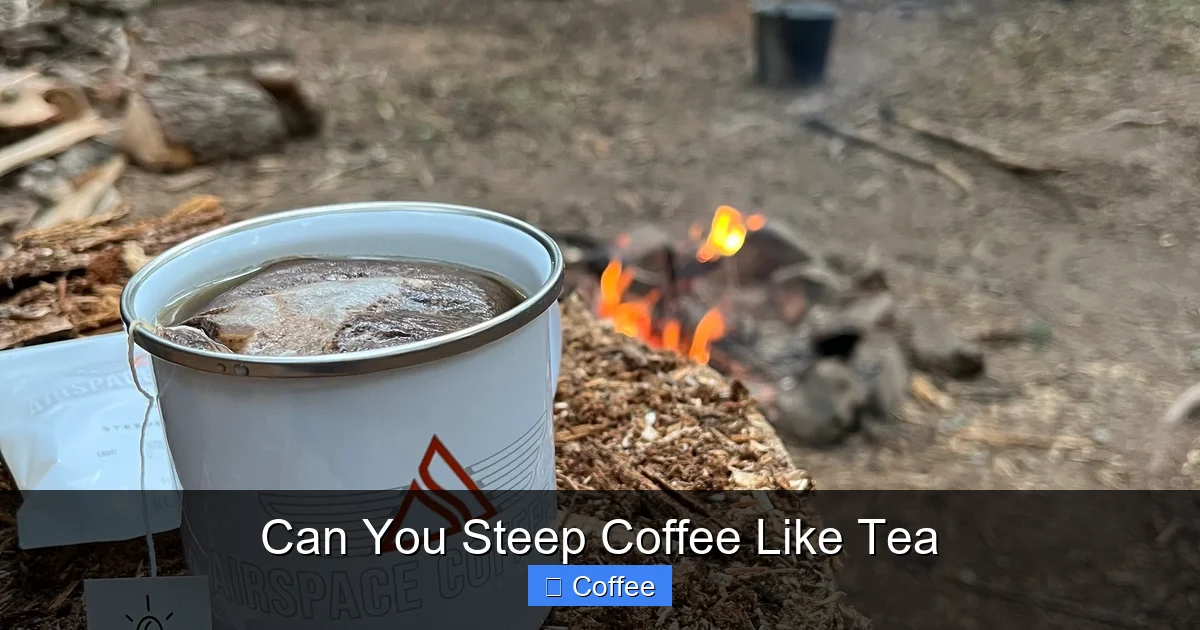
Visual guide about Can You Steep Coffee Like Tea
Image source: airspacecoffee.com
The Fundamental Differences: Coffee vs. Tea Extraction
Here’s where the similarity ends and the challenge begins. Coffee beans are seeds packed with complex oils, acids, and aromatic compounds locked inside a dense structure. Tea leaves, while also complex, are more porous and contain different compounds (like L-theanine and specific tannins). Crucially, coffee requires finer grinding than tea to expose sufficient surface area for efficient extraction. A typical tea leaf is already relatively large and porous. Coffee grounds, especially for methods involving steeping, need to be much finer to extract properly in a reasonable time, but not *too* fine, or you get sludge and bitterness.
Another critical difference is extraction speed and temperature sensitivity. Coffee extracts much faster than tea, particularly with hot water. While a black tea might steep for 3-5 minutes, coffee grounds in near-boiling water can become unpleasantly bitter in just 2-3 minutes if the grind is too fine or the water too hot. Tea tannins contribute to astringency, but coffee’s combination of acids and bitter compounds (like cafestol and kahweol) can overwhelm the palate much quicker under aggressive hot steeping conditions. Cold water extraction (cold brew) slows this process dramatically, making it the most tea-like method for coffee. Understanding these core differences – grind size requirements, extraction kinetics, and compound sensitivity – is essential before you try to steep your coffee like tea.
Cold Brew: The Closest Thing to “Steeping Coffee Like Tea”
If you’re looking for a method that genuinely mirrors the tea steeping experience – minimal active time, cold water, long infusion – cold brew is your answer. It’s the undisputed champion of coffee steeping methods and has exploded in popularity for good reason.

Visual guide about Can You Steep Coffee Like Tea
Image source: cdn.shopify.com
How Cold Brew Mimics Tea Steeping (But Better)
Cold brew involves coarsely ground coffee beans submerged in cold or room-temperature water for an extended period, typically 12 to 24 hours. This is strikingly similar to how you might steep a large batch of iced tea or sun tea. You combine the ingredients, let them sit undisturbed, and then filter out the solids. The key parallels are:
- Passive Infusion: Like tea, there’s no active brewing process (no pouring, no pressure). You set it and forget it.
- Long Steeping Time: Both rely on time for extraction, though cold brew takes significantly longer due to the cold water.
- Simple Equipment: A jar, pitcher, or dedicated cold brew maker is all you need – no fancy machines. A French press can even double as a cold brew vessel.
- Smooth Result: The cold water extracts fewer acidic and bitter compounds, resulting in a naturally sweeter, smoother, less acidic beverage – often preferred by those who find hot coffee harsh.
Why Cold Brew Works Where Hot Steeping Often Fails
Cold water is the magic ingredient that makes this “steeping” successful for coffee. The lower temperature dramatically slows down the extraction of undesirable compounds like chlorogenic acids (which contribute sourness) and the aforementioned bitter oils. It primarily extracts the sweeter, more soluble compounds first. This slow, gentle process over many hours compensates for the coarser grind size needed to prevent sludge (finer grinds would make filtering impossible and create a muddy texture). Think of it as the coffee equivalent of a very long, cold tea infusion. The result is a concentrate that’s versatile – dilute it with water or milk over ice, or use it in recipes. While it lacks the bright acidity and complex aromatics of a well-made hot pour-over, cold brew offers a uniquely smooth and refreshing coffee experience that genuinely feels like steeping, just with a much longer wait time than tea.
Adapting the French Press: Hot Steeping Coffee (With Caution)
The French press is the most common tool people instinctively reach for when trying to “steep” coffee like tea. It’s a simple immersion brewer: add grounds, pour hot water, wait, press the plunger to separate. On the surface, it seems perfect. And it *can* work, but it requires careful attention to avoid common pitfalls.

Visual guide about Can You Steep Coffee Like Tea
Image source: coffeexplore.com
The French Press Steeping Method: Step-by-Step
Here’s how to adapt French press brewing for a more “steep-like” approach, focusing on controlling extraction:
- Grind Size is CRITICAL: Use a medium-coarse grind. This is finer than typical tea leaves but coarser than espresso. Think sea salt. Too fine = sludge and bitterness; too coarse = weak, under-extracted coffee.
- Water Temperature: Aim for just off the boil (around 200°F or 93°C). Boiling water can scald the coffee, increasing bitterness.
- Ratio: A standard starting point is 1:15 coffee to water (e.g., 30g coffee to 450g water). Adjust to taste.
- The Steep: Pour water over grounds, ensuring all are saturated. Give a gentle stir with a non-metallic spoon to break the crust (“bloom”). Place the lid on top with the plunger *up*. Set a timer for 4 minutes. This is the crucial steeping phase.
- Press & Serve IMMEDIATELY: After 4 minutes, press the plunger down slowly and steadily. Pour all the coffee into your mug or carafe immediately. Do *not* let it sit in the press with the grounds – it will continue extracting and become bitter.
Why Timing is Everything (and Why Tea Steeping Time Doesn’t Translate)
This is where the French press diverges most sharply from tea steeping. While a black tea might happily steep for 5 minutes, coffee in a French press becomes increasingly bitter after the 4-minute mark. The immersion method means the coffee grounds are in constant contact with the water. Hot water extracts desirable flavors quickly, but undesirable bitter compounds follow shortly after. Leaving it steeping for 10 minutes (like some might with a strong tea) will almost certainly result in a harsh, astringent cup. The 4-minute guideline is a balance point for medium-coarse grind. If you prefer stronger coffee, increase the coffee dose slightly rather than the steep time. Remember, the press isn’t just a steeping vessel; the plunger action is part of the process, but the *duration* of the immersion before pressing is what defines the “steep” in this context. Mastering this timing is key to avoiding the dreaded “French press bitterness.”
Other Steeping Methods: Sachets, AeroPress, and the Tea Bag Trap
Beyond cold brew and French press, a few other methods can be adapted for a steeping-like experience, each with its own quirks and limitations.
Coffee Sachets: The Convenience Play
Inspired by tea bags, coffee sachets (like those from brands such as Waka, Cometeer, or specialty roasters) offer a true “steep and pour” experience. You place the sachet (containing pre-ground, pre-portioned coffee) into a cup, pour hot water over it, and let it steep for 3-5 minutes before removing it. This is arguably the *most* tea-like method available for coffee.
- Pros: Ultimate simplicity, no mess, consistent dose, easy cleanup. Good for travel or office use.
- Cons: Often more expensive per cup than bulk brewing. Flavor can be less complex than fresh-brewed methods; some sachets use lower-quality coffee or pre-ground (losing freshness). The paper or fabric material can sometimes impart a papery taste if low quality. Steeping time still needs monitoring to avoid bitterness.
- Tip: Look for sachets using high-quality, freshly ground coffee and food-safe, non-bleached filters. Steep for 3-4 minutes max with water just off boil.
AeroPress: Steeping with a Twist (and Pressure)
The AeroPress is incredibly versatile and can be used for a steep-and-press method, though it incorporates a small amount of pressure at the end.
- The Steep Method: Add coffee (medium-fine grind), pour hot water (just off boil) to your desired level, stir briefly, place plunger *lightly* on top (not sealed), and let steep for 1-2 minutes. Then, press down slowly over 20-30 seconds.
- Why it’s Different: The short steep time (1-2 mins) is possible because the AeroPress uses a fine filter and the final press creates a small amount of pressure, aiding extraction. It’s faster than French press but still involves immersion. The result is often cleaner than French press due to the paper filter.
- Caveat: While it involves steeping, the AeroPress is fundamentally a hybrid immersion/pressure brewer. The steep phase is shorter than traditional tea steeping, and the press is integral. It’s a great method, but not a pure “steep like tea” experience.
The Tea Bag Trap: Why Standard Tea Bags Fail for Coffee
This is a common mistake: trying to put coffee grounds into a standard paper tea bag. It almost always ends poorly.
- Insufficient Space: Tea bags are designed for leaves that expand. Coffee grounds, especially finer ones needed for decent extraction, pack tightly and don’t allow water to flow through properly, leading to under-extraction.
- Flimsy Material: Standard tea bag paper is too porous for fine coffee grounds. You’ll get sludge in your cup as fine particles pass through, or the bag might tear.
- Wrong Grind: Even if you use coarse grounds, the small volume of a tea bag means you get very weak coffee. You’d need an enormous bag for a standard cup.
- The Fix: If you want a bag-like experience, use specialized coffee sachets designed with the right filter strength and volume, or a fine-mesh tea infuser ball (like a “coffee sock” or metal infuser) that holds a larger amount of grounds and allows proper water flow. Don’t force a tea bag to do coffee’s job!
Why Traditional “Steeping” (Like a Teapot) Usually Doesn’t Work for Coffee
Imagine pouring hot water over coffee grounds in a teapot, letting it sit for 5 minutes like you would with tea, and then pouring. Sounds simple, right? In practice, this method is almost guaranteed to produce a subpar, often unpleasant cup. Here’s why it fails:
The Grind Size Dilemma: Too Fine or Too Coarse?
This is the core problem. For effective extraction with hot water in a reasonable time (like 3-5 minutes), coffee needs a medium-fine to fine grind. However:
- If you use a fine grind (like for espresso): In a teapot with no filter, the fine particles will create a dense sludge at the bottom. When you pour, you’ll get cloudy, gritty coffee with an overwhelming bitter taste from over-extraction of the fines. It’s undrinkable.
- If you use a coarse grind (like for cold brew or French press): In only 3-5 minutes of hot water contact, the coarse grounds won’t extract enough flavor. You’ll end up with weak, watery, under-extracted coffee that tastes sour and thin – the opposite of what you want.
- Tea Leaves vs. Coffee Grounds: Tea leaves are designed to steep – they’re larger, less dense, and release flavor gradually over minutes. Coffee grounds, especially fine ones, release flavor rapidly and then turn bitter. The physical structure is fundamentally mismatched for the same steeping vessel and time.
Lack of Filtration: The Sludge Factor
Teapots typically have a built-in strainer for leaves, but it’s designed for larger leaf particles. Coffee fines are microscopic in comparison. Without a proper paper filter (like in pour-over) or a very fine metal mesh (like in a good French press), those fine particles will end up in your cup. This creates:
- Muddy Appearance: Cloudy, opaque coffee.
- Gritty Texture: Unpleasant sandiness on the palate.
- Increased Bitterness: Fine particles over-extract quickly, flooding the cup with bitter compounds.
Tea’s astringency comes from tannins in the liquid, not physical particles. Coffee’s bitterness from fines is a different beast altogether. The teapot simply isn’t equipped to handle the physical nature of coffee grounds during hot steeping.
Uncontrolled Extraction: The Bitterness Bomb
As mentioned earlier, coffee extracts rapidly with hot water. In a teapot scenario:
- No Plunger or Stop Mechanism: Unlike a French press where you press to separate, or a pour-over where water drains, the coffee grounds keep steeping in the pot as long as water is present. That 5-minute steep easily turns into 10, 15, or 20 minutes while you get distracted, leading to extreme bitterness.
- Water Temperature Drop: As the water cools in the pot, extraction slows but doesn’t stop. The initial hot phase might extract good flavors, but the prolonged cooler phase can pull out harsher compounds.
- No Agitation Control: A gentle stir at the beginning (like the French press bloom) helps even extraction. In a teapot, it’s harder to do effectively without making a mess.
The result is almost always a cup that’s either weak and sour (coarse grind, short time) or strong, bitter, and muddy (fine grind, any time). It’s a lose-lose situation compared to methods designed for coffee’s specific needs.
Practical Tips for Steeping Coffee Success (When You Choose To)
So, you’ve decided to give steeping coffee a try? Whether it’s cold brew, French press, or sachets, these tips will dramatically increase your chances of a delicious cup and help you avoid the common pitfalls.
Master the Grind: Your Most Important Tool
Forget everything you know about tea leaf size. Grind size is non-negotiable for steeping coffee.
- Cold Brew: Use a very coarse grind (like breadcrumbs or sea salt). This prevents sludge and allows easy filtering after 12-24 hours. A burr grinder is ideal for consistency.
- French Press: Use a medium-coarse grind (slightly finer than cold brew, like coarse sand). Consistency is key – avoid grinders that produce too many fines.
- Coffee Sachets/AeroPress Steep: Follow the sachet instructions or use a medium-fine grind for AeroPress (like table salt). Pre-ground coffee often works well here.
- Golden Rule: If your coffee tastes bitter and muddy, your grind is too fine. If it’s weak and sour, your grind is too coarse. Adjust accordingly!
Water Matters: Temperature and Quality
Don’t just grab tap water and boil it. Water makes up 98-99% of your brew.
- Temperature: For hot steeping (French press, sachets), use water just off the boil (200°F/93°C). Boiling water (212°F/100°C) can scald coffee, increasing bitterness. For cold brew, cold tap or filtered water is fine.
- Quality: Use filtered water if your tap water has strong minerals or chlorine. Bad water makes bad coffee, no matter the method. Aim for balanced mineral content – too soft (distilled) lacks body, too hard can cause scaling and off-flavors.
Ratio and Time: The Extraction Sweet Spot
Consistency here is crucial. Use a scale for coffee and water – volume measurements (scoops, cups) are unreliable.
- Standard Ratios: Start with 1:15 or 1:16 coffee-to-water (e.g., 20g coffee to 300g water). Adjust to taste – stronger (1:14), weaker (1:17).
- Steeping Time is CRITICAL:
- Cold Brew: 12-24 hours (shorter = brighter, longer = smoother/sweeter).
- French Press: 4 minutes MAX for hot steep. Set a timer!
- Coffee Sachets: 3-5 minutes (check package).
- AeroPress Steep: 1-2 minutes before pressing.
- Never Guess: Over-steeping hot coffee is the #1 cause of bitterness. Under-steeping leads to sourness. Timing is everything.
Filtering and Serving: The Final Steps
How you separate the coffee from the grounds impacts the final taste.
- Cold Brew: Strain through a fine-mesh sieve lined with a paper filter or cheesecloth for clarity. Store concentrate in the fridge.
- French Press: Press slowly and steadily. Pour ALL coffee into cups/carafe immediately after pressing. Do NOT let it sit in the press.
- Sachets/AeroPress: Remove sachet or press fully. Serve immediately.
- General Tip: Pre-heat your mug or carafe with hot water before brewing. This maintains optimal serving temperature.
Conclusion: Steeping Coffee – Possible, But Not Always Ideal
So, can you steep coffee like tea? The definitive answer is **yes, but with important caveats and adaptations.** Cold brew stands out as the true champion of the “steep” approach, offering a genuinely tea-like passive infusion process that results in a uniquely smooth and refreshing beverage. Adapting the French press for a controlled 4-minute hot steep is feasible and popular, but it demands strict attention to grind size and timing to avoid bitterness – it’s not as forgiving as steeping a robust black tea. Specialized coffee sachets provide the closest mimicry of the tea bag experience, prioritizing convenience over peak flavor complexity.
However, it’s crucial to recognize the inherent limitations. The fundamental differences in coffee’s composition – its need for finer grinding, faster extraction rates, and sensitivity to over-extraction – mean that simply dumping grounds into a teapot and waiting like you would with tea is a recipe for disappointment (bitter sludge or weak sourness). Dedicated coffee brewing methods like pour-over, pour-over, or espresso are engineered to handle these nuances, typically yielding more balanced, complex, and flavorful cups by controlling water flow, pressure, and contact time with precision.
The beauty lies in choice. Steeping methods, particularly cold brew, offer undeniable simplicity, convenience, and a distinct flavor profile that many adore. They’re perfect for hot days, travel, or when you crave a low-acid option. But don’t feel pressured to abandon your pour-over kettle or espresso machine. Understanding *why* steeping works (or doesn’t) for coffee empowers you to experiment wisely. Grab your coarse grounds for cold brew, set that 4-minute timer for the French press, or try a quality sachet. Just remember the golden rules: respect the grind size, master the timing, and use good water. Whether you steep, pour, or press, the goal is the same: unlocking the delicious potential in those humble coffee beans, one perfectly brewed cup at a time. Happy steeping (responsibly)!
Frequently Asked Questions
What’s the best way to steep coffee for a simple hot cup?
The French press with a strict 4-minute steep time using medium-coarse grounds and water just off boil is the simplest reliable hot steeping method. Coffee sachets are even simpler but may offer less flavor complexity. Avoid teapots for hot coffee steeping.
Why is cold brew less acidic than steeped hot coffee?
Cold water extracts far fewer acidic compounds (like chlorogenic acids) from coffee beans compared to hot water. The slow, cold extraction over many hours primarily pulls out sweeter, smoother compounds, resulting in a naturally lower acidity profile.
Can I reuse coffee grounds for a second steep like tea?
Generally, no. Coffee grounds give up most of their desirable flavor compounds in the first steep. A second steep will be very weak, sour, and lack complexity. Tea leaves often hold up better for multiple infusions, but coffee does not.
Do I need a special grinder to steep coffee properly?
While not strictly necessary, a burr grinder (even a cheap manual one) is highly recommended. It provides consistent particle size, which is crucial for even extraction. Blade grinders create too many fines (causing bitterness) and large boulders (causing weak coffee), making good steeping much harder.
Is steeping coffee healthier than other methods?
Cold brew steeping may result in lower levels of certain compounds linked to increased cholesterol (like cafestol and kahweol) because the cold water doesn’t extract them as effectively as hot methods. However, the overall health impact of coffee is complex and depends more on the coffee itself and what you add (sugar, cream) than the brewing method alone.
Can I make iced coffee by steeping hot coffee like tea and then chilling it?
You can, but it’s not ideal. Steeping hot coffee (e.g., French press) and then chilling it often results in a flat, less vibrant flavor compared to proper cold brew or flash-chilled methods (like Japanese iced coffee). The rapid cooling can also cause some aromatic compounds to be lost. Cold brew concentrate diluted over ice is generally superior for iced coffee.