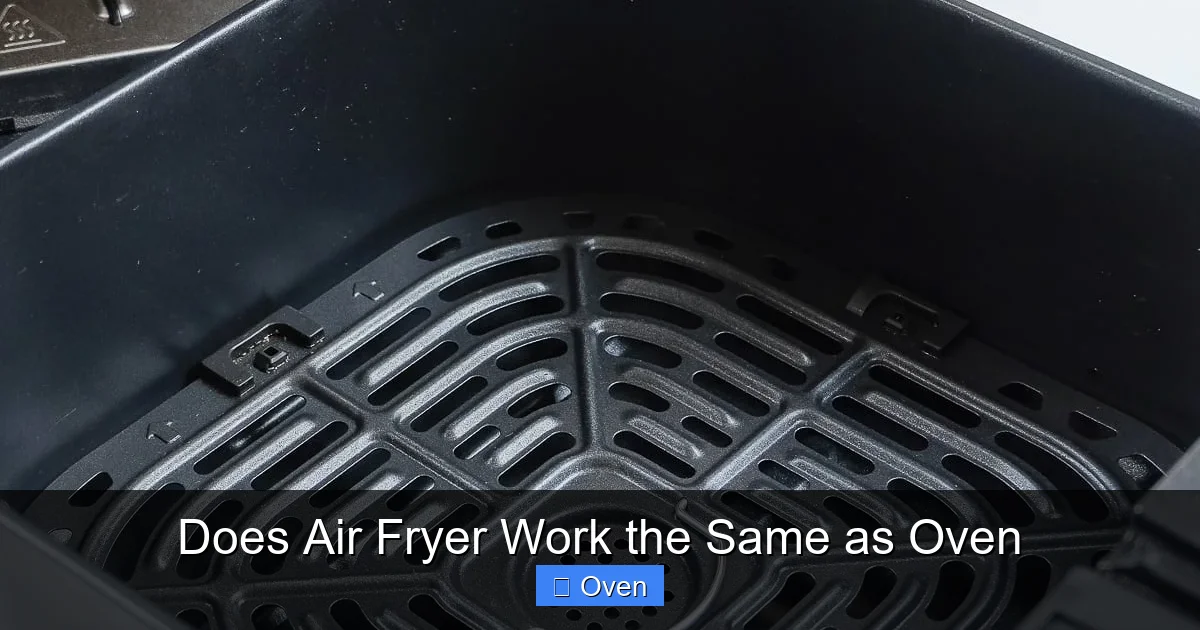
Air fryers and ovens don’t work exactly the same, though they share similarities. Air fryers are compact convection ovens that cook food significantly faster using intense, targeted hot air circulation, ideal for smaller portions and achieving crispiness. Ovens offer larger capacity, more consistent even heating for baking, and handle bigger dishes better, but take longer to preheat and use more energy. Choosing depends on your cooking needs, space, and desired results.
Key Takeaways
- Faster Cooking: Air fryers heat up quickly and cook food 20-40% faster than conventional ovens due to their small size and powerful convection fan.
- Smaller Capacity: Air fryers are best for 1-4 servings; ovens handle larger roasts, whole chickens, and baking sheets with ease.
- Energy Efficiency: Air fryers use significantly less electricity (up to 70% less) for small meals compared to heating a full oven cavity.
- Superior Crispiness: The intense, focused airflow in air fryers creates a crispier exterior on foods like fries, wings, and roasted veggies than most ovens.
- Baking Limitations: Ovens generally produce better results for delicate baked goods (cakes, soufflés) requiring gentle, even heat; air fryers can dry them out.
- Versatility Trade-off: Ovens offer more cooking methods (broiling, proofing, slow roasting); air fryers excel at reheating leftovers and quick frying alternatives.
- Space & Cost: Air fryers are compact countertop appliances; ovens are built-in or range-top units requiring significant kitchen space and higher installation costs.
Quick Answers to Common Questions
What is Does Air Fryer Work The Same As Oven?
Does Air Fryer Work The Same As Oven refers to essential knowledge and techniques.
📑 Table of Contents
- Does Air Fryer Work the Same as Oven? Let’s Set the Record Straight
- How They Actually Work: Convection is the Common Thread (But Execution Differs)
- Cooking Results: Crisp vs. Consistent – What You Actually Get
- Speed, Energy & Capacity: The Practical Differences
- When to Use Which: Your Practical Guide
- The Verdict: They’re Complementary, Not Competitors
Does Air Fryer Work the Same as Oven? Let’s Set the Record Straight
So, you’re standing in the kitchen, staring at that bag of frozen french fries. You’ve got an oven, but it takes forever to preheat. Then you remember the air fryer humming on the counter. You wonder: “Does air fryer work the same as oven?” It’s a question on *so* many home cooks’ minds, especially with air fryers becoming kitchen staples. The short answer? They’re cousins, not twins. Both use hot air to cook, but they do it in fundamentally different ways, leading to distinct results, speeds, and best-use scenarios.
Think of your standard oven as the reliable, spacious family sedan. It’s built for hauling big loads – a Sunday roast, a tray of cookies, a casserole for twelve. It heats a large cavity slowly and evenly, creating a stable environment perfect for baking delicate cakes or slowly roasting a tough cut of meat until it’s fall-apart tender. The air fryer, on the other hand, is like a high-performance sports car. It’s small, nimble, and built for speed. It blasts food with intensely hot, rapidly circulating air in a confined space, delivering that coveted crispy crunch in a fraction of the time. Understanding these core differences is key to knowing when to reach for which appliance. Let’s dive deep into the mechanics and realities of each.
How They Actually Work: Convection is the Common Thread (But Execution Differs)
At their heart, both appliances rely on convection heating – moving hot air around food to cook it. But the similarities often stop there. Here’s the breakdown:
The Conventional Oven: Radiant + Gentle Convection
Most standard home ovens (not convection ovens) primarily use radiant heat. Electric coils or gas flames at the bottom (and sometimes top) heat up, and that heat radiates directly to the food and the oven walls. Some hot air naturally rises and circulates, but it’s relatively slow and uneven. This is why you often need to rotate pans for even cooking. Preheating takes significant time (10-20 minutes) because you’re heating a large volume of air and the oven’s metal structure. The environment is generally moist, which is great for preventing baked goods from drying out but can make achieving a deep crisp difficult.

Visual guide about Does Air Fryer Work the Same as Oven
Image source: fryerhouse.com
The Convection Oven: Fan-Powered Evenness
Many modern ovens have a “convection” setting. This adds a powerful fan and often a heating element *around* the fan at the back of the oven. This fan actively pulls hot air from the heating elements and forces it *rapidly* around the entire oven cavity. This creates much more consistent, even heat distribution, reduces hot/cold spots, and speeds up cooking times by about 25% compared to standard mode. It also helps dry the air slightly, aiding in browning. However, the cavity is still large, so preheating time remains substantial.
The Air Fryer: Concentrated Convection on Steroids
This is where the air fryer truly shines and differs most dramatically. An air fryer is essentially a *miniature, high-powered convection oven* designed for maximum airflow efficiency. Here’s the magic:
- Tiny Cavity: The cooking chamber is very small (typically 3-6 quarts), meaning there’s far less air to heat up. Preheating often takes just 2-5 minutes.
- Powerful Fan & Heating Element: A large, high-speed fan sits directly above a powerful heating element (often 1500-1800 watts). This fan blasts intensely hot air *downwards* onto the food basket below.
- Basket Design: The perforated basket allows the hot air to circulate *all around* the food – top, bottom, and sides – creating 360-degree cooking. This rapid, focused airflow is key to the signature air fryer crisp.
- High Heat & Speed: Air fryers operate at very high temperatures (often up to 400°F/200°C) and move air at speeds significantly faster than even a convection oven fan. This intense, direct blast rapidly dehydrates the food’s surface, triggering the Maillard reaction (browning) and creating crispiness without needing much oil.
So, while both convection ovens and air fryers use fans, the air fryer’s compact size, powerful fan placement, and basket design create a uniquely intense and efficient cooking environment. This is the core reason why an air fryer works differently than a standard oven, and even differently than a convection oven setting.
Cooking Results: Crisp vs. Consistent – What You Actually Get
This is where the rubber meets the road. How does food cooked in each appliance *actually* turn out? The differences are noticeable, especially for certain types of food.
The Crisp Factor: Air Fryer’s Superpower
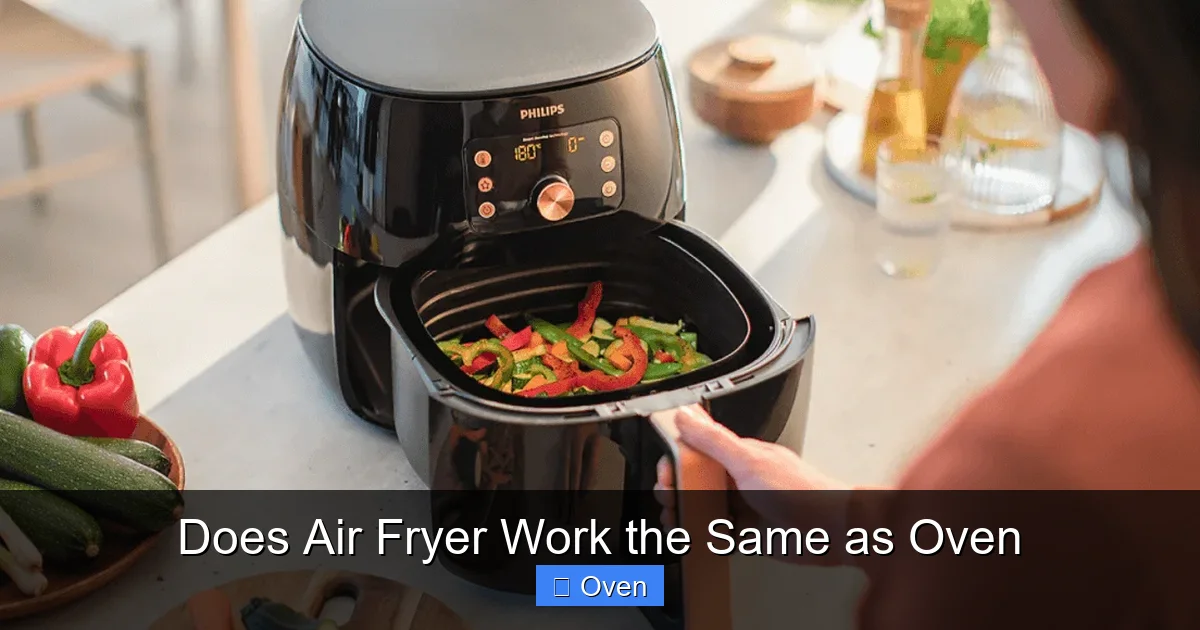
If you crave that deep-fried texture without the deep fryer mess and calories, the air fryer is your champion. The intense, focused airflow rapidly removes moisture from the food’s surface, creating an incredibly crispy, golden-brown exterior. Think:
Visual guide about Does Air Fryer Work the Same as Oven
Image source: airfryermasterchef.com
- Frozen Fries & Tater Tots: Achieve a shatteringly crisp exterior with a fluffy interior in 12-15 minutes, often with just a light spritz of oil. Ovens usually result in softer, less defined crispness and take 20-25 minutes.
- Chicken Wings: Get incredibly crispy skin without boiling them first (a common oven trick). The air circulation ensures even crispness all around. Oven-baked wings often have uneven crispness or require flipping multiple times.
- Roasted Vegetables: Cauliflower, broccoli, Brussels sprouts, and zucchini develop beautiful caramelization and a slight char much faster and more effectively in an air fryer than in a standard oven. The dry heat prevents sogginess.
- Reheating Leftovers: Pizza, fried chicken, and even french fries regain their crisp texture beautifully in an air fryer, often better than a microwave or oven can manage.
The air fryer’s ability to deliver this level of crispiness quickly is its biggest advantage over the standard oven. A convection oven setting helps, but rarely matches the air fryer’s intensity for pure surface dehydration.
Baking & Delicate Tasks: The Oven’s Domain
While air fryers are fantastic for roasting and “frying,” they struggle with many traditional baking tasks where gentle, even, moist heat is crucial:
- Cakes & Cupcakes: The intense, direct airflow can cause cakes to rise too quickly and then collapse, or dry out the edges while the center is undercooked. Ovens provide the stable, radiant heat needed for even rising and moist crumb structure.
- Soufflés & Custards: These delicate dishes require precise, gentle, and humid heat. The air fryer’s dry, blasting air is far too harsh and will likely cause collapse or curdling.
- Bread: Achieving a good oven spring and crust development is difficult in an air fryer. The small size also limits loaf size. Ovens (especially with steam injection) are superior for bread baking.
- Large Casseroles & Lasagna: The air fryer simply lacks the capacity. Ovens handle these layered, moist dishes perfectly, allowing even heat penetration without drying out the top excessively.
For tasks requiring a stable, moist environment or very large volumes, the oven remains the undisputed king. The air fryer’s strength in crispiness becomes a weakness for delicate baking.
Evenness & Consistency: Size Matters
Ovens, particularly convection models, excel at cooking large items evenly. A whole chicken, a large roast, or a full baking sheet of cookies benefits from the oven’s spacious cavity and (in convection mode) consistent air circulation. While air fryers are great for smaller portions, achieving perfect evenness with larger items or dense foods (like a thick steak or a large batch of dense roasted root vegetables) can be trickier. You might need to shake the basket more frequently or accept slightly less uniform results compared to a well-calibrated oven. The oven’s larger thermal mass also provides more stable temperature control during extended cooking.
Speed, Energy & Capacity: The Practical Differences
Beyond the food itself, how these appliances impact your time, wallet, and kitchen space is crucial for daily use.
Cooking Speed: Air Fryer Wins Hands Down (for Small Batches)
This is where the air fryer’s design pays off massively:

Visual guide about Does Air Fryer Work the Same as Oven
Image source: greenkithome.com
- Preheat Time: Air fryers typically preheat in 2-5 minutes. Ovens, even convection ones, usually need 10-20 minutes to reach temperature. That’s a huge time saver for weeknight dinners.
- Actual Cooking Time: Due to the concentrated heat and rapid airflow, air fryers cook most foods 20-40% faster than a standard oven. Frozen fries might take 12 mins vs 20+ in the oven. Chicken breasts cook in 15-18 mins vs 25-30. This speed is a major factor in the “does air fryer work the same as oven” question – it simply doesn’t; it’s faster.
- Real-World Impact: Need a quick side dish? Crispy veggies in 10 minutes? Reheating pizza perfectly in 5? The air fryer shines for these small, fast tasks where firing up the big oven feels like overkill.
For large roasts or baking projects requiring long, slow cooking, the oven’s speed advantage disappears, but for the vast majority of everyday meals for 1-4 people, the air fryer is significantly quicker.
Energy Efficiency: Saving Watts (and Dollars)
Heating a large oven cavity consumes a lot of electricity (or gas). Air fryers, with their tiny chamber and quick preheat/cook times, are remarkably energy-efficient for small meals:
- Lower Wattage: Most air fryers use 1500-1800 watts. A standard electric oven element can draw 2000-5000+ watts *just for the bake function*, plus more for convection fans and lights.
- Shorter Runtime: Combining lower wattage with significantly shorter cooking times means air fryers can use up to 70% less energy for equivalent small meals compared to a full oven.
- Cost Savings: Over time, using an air fryer for appropriate tasks (reheating, small roasts, sides) instead of the oven can noticeably reduce your energy bill, especially in regions with high electricity costs.
While running a convection oven *might* be slightly more efficient than standard mode for larger items, the air fryer’s efficiency for small portions is unmatched. This is a strong practical argument for having both appliances.
Capacity & Versatility: Knowing Your Limits
This is perhaps the most straightforward difference:
- Air Fryer Capacity: Typically ranges from 3 to 6 quarts. Perfect for 1-4 servings (e.g., 2 chicken breasts, 1.5 lbs of fries, a small tray of veggies). Struggles with whole chickens (unless very small), large roasts, full baking sheets, or casseroles. The basket size limits what fits.
- Oven Capacity: Ranges from 30+ liters in smaller models to 70+ liters in large ranges. Can easily handle whole chickens, large roasts, multiple baking sheets, casseroles, and large batches of cookies or pizza. Offers multiple rack positions for layered cooking.
- Versatility Beyond Size: Ovens offer more cooking *methods*: broiling (direct top heat), proofing dough (gentle warm environment), slow roasting at very low temps, dehydrating (with door ajar), and often have warming drawers. Air fryers are primarily for roasting, baking (with limitations), reheating, and “frying.” Some models have rotisserie or dehydrate functions, but core versatility leans towards the oven.
If you regularly cook for large families, entertain often, or bake extensively, an oven is non-negotiable. The air fryer complements it for speed and crispness on smaller tasks.
When to Use Which: Your Practical Guide
Now that we’ve covered the differences, when should you actually reach for the air fryer vs. the oven? Here’s a practical cheat sheet:
Reach for the Air Fryer When:
- You Need Speed: Weeknight dinners, quick sides, or reheating leftovers. (e.g., Crispy roasted asparagus in 10 mins, reheated pizza in 5).
- Crispiness is Key: Frozen appetizers (mozzarella sticks, spring rolls), french fries, chicken wings, roasted veggies, or anything where a golden, crunchy exterior matters most.
- Cooking Small Portions: For 1-4 people. Perfect for solo meals or small family dinners.
- Energy Efficiency Matters: On a hot day when you don’t want to heat the whole house, or simply want to save on your electric bill for a small meal.
- You Have Limited Oven Space: Cooking multiple dishes? Use the air fryer for the side while the main dish roasts in the oven.
Pro Tip: Don’t overcrowd the air fryer basket! Leave space for air circulation. Shake or flip food halfway through cooking for even results. A light spritz of oil *does* help achieve maximum crispness on many foods, but you’ll use far less than deep frying.
Reach for the Oven When:
- Cooking Large Quantities: Whole chickens, large roasts (pork loin, leg of lamb), full baking sheets of cookies or sheet pan dinners, casseroles, lasagna.
- Baking Delicate Goods: Cakes, cupcakes, soufflés, custards, bread, pastries – anything requiring gentle, even, moist heat.
- You Need Specific Functions: Broiling (melting cheese on a casserole, browning a top), proofing yeast dough, slow roasting at very low temperatures (e.g., 225°F for pulled pork).
- Even, Consistent Heat is Paramount: For large, dense items where even cooking from edge to center is critical (e.g., a thick prime rib).
- You’re Already Using the Oven: If the main dish is roasting, use the oven for the side dish too for efficiency (though the air fryer might still be faster for the side).
Pro Tip: Always use the convection setting on your oven if you have it! It significantly improves evenness and reduces cooking time compared to standard bake mode, making it more competitive with the air fryer for many tasks (though still not as fast for small items).
Can You Convert Oven Recipes for Air Fryer?
Yes, but with adjustments! It’s not a direct 1:1 swap. Here’s how:
- Lower the Temperature: Reduce oven temp by 25°F (15°C). Air fryers cook hotter and faster due to the intense airflow.
- Shorten Cooking Time: Start checking for doneness 25-30% sooner than the oven recipe suggests. Use a meat thermometer for proteins.
- Adjust Liquid: You might need slightly less liquid in sauces or marinades, as the dry heat evaporates moisture faster.
- Shake/Flip More Often: Due to the intense top-down airflow, food may cook unevenly. Shake the basket or flip items halfway through.
- Don’t Overcrowd: This is even more critical in the air fryer than the oven for crisp results.
Start with recipes specifically designed for air fryers, or use oven recipes as a guideline and be prepared to monitor closely and adjust. Baking recipes (cakes, etc.) are the hardest to convert successfully.
The Verdict: They’re Complementary, Not Competitors
So, circling back to the core question: “Does air fryer work the same as oven?” The definitive answer is **no**. While both utilize convection heating principles, their design, scale, and resulting performance create distinct tools for the kitchen.
The air fryer is a speed demon and crispness champion for small to medium portions. It heats up almost instantly, cooks significantly faster, uses less energy, and delivers that addictive fried-food texture with minimal oil. It’s ideal for weeknight dinners, quick sides, reheating leftovers, and achieving perfect roastiness on vegetables or proteins. Its limitations are clear: small capacity, difficulty with delicate baking, and less consistent results on very large or dense items.
The oven, particularly a convection oven, is the versatile workhorse. It handles large volumes, delicate baking, slow roasting, broiling, and proofing with unmatched capacity and consistent, even heat. It’s essential for family feasts, holiday meals, baking projects, and any task requiring precise, gentle, or large-scale cooking. Its drawbacks are longer preheat times, higher energy consumption for small tasks, and often less effective at achieving deep crispness compared to an air fryer.
**The smartest approach isn’t choosing one over the other, but understanding how to use both effectively.** Think of your oven as your primary cooking vessel for big jobs and baking, and your air fryer as your go-to for speed, crispness, and energy efficiency on smaller tasks. They complement each other perfectly, covering the full spectrum of home cooking needs. If you only have space or budget for one, your choice depends entirely on your cooking style: prioritize speed and crispness for small meals (air fryer), or capacity and baking versatility (oven). But for most home kitchens, having both unlocks the greatest flexibility and best results. Stop wondering if they work the same – start using them for what they do best!
Frequently Asked Questions
What is Does Air Fryer Work The Same As Oven?
Does Air Fryer Work The Same As Oven is an important topic with many practical applications.