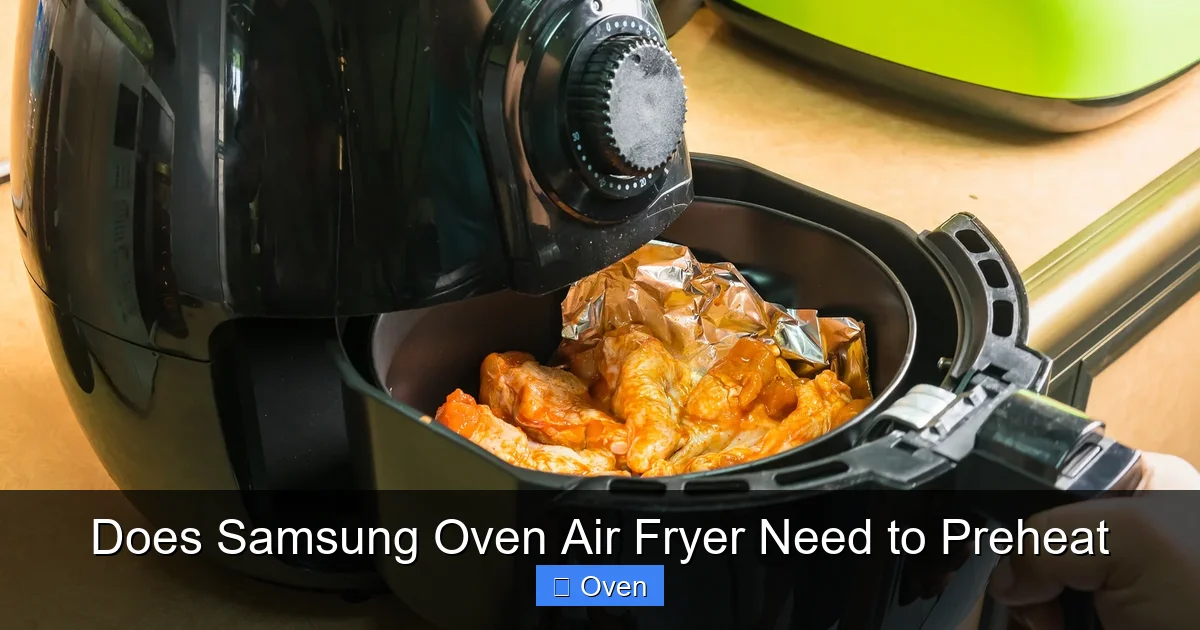
Most Samsung oven air fryers benefit significantly from preheating for optimal results, though it’s not always strictly mandatory like traditional ovens. Preheating ensures even cooking, perfect crispiness, and accurate timing, typically taking just 3-5 minutes. Always check your specific model’s manual, as some newer Samsung Smart Ovens feature rapid preheat or instant heat technology that minimizes this step.
Key Takeaways
- Generally Recommended: Preheating your Samsung air fryer oven is strongly advised for best texture, even cooking, and reliable recipe timing.
- Model Matters: Newer Samsung Smart Ovens (e.g., with AI or rapid preheat) may require less or no preheat; always consult your manual.
- Short Preheat Time: Unlike traditional ovens, Samsung air fryer preheating usually takes only 3-5 minutes, making it quick and efficient.
- Skip for Certain Foods: You can often skip preheat for large, dense items like whole chickens or casseroles where internal temp is key.
- Crispiness & Browning: Preheating is crucial for achieving that signature air fryer crisp on fries, wings, and roasted veggies.
- Energy Efficient: The short preheat time uses minimal extra energy compared to the cooking cycle itself.
- Check the Manual: Your specific Samsung model’s instructions are the ultimate authority on preheating requirements.
Quick Answers to Common Questions
How long should I preheat my Samsung air fryer oven?
Most Samsung air fryer ovens need only 3-5 minutes to preheat. Newer Smart Oven models with rapid preheat technology might take just 1-3 minutes. Always wait for the preheat complete beep or indicator light.
Can I put frozen food in a cold Samsung air fryer?
It’s not recommended. Frozen food releases significant moisture; starting in a cold oven causes steaming, leading to soggy results. Always preheat for frozen fries, nuggets, or wings to achieve crispiness.
Does preheating use a lot of extra energy?
No, the energy used during the short 3-5 minute preheat is minimal compared to the main cooking cycle. Preheating often leads to more efficient overall cooking by preventing longer recovery times.
My Samsung oven says “Preheat Complete” – is it ready?
Yes! The “Preheat Complete” signal means the oven has reached the set temperature AND stabilized. This stabilization is key – the air and chamber are consistently hot and ready for your food.
Can I skip preheat for a whole chicken in my Samsung air fryer?
You can, as the long cooking time allows the oven to recover temperature. However, preheating will give a better sear on the skin. If skipping, add 5-10 minutes to cook time and always use a meat thermometer.
📑 Table of Contents
- Does Your Samsung Oven Air Fryer Really Need That Extra Preheat Step?
- How Samsung Air Fryer Ovens Actually Work (It’s Not Magic!)
- The Preheating Basics: What Does “Preheat” Mean for Air Fryers?
- Why Preheating Your Samsung Air Fryer Oven is Usually a Good Idea
- When Can You *Maybe* Skip Preheating Your Samsung Air Fryer?
- Your Step-by-Step Guide to Preheating a Samsung Air Fryer Oven
- Energy, Time, and the Bottom Line: Is Preheating Worth It?
- Conclusion: Preheat for Perfection, Know Your Model
Does Your Samsung Oven Air Fryer Really Need That Extra Preheat Step?
So, you’ve got your shiny new Samsung oven air fryer – maybe it’s a sleek countertop model or a built-in wall oven with air fry capabilities. You’re excited to whip up crispy fries, juicy chicken wings, or perfectly roasted veggies. But then you pause: Do I really need to preheat this thing? It’s a question echoing in kitchens everywhere, especially since air fryers are often marketed as faster and more convenient than traditional ovens. You might be thinking, “My old oven took forever to heat up – surely this modern marvel doesn’t need that step too?” It’s a totally valid question, and the answer isn’t always a simple yes or no. It depends on your specific Samsung model, what you’re cooking, and how perfect you want those results. Let’s cut through the confusion and get to the truth about preheating your Samsung air fryer oven.
Preheating has been a staple of oven cooking for decades. We’re conditioned to wait for that little light to turn off or the beep to sound before we slide in the casserole dish. But air fryers work differently, right? They use powerful, concentrated convection currents to cook food rapidly. Samsung, being a leader in kitchen tech, has packed its air fryer ovens with features designed for speed and efficiency. This naturally leads to the burning question: is preheating just an outdated habit, or is it still a crucial step for success? The short answer leans towards “yes, but it’s quick!” However, the nuances are important. Understanding why preheating matters for air frying, and when you might get away without it, can save you time, energy, and prevent disappointing soggy results. Let’s dive deep into the mechanics and practicalities.
How Samsung Air Fryer Ovens Actually Work (It’s Not Magic!)
Before we tackle preheating, it’s essential to grasp how these appliances cook your food. Samsung air fryer ovens, whether countertop models like the popular AF series or built-in convection ovens with an air fry setting, rely on a core principle: rapid hot air circulation. Imagine a powerful fan forcefully pushing extremely hot air around your food from all angles. This intense convection creates a “battering ram” effect of heat that cooks food much faster than a standard oven’s radiant heat alone.

Visual guide about Does Samsung Oven Air Fryer Need to Preheat
Image source: instantpoteats.com
The Convection Engine: Fan + Heating Element
At the heart of your Samsung air fryer is a high-speed fan, usually located at the back or top of the cooking chamber. This fan draws in air, which is then rapidly heated by a powerful heating element (often hidden behind a shield). The superheated air is then blasted back into the cavity, constantly circulating around your food. This process is incredibly efficient at transferring heat directly to the food’s surface. It’s this intense surface heating that creates the coveted crispy, fried-like texture without needing a lot of oil. The speed of this process is why air fryers cook faster – the heat isn’t just warming the air slowly; it’s actively and forcefully moving that heat onto your food.
Why Temperature Stability Matters
Here’s the key point for preheating: for this convection process to work optimally, the entire cooking chamber needs to be at the target temperature before you add your food. When you put cold food into a cold oven, the oven has to work extra hard to heat both the food and the air/chamber around it. This initial temperature drop can lead to uneven cooking – the outside might start cooking before the inside has even warmed up, or the surface might steam instead of sear, preventing that crucial crispy crust from forming immediately. Preheating ensures the air, the walls, the rack, and the circulating air are all stable at the desired temperature the moment your food hits the rack. This stability is what gives you predictable results, especially for foods where texture (crispiness!) is paramount.
The Preheating Basics: What Does “Preheat” Mean for Air Fryers?
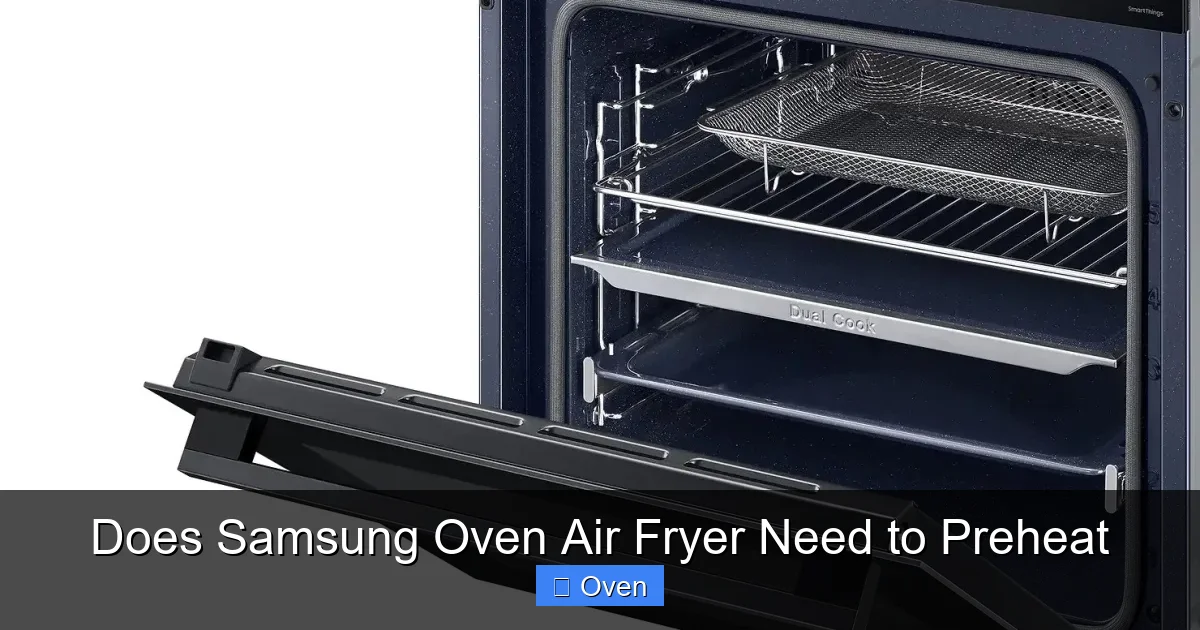
Preheating, in the context of any oven (including air fryers), simply means allowing the appliance to reach and stabilize at the cooking temperature you’ve selected before you put your food inside. It’s giving the machine time to get its internal environment ready for the task. While the concept is the same as a traditional oven, the execution and time required are often significantly different for air fryers, especially Samsung models.
Visual guide about Does Samsung Oven Air Fryer Need to Preheat
Image source: instantpoteats.com
Why Preheating is Different (and Faster!) in Air Fryers
Traditional ovens heat up slowly because they rely on radiant heat from elements at the top and bottom. They need to warm the entire large cavity volume of air and the oven walls. Samsung air fryer ovens, however, have a much smaller cooking chamber (especially countertop models) and use that powerful convection fan. This fan rapidly distributes the heat generated by the element, meaning the air temperature stabilizes much quicker. Think of it like blowing on hot soup to cool it down – the moving air transfers heat much faster than still air. For most Samsung air fryer ovens, preheating typically takes only **3 to 5 minutes**. Compare that to 10-20 minutes for a conventional oven! This speed is a major advantage and makes preheating far less of a chore. It’s not about waiting forever; it’s a quick step to ensure quality.
What Happens During Preheat?
When you select your cooking temperature and start the preheat cycle (often just pressing “Start” after setting the temp), the heating element kicks on at full power. The convection fan runs continuously. You’ll usually see the temperature display rise steadily. Once the internal sensors detect the air temperature has reached the set point and stabilized (meaning it’s not fluctuating wildly), the oven will typically beep, the light might turn off, or a “Preheat Complete” message appears. **This is your green light to add your food.** Crucially, this stabilization is key. Just reaching the temperature isn’t enough; the oven needs a moment for the heat to evenly permeate the chamber. Skipping this stabilization phase is where inconsistent results often begin.
Why Preheating Your Samsung Air Fryer Oven is Usually a Good Idea
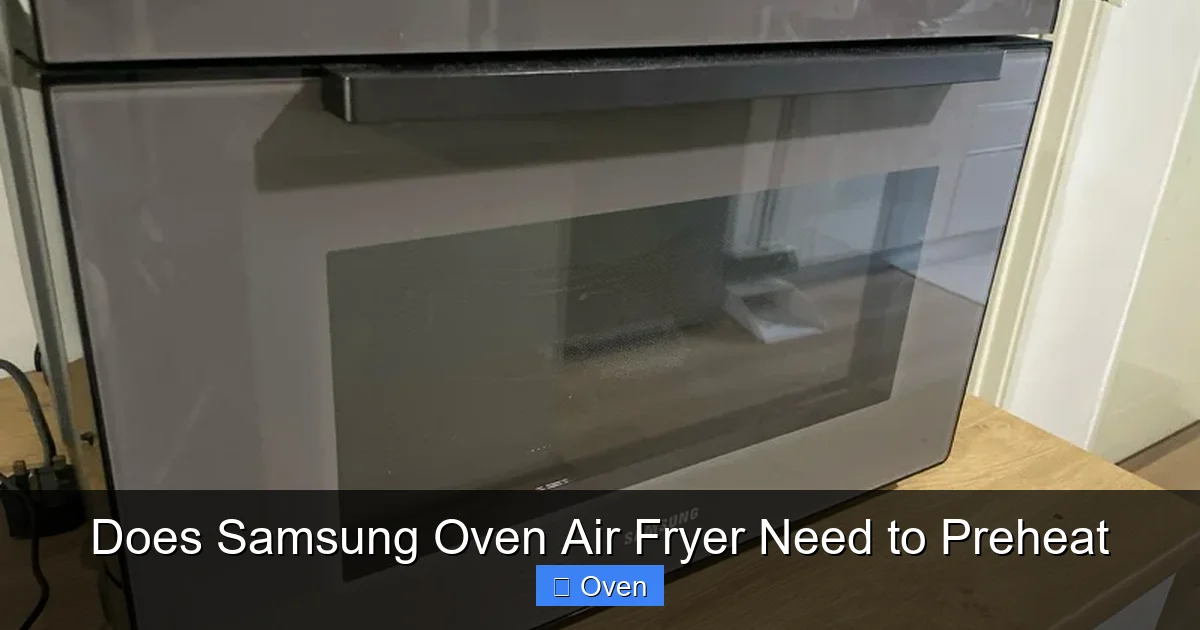
While you can technically put food into a cold air fryer and it will eventually cook, preheating delivers tangible benefits that elevate your results from “edible” to “restaurant-quality crispy.” Here’s why taking those extra few minutes is almost always worth it:
Visual guide about Does Samsung Oven Air Fryer Need to Preheat
Image source: down-my.img.susercontent.com
Achieving Perfect Crispiness Every Time
This is the #1 reason! Air frying’s superpower is creating that deep-fried texture with minimal oil. But crispiness happens in the first few minutes of cooking, when the surface moisture rapidly evaporates and the Maillard reaction (browning) occurs. If you put food into a cold oven, the surface initially steams as the cold food meets the gradually warming air. Steaming = sogginess. Preheating ensures the air is scorching hot the instant your food touches the rack. This immediate blast of high heat instantly sears the surface, locking in juices and driving off surface moisture to create that perfect, shatteringly crisp crust on fries, wings, tofu, or roasted vegetables. Without preheat, you’re much more likely to end up with limp, greasy results, even if the inside is cooked through.
Ensuring Even and Predictable Cooking
Recipes for air frying rely on specific time and temperature combinations tested with a preheated oven. If you start cooking in a cold chamber, the initial temperature plunge means the oven has to work harder and longer to recover. This throws off the timing. Your food might cook unevenly – the bottom could be overdone while the top is undercooked, or it might simply take significantly longer than the recipe states. Preheating creates a stable thermal environment. The hot air circulates consistently from the very start, cooking your food evenly from all sides. This predictability is essential for following recipes successfully and knowing your chicken will be juicy and safe, or your baked goods will rise properly.
Optimizing Cooking Speed (Yes, Really!)
It might seem counterintuitive, but preheating can actually make your overall cooking process faster. While you wait 3-5 minutes for preheat, the oven isn’t actively cooking your food yet. However, once preheated, the intense convection heats your food much more rapidly and efficiently than if it had to constantly fight against a dropping temperature. For many foods, especially smaller items like fries or nuggets, the active cooking time might be slightly shorter with preheat because the oven isn’t wasting energy just trying to get back to temperature. The total time (preheat + cook) is often comparable or even less than starting cold, but the quality difference is massive.
Energy Efficiency: The Short Burst Myth
Some worry preheating wastes energy. Let’s bust that myth for air fryers. The energy used during the short 3-5 minute preheat cycle is minimal compared to the energy used during the actual cooking cycle, which can be 10-30 minutes or more. More importantly, cooking food without preheat often leads to longer overall cooking times (as the oven recovers temperature) or the need to cook in batches (if the first batch cooled the oven down too much), which can use more total energy. Preheating ensures the cooking process is efficient from the start. Samsung’s efficient convection design means that short preheat burst is a very small energy investment for a big payoff in results.
When Can You *Maybe* Skip Preheating Your Samsung Air Fryer?
Preheating is generally recommended, but there are specific scenarios where skipping it is less likely to ruin your meal, especially if you adjust expectations or timing. It’s not a free pass, but it can be a time-saver for certain tasks.
Large, Dense, or Long-Cooking Items
For foods where the primary goal is cooking the inside to a safe temperature and the cooking time is relatively long (15-20+ minutes), the initial temperature drop from adding cold food has less impact on the final outcome. Think whole chickens, large roasts, dense casseroles, or baked potatoes. The extended cooking time allows the oven to recover the temperature drop relatively quickly. While preheating might still give a slightly better sear on the outside, skipping it won’t usually result in soggy disaster like it would with fries. **Pro Tip:** If skipping preheat for a large item, consider adding 2-5 minutes to the cooking time and always use a meat thermometer for doneness.
Newer Samsung Models with “Rapid Preheat” or “Instant Heat”
This is crucial! Samsung has been innovating. Many of their newer **Smart Oven** models (like certain ranges with air fry capabilities or advanced countertop units) feature technologies designed to minimize or eliminate the need for traditional preheating. Look for terms like:
- Rapid Preheat: Uses boosted power to reach temperature much faster (sometimes in under 2 minutes).
- Instant Heat / True Convection: Advanced fan systems and heating elements designed to deliver immediate, stable heat the moment you start cooking.
- AI-Powered Cooking (on some Smart Ovens): Sensors might detect food load and adjust heating dynamically, potentially reducing reliance on a separate preheat step.
If your specific Samsung model’s manual states that preheating is optional or not required due to these features, then you can likely skip it without major penalty. **Always prioritize your model’s specific instructions over general advice.** Check the manual or Samsung’s online support for your exact model number.
When You’re in a Genuine Hurry (With Caveats)
We’ve all been there – dinner needs to be on the table now. If you’re cooking something very quick (like reheating leftovers for 3-4 minutes) or a small batch of something forgiving (like toasting nuts), skipping preheat might be acceptable. However, be prepared for potentially less crisp results and adjust cooking time slightly upwards. **This is the exception, not the rule, for achieving optimal air fryer results.** For anything where texture matters (fries, wings, roasted veggies), preheating is still highly recommended even when rushed.
Your Step-by-Step Guide to Preheating a Samsung Air Fryer Oven
Preheating a Samsung air fryer oven is straightforward, but doing it correctly ensures you get the best results. Here’s exactly what to do:
1. Prep Your Oven & Food
Before you even turn the oven on:
- Ensure the cooking chamber is clean and dry. Wipe out any crumbs or grease from previous use.
- Place your food on the air fryer basket, tray, or rack in the oven. **Do NOT put the food in before preheating starts.** Have it ready to slide in the moment preheat is done. (Exception: Some models with rapid preheat might allow adding food immediately – check your manual).
- Make sure the basket/tray is positioned correctly for optimal air flow (usually the middle rack position).
- Close the door securely.
2. Set the Temperature & Start Preheat
- Select the “Air Fry” function (or convection bake if that’s the equivalent on your model).
- Set your desired cooking temperature (e.g., 375°F / 190°C for fries).
- Most Samsung air fryers will automatically start a preheat cycle when you press “Start” after setting the temp. **You typically don’t need to select a separate “Preheat” mode.** The oven knows it needs to heat up first.
- Press “Start”. The heating element will turn on, and the convection fan will begin running loudly – that’s normal!
3. Wait for the Signal
- Watch the temperature display. It will rise steadily.
- Listen for the beep or watch for the indicator light to change (e.g., the “Preheat” light turns off, or a “Preheat Complete” message appears).
- **This signal means the oven has reached and STABILIZED at the set temperature.** This stabilization is critical – don’t open the door the second the temp hits the number; wait for the beep/message.
- Typical wait time: **3-5 minutes** for most models. Newer Smart Ovens might be faster (1-3 mins).
4. Add Your Food & Start Cooking
- When preheat is complete, carefully open the door (watch for steam!).
- Quickly slide your prepared food into the oven on the rack/basket.
- Close the door firmly.
- The oven will usually automatically start the cooking timer once the door closes, or you may need to press “Start” again. Follow your model’s specific prompts.
- Cook for the time specified in your recipe.
Pro Tips for Perfect Preheating
- Don’t Peek! Opening the door during preheat (or early cooking) lets out hot air, causing temperature fluctuations that undo the preheat benefit. Wait until at least halfway through cooking before checking.
- Preheat with the Rack In: Always preheat with the rack or basket in place. A cold rack will absorb heat, cooling the air. Preheating with it in ensures the rack is hot too.
- Frozen Food? Preheat is NON-NEGOTIABLE: Frozen fries, nuggets, or wings release a lot of moisture. Starting in a cold oven guarantees steaming and sogginess. Preheating is essential for crisp frozen foods.
- Batch Cooking? Re-Preheat: If cooking multiple batches, the oven chamber will cool down significantly after removing the first batch. Preheat again for 1-2 minutes before adding the next batch for consistent results.
Energy, Time, and the Bottom Line: Is Preheating Worth It?
Let’s address the practical concerns head-on: “Doesn’t preheating waste time and energy?” For Samsung air fryer ovens, the reality is quite the opposite when you consider the bigger picture.
The Time Factor: Minutes vs. Minutes
The perceived time “waste” of preheating is minimal. Waiting 3-5 minutes while you finish prepping your food (chopping veggies, seasoning protein, setting the table) is hardly disruptive. In fact, it’s often the perfect moment to do those last-minute tasks. Compare this to the potential time saved by avoiding:
- Longer overall cooking times due to temperature recovery.
- Having to cook a second batch because the first was undercooked or soggy.
- The frustration of failed results requiring re-cooking.
For most everyday air frying tasks (fries, wings, veggies), the total active time (preheat + cook) is still significantly less than using a traditional oven, preheat or not. The few extra minutes for preheat are a small investment for guaranteed quality.
Energy Efficiency: The Short Burst Advantage
Modern Samsung air fryer ovens are designed for efficiency. The energy consumed during a 3-5 minute preheat cycle is relatively small. Crucially, the intense convection cooking that follows is highly efficient at transferring heat directly to the food. Starting with a cold oven forces the appliance to expend extra energy just to overcome the initial temperature drop caused by the cold food, potentially extending the active cooking time. Preheating ensures the cooking process begins at peak efficiency. While the absolute energy difference per cycle might be small, consistently achieving perfect results without needing to re-cook or use larger appliances (like firing up the big oven) adds up to real efficiency over time. Samsung’s focus on rapid heating in their convection systems minimizes the energy cost of preheating.
The Real Cost of Skipping Preheat: Poor Results
The most significant “cost” of skipping preheat isn’t measured in watts or minutes – it’s measured in disappointment. Soggy fries, steamed chicken wings, unevenly roasted vegetables, or undercooked casseroles are the direct result of inadequate preheating for most air fryer tasks. That wasted food, the time spent cooking something subpar, and the frustration of a failed meal far outweigh the minor time and energy investment of a proper preheat. When you consider the purpose of an air fryer – to deliver that specific crispy, delicious texture – preheating is an essential step in achieving that goal. It’s not an outdated ritual; it’s a key part of the technology’s success formula.
Conclusion: Preheat for Perfection, Know Your Model
So, does your Samsung oven air fryer need to preheat? For the vast majority of cooking tasks where you crave that signature air fryer crispiness – think golden fries, succulent wings, perfectly roasted veggies, or crispy tofu – **the answer is a resounding yes, it’s highly recommended and usually necessary for best results.** The short 3-5 minute preheat time is a small price to pay for guaranteed texture, even cooking, and reliable recipe timing. It leverages the core convection technology of your Samsung appliance, ensuring the hot air is ready to work its magic the instant your food enters the chamber.
However, the smart Samsung owner knows their specific machine. **Always, always consult your model’s user manual.** Newer Samsung Smart Ovens with features like Rapid Preheat, Instant Heat, or advanced AI convection may genuinely minimize or eliminate the need for a traditional preheat step, especially for certain foods. For large roasts or long-cooking items, skipping preheat is less critical, though still beneficial. But for the everyday magic of air frying – achieving that crave-worthy crunch – preheating remains a fundamental best practice. Don’t let the speed of air frying fool you into skipping this crucial step. Embrace the quick preheat, trust the process, and unlock the full potential of your Samsung air fryer oven. Your taste buds (and your dinner guests) will thank you for those perfectly crisp, evenly cooked results every single time. Now, go preheat that oven and get cooking!
Frequently Asked Questions
Is preheating mandatory for all Samsung air fryer ovens?
While not strictly mandatory like some traditional ovens, preheating is strongly recommended for optimal results on most foods. Newer Samsung Smart Ovens with specific rapid heat technology may have reduced requirements, so always check your model’s manual.
Why is preheating so important for crispy food in an air fryer?
Preheating ensures the air is scorching hot the instant food enters. This immediate blast of heat sears the surface, evaporates moisture quickly, and triggers browning (Maillard reaction), creating crispiness. Cold ovens cause steaming, leading to sogginess.
How do I know when my Samsung air fryer is fully preheated?
Your oven will signal completion with a beep, a change in indicator light (e.g., “Preheat” light turns off), or a “Preheat Complete” message on the display. This indicates the temperature has stabilized, not just reached the set point.
Can preheating damage my Samsung air fryer oven?
No, preheating is a normal and intended function. Samsung designs these ovens to handle the preheat cycle safely. Always follow the manufacturer’s instructions for your specific model.
Should I preheat with the basket or tray inside?
Yes, absolutely. Preheat with the rack, basket, or tray in its correct position. A cold rack will absorb significant heat, cooling the air and extending preheat time. Preheating with it in ensures everything is hot and ready.
What happens if I don’t preheat my Samsung air fryer?
Food is more likely to cook unevenly, take longer overall, and lack crispiness (becoming soggy or steamed). Recipe timing becomes unreliable, and you risk undercooked or overcooked results, especially for smaller, quicker-cooking items.