Ever wonder why your coffee buzz varies? Caffeine content isn’t fixed—it depends on bean type, brew method, and serving size. Understanding these factors helps you control your energy boost and avoid jitters. Master your cup for the perfect balance every time.
Key Takeaways
- Bean type is crucial: Robusta beans contain nearly double the caffeine of Arabica beans, significantly impacting your cup’s strength.
- Brew method matters most: Espresso packs more caffeine per ounce, but a standard 8oz drip coffee often has more total caffeine than a 1oz espresso shot.
- Serving size changes everything: A “large” coffee can have 2-3x the caffeine of a “small,” so always check your cup’s actual volume.
- Decaf isn’t caffeine-free: Most decaf coffee still contains 2-15mg of caffeine per cup—enough to affect sensitive individuals.
- Dark roast ≠ more caffeine: While darker roasts taste bolder, they actually have slightly less caffeine by weight than lighter roasts due to longer roasting.
- Your body plays a role: Genetics, tolerance, and even hydration levels influence how you experience caffeine’s effects.
Quick Answers to Common Questions
Does coffee size really affect caffeine content?
Yes! A 16oz coffee has roughly double the caffeine of an 8oz serving made with the same coffee-to-water ratio. Always check actual volume, not just the cup label.
Is espresso stronger in caffeine than drip coffee?
Per ounce, yes—espresso has more caffeine concentration. But a standard 1oz espresso shot (60-80mg) often has less total caffeine than an 8oz drip coffee (80-120mg).
Why does dark roast coffee taste stronger but have less caffeine?
Dark roasts lose mass during longer roasting, so you get slightly less caffeine by weight. The bold flavor comes from roasted compounds, not caffeine density.
Can I remove caffeine from coffee at home?
No reliable home method exists. Commercial decaf uses specialized processes; home techniques like “rinsing beans” are ineffective myths.
How long does caffeine stay in your system?
On average, caffeine’s half-life is 5 hours—meaning half remains after 5 hours. Full clearance takes 10+ hours, varying by metabolism and other factors.
📑 Table of Contents
- Why Your Coffee Buzz Isn’t One-Size-Fits-All
- The Bean Truth: Arabica vs. Robusta
- Brew Methods: The Caffeine Multipliers
- Serving Size: The Silent Caffeine Amplifier
- Decaf Coffee: The Caffeine Illusion
- Beyond the Cup: Your Body’s Role in Caffeine Absorption
- Putting It All Together: Your Caffeine Control Toolkit
- Conclusion: Your Cup, Your Rules
Why Your Coffee Buzz Isn’t One-Size-Fits-All
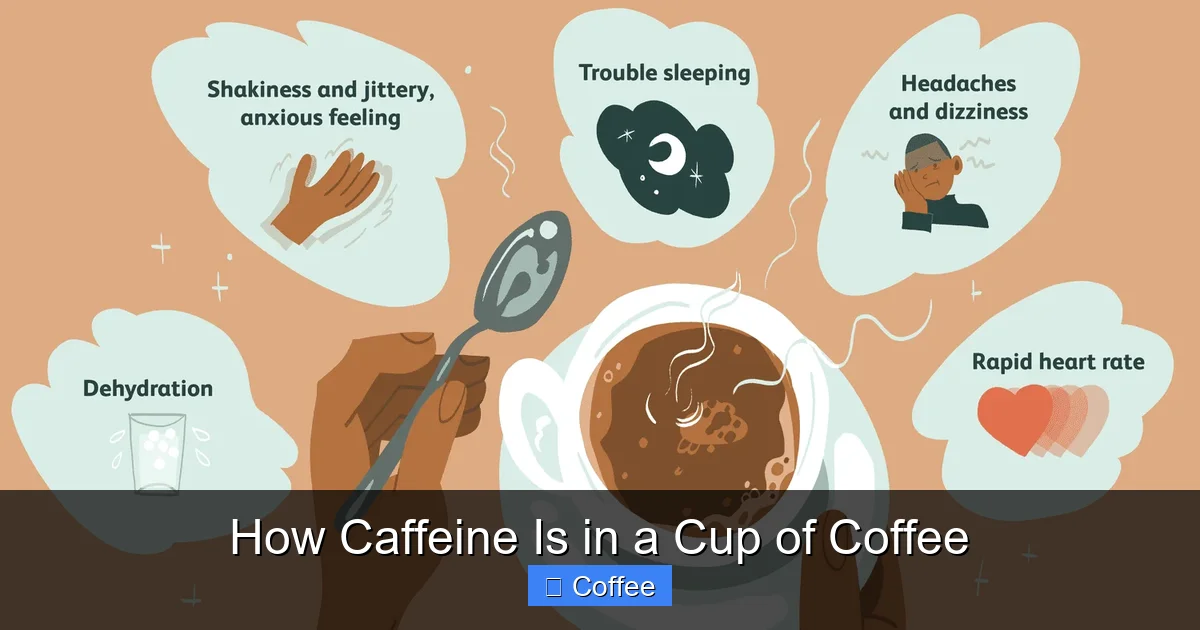
You pour your morning coffee, take that first sip, and wait for the familiar energy surge. But some days, it’s a gentle wave; other days, it’s a tidal wave of jitters. Ever wonder why? The answer lies in a simple question: how caffeine is in a cup of coffee. It’s not a fixed number. That “cup” on your desk could pack anywhere from 30mg to over 500mg of caffeine. Crazy, right? This variability isn’t random—it’s shaped by choices you make (or don’t realize you’re making) every time you brew.
Think about your last coffee run. Did you grab a tiny espresso shot or a giant iced cold brew? Did you choose a light roast pour-over or a dark roast drip? Each decision tweaks the caffeine content. Even the coffee bean itself holds secrets. Most people assume all coffee is created equal, but the truth is messier—and more fascinating. Understanding how caffeine is in a cup of coffee empowers you. It lets you chase that perfect focus without the crash, or enjoy a late-afternoon cup without ruining sleep. This isn’t just trivia; it’s your key to coffee nirvana.
The Bean Truth: Arabica vs. Robusta
Let’s start at the source: the coffee bean. Not all beans are born equal when it comes to caffeine. There are two main species powering your cup—Arabica and Robusta—and they play very different roles in the caffeine game.
Visual guide about How Caffeine Is in a Cup of Coffee
Image source: verywellfit.com
Arabica: The Smooth Operator
Arabica beans make up about 60-70% of global coffee production. They’re the darlings of specialty coffee shops, prized for their nuanced flavors—think fruity, floral, or chocolatey notes. But here’s the catch: Arabica beans contain roughly 1.2-1.5% caffeine by weight. A standard 18g dose of Arabica grounds yields about 80-100mg of caffeine in a typical 8oz (240ml) drip coffee. Why the range? Factors like origin (Ethiopian beans often have less than Brazilian), altitude, and processing method all nudge that number up or down. If you love a bright, complex cup, you’re likely sipping Arabica—and getting a moderate caffeine hit.
Robusta: The Caffeine Powerhouse
Robusta beans are the unsung heroes of caffeine density. They pack nearly double the caffeine of Arabica—about 2.2-2.7% by weight. This makes them the go-to for instant coffee, espresso blends (where they add “kick” and crema), and budget-friendly supermarket brands. A 18g dose of Robusta could deliver 150-200mg in the same 8oz drip. But Robusta isn’t just about brute strength; it’s also hardier, grows at lower altitudes, and has a harsher, more bitter taste. That’s why you’ll rarely find 100% Robusta in a specialty café—it’s often blended to boost caffeine without overwhelming flavor. Next time you feel an extra-strong buzz, Robusta might be the reason.
Practical Tip: Check the Label (or Ask!)
Don’t leave it to guesswork. If you’re sensitive to caffeine, ask your barista: “Is this blend Arabica or Robusta-heavy?” For home brewing, look for single-origin Arabica beans if you prefer lower caffeine. Brands like Stumptown or Intelligentsia often specify bean types. Remember: how caffeine is in a cup of coffee starts with this fundamental choice.
Brew Methods: The Caffeine Multipliers
Here’s where things get really interesting. The way you extract coffee dramatically reshapes caffeine content. Two cups using identical beans can have wildly different caffeine levels based solely on brew method. Let’s break down the heavy hitters.

Visual guide about How Caffeine Is in a Cup of Coffee
Image source: png.pngtree.com
Drip Coffee: The Everyday Standard
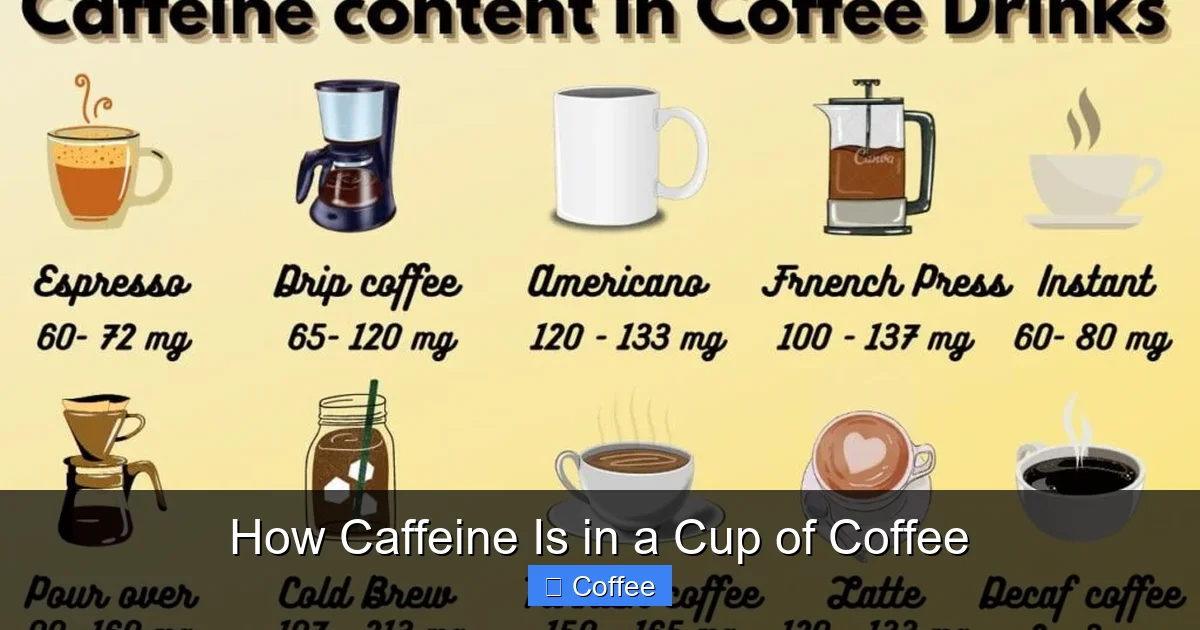
Your classic home brewer or office pot. A standard 8oz (240ml) cup of drip coffee made with Arabica beans typically contains 80-120mg of caffeine. But “standard” is a myth. If you use a 12oz mug (355ml) with the same coffee-to-water ratio, you’re sipping 120-180mg. Commercial “large” sizes? Often 16oz (473ml) with 160-240mg. The key variable is contact time: water drips slowly through grounds (4-6 minutes), extracting caffeine steadily. More water + same grounds = more caffeine. Pro tip: Use a scale! 18g of coffee per 300ml water is the SCA gold standard for balanced extraction.
Espresso: Concentrated Power
Espresso is the caffeine chameleon. A single 1oz (30ml) shot packs 60-80mg of caffeine—more per ounce than drip coffee. But because the serving is tiny, a double shot (2oz) often totals 120-150mg, similar to an 8oz drip. Why? Espresso uses high pressure (9 bars) and short contact time (25-30 seconds), forcing rapid extraction. Robusta-heavy blends amplify this. Fun fact: That “strong” espresso taste comes from oils and acids, not just caffeine. If you’re ordering a latte, remember: the milk dilutes caffeine concentration, but the espresso shot’s content remains unchanged.
Cold Brew: The Slow Steep Surprise
Cold brew is having a moment—and for good reason. Made by steeping coarse grounds in cold water for 12-24 hours, it’s smooth and low-acid. But don’t assume it’s weak. A standard 8oz serving can contain 150-250mg of caffeine—sometimes more than hot brew! Why? Longer steep time extracts more caffeine, and recipes often use higher coffee-to-water ratios (e.g., 1:8 vs. drip’s 1:16). That refreshing iced cup might be a stealthy caffeine bomb. Tip: Dilute concentrate 1:1 with water or milk to tame the intensity.
French Press & Pour-Over: The Middle Ground
French press (4-minute steep) and pour-over (2-4 minute bloom + drip) sit between drip and espresso. An 8oz French press typically delivers 100-140mg, while pour-over ranges from 80-120mg. The difference? French press uses immersion brewing (grounds steep fully), extracting slightly more caffeine than pour-over’s percolation method. Both let you control strength: finer grind = more extraction, coarser = less. Experiment to find your sweet spot!
Practical Tip: Match Brew to Your Goal
Need a quick morning jolt? Espresso’s your friend. Want sustained focus for hours? Cold brew’s slow release wins. Sensitive to caffeine? Opt for pour-over with light roast Arabica. Understanding how caffeine is in a cup of coffee means aligning your brew method with your body’s needs.
Serving Size: The Silent Caffeine Amplifier
Here’s a shocker: Your “cup” might not be a cup at all. In coffee terms, a “cup” is often 6oz (180ml)—not the 8oz (240ml) mug you’re using. This discrepancy alone can double your caffeine intake without you realizing it.
Visual guide about How Caffeine Is in a Cup of Coffee
Image source: coffeeabout.com
The Myth of the “Standard Cup”
When studies say “a cup of coffee has 95mg caffeine,” they’re usually referencing a 6oz serving. But in real life:
- A typical home mug holds 12-16oz (355-473ml).
- Coffee shop “small” is often 12oz, “medium” 16oz, “large” 20oz+.
- Espresso shots are 1oz, but lattes/cappuccinos use 8-16oz total liquid.
Result? That “medium” latte you order? It likely contains 150-225mg caffeine—not the 95mg you might expect. Even home brewing trips people up: filling your 12oz mug to the brim with drip coffee means you’re consuming 1.5x the “standard” caffeine dose.
Why Size Matters More Than You Think
Caffeine isn’t diluted by milk or water—it’s concentrated in the coffee liquid. Adding milk to a 2oz espresso shot (making a 12oz latte) doesn’t reduce the shot’s 120mg caffeine; it just spreads it over more volume. Similarly, a 16oz cold brew has roughly double the caffeine of an 8oz version. This is why “I only had one coffee” can still leave you wired: that “one” was likely a large serving.
Practical Tip: Measure, Don’t Guess
Grab a measuring cup. Pour your usual “cup”—you’ll likely be shocked. For accuracy:
- Use a kitchen scale for coffee grounds (grams beat scoops).
- Track liquid volume: 8oz = 1 “standard” serving, 16oz = 2 servings.
- At cafes, ask: “How many ounces is this?” and “How much caffeine is in it?” (many post charts).
Mastering serving size is step one to controlling how caffeine is in a cup of coffee.
Decaf Coffee: The Caffeine Illusion
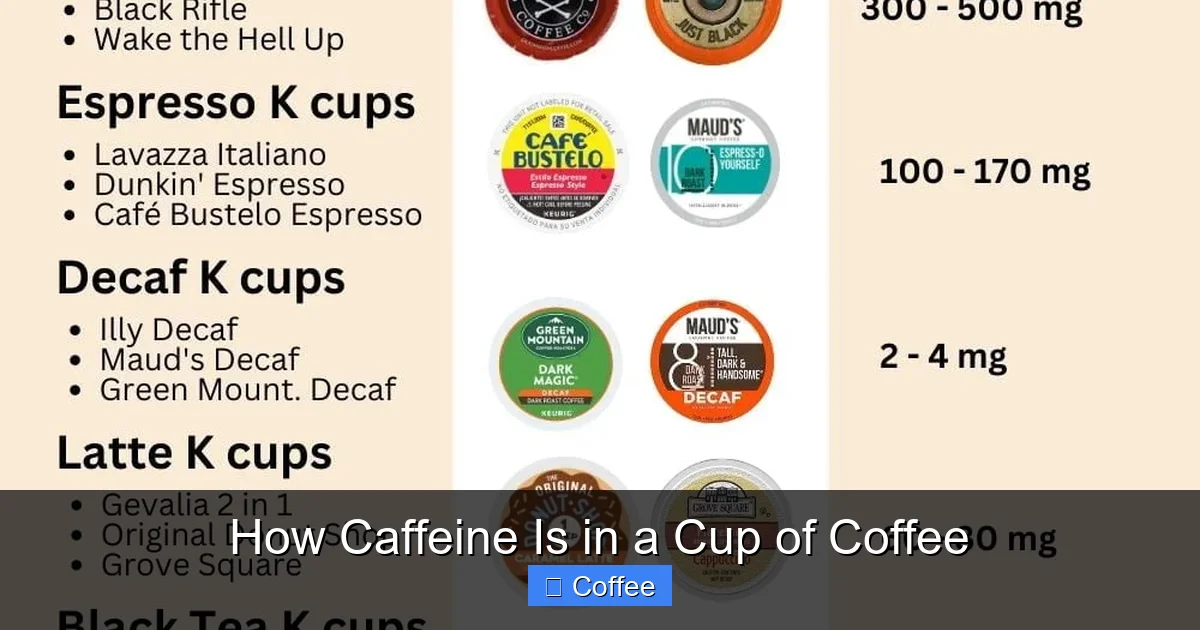
Decaf seems like a safe harbor for the caffeine-sensitive. But “decaffeinated” doesn’t mean “caffeine-free.” Most decaf coffee still contains 2-15mg of caffeine per 8oz cup—enough to trigger effects in highly sensitive people.
How Decaf Works (and Why It’s Not Zero)
Decaffeination removes 97-99% of caffeine, but not 100%. Common methods:
- Swiss Water Process: Uses water and osmosis (no chemicals). Leaves 2-5mg per cup.
- Direct Solvent Method: Uses ethyl acetate or CO2. Can leave 5-15mg.
- Indirect Solvent Method: Similar to direct, but beans are soaked first. Residual caffeine varies.
Why the leftover? Caffeine molecules bond tightly with coffee compounds. Complete removal would ruin flavor and aroma. Also, decaf beans are often Robusta (higher baseline caffeine), so even after processing, traces remain.
The Real-World Impact
For most people, 2-15mg is negligible—less than a quarter of a dark chocolate square. But if you’re ultra-sensitive, pregnant, or managing anxiety, it adds up. Three decaf cups could deliver 30mg—equivalent to a small espresso shot. Studies show some decaf drinkers still report alertness, likely from placebo or trace caffeine.
Practical Tip: Know Your Limits
If you need near-zero caffeine:
- Ask cafes about their decaf process (Swiss Water is best for low traces).
- Limit to 1-2 cups if highly sensitive.
- Try chicory root or mushroom “coffee” for a true caffeine-free alternative.
Don’t assume decaf is a free pass—it’s about managing expectations around how caffeine is in a cup of coffee.
Beyond the Cup: Your Body’s Role in Caffeine Absorption
Two people drink identical coffee. One feels energized; the other gets anxious. Why? Caffeine isn’t just about the cup—it’s a dance between the coffee and your biology.
Genetics: The Fast vs. Slow Metabolizers
Your liver breaks down caffeine using an enzyme called CYP1A2. Genetics determine if you’re a “fast” or “slow” metabolizer:
- Fast metabolizers clear caffeine quickly (half-life: 2-3 hours). They tolerate more without jitters.
- Slow metabolizers take 5-6+ hours to clear it. They’re prone to anxiety, insomnia, or blood pressure spikes with moderate intake.
About 50% of people are slow metabolizers. If coffee leaves you wired at midnight, genetics might be why.
Tolerance: The More You Drink, The Less You Feel
Regular coffee drinkers build tolerance. Adenosine receptors (which caffeine blocks to keep you alert) multiply in response. Result? That 100mg cup that once gave you wings now does nothing. To reset tolerance, take a 2-3 day break. But be warned: withdrawal headaches are real!
Other Factors: Food, Meds, and Timing
- Empty stomach? Caffeine absorbs faster—intensifying effects.
- Birth control pills or certain antibiotics? They slow caffeine metabolism, prolonging its stay.
- Hydration? Dehydration amplifies caffeine’s anxiety-inducing effects.
- Time of day? Cortisol peaks at 8-9am—adding caffeine then can cause a crash later.
Practical Tip: Personalize Your Approach
Track your coffee and how you feel for a week. Note:
- Time consumed
- Serving size/brew method
- Effects (energy, anxiety, sleep quality)
This reveals your unique caffeine fingerprint. Understanding how caffeine is in a cup of coffee means listening to your body, not just the label.
Putting It All Together: Your Caffeine Control Toolkit
Now that you know the variables, how do you wield this knowledge? It’s not about deprivation—it’s about precision. Let’s build your personalized strategy.
Step 1: Audit Your Current Habit
Grab a notebook. For 3 days, log:
- What you drank (e.g., “16oz cold brew, 8am”)
- How you felt 1 hour later (e.g., “focused but jittery”)
- How you slept that night
Patterns will emerge. Maybe your afternoon espresso wrecks sleep, or your “small” latte is secretly large.
Step 2: Adjust Based on Your Goals
- Need steady energy? Switch to cold brew (slow release) or smaller, frequent servings.
- Sensitive to jitters? Choose Arabica, light roast, pour-over, and avoid caffeine after 2pm.
- Want maximum buzz? Opt for Robusta-heavy espresso or cold brew concentrate.
- Managing sleep? Cap intake at 400mg/day (FDA guideline) and stop 6 hours before bed.
Step 3: Master the Variables
Small tweaks make big differences:
- For less caffeine: Use 10% fewer grounds, coarser grind, shorter brew time.
- For more caffeine: Add 10% more grounds, finer grind, longer steep (within reason).
- Always measure: Ditch scoop estimates. A $10 scale pays for itself in balanced cups.
Practical Tip: The 200mg “Sweet Spot”
Research suggests 200mg (about two 8oz drip coffees) optimizes focus without side effects for most. Use this as a benchmark. If your usual cup exceeds it, consider downsizing or switching methods.
Conclusion: Your Cup, Your Rules
Caffeine isn’t a monolith—it’s a spectrum shaped by beans, brew, size, and biology. The question “how caffeine is in a cup of coffee” has no single answer, but that’s the beauty of it. You hold the power to calibrate your cup to your life. Whether you’re chasing productivity, savoring ritual, or protecting sleep, knowledge is your compass.
Start small. Measure your mug. Ask about bean types. Experiment with brew times. Notice how your body responds. Coffee is personal—it should serve you, not the other way around. With these insights, you’re not just drinking coffee; you’re curating an experience. So pour with purpose, sip with awareness, and let every cup be exactly what you need it to be. Your perfect balance is waiting in that next brew.
Frequently Asked Questions
Why does cold brew have more caffeine than hot coffee?
Cold brew uses a higher coffee-to-water ratio and steeps for 12-24 hours, extracting more caffeine. Hot methods like drip use less coffee per ounce and shorter contact time.
Does adding milk reduce caffeine in coffee?
No. Milk dilutes the concentration per sip but doesn’t remove caffeine. A latte’s caffeine content equals the espresso shot used, regardless of milk volume.
Is decaf coffee completely caffeine-free?
No. Most decaf contains 2-15mg per 8oz cup. While minimal for most, it can affect highly sensitive individuals or those avoiding all caffeine.
Why do some coffee brands list higher caffeine than others?
Brands using Robusta beans, darker roasts (which require more beans for same volume), or concentrated brews like cold brew will naturally have higher caffeine counts.
Can brewing time increase caffeine?
Yes, but only up to a point. Longer contact time extracts more caffeine initially, but over-extraction (beyond 4-6 minutes for drip) pulls bitter compounds without significantly more caffeine.
Does coffee freshness affect caffeine content?
Minimal impact. Caffeine is stable during storage. Staleness affects flavor and volatile aromas more than caffeine levels, which remain consistent for months.