
Air fryers cook food rapidly using a powerful fan to circulate superheated air, creating crispy results similar to deep frying but with little to no oil. Ovens rely on radiant heat from elements to bake, roast, or broil, offering larger capacity and versatility but slower cooking times. Choosing between them depends on your priorities: speed and crispiness (air fryer) versus capacity and traditional baking (oven).
Key Takeaways
- Core Mechanism Difference: Air fryers use rapid convection (intense fan-driven hot air) for fast, crispy cooking; ovens use radiant heat from top/bottom elements for slower, even baking/roasting.
- Speed & Energy: Air fryers preheat and cook 20-40% faster with significantly less energy (typically 1,500-2,000W) compared to full-size ovens (2,000-5,000W).
- Texture & Results: Air fryers excel at crispy exteriors (fries, wings) with minimal oil; ovens provide superior even baking for cakes, breads, and large roasts.
- Capacity & Versatility: Ovens handle large batches (whole turkey, multiple trays) and diverse tasks (proofing dough, slow roasting); air fryers are ideal for small-to-medium portions (1-4 servings).
- Space & Cost: Countertop air fryers are compact and affordable ($50-$200); built-in ovens require permanent installation and cost significantly more ($500+).
- Best Use Case: Use an air fryer for quick, crispy meals and reheating; rely on your oven for baking, large roasts, and tasks needing precise, gentle heat.
Quick Answers to Common Questions
Can I completely replace my oven with an air fryer?
No, not for most households. While air fryers excel at speed and crispiness for small portions, they lack the capacity and gentle, even heat needed for baking cakes, roasting large turkeys, or slow-cooking dishes. They’re best as a complement, not a full replacement.
Do air fryers use significantly less electricity than ovens?
Yes, especially for small tasks. Air fryers (1,500-2,000W) consume less power and cook much faster than preheating and running a full-size oven (2,000-5,000W). For reheating leftovers or cooking a single meal, the air fryer is far more energy-efficient.
Why do some foods turn out dry in an air fryer?
Overcooking is the main culprit! The intense heat and rapid air circulation remove moisture quickly. Always check food a few minutes before the recipe suggests, use a light oil spray, and avoid overcrowding the basket to allow proper air flow.
Can I bake a cake in an air fryer?
Yes, but with caveats. Small batches (like mug cakes or mini loaves) work best. You’ll likely need to reduce the oven temperature by 25°F and check earlier, as the intense top heat can cause uneven baking or drying. Traditional ovens are still superior for most baking.
Is the air fryer basket dishwasher safe?
Most modern air fryer baskets and trays are dishwasher safe (top rack recommended), but always check your specific model’s manual. Avoid harsh detergents or abrasive scrubbers that could damage non-stick coatings over time.
📑 Table of Contents
- Air Fryer vs Oven: Your Kitchen’s Secret Showdown
- How Air Fryers Actually Work: The Science of Crispy Speed
- How Conventional Ovens Work: The Reliable Radiant Heat Source
- Air Fryer vs Oven: Head-to-Head Comparison
- When to Choose Which: Your Practical Guide
- Maximizing Both: Tips for a Harmonious Kitchen
- Conclusion: Your Perfect Kitchen Duo
Air Fryer vs Oven: Your Kitchen’s Secret Showdown
So, you’re staring at that shiny new air fryer box on your counter, or maybe you’re debating whether to ditch your old oven for one. It’s a common dilemma! Both appliances promise delicious meals, but they work in fundamentally different ways. Understanding how air fryer work vs oven is the key to unlocking your kitchen’s full potential and avoiding burnt dinners or soggy fries.
Imagine biting into perfectly crisp chicken wings without the guilt of deep frying, or reheating last night’s pizza so it tastes fresh out of the oven. That’s the air fryer magic. But then you need to bake a towering birthday cake or roast a whole chicken for Sunday dinner – that’s where your trusty oven shines. It’s not about which is “better,” but knowing which tool tackles which job best. This isn’t just about gadgets; it’s about saving time, energy, and frustration while getting the results you crave. Let’s pull back the curtain and see exactly what makes each appliance tick.
How Air Fryers Actually Work: The Science of Crispy Speed
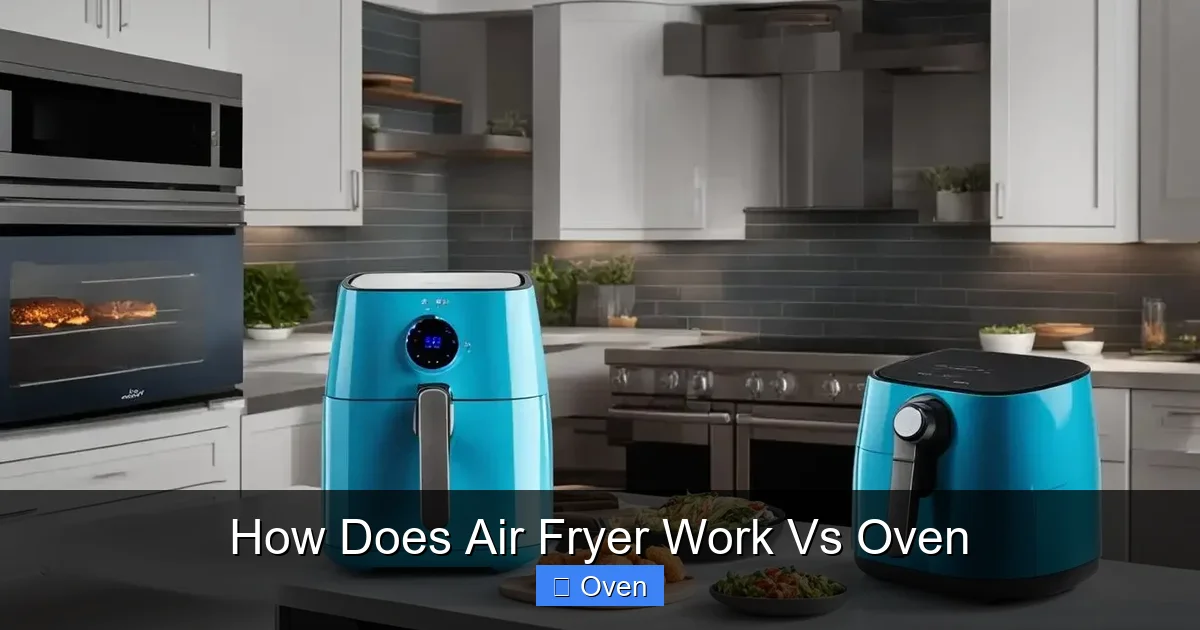
Forget the name “fryer” – air fryers don’t actually fry in oil. They’re high-powered convection ovens on steroids, designed for one thing: speed and crispiness. The magic happens thanks to a powerful heating element and a turbocharged fan working in perfect harmony.
Visual guide about How Does Air Fryer Work Vs Oven
Image source: airfryeraid.com
The Convection Powerhouse: Fan + Heat = Crisp
Here’s the simple breakdown of how air fryer work: A heating coil (usually located at the top) rapidly heats up to very high temperatures, often 350°F to 450°F (175°C to 230°C). But the real star is the powerful fan positioned just above that coil. This fan spins incredibly fast, forcing the superheated air down in a concentrated, turbulent stream directly onto your food. Think of it like a mini tornado of hot air constantly circulating around your chicken tenders or Brussels sprouts.
This intense, rapid convection is what creates the signature air fryer crisp. The hot air efficiently removes moisture from the food’s surface almost instantly, triggering the Maillard reaction (that magical browning process) without needing much oil. A light spray or brush of oil helps conduct heat and enhance crispness, but it’s nowhere near the amount used in deep frying. The result? Food that’s golden, crispy on the outside, and often surprisingly juicy inside, cooked in a fraction of the time an oven would take.
Key Components Driving the Process
Several elements make this rapid convection possible:
- High-Wattage Heating Element: Typically 1,500 to 2,000 watts, generating intense heat quickly.
- Powerful Centrifugal Fan: Creates the high-velocity air circulation essential for even cooking and crispness. This is the defining feature.
- Compact Cooking Chamber: The small space (usually 3-6 quarts) ensures the hot air doesn’t have far to travel, maintaining high velocity and temperature.
- Perforated Basket/Tray: Allows the hot air to circulate *all* around the food, not just from the top, ensuring even exposure.
This focused, high-velocity system is why air fryers preheat in 2-5 minutes and cook foods like frozen fries in 12-15 minutes, while an oven might take 20+ minutes just to preheat and 25+ minutes to cook the same fries.
How Conventional Ovens Work: The Reliable Radiant Heat Source
Your standard electric or gas oven is a workhorse built on a much older, simpler principle: radiant heat. It’s reliable, versatile, and perfect for a wide range of cooking tasks, but it operates at a different pace and intensity than an air fryer.

Visual guide about How Does Air Fryer Work Vs Oven
Image source: airfryeraid.com
Radiant Heat: Gentle, Even, and Slow
Understanding how oven work starts with the heating elements. In an electric oven, you have:
- Bottom Element: Primarily responsible for baking and roasting. It heats the air inside the oven cavity from the bottom up.
- Top Element: Used for broiling, providing intense direct radiant heat from above to quickly brown or melt toppings.
- (Optional) Convection Fan: Many modern ovens have a third element and a fan at the back to circulate air, mimicking some air fryer benefits but on a larger scale and usually less intensely.
Gas ovens work similarly, using a gas burner at the bottom to heat the air. The heated air rises naturally (convection), but much more slowly and gently than in an air fryer. This radiant heat gradually penetrates the food, cooking it from the outside in. It’s excellent for tasks requiring even, controlled heat over longer periods – think baking a delicate soufflé, slow-roasting a pork shoulder until fall-apart tender, or proofing bread dough.
The Role of the Oven Cavity and Insulation
The large, insulated cavity of an oven is crucial. It traps the heat generated by the elements, creating a stable, consistent environment. This insulation allows the oven to maintain a steady temperature (like 350°F) for extended periods, which is essential for baking where precise, gentle heat is needed. The larger space also means heat distribution is inherently less intense and concentrated than in the tight confines of an air fryer basket. While convection ovens improve this with a fan, the airflow is generally less forceful than an air fryer’s dedicated system, and the larger volume takes longer to heat up and recover temperature when the door is opened.
Air Fryer vs Oven: Head-to-Head Comparison
Now that we’ve covered the core mechanics, let’s put them side-by-side on the factors that really matter in your kitchen.
Visual guide about How Does Air Fryer Work Vs Oven
Image source: airfryeraid.com
Cooking Speed: The Clear Winner
This is where the air fryer dominates. The combination of high heat, powerful forced convection, and a small chamber means:
- Preheating: Air fryer: 2-5 minutes. Oven: 10-20 minutes.
- Cooking Time: Air fryers typically cook 20-40% faster than conventional ovens for similar items (e.g., frozen fries: 12-15 mins vs 20-25 mins; chicken wings: 20-25 mins vs 35-45 mins).
Why? Ovens have a massive volume of air to heat, and natural convection is slow. Air fryers heat a tiny space with a blast of forced air. If speed is your top priority (weeknight dinners, quick snacks), the air fryer wins hands-down.
Energy Efficiency: Saving Watts and Dollars
Air fryers are generally much more energy-efficient for small-to-medium tasks:
- Power Draw: Air fryers: 1,500-2,000 watts. Full-size ovens: 2,000-5,000+ watts (often drawing peak power during preheat and recovery).
- Runtime: Shorter cooking times mean less total energy consumed per meal.
Running an air fryer for 20 minutes uses significantly less electricity than preheating and running a large oven for 30+ minutes. For small batches, reheating leftovers, or quick cooks, the air fryer is the greener (and cheaper) choice. However, for large roasts or baking multiple trays, the oven’s efficiency per item might balance out.
Texture and Results: Crisp vs. Even
This is highly dependent on the food:
- Crispiness (Exteriors): Air fryer wins big. The intense, dry, circulating air creates superior crisp on fries, wings, roasted veggies, and reheated pizza with minimal oil. Ovens can achieve crispness, but often require higher temps, longer times, or broiling (which risks burning).
- Even Baking (Interiors): Ovens generally win for delicate baked goods. The gentler, more consistent radiant heat of an oven (especially convection models) is better for cakes, cookies, breads, and casseroles where even rise and texture are critical. Air fryers can sometimes dry out baked goods or cause uneven browning due to the intense top-down heat.
- Large Roasts: Ovens are superior for whole chickens, turkeys, or large cuts of meat. The larger cavity allows for even heat penetration throughout the dense protein. While air fryers can cook smaller roasts (like a chicken breast or pork loin), they struggle with very large items and may not render fat as effectively.
Think air fryer for “crispy outside, tender inside” speed; oven for “perfectly baked throughout” reliability.
Capacity and Versatility: Size Matters
This is the oven’s strongest suit:
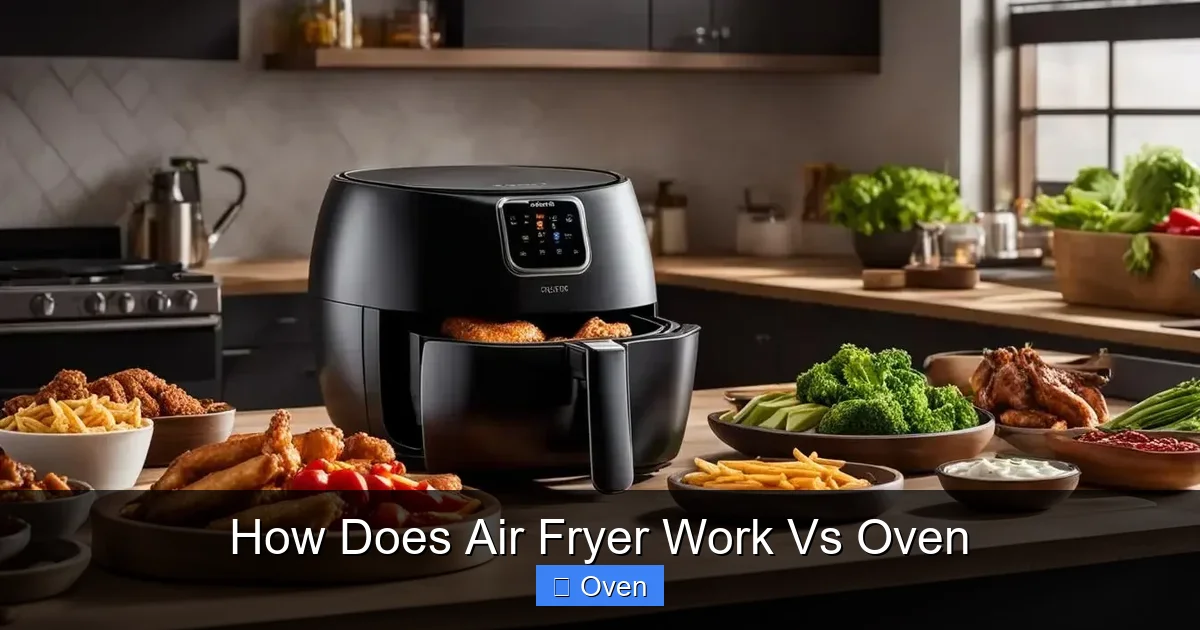
- Air Fryer: Typically 3-6 quarts. Best for 1-4 servings. Great for single items (a salmon fillet, a small batch of fries) or small families. Limited by basket size – you can’t cook a whole chicken or multiple pizza stones.
- Oven: Ranges from 3-7+ cubic feet. Can handle a whole turkey, multiple baking sheets, large casserole dishes, pizza stones, and more. Essential for entertaining, holiday meals, or baking in bulk. Offers diverse functions: bake, roast, broil, convection bake, proof, dehydrate (on some models).
If you regularly cook for large groups or need maximum flexibility, the oven is indispensable. The air fryer complements it for smaller, faster tasks.
Ease of Use and Cleanup: Convenience Factor
Both have pros and cons:
- Air Fryer: Usually simpler controls (dial or digital). The basket/tray is often dishwasher safe (check manual!), making cleanup quick for most tasks. However, grease splatter inside the chamber can require wiping down. Shaking the basket mid-cook is often needed for even results.
- Oven: More complex controls (multiple settings, timers, modes). Cleaning baked-on grease or spills from the interior cavity and racks can be a chore (though self-cleaning cycles exist, they have downsides). Racks are usually dishwasher safe.
For quick, simple meals with easy cleanup, the air fryer often has the edge. For complex baking or large roasts, the oven’s controls are necessary, but cleanup might be harder.
When to Choose Which: Your Practical Guide
Knowing how air fryer work vs oven helps you deploy them strategically. Here’s when to reach for each:
Reach for the Air Fryer When…
- You need speed: Weeknight dinners, quick snacks (mozzarella sticks, jalapeño poppers), reheating leftovers (pizza, fried chicken) to crispy perfection.
- Crispiness is key: Frozen fries, roasted vegetables (broccoli, asparagus, potatoes), chicken wings, salmon skin, toasting nuts or seeds.
- Cooking small portions: One or two servings of almost anything – a baked potato, a small roast chicken breast, a portion of stuffed peppers.
- Minimizing oil: Achieving fried-like results with just a light spritz of oil.
- Energy savings matter: For small tasks where running the big oven feels wasteful.
Pro Tip: Don’t overcrowd the basket! Air needs space to circulate. Cook in batches if needed for even results.
Reach for the Oven When…
- Baking is required: Cakes, cookies, breads, muffins, pies – tasks needing gentle, even heat for proper rise and texture.
- Cooking large items: Whole chickens, turkeys, large roasts (pork loin, beef tenderloin), multiple baking sheets of cookies or sheet pan dinners.
- You need precise, low-and-slow heat: Slow roasting (pot roast, short ribs), proofing bread dough, dehydrating fruits/veggies (on convection setting).
- Broiling is needed: Melting cheese on a casserole, browning the top of a dish (like a gratin).
- You’re cooking for a crowd: Large casseroles, multiple pizzas, holiday feasts.
Pro Tip: Use the convection setting on your oven (if available) for roasting veggies or meats – it improves crispness and speed, bridging the gap slightly with air fryer performance.
Maximizing Both: Tips for a Harmonious Kitchen
The smartest approach isn’t choosing one over the other, but using them together like a pro chef!
Air Fryer Hacks for Oven Lovers
- Pre-Crisp for Oven Roasts: Sear a large roast (like a pork shoulder) in the air fryer for 10-15 minutes to get a beautiful crust, then transfer to the oven for slow, even cooking. Saves oven time and improves texture.
- Reheat Like a Boss: Never microwave pizza or fried food again! 3-5 minutes in the air fryer restores crispness perfectly.
- Cook Sides While Oven is Busy: Roast veggies or make garlic bread in the air fryer while your main dish bakes in the oven – doubles your cooking capacity!
- Don’t Fear the Basket: Use it for baking small batches of cookies, brownies, or even a mini frittata. Just adjust time/temp (usually lower temp, slightly longer than oven recipe).
Oven Hacks for Air Fryer Owners
- Leverage Convection: If your oven has a convection setting, use it for roasting meats and veggies – it mimics the air fryer’s circulation for better browning and faster cook times.
- Master the Broiler: Use it for quick melting (cheese on nachos) or adding a final crisp to dishes started in the air fryer or oven.
- Think Low and Slow: Embrace the oven’s strength for dishes that need hours of gentle heat – braises, bean soups, or slow-cooked meats – where an air fryer simply can’t compete.
- Proof Dough: The warm, stable environment of a turned-off oven with the light on is perfect for rising bread dough.
The goal is synergy. Your oven handles the big, slow, delicate jobs. Your air fryer tackles the quick, crispy, small-batch tasks. Together, they cover virtually every cooking need efficiently.
Conclusion: Your Perfect Kitchen Duo
So, how does air fryer work vs oven? It’s not a battle with a single winner, but a partnership built on complementary strengths. The air fryer is your speed demon and crispness champion, using intense, fan-driven convection to cook small portions rapidly with minimal oil. The oven is your versatile, reliable workhorse, providing gentle, radiant heat perfect for baking, large roasts, and slow-cooked masterpieces.
Choosing between them depends entirely on what you’re cooking and your priorities. Need crispy fries in 15 minutes? Air fryer. Baking a wedding cake? Oven. Reheating pizza? Air fryer. Roasting a turkey for 12? Oven. The most efficient, enjoyable kitchens leverage both. Don’t ditch your oven for an air fryer – add the air fryer to your oven’s team. Understand their core mechanics, respect their ideal use cases, and you’ll unlock faster meals, better textures, and less time spent waiting (or cleaning up!). Your perfect kitchen rhythm is just a understanding of how air fryer work vs oven away. Now go cook something amazing!
Frequently Asked Questions
Are air fryers just mini convection ovens?
Essentially, yes, but with key differences. Both use fans to circulate hot air. However, air fryers have a much more powerful fan, a significantly smaller cooking chamber, and often higher maximum temperatures. This creates far more intense, turbulent airflow focused on rapid surface crisping, whereas convection ovens prioritize even heating throughout a larger space.
Do air fryers make food taste like it’s deep-fried?
They can achieve a remarkably similar *crispness* and texture to deep-fried food, especially on the exterior, using very little oil. However, the flavor profile isn’t identical. Deep frying imparts a distinct oiliness and richness that air frying, with minimal oil, doesn’t replicate. The Maillard reaction (browning) creates delicious flavors in both methods.
Can I put foil or parchment paper in an air fryer?
Yes, but with caution. Parchment paper (perforated or with holes cut for airflow) is generally safe and great for easy cleanup. Avoid blocking the air vents. Aluminum foil can be used to loosely cover food (like to prevent over-browning) but should never completely seal the basket or block the fan’s airflow, as this can cause overheating or poor cooking.
Why does my air fryer smoke?
Smoke usually occurs due to excess oil dripping onto the heating element or food residue burning. Always use oils with high smoke points (avocado, canola) and avoid overfilling the basket. Clean the basket and interior chamber regularly. If smoke persists, run an empty cycle at high heat for 5-10 minutes to burn off residue (ensure good ventilation).
Is it safe to leave an air fryer unattended?
While air fryers have safety features like auto-shutoff timers, it’s never advisable to leave *any* cooking appliance unattended for long periods. Always stay nearby, especially during the first few uses of a new recipe, to monitor cooking progress and prevent potential issues like overheating or smoke.
Can I cook a whole chicken in an air fryer?
Yes, but size is critical. Most standard countertop air fryers (3-6 quarts) can handle a small whole chicken (3-4 lbs). You’ll need to truss it tightly, possibly prop it upright on a rack inside the basket, and cook at a lower temperature (325-350°F) for longer (60-90 mins) than smaller cuts to ensure the interior cooks through without burning the skin. Larger chickens typically require an oven.