
Decaf coffee isn’t caffeine-free—it retains 2-15mg per 8oz cup—but undergoes careful processing to remove 97% of caffeine. Methods like Swiss Water use only water and osmosis, while others employ solvents or CO2. Contrary to myths, quality decaf starts with premium beans and preserves rich flavor when done right.
Key Takeaways
- Decaf isn’t caffeine-free: It contains 2-15mg of caffeine per 8oz cup (vs. 80-100mg in regular coffee), meeting the 97% removal standard.
- Swiss Water is chemical-free: This popular method uses only water, temperature shifts, and osmosis—no solvents—making it ideal for organic certification.
- Solvent methods are common but regulated: Ethyl acetate (from fruits) or methylene chloride gently bind caffeine, with strict residue limits (under 10ppm).
- CO2 extraction is high-tech: Supercritical CO2 acts like a “caffeine magnet” under high pressure, preserving delicate flavors for premium decaf.
- Bean quality matters most: Great decaf starts with high-quality, freshly roasted beans—cheap beans yield flat-tasting decaf regardless of method.
- Flavor loss is minimal with modern tech: Advanced processes retain 90%+ of oils and aromatics, debunking the “decaf tastes watery” myth.
- Look for transparency: Trust brands that specify their method (e.g., “Swiss Water Process”) and test caffeine levels independently.
Quick Answers to Common Questions
Is decaf coffee completely caffeine-free?
No—decaf retains 2-15mg of caffeine per 8oz cup (vs. 80-100mg in regular coffee). Regulations require 97% caffeine removal, but trace amounts remain for safety and flavor preservation.
Does decaf taste worse than regular coffee?
Not with modern methods! High-quality decaf from specialty roasters using Swiss Water or CO2 extraction tastes nearly identical to regular coffee. Flavor loss is minimal when premium beans are used.
Is Swiss Water decaf healthier than other methods?
Swiss Water is chemical-free, making it ideal for those avoiding solvents. However, solvent-based methods (EA/MC) are rigorously tested and safe—residue levels are far below danger thresholds.
Can decaf keep you awake?
Unlikely for most people. The tiny caffeine traces (2-15mg) are less than 1/10th of a regular cup. Sensitivity varies, but decaf rarely disrupts sleep unless consumed in massive quantities.
Why does decaf sometimes taste sour?
Sourness usually comes from stale beans, over-extraction during brewing, or low-quality beans. Fresh, light-roast decaf brewed with proper technique (195-205°F water, correct grind) should taste balanced.
📑 Table of Contents
- The Decaf Revolution: Why We’re Choosing Caffeine-Free (Mostly)
- The Great Caffeine Challenge: Why Decaffeination Is Tricky
- Meet the Methods: How Coffee Actually Loses Its Buzz
- Direct vs. Indirect: The Steaming Secret
- Flavor, Quality, and the Decaf Myth-Buster
- Your Decaf Shopping Guide: What to Look For
- The Future of Decaf: Where Science Meets Sustainability
- Conclusion: Your Perfect Cup, Minus the Jitters
The Decaf Revolution: Why We’re Choosing Caffeine-Free (Mostly)
Picture this: It’s 3 PM, you’ve hit the wall after lunch, but your doctor just warned you about caffeine sensitivity. Or maybe you’re pregnant, managing anxiety, or simply savoring that evening cup without the jitters. Whatever your reason, you reach for decaf—only to wonder: How on earth did they strip the caffeine out of this bean? You’re not alone. Over 12% of coffee drinkers regularly choose decaf, and that number is climbing as health awareness grows. But here’s the kicker: Decaf isn’t some sad, flavorless cousin of “real” coffee. When done right, it’s a rich, complex brew that just happens to be gentle on your nervous system.
Let’s be real—most of us assume decaf is “caffeine-free.” Spoiler alert: It’s not. That comforting cup still packs a tiny caffeine punch (more on that later). But the real magic lies in how coffee becomes decaf. It’s a delicate dance of chemistry, physics, and craftsmanship that preserves the bean’s soul while bidding farewell to most of its stimulant. Forget harsh chemicals and ruined flavors—modern decaffeination is closer to a spa day for coffee beans than a lab experiment. In this guide, we’ll pull back the curtain on the science, the methods, and the myths. By the end, you’ll know exactly what’s in your mug—and why your favorite decaf tastes so darn good.
The Great Caffeine Challenge: Why Decaffeination Is Tricky
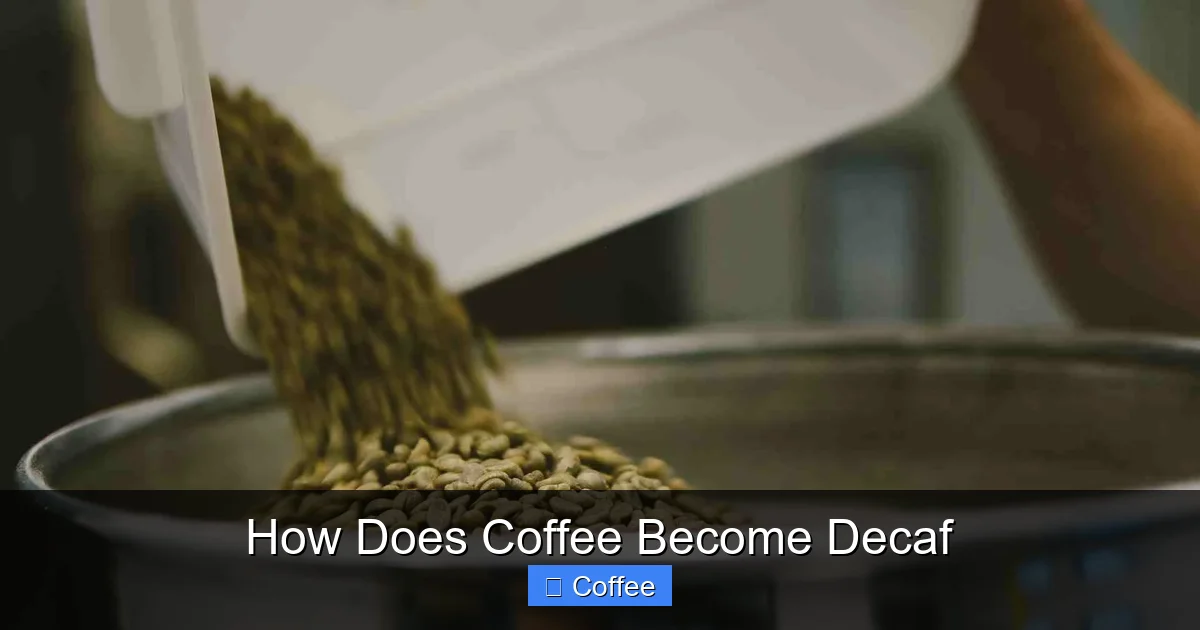
Before we dive into methods, let’s unpack why removing caffeine is such a puzzle. Caffeine isn’t some separate gunk clinging to the bean—it’s woven into the coffee plant’s very DNA. It’s a natural pesticide that protects the plant, and it’s locked deep inside the bean’s cellular structure alongside oils, acids, and aromatic compounds that give coffee its magic. Strip away the caffeine carelessly, and you risk losing the flavor, the body, the essence of coffee. It’s like trying to remove salt from soup without making it bland—possible, but easy to mess up.
Visual guide about How Does Coffee Become Decaf
Image source: thefinestroast.com
The 97% Rule: What “Decaf” Really Means
Here’s a fact that shocks even coffee nerds: The FDA (and international standards) only require decaf to have 97% of the original caffeine removed. For an average 8oz cup of regular coffee (95mg caffeine), that leaves 2-3mg behind. Why not 100%? Because caffeine is so deeply integrated that removing every trace would require aggressive methods that obliterate flavor. Plus, trace amounts are harmless for most people—and honestly, they might even help preserve the bean’s structure during processing. So when you sip decaf, you’re enjoying coffee that’s mostly free of caffeine’s buzz, but still very much coffee.
Bean Selection: The Foundation of Great Decaf
Ever had terrible decaf? Blame the beans, not the process. Top decaf producers start with high-quality, specialty-grade Arabica beans—the same ones used for your favorite pour-over. Why? Because cheap, broken, or overripe beans turn into muddy, sour decaf no matter how gently you treat them. Brands like Counter Culture or Stumptown source beans specifically for decaffeination, often using lots that are too delicate for regular roasting (since decaf processing can stabilize them). Pro tip: If a brand doesn’t mention bean origin or quality, their decaf is likely made from “robusta seconds”—a recipe for disappointment.
Meet the Methods: How Coffee Actually Loses Its Buzz
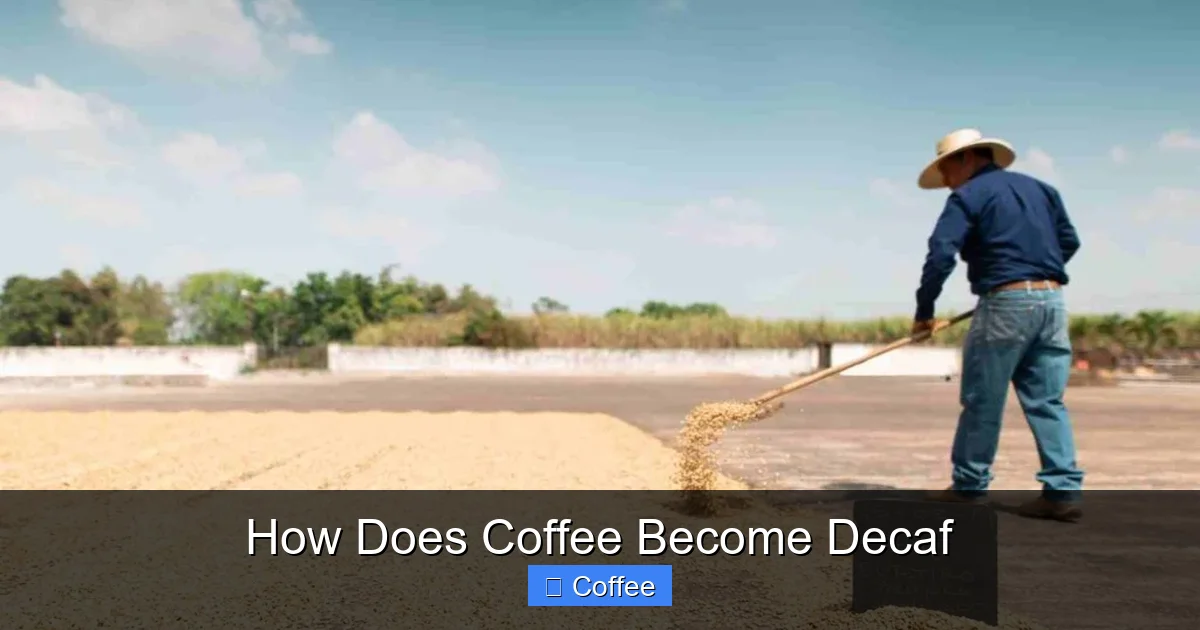
There are four main decaffeination techniques, each with pros, cons, and passionate advocates. Let’s break them down—no chemistry degree required.
Visual guide about How Does Coffee Become Decaf
Image source: thefinestroast.com
The Swiss Water Process: Nature’s Gentle Touch
This method is the gold standard for chemical-free decaf—and it’s all about water, temperature, and patience. Here’s how it works:
- Step 1: Soak & Swell – Green coffee beans are soaked in hot water (not boiling!) until they absorb moisture and swell up. This opens their pores, making caffeine accessible.
- Step 2: The Magic of Osmosis – The water is drained and filtered through activated carbon, which traps caffeine molecules like a net. Crucially, the water retains all the other soluble compounds (oils, acids, sugars) that give coffee flavor. This “flavor-charged” water is reused for the next batch.
- Step 3: Repeat & Refine – Beans soak in fresh flavor-charged water. Since the water is already saturated with coffee solids (but not caffeine), osmosis pulls only caffeine out of the beans—leaving flavor intact. This cycle repeats for 8-10 hours until 99.9% of caffeine is gone.
Why coffee lovers adore it: No chemicals, minimal flavor loss, and it’s certified organic. Brands like Kicking Horse and Allegro use it exclusively. Downside? It’s slow and expensive—beans lose 15-20% of their weight from water absorption, raising costs.
Solvent-Based Methods: The Trusted Workhorses
Don’t panic at “solvents”—these are food-grade, naturally occurring compounds used in tiny, regulated amounts. Two dominate:
- Ethyl Acetate (EA): Often called “natural” because it’s found in fruits like apples and bananas. Beans are steamed to open pores, then rinsed with EA, which binds to caffeine. The solvent is evaporated off, leaving <10ppm residue (well below safety limits). Brands like Starbucks use EA for some decaf. Flavor note: EA can impart a subtle fruitiness—some roasters actually prefer it!
- Methylene Chloride (MC): The controversial one. Yes, it’s a chemical, but in decaf processing, it’s used at 1/100th the concentration of paint strippers. Beans are steamed, then bathed in MC vapor, which dissolves caffeine. Residue limits are strict (under 10ppm), and MC evaporates completely during roasting. Many European brands (like Lavazza) use it for its precision. Flavor advantage: MC is so selective it preserves delicate floral notes better than water-based methods.
Key takeaway: Both solvents are rigorously tested. The “chemical” fear is overblown—your morning orange juice has more natural ethyl acetate!
Supercritical CO2 Extraction: The High-Tech Hero
Imagine turning carbon dioxide into a liquid that acts like a magnet for caffeine. That’s supercritical CO2—a state where CO2 has properties of both gas and liquid, achieved under high pressure (250+ atmospheres) and moderate heat (90°F). Here’s the genius:
- Beans are steamed to open pores, then placed in a pressurized chamber.
- Supercritical CO2 flows through them, dissolving caffeine (but not flavor compounds, thanks to precise pressure control).
- The CO2-caffeine mix is transferred to a lower-pressure chamber, where CO2 turns back to gas—leaving pure caffeine behind. The gas is recycled.
Why it’s special: It’s incredibly selective, preserving 95%+ of volatile aromatics. Used by premium brands like Illy and Peet’s for their top-shelf decaf. Downside? The equipment costs millions—so it’s rare outside large producers.
Direct vs. Indirect: The Steaming Secret
All methods fall into two camps based on how beans are prepped:

Visual guide about How Does Coffee Become Decaf
Image source: thefinestroast.com
- Direct Method: Beans are steamed before solvent/water contact. This opens pores gently, reducing processing time. Used in EA and MC methods. Pro: Faster, less flavor loss. Con: Slight “cooked” note from steaming.
- Indirect Method: Beans are soaked in water first (like Swiss Water), then the water is treated to remove caffeine. The beans are re-soaked in the “decaffeinated” water to reabsorb flavor compounds. Pro: No direct solvent contact. Con: Longer process, potential for flavor dilution.
Most modern decaf uses direct steaming—it’s cleaner and more efficient. But Swiss Water remains indirect by design, and coffee snobs argue it yields the purest taste.
Flavor, Quality, and the Decaf Myth-Buster
Let’s address the elephant in the room: “Decaf tastes bad.” This myth persists because decades ago, decaf was made from cheap beans using harsh methods. Today? Game changed.
Why Modern Decaf Tastes Amazing
Three factors make today’s decaf shine:
- Bean Quality: Specialty roasters use the same high-altitude, single-origin beans for decaf as regular coffee. A decaf Ethiopian Yirgacheffe can burst with blueberry notes—if processed right.
- Roasting Matters: Decaf beans are more porous after processing, so they roast faster and darker. Expert roasters adjust profiles to avoid bitterness. Tip: Look for light-to-medium roasts—they highlight origin flavors better than dark roasts (which mask processing nuances).
- Freshness is Non-Negotiable: Decaf stales faster due to higher moisture content post-processing. Buy from roasters who label roast dates and use valve bags. Stale decaf = cardboard city.
Common Flavor Complaints—Solved
- “It tastes watery”: Usually from over-extraction during brewing. Decaf needs slightly coarser grinds and 195-205°F water (not boiling!). Try a French press—it highlights body.
- “It’s sour or flat”: Likely from low-quality beans or old stock. Splurge on Swiss Water or CO2 decaf from a specialty roaster.
- “It lacks depth”: Dark roasts can mute origin characteristics. Try a light-roast decaf—you might discover new flavors!
Real talk: A well-made decaf from great beans will taste 90% like its caffeinated sibling. The difference? You’ll savor it at 10 PM without counting sheep.
Your Decaf Shopping Guide: What to Look For
Not all decaf is created equal. Use this checklist to find your perfect cup:
- Method Matters: Prioritize Swiss Water (for purity) or CO2 (for flavor precision). Avoid vague terms like “naturally decaffeinated”—it could mean EA, which some prefer to avoid.
- Check the Label: “Processed with ethyl acetate” is transparent. “Decaffeinated” alone? Red flag—it might use MC, which some consumers distrust despite safety data.
- Roast Date is King: Decaf loses vibrancy faster. Buy within 2 weeks of roasting for peak flavor.
- Origin Transparency: Brands like Equal Exchange list bean sources (e.g., “Decaf Peru Swiss Water”). Generic “blend” decaf often uses lower-grade beans.
- Taste Test: Brew a side-by-side with regular coffee. Does it have acidity? Body? Sweetness? If yes, you’ve found a winner.
Budget tip: Store-brand decaf (like Trader Joe’s Swiss Water) is often excellent value—they use the same beans as premium brands but skip fancy packaging.
The Future of Decaf: Where Science Meets Sustainability
Decaffeination is evolving fast. Researchers are testing:
- Enzyme-Based Decaf: Using natural enzymes (like those in tea) to break down caffeine. Still experimental but promising for zero chemical residue.
- Upcycled Caffeine: Companies like Coffeevacuum capture extracted caffeine to sell to soda/pharma industries—turning waste into revenue.
- Waterless Swiss Water: New filtration tech could cut water use by 70%, addressing a major eco-concern of traditional Swiss Water.
Meanwhile, consumer demand is shifting: 68% of decaf buyers now prioritize organic or chemical-free methods (up from 42% in 2018). As tech improves and transparency grows, decaf is finally stepping out of the shadow of “regular” coffee—not as a compromise, but as a choice.
Conclusion: Your Perfect Cup, Minus the Jitters
So, how does coffee become decaf? It’s not magic—it’s a blend of smart science, quality beans, and respect for the craft. Whether it’s the gentle osmosis of Swiss Water, the precision of CO2, or the efficiency of food-grade solvents, the goal is the same: to honor the bean’s flavor while setting caffeine free. And the result? A cup that’s 97% less stimulating, but 100% coffee.
Next time you pour decaf, remember: You’re sipping innovation. You’re supporting farmers who grow beans specifically for this process. You’re choosing a ritual that fits your life—whether that’s a calm morning, a late-night treat, or a pregnancy-safe indulgence. So skip the guilt, ignore the myths, and savor that first sip. Because great decaf isn’t just possible—it’s here, and it’s delicious.
Frequently Asked Questions
What’s the healthiest decaf coffee?
Swiss Water decaf is often considered the healthiest due to its chemical-free process. However, all FDA-approved methods produce safe coffee—choose based on flavor preference and transparency. Organic certification adds another layer of assurance.
Does decaf have the same antioxidants as regular coffee?
Yes! Decaffeination removes caffeine but preserves 90%+ of antioxidants like chlorogenic acid. In fact, some studies show decaf has slightly higher antioxidant levels since caffeine extraction can concentrate other compounds.
Can pregnant women drink decaf?
Yes, in moderation. The American College of Obstetricians recommends under 200mg caffeine daily during pregnancy—equivalent to 13-100 cups of decaf. Most doctors consider standard decaf servings safe.
Why is decaf more expensive?
Decaf costs more due to labor-intensive processing (e.g., Swiss Water takes 8-10 hours), bean weight loss (15-20% from water absorption), and lower economies of scale. Premium methods like CO2 also require expensive equipment.
Does decaf dehydrate you?
No—decaf’s mild diuretic effect is offset by its water content. Studies confirm moderate decaf consumption (3-4 cups) hydrates you just like water, debunking the “coffee dehydrates” myth.
Can you make decaf espresso?
Absolutely! Many cafes offer decaf espresso shots. Use finely ground decaf beans and standard espresso parameters—just remember decaf beans are more porous, so extraction may be slightly faster. Expect a rich, full-bodied shot with proper technique.