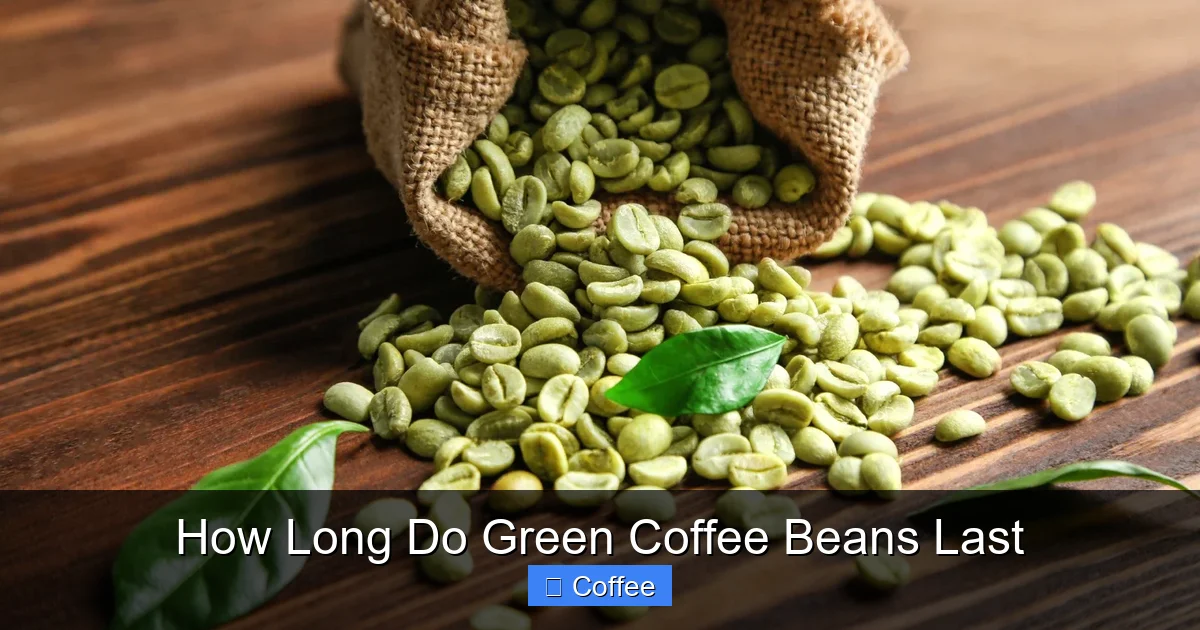
Green coffee beans typically stay fresh for 6-12 months when stored properly in a cool, dark, airtight container. While they can remain *usable* for up to 2 years or more under ideal conditions, flavor and aroma degrade significantly after the first year. Proper storage is absolutely crucial to hitting that optimal window and avoiding wasted beans.
Key Takeaways
- Optimal Freshness Window: For peak flavor and aroma, use green coffee beans within 6-12 months of purchase or harvest.
- Storage is King: Airtight containers in a cool, dark, dry place (like a pantry) are essential; avoid heat, light, moisture, and oxygen.
- Freezing Extends Life: For long-term storage (1-2+ years), vacuum-seal beans and freeze them; thaw completely before roasting.
- Signs of Spoilage: Musty/moldy smell, visible mold, excessive moisture, or a stale, flat aroma mean beans are past their prime.
- Roast Date Matters More: Once roasted, coffee stales rapidly; green beans offer a much longer shelf life but still need care.
- Buy Smaller Quantities: Purchase only what you can roast within 6-12 months to ensure you’re always using beans at their best.
- Trust Your Senses: If beans smell off or look questionable, don’t risk it – discard them for safety and quality.
Quick Answers to Common Questions
Can I store green coffee beans in the fridge?
Generally, no, for long-term storage. Fridges have high humidity and temperature fluctuations. Every time you open the door, warm, moist air enters, potentially causing condensation *inside* your container when you close it, leading to mold. Freezing (with proper vacuum sealing and thawing) is the recommended cold storage method.
How do I know if frozen green coffee beans are still good?
Thaw them completely (still sealed) at room temperature first. Then, inspect and smell them just like fresh beans. Look for mold, moisture, or off-odors (musty, rancid). If they pass the smell and visual test, they’re likely fine. Frozen beans can easily last 18-24 months with proper handling.
Is it worth vacuum sealing green beans for pantry storage?
Yes, absolutely! Vacuum sealing removes oxygen, the primary enemy of freshness. It’s one of the most effective ways to extend the shelf life of beans stored at room temperature, potentially pushing them closer to that 12-month optimal window. Combine it with a cool, dark location.
Can I roast green beans that smell a bit stale but look okay?
It’s not recommended. A stale smell indicates significant loss of volatile flavor precursors. While the coffee might not be *unsafe*, it will almost certainly be flat, bland, and lack the complexity you expect. You’re better off composting them and using fresher beans for a rewarding roast.
Do green coffee beans expire like milk?
No, they don’t have a strict “expiration date” like perishable dairy. They degrade gradually over time. They become less flavorful and potentially unusable due to staleness or mold, but there’s no single date where they suddenly become dangerous (unless mold develops). Focus on harvest date and storage conditions.
📑 Table of Contents
- How Long Do Green Coffee Beans Last? Your Complete Freshness Guide
- What Exactly Are Green Coffee Beans? (And Why It Matters for Shelf Life)
- The Science Behind Green Coffee Bean Shelf Life: What Makes Them Go “Bad”?
- Optimal Storage Methods: Your Secret Weapon for Longevity
- How Long Do Green Coffee Beans Last? Breaking Down the Timelines
- Signs Your Green Coffee Beans Have Gone Bad (Don’t Roast These!)
- Maximizing Your Green Coffee Bean Freshness: Pro Tips Beyond Basic Storage
- Conclusion: Freshness is a Journey, Not Just a Destination
How Long Do Green Coffee Beans Last? Your Complete Freshness Guide
So, you’ve taken the plunge into home roasting. Maybe you scored a fantastic deal on a bag of exotic Ethiopian Yirgacheffe green beans, or perhaps you’re building your stash of reliable Colombian Supremo. The excitement is real! But then that nagging question pops up: “How long do these green coffee beans actually last before they go bad?” It’s a crucial question for any home roaster, whether you’re a seasoned pro or just starting your journey. Unlike roasted coffee, which feels urgent to use within weeks, green beans seem to have a mysterious, almost indefinite lifespan. But the truth is, they *do* degrade over time, and understanding that timeline is key to unlocking the best possible flavor in your cup. Getting this wrong means wasted money, disappointing roasts, and coffee that just doesn’t taste as vibrant as it should. Let’s cut through the confusion and get to the heart of green coffee bean freshness.
The good news is that green coffee beans are remarkably stable compared to their roasted counterparts. Their low moisture content (typically 10-12%) and lack of the volatile compounds created during roasting make them much less prone to rapid staling. However, they aren’t immortal. Factors like oxygen exposure, humidity, temperature, and light slowly work their magic (or rather, their degradation), altering the beans’ chemical composition. The goal isn’t just to keep them *edible* – it’s to preserve the complex precursor compounds that, when roasted correctly, develop into the beautiful aromas and flavors we love. Think of green beans as sleeping flavor potential. Proper storage keeps them in a deep, restful sleep. Poor storage wakes them up prematurely, leading to a restless, degraded state where the best flavors never fully emerge. So, how long can you realistically expect them to stay in that optimal “sleeping” state? The answer isn’t a single date, but a spectrum influenced heavily by how you treat them.
What Exactly Are Green Coffee Beans? (And Why It Matters for Shelf Life)
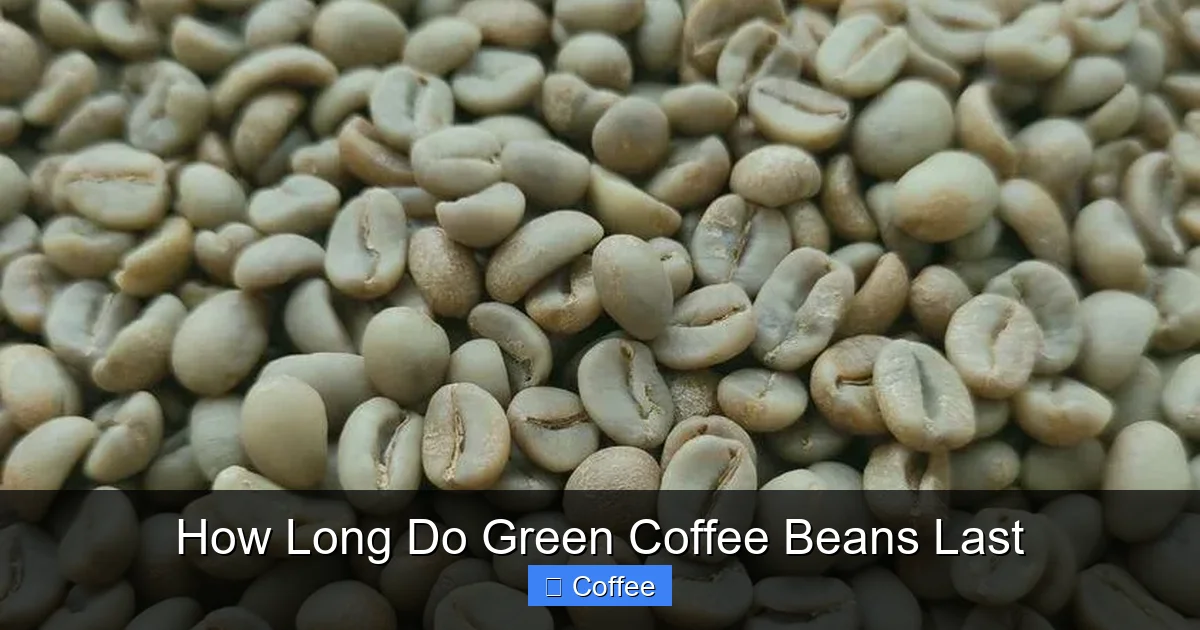
Before diving into timelines, let’s clarify what we’re talking about. Green coffee beans are the raw, unroasted seeds harvested from the coffee cherry. They’re hard, dense, and have a distinctive pale green or yellowish color (hence the name), often with a faint grassy or hay-like aroma. This is the state they’re in when you buy them from a specialty green coffee supplier, a local roaster selling unroasted beans, or even some larger online retailers.
The Natural State: Stability with Limits
The inherent stability of green beans comes from their biology. After processing (removing the fruit pulp and mucilage) and drying, the beans enter a state of dormancy. Their low moisture content is the primary defense against microbial growth (like mold) and rapid chemical reactions. However, they are not completely inert. They still contain enzymes and oils that can react slowly over time, especially when exposed to external factors. Think of them like a sealed jar of nuts – they last a long time, but eventually, the oils can turn rancid if not stored correctly. The key difference is that green coffee beans lack the high-fat content of nuts, making them *more* stable, but the principle of oxidation and moisture sensitivity remains.
Visual guide about How Long Do Green Coffee Beans Last
Image source: fnb.coffee
Why Green Beans Last Longer Than Roasted Beans
This is where the magic (and the science) of roasting comes in. The roasting process is a massive chemical transformation. It drives off moisture, creates hundreds of new volatile aromatic compounds, and develops the characteristic coffee oils on the bean’s surface. While this creates the coffee we know and love, it also makes the beans incredibly vulnerable. Roasted beans are like opened Pandora’s box – the volatile aromas escape rapidly, the oils oxidize quickly when exposed to air, and moisture from the environment is readily absorbed. Green beans, in their raw state, have none of these exposed, reactive compounds *yet*. Their complex sugars, acids, and other precursors are locked away, protected by the bean’s dense structure and low moisture. This fundamental difference is why your roasted coffee needs to be used within weeks, while green beans can be stored for months or even years with care. Understanding this contrast highlights why proper green bean storage is so impactful – it preserves the potential for that transformation.
The Science Behind Green Coffee Bean Shelf Life: What Makes Them Go “Bad”?
Green coffee beans don’t suddenly “expire” like milk. Instead, they undergo a gradual degradation process. Several key factors interact to determine how quickly this happens and how long the beans remain in a state suitable for producing great coffee.
The Usual Suspects: Oxygen, Moisture, Heat, and Light
Oxygen (Oxidation): This is arguably the biggest enemy. Oxygen slowly reacts with the compounds inside the bean, leading to a loss of freshness and the development of stale, flat, or even cardboard-like notes. While the reaction is much slower than in roasted beans, it’s constant. Every time you open your storage container, you’re letting oxygen in. Minimizing oxygen exposure is paramount.
Visual guide about How Long Do Green Coffee Beans Last
Image source: specialtycoffee.id
Moisture (Humidity): Green beans are hygroscopic – they absorb moisture from the air. Too much humidity (above 60-65% relative humidity) can cause beans to swell, become moldy, or encourage unwanted chemical reactions. Conversely, extremely dry conditions aren’t ideal either, but moisture is the primary concern. This is why storing beans in the fridge (where humidity fluctuates) is generally discouraged unless properly sealed.
Heat: Higher temperatures accelerate *all* chemical reactions, including oxidation. Storing beans in a warm place (like near a stove, in a sunny window, or in a hot garage) significantly shortens their shelf life. Cool, stable temperatures are best.
Light: Particularly UV light, can degrade sensitive compounds and contribute to off-flavors. Opaque containers are essential.
These factors don’t act in isolation. Heat speeds up oxidation. Moisture can facilitate chemical reactions. Light can generate heat. It’s a synergistic attack on the bean’s integrity.
The Degradation Timeline: What Actually Changes?
As time passes under suboptimal conditions, several things happen internally:
- Loss of Volatile Precursors: The complex molecules that, during roasting, develop into desirable floral, fruity, or nutty notes begin to break down or evaporate slowly.
- Oxidation of Oils: While less oily than roasted beans, green beans do contain some lipids. Oxidation leads to rancid, stale flavors.
- Enzyme Activity: Residual enzymes can slowly alter the bean’s composition, potentially leading to off-flavors.
- Moisture Imbalance: Absorbing too much moisture can make roasting inconsistent and promote mold; losing too much can make beans brittle and roast unevenly.
The result? Beans that, when roasted, produce coffee with muted acidity, flat flavor, lack of complexity, and potentially unpleasant stale or musty notes. The vibrant potential locked in the fresh bean simply isn’t there anymore. The rate of this degradation is directly proportional to how well you control the four factors above.
Optimal Storage Methods: Your Secret Weapon for Longevity
The single most important factor determining how long your green coffee beans last is how you store them. Proper storage can easily double or triple their usable life compared to poor storage. It’s not complicated, but it requires consistency.
The Golden Rules of Green Bean Storage
Forget the coffee canister on the counter next to the toaster. For green beans, think “burial”: deep, dark, cool, and sealed. Here’s your battle plan:
- Airtight is Non-Negotiable: Use containers with a true airtight seal. Glass jars with rubber gaskets (like Le Parfait or Weck), high-quality food-grade plastic containers with locking lids (like OXO Pop), or dedicated coffee storage canisters with one-way valves (though valves are more critical for roasted beans) are excellent choices. Avoid flimsy bags or containers that don’t seal perfectly. Oxygen absorbers (like those used for dry foods) placed *inside* the container can provide an extra layer of protection by scavenging residual oxygen.
- Darkness is Essential: Light, especially sunlight, degrades beans. Store your containers inside a cupboard, pantry, or drawer – anywhere completely dark. Opaque containers are ideal; if using clear glass, store it inside a dark cupboard.
- Cool and Stable Temperature: Aim for a consistently cool environment, ideally between 60-70°F (15-21°C). Avoid places with temperature swings – no garages, sheds, or spots right next to the oven or dishwasher. A pantry or cellar (if dry) is perfect. Refrigeration is generally *not* recommended for long-term green bean storage due to humidity fluctuations and potential for condensation when moving in/out, *unless* the beans are vacuum-sealed and frozen (see below).
- Low Humidity: Keep beans away from sources of moisture like sinks, dishwashers, or humid basements. The ideal relative humidity is below 65%. If you live in a very humid climate, consider using silica gel desiccant packs *inside* your airtight container (make sure they don’t touch the beans).
Consistency is key. Opening the container frequently introduces warm, moist air. Only take out what you need for immediate roasting and seal it back up quickly.
Visual guide about How Long Do Green Coffee Beans Last
Image source: thecoffeestir.com
Freezing: The Long-Term Lifesaver (When Done Right)
If you have a large quantity of beans you won’t use within 6-12 months, freezing is the most effective method for preserving them for 1-2 years or even longer. However, freezing *wrong* can ruin them. Here’s how to do it properly:
- Divide into Roasting Batches: Portion beans into the amount you typically roast in one session (e.g., 250g or 500g).
- Vacuum Seal is Best: Use a vacuum sealer to remove *all* air from the bags. This prevents freezer burn (ice crystal formation) and oxidation. If you don’t have a vacuum sealer, use high-quality, heavy-duty freezer bags and squeeze out as much air as humanly possible before sealing. Double-bagging adds extra protection.
- Label Religiously: Note the bean origin, variety, and date frozen on the bag.
- Freeze Solid: Place the sealed bags in the coldest part of your freezer.
- Thaw Completely Before Roasting: This is critical! Take the bag out of the freezer and let it thaw *completely* at room temperature, still sealed, for several hours (or overnight). This allows any condensation that formed on the *outside* of the bag during freezing to evaporate *before* you open it. Opening a frozen bag immediately causes moisture from the air to condense *on the beans* inside, which is disastrous for roasting consistency and can cause mold. Never roast frozen beans directly.
Freezing halts the degradation process almost entirely. Beans stored this way can maintain excellent quality for 18-24 months, sometimes longer. It’s the go-to method for serious home roasters with large stashes or those buying in bulk.
How Long Do Green Coffee Beans Last? Breaking Down the Timelines
Now, let’s get to the heart of the matter: the actual timelines. Remember, “last” can mean different things – optimal flavor potential vs. mere usability. Here’s a realistic breakdown based on storage conditions:
The Sweet Spot: Peak Freshness (6-12 Months)
This is the golden window where you’ll experience the beans at their absolute best. When stored perfectly (airtight, cool, dark, dry), most high-quality green coffee beans will deliver their full spectrum of intended flavors – vibrant acidity, complex aromatics, balanced body – for 6 to 12 months from the date of harvest or purchase (check if your supplier provides a harvest date; “best by” dates on green beans are often less reliable than roast dates on roasted beans). Specialty, high-altitude, or dense beans (like many Ethiopians or Kenyans) often hold up well towards the 12-month mark. Beans from regions with less ideal drying conditions might peak closer to 6 months. **This is the target window for most home roasters buying reasonably fresh beans.** If you’re using beans within this timeframe, you’re maximizing your investment and your cup.
The Usable Zone: Still Good, But Diminishing Returns (12-24 Months)
Beyond the first year, the beans are still technically usable for roasting, but you’ll notice a decline. The vibrant top notes (floral, fruity) start to fade. Acidity might become muted or less pleasant. The overall cup profile becomes flatter, less complex, and potentially develops subtle stale or woody undertones. Beans stored *very* well (perfectly airtight, consistently cool, maybe even with oxygen absorbers) might remain enjoyable in this zone for 18-24 months, especially if they were exceptionally dense and fresh to begin with. However, beans stored even slightly sub-optimally (e.g., in a container that’s opened frequently, in a slightly warm pantry) will likely show significant degradation by 12-15 months. **If your beans are in this zone, roast smaller batches more frequently and manage your expectations – the magic won’t be quite the same.**
The Danger Zone: Past Prime (24+ Months)
After about 2 years, even well-stored green beans are generally past their prime for producing high-quality coffee. Flavor degradation is usually pronounced – expect significant staleness, loss of origin character, and potentially unpleasant flat or musty notes. The beans might also become more brittle, leading to inconsistent roasting. While they might not be *dangerous* to roast and drink (unless moldy), the resulting coffee will be disappointing and lack the characteristics you paid for. **Beans stored poorly (exposed to air, heat, light, moisture) can enter this zone in as little as 6-9 months.** At this stage, it’s usually best to compost them rather than waste your roast time and energy on a subpar cup. The exception is if you’ve frozen them properly from the start – frozen beans can easily remain in the “Usable Zone” for 24+ months.
The Harvest Date Factor: It’s Not Just Purchase Date
When assessing age, the most important date is the **harvest date**, not necessarily the date you bought them. Coffee is typically harvested once a year in most origins (though some have multiple harvests). Beans from the most recent harvest are freshest. Reputable green coffee suppliers will provide the harvest date (e.g., “2023 Harvest” or “May 2024 Harvest”). If this information isn’t available, assume the beans are at least several months old when you receive them, especially if shipping took time. A bean harvested 10 months ago and stored well might be equivalent to a bean harvested 2 months ago but stored poorly. Always prioritize suppliers who disclose harvest dates for the most accurate freshness assessment.
Signs Your Green Coffee Beans Have Gone Bad (Don’t Roast These!)
Knowing the timeline is helpful, but your senses are the ultimate test. Before you commit valuable roast time and energy to a batch, always inspect your green beans. Here’s what to look and smell for:
The Smell Test: Your First Line of Defense
Fresh green coffee beans have a distinctive, pleasant aroma: grassy, hay-like, sometimes with subtle floral, nutty, or even chocolatey notes depending on the origin. **This is your baseline.**
- Musty or Moldy: This is the biggest red flag. A damp, earthy, mushroomy, or sour smell indicates mold growth, often due to excess moisture. **Discard immediately.** Roasting won’t kill mold spores, and consuming moldy coffee is unsafe.
- Vinegary or Sour: Suggests fermentation has occurred, likely due to high humidity or temperature during storage. Results in unpleasant sourness in the cup.
- Rancid or Oily: A sharp, paint-thinner-like, or stale nut smell indicates significant oil oxidation. The coffee will taste flat and unpleasant.
- Flat, Stale, or “Cardboard”: A complete lack of the characteristic fresh green aroma, replaced by a dull, papery, or cardboard-like smell. This means the volatile precursors are gone – the coffee will be bland and lifeless.
- Burnt or Smoky: Usually indicates the beans were exposed to high heat (e.g., stored near an oven). The delicate compounds are already damaged.
If the smell is anything other than fresh and grassy/hay-like (with pleasant origin variations), be cautious. Trust your nose – it’s rarely wrong.
Visual Inspection: Look Closely
Examine the beans under good light:
- Visible Mold: Fuzzy spots (white, green, black, or pink) are an absolute no-go. Discard the entire batch.
- Excessive Moisture or Clumping: Beans should be dry and free-flowing. If they feel damp, stick together, or have visible water droplets, they’ve absorbed too much humidity and are likely moldy or will roast poorly.
- Unusual Colors: While green shades vary by origin (pale green, yellow-green, blue-green), significant darkening (towards brown) or spotty discoloration can indicate age, poor processing, or storage issues.
- Brittleness or Excessive Chaff: While some chaff is normal, excessive brittleness (beans crumbling easily) or an unusual amount of loose chaff can be signs of age or poor storage.
If beans look questionable, especially with mold or moisture, don’t risk it. When in doubt, throw it out. Your health and your roast quality are worth more than the cost of the beans.
The Texture Test (Optional but Helpful)
Fresh green beans should feel hard and dense. If they feel soft, spongy, or excessively brittle, it’s a sign of moisture issues or advanced age. Give a few a gentle squeeze – they shouldn’t yield easily.
Maximizing Your Green Coffee Bean Freshness: Pro Tips Beyond Basic Storage
You’ve got the fundamentals down, but here are some advanced strategies to squeeze every last drop of potential from your green beans:
Buy Fresh, Buy Smart
Start with the freshest beans possible. Seek out suppliers who:
- Clearly state the harvest date (not just “roast date” – green beans don’t have one).
- Have high turnover (indicating beans aren’t sitting in their warehouse for ages).
- Specialize in specialty coffee and prioritize freshness.
- Ship quickly, especially if you live far from the origin.
Don’t be afraid to ask about harvest dates! A reputable supplier will be happy to provide it. Buying beans from the most recent harvest gives you the longest possible freshness window from day one.
Master the Art of Portioning
Instead of buying one giant bag and storing it all together, consider:
- Buying Smaller Quantities: Purchase only what you can realistically roast within 6-9 months. This is the single easiest way to ensure you’re always using beans at their peak.
- Pre-Portioning Upon Arrival: As soon as you get a larger bag, divide it into your typical roast batch sizes (e.g., 250g). Store the main stash airtight, and only open the portion you’re roasting *that day*. This minimizes how often the main container is exposed to air.
- Freeze Portions Immediately: If you know you won’t use the whole bag within 6 months, portion and freeze the excess *right away*, following the vacuum-sealing/thawing protocol.
This strategy minimizes oxygen exposure for the bulk of your beans and ensures you’re always roasting with the freshest possible portion.
The Oxygen Absorber Hack
For your main airtight storage container (not frozen bags), adding a small food-grade oxygen absorber packet (like those used for jerky or nuts) can make a significant difference, especially for beans you’ll use over several months. These packets contain iron powder that reacts with and removes residual oxygen from the container’s headspace. Ensure the packet is designed for food use and doesn’t touch the beans directly (place it on a small piece of parchment paper inside the container). Replace the absorber if it becomes saturated (they usually have an indicator). This is a cheap and effective way to slow oxidation.
Track and Rotate Your Stock
Implement a simple “first in, first out” (FIFO) system. Label your containers or bags with the harvest date or purchase date. When you get new beans, place them *behind* the older stock. This ensures you use the oldest beans first, preventing any from languishing forgotten at the back of the pantry for years. A simple notebook or spreadsheet tracking origin, harvest date, purchase date, and storage location is invaluable for managing a larger collection.
Know Your Beans’ Personality
Some origins and varieties are naturally more resilient than others:
- Dense, High-Altitude Beans: Often have a longer shelf life (e.g., many Ethiopians, Kenyans, Guatemalans). Their density slows oxygen diffusion.
- Lighter, Washed Process Beans: Can sometimes be slightly more delicate than dense naturals, but this varies greatly.
- Older Crop or Lower Quality Beans: May degrade faster due to less optimal processing or drying.
While storage is paramount, being aware of these tendencies can help set realistic expectations. A dense Ethiopian might still shine at 10 months, while a lighter Brazilian might start fading at 8 months, even with perfect storage.
Conclusion: Freshness is a Journey, Not Just a Destination
So, how long do green coffee beans last? The honest answer is: it depends, primarily on how well you treat them. But armed with the knowledge from this guide, you can confidently navigate that timeline. Aim for that sweet spot of **6-12 months** for peak flavor, achievable with consistent, proper storage in an airtight container, cool, dark, and dry. Understand that while beans might remain *roastable* for longer, the magic fades after the first year. Embrace freezing for long-term preservation, but only if you do it meticulously – vacuum seal, portion, and thaw completely.
The journey from green bean to glorious cup is filled with variables, but freshness is the non-negotiable foundation. Wasting perfectly good beans due to poor storage is frustrating and unnecessary. By implementing these simple yet crucial practices – buying fresh, storing smart, freezing correctly, and trusting your senses – you transform potential into reality, cup after cup. You honor the hard work of the farmers, the roaster (even if it’s you!), and most importantly, your own taste buds. So, take a moment next time you open your green bean stash. Give them a sniff. Feel their density. Know that with a little care, you’re holding months of delicious potential. Now go roast some coffee – and savor the freshness you’ve preserved!
Frequently Asked Questions
How long do unopened green coffee beans last?
Unopened green coffee beans, stored in their original packaging (which is often not fully airtight), typically last 6-9 months for optimal freshness. The original bag offers some protection but isn’t ideal for long-term storage. Once opened, transfer them to a proper airtight container immediately to maximize shelf life.
Can green coffee beans get moldy?
Yes, absolutely. Green coffee beans are susceptible to mold growth if exposed to excessive moisture (high humidity) or if they absorb water during storage. Signs include a musty smell, visible fuzzy spots (white, green, black), or clumping. Moldy beans should always be discarded for safety reasons.
What’s the best container for storing green coffee beans?
The best containers are truly airtight, opaque (or stored in the dark), and made of food-grade material. Top choices include glass jars with rubber gaskets (like Le Parfait), high-quality plastic containers with locking lids (like OXO Pop), or dedicated coffee canisters. Avoid thin plastic bags or containers that don’t seal perfectly.
Should I freeze green coffee beans?
Freezing is excellent for long-term storage (1-2+ years) if done correctly: portion into roast-sized batches, vacuum seal (or remove *all* air), label, freeze solid, and thaw *completely* at room temperature while still sealed before roasting. Do not freeze beans in their original bag or without proper sealing.
How can I tell if green coffee beans are fresh?
Fresh green coffee beans have a vibrant, grassy, hay-like aroma, sometimes with subtle floral, nutty, or chocolatey notes depending on the origin. They should feel hard and dense, be dry and free-flowing, and have a consistent pale green, yellow-green, or blue-green color. Avoid beans that smell musty, sour, rancid, or flat.
Do green coffee beans lose caffeine over time?
Caffeine is a very stable compound. While some minor loss might occur over *extremely* long periods (years) under poor storage, it’s negligible within the typical 1-2 year shelf life of properly stored green beans. The primary degradation affects flavor compounds, not caffeine levels significantly.