Air fryers cook food 20-30% faster than traditional ovens due to intense convection and smaller cavity size. You’ll typically reduce oven times by 25% and lower temperatures by 25°F (15°C) for best results. However, air fryers excel with small batches and crispy textures, while ovens handle large roasts and baking better.
Key Takeaways
- 20-30% faster cooking: Air fryers significantly reduce cook times compared to conventional ovens for most foods
- Temperature adjustment: Reduce oven temperature by 25°F (15°C) when converting air fryer recipes
- Batch size matters: Air fryers work best for 1-4 servings; ovens handle larger quantities more efficiently
- Texture differences: Air fryers create superior crispness but may dry out delicate foods more easily
- Energy efficiency: Air fryers use 15-25% less energy for small meals due to faster preheating and cooking
- Not universal: Some foods like large roasts or baked goods still require oven cooking
- Shake/check frequently: Air fryer cooking requires more frequent monitoring than oven baking
Quick Answers to Common Questions
Can I put aluminum foil in my air fryer?
Yes, but with caveats. Use heavy-duty foil and never cover the bottom completely – it blocks airflow. Best for lining the basket with small holes or creating a foil “tent” over delicate foods. Avoid shiny foil that might reflect heat unevenly.
Why does my air fryer food sometimes cook unevenly?
Usually caused by overcrowding or not shaking food. Air needs space to circulate. Cook in single layers, shake basket at the 50% mark, and avoid stacking items. Also ensure your air fryer has enough clearance (2-3 inches) on all sides for proper ventilation.
Do I need to preheat my air fryer?
Yes, but briefly! 2-3 minutes is sufficient for most foods. Preheating ensures immediate crispness and accurate timing. Skip it for long cooks (over 20 mins) where the preheat time is negligible, but always preheat for crispy results on fries, wings, or reheating.
Can I cook raw meat straight from the fridge?
Not recommended. Cold meat cooks unevenly – the outside overcooks before the inside reaches safe temperature. Let meat sit at room temperature for 15-20 minutes before air frying. This ensures even cooking and better texture.
Why does my air fryer smoke?
Usually from oil dripping onto the heating element or food residue buildup. Avoid overfilling the basket, use oils with high smoke points (avocado, canola), and clean the basket after every use. If smoking persists, run an empty cycle at 400°F for 5 minutes to burn off residue.
📑 Table of Contents
- Why Air Fryers Cook Faster Than Ovens (The Science Simplified)
- Your Practical Time Conversion Guide
- When Your Air Fryer Beats the Oven (And When It Doesn’t)
- The Texture Trade-Off: Crispness vs. Moisture
- Energy and Cost: The Hidden Time Saver
- Mastering Air Fryer Timing Like a Pro
- Conclusion: Your Smart Appliance Strategy
Why Air Fryers Cook Faster Than Ovens (The Science Simplified)
Hey there! Ever stood waiting for your oven to preheat while your stomach growls? You’re not alone. That’s where air fryers shine – they slash cooking time dramatically. But why exactly does your air fryer cook chicken wings in 18 minutes while the oven needs 25? It all boils down to physics and design.
Air fryers work like mini tornadoes of hot air. A powerful fan circulates extremely hot air (up to 400°F) rapidly around your food in a small, enclosed space. This creates what engineers call “forced convection” – way more intense than the natural convection in your oven. Meanwhile, traditional ovens heat air slowly that then gradually transfers heat to your food. Think of it like comparing a hairdryer to a warm room – one blasts concentrated heat directly, the other warms the whole space.
The Size Factor You Can’t Ignore
Here’s the kicker: your air fryer’s cavity is typically 3-5 quarts – tiny compared to an oven’s 30-60+ cubic feet. Less space means heat concentrates faster and more intensely around your food. No wonder preheating takes 3 minutes instead of 15! This compact design is why air fryers cook faster, but also why you can’t roast a whole turkey in them. It’s all about smart heat delivery in a small package.
Your Practical Time Conversion Guide
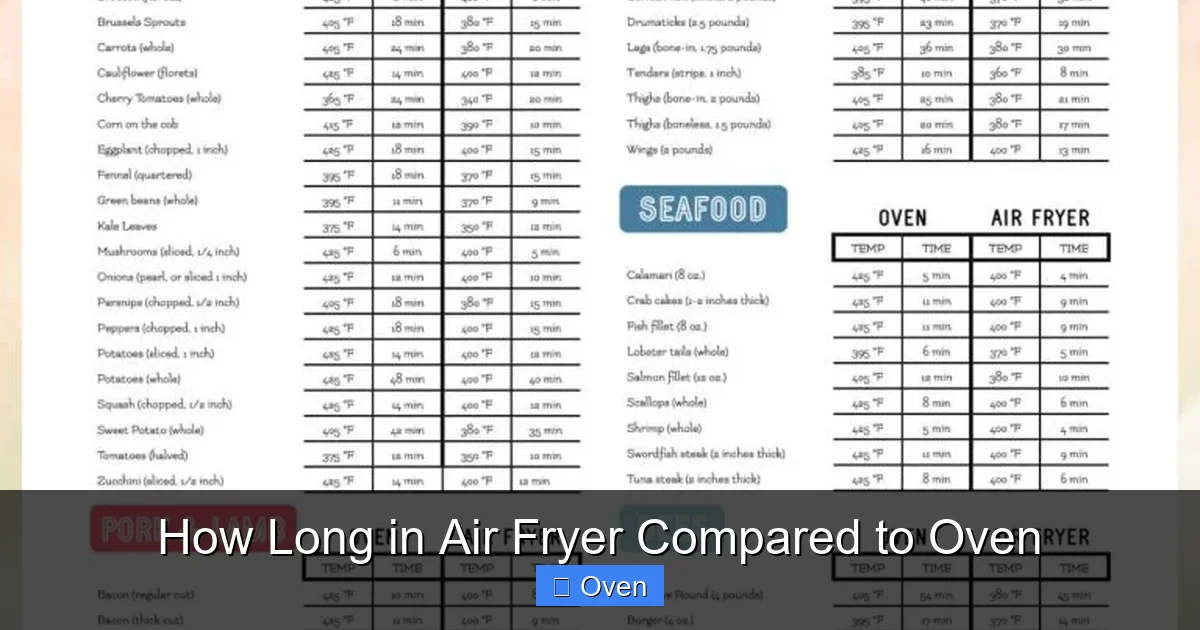
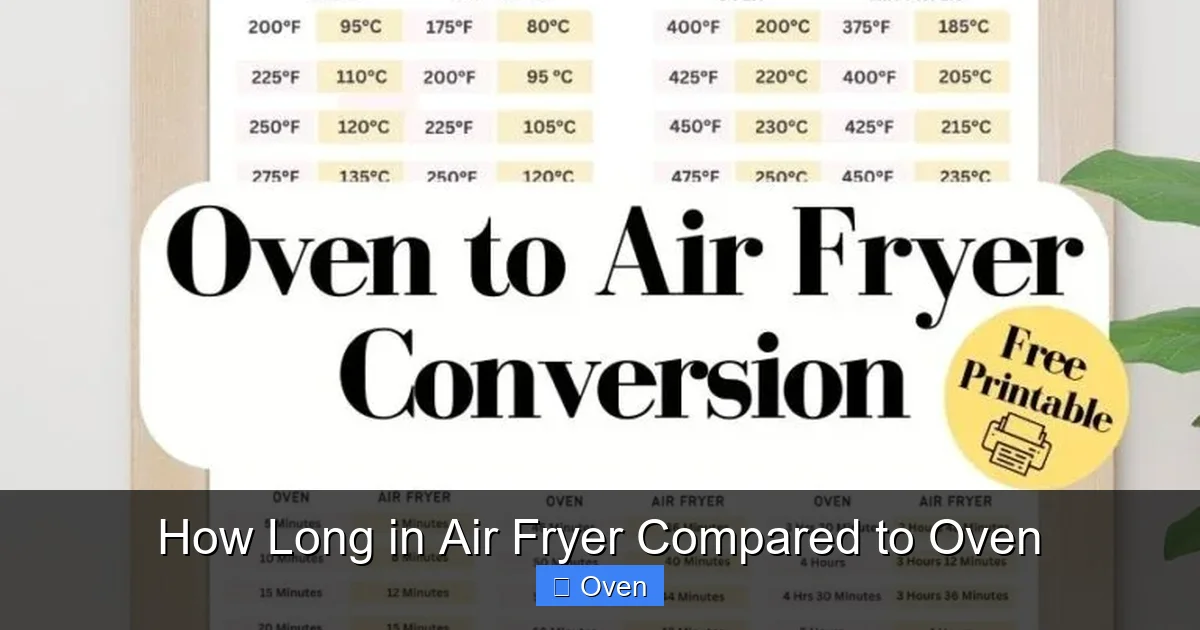
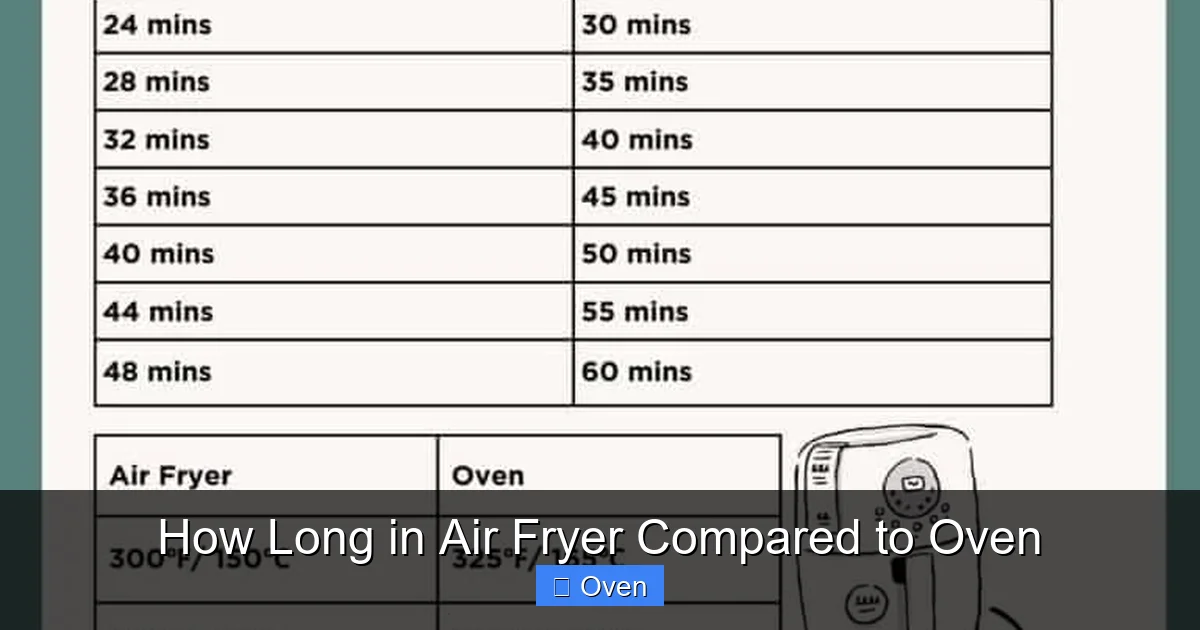
Ready to stop guessing? Here’s how to translate oven times to air fryer times like a pro. The golden rule: reduce oven cooking time by 20-30% and lower temperature by 25°F (15°C). But let’s get specific with real examples you’ll actually cook.
Visual guide about How Long in Air Fryer Compared to Oven
Image source: savorandsavvy.com
Common Food Conversion Cheat Sheet
Forget complicated formulas. These everyday conversions will save you time tonight:
- Frozen french fries: Oven: 425°F for 25 mins → Air fryer: 400°F for 15-18 mins (shake basket at 10 mins)
- Chicken wings: Oven: 400°F for 45 mins → Air fryer: 380°F for 25-28 mins (flip halfway)
- Salmon fillets: Oven: 375°F for 18 mins → Air fryer: 350°F for 12-14 mins
- Frozen mozzarella sticks: Oven: 400°F for 12 mins → Air fryer: 375°F for 8-10 mins
- Roasted vegetables: Oven: 425°F for 25 mins → Air fryer: 400°F for 15-18 mins (shake at 10 mins)
Notice the pattern? Most foods hit the sweet spot between 25-30% faster. But exceptions exist – delicate fish or stuffed items might need only 20% reduction to prevent drying out.
Why Temperature Adjustment is Non-Negotiable
Here’s where beginners mess up: using the same temperature. Air fryers’ intense heat can scorch food if you don’t lower the temp. That 25°F reduction isn’t arbitrary – it compensates for the faster heat transfer. Try cooking chicken at 400°F in both appliances: oven gives even browning, air fryer might char the outside while the inside stays raw. Always dial down that temperature!
When Your Air Fryer Beats the Oven (And When It Doesn’t)
Let’s be real: air fryers aren’t magic. They excel in specific scenarios but have clear limitations. Knowing when to reach for which appliance saves frustration.
Visual guide about How Long in Air Fryer Compared to Oven
Image source: the-bella-vita.com
The Air Fryer’s Sweet Spot
These are the moments your air fryer becomes your kitchen MVP:
- Reheating leftovers: Crisp up pizza or fried chicken in 3-5 minutes (oven takes 15+)
- Small-batch cooking: Perfect for 1-2 servings – no need to heat a whole oven
- Crispy exteriors: Achieves deep-fryer crunch without oil for wings, zucchini fries, or tofu
- Quick weeknight sides: Roasted Brussels sprouts in 15 mins vs 30 in oven
- Frozen convenience foods: Cooks frozen appetizers 30% faster with better texture
My personal favorite? Making “fried” pickles for game night. Oven version soggy and sad; air fryer version? Crunchy perfection in 12 minutes flat.
When You Should Stick With the Oven
Don’t ditch your oven just yet! These tasks still demand its spacious cavity:
- Large roasts: Turkey, whole chicken, or leg of lamb need oven space
- Baking: Cakes, breads, and casseroles require even, gentle heat
- Multi-rack cooking: Need to cook multiple dishes simultaneously? Oven wins
- Low-and-slow cooking: Braises or pulled pork need oven’s stable low temps
- Large batches: Feeding 6+ people? Oven handles volume better
Pro tip: Use both appliances together! Roast a chicken in the oven while crisping potatoes in the air fryer – dinner done 20 minutes faster.
The Texture Trade-Off: Crispness vs. Moisture
Here’s the delicious dilemma: air fryers deliver incredible crispness but can sacrifice moisture. Understanding this balance helps you tweak recipes perfectly.
Visual guide about How Long in Air Fryer Compared to Oven
Image source: realfoodwithsarah.com
Why Air Fryers Create Magic Crunch
That addictive crisp? It’s all about the Maillard reaction – browning that happens when proteins and sugars react at high heat. Air fryers’ rapid air circulation removes surface moisture instantly, creating ideal conditions for browning. Ovens take longer to evaporate surface moisture, resulting in less dramatic crisping. For foods where crunch matters (chicken skin, roasted veggies), air fryers are unbeatable.
Moisture Management Secrets
Air fryers’ drying power can backfire with delicate foods. Here’s how to keep things juicy:
- Brush with oil: A light coating protects fish and chicken from drying
- Use marinades: Acidic marinades (lemon, vinegar) help retain moisture
- Don’t overcrowd: Crowding steams food instead of crisping it
- Check early: Pull food out 2-3 minutes before oven time suggests
- Rest before cutting: Lets juices redistribute (critical for meats!)
My go-to trick? For salmon, pat fillets dry, brush with olive oil, and add a sprinkle of everything bagel seasoning. Air fryer at 350°F for 12 minutes – crispy skin, moist flesh. Oven version? Often ends up dry.
Energy and Cost: The Hidden Time Saver
Beyond cooking speed, air fryers save something equally valuable: energy dollars. Let’s break down the real savings.
The Energy Math You Need to Know
Consider this scenario: cooking frozen fries for two people.
- Oven: 15 min preheat + 25 min cook = 40 min at 2000W = 1.33 kWh
- Air fryer: 3 min preheat + 16 min cook = 19 min at 1500W = 0.48 kWh
That’s 64% less energy for the same meal! At $0.15/kWh, you save $0.12 per meal. Multiply that by 3 meals a week? That’s $18.72 yearly savings just on fries. Factor in faster preheating (air fryers heat in 3 mins vs 15+ for ovens), and the savings multiply for small-batch cooking.
When Ovens Become More Efficient
Energy advantage flips when cooking large quantities. Baking a casserole for 8 people? The oven’s larger cavity means you’re cooking more food per energy unit. Air fryers lose efficiency when overcrowded (which also ruins texture). Rule of thumb: for meals serving 1-4 people, air fryers win on energy. For 5+, ovens often pull ahead.
Mastering Air Fryer Timing Like a Pro
Ready to move beyond basic conversions? These advanced tips will make you an air fryer timing expert.
The Shake-and-Check Method
Unlike ovens where you can set-and-forget, air fryers demand attention. Why? Uneven airflow can create hot spots. Pro technique:
- Shake or flip food at the 50% mark
- Check doneness 2-3 minutes before recipe suggests
- Use visual cues: chicken should have clear juices, veggies caramelized
- For dense foods (potatoes), pierce with fork to test tenderness
I learned this the hard way when my first air fryer batch of sweet potato fries came out half-raw, half-burnt. Now I shake religiously at 8 minutes for a 16-minute cook.
Thickness is Your Secret Timing Clue
Here’s what recipe books often miss: thickness changes everything. A 1-inch chicken breast cooks differently than a 1.5-inch cutlet. General guide:
- Thin cuts (<1/2"): Reduce time by 15% vs standard
- Standard (1/2″-1″): Follow conversion chart
- Thick cuts (1″+): Increase time by 10-15% or lower temp 10°F
Pro tip: Use a meat thermometer! 165°F for poultry, 145°F for fish. Takes the guesswork out completely.
Conclusion: Your Smart Appliance Strategy
So how long in air fryer compared to oven? For most everyday cooking, 20-30% faster with a 25°F temperature reduction. But the real answer isn’t just about minutes saved – it’s about matching the right tool to the task.
Think of your air fryer as the speedy sidekick for crispy, small-batch meals, while your oven remains the reliable workhorse for big gatherings and baking. Keep that conversion rule handy (reduce time 25%, lower temp 25°F), master the shake-and-check method, and respect the texture trade-offs. Before you know it, you’ll be effortlessly switching between appliances like a kitchen ninja.
The best part? You don’t have to choose one over the other. Use the air fryer for lightning-fast weeknight sides while your oven roasts a chicken. Reheat pizza in the air fryer while baking cookies in the oven. That’s the real time-saving magic – leveraging both appliances’ strengths. Now go enjoy that extra 10 minutes with your family while your dinner cooks!
Frequently Asked Questions
How much faster is an air fryer than an oven?
Air fryers typically cook 20-30% faster than conventional ovens for most foods. This varies based on food type and quantity, but you can generally reduce oven cooking times by about 25% when converting recipes. Always lower the temperature by 25°F (15°C) to prevent burning.
Can I cook everything in an air fryer that I cook in an oven?
Not everything. Air fryers excel at crisping, reheating, and small-batch cooking but struggle with large roasts, baked goods requiring precise rising, and dishes needing steam (like bread). They’re ideal for proteins, veggies, and frozen foods but not replacements for oven baking or large-scale cooking.
Why do some foods take longer in an air fryer?
Foods with high moisture content (like fresh zucchini or eggplant) may take slightly longer as the air fryer works to evaporate surface water before crisping. Also, overcrowding the basket reduces airflow efficiency. Generally though, air fryers are faster – any “longer” times are exceptions requiring special handling.
Is air frying healthier than oven baking?
Both methods are healthy when used properly. Air frying often requires less oil to achieve crispness, potentially reducing fat content. However, oven baking allows for more cooking methods (like steaming or braising) that retain moisture without added fats. The health impact depends more on ingredients than the appliance itself.
Do air fryers use less electricity than ovens?
Yes, for small-batch cooking. Air fryers consume 1,500-1,800 watts versus 2,000-5,000 watts for ovens, and heat up much faster. Cooking a single serving of fries uses about 65% less energy in an air fryer. For large meals, ovens become more efficient per serving due to their capacity.
Can I put a glass dish in my air fryer?
Only if it’s explicitly labeled as air fryer-safe or oven-safe to 400°F+. Avoid thin glass or dishes with plastic handles. Always place dishes centered in the basket without touching the sides or heating element. When in doubt, use the air fryer basket directly – it’s designed for optimal airflow.