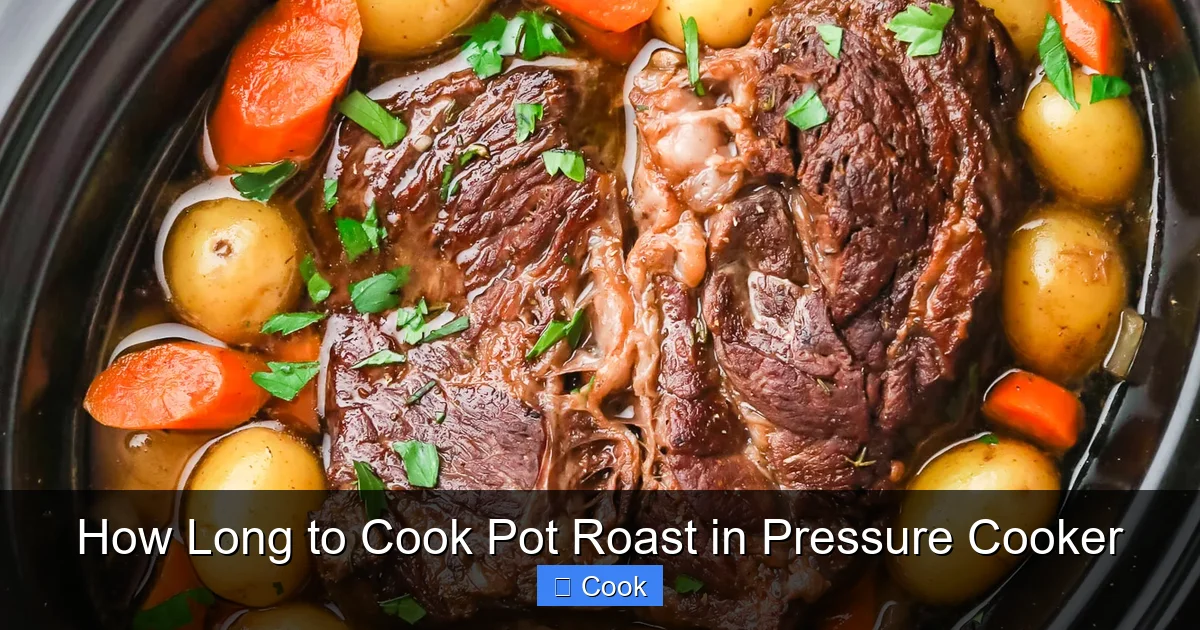
Pressure cooking pot roast slashes traditional cooking time from 3+ hours to just 60-90 minutes while delivering incredibly tender, flavorful results. Key factors like meat cut, size, and pressure release method determine exact timing, but our detailed guide ensures perfect doneness every time.
Key Takeaways
- 60-90 Minutes is Typical: Most chuck roasts (2-4 lbs) cook perfectly in 60-90 minutes under high pressure, depending on thickness and desired tenderness.
- Searing is Non-Negotiable: Always brown the roast first for deep flavor and better texture; skipping this step results in bland meat.
- Liquid Minimums Matter: Use at least 1 cup of broth, wine, or water to generate sufficient steam for safe, effective pressure cooking.
- Natural Release is Crucial: Allow 15-20 minutes of natural pressure release after cooking to prevent tough, stringy meat from sudden steam loss.
- Check Internal Temperature: Aim for 195°F-205°F (90°C-96°C) for fall-apart tenderness; use an instant-read thermometer for accuracy.
- Cut Choice is Key: Chuck roast is ideal; avoid lean cuts like sirloin tip which can dry out under pressure.
- Frozen Roasts Need Adjustment: Add 10-15 extra minutes to cooking time if starting from frozen, but thawing is recommended for best results.
📑 Table of Contents
- Why Pressure Cooker Pot Roast is a Game-Changer
- Prepping Your Pot Roast for Pressure Cooking Success
- How Long to Cook Pot Roast in Pressure Cooker: The Definitive Guide
- Liquid, Veggies, and Seasoning: Getting the Balance Right
- Troubleshooting Common Pressure Cooker Pot Roast Issues
- Pro Tips for Next-Level Pressure Cooker Pot Roast
- Conclusion: Your Perfect Pot Roast, Fast and Foolproof
Why Pressure Cooker Pot Roast is a Game-Changer
Let’s be honest: traditional pot roast is delicious, but it’s a time-sink. That slow simmer for 3-4 hours? It’s perfect for a lazy Sunday, but what about a Tuesday night when you’re starving at 6 PM? Enter the pressure cooker—your new secret weapon for tender, melt-in-your-mouth pot roast in under 90 minutes. No more babysitting the stove or waiting all day for dinner. The magic happens because the sealed pot traps steam, raising the internal pressure and boiling point of water. This intense environment breaks down tough connective tissues in the meat incredibly fast, transforming a humble chuck roast into something extraordinary while locking in juices and flavor.
You might be thinking, “But will it taste as good?” Absolutely. In fact, many chefs swear pressure-cooked pot roast is more flavorful than the slow-cooked version. Why? Because the sealed environment prevents volatile aromas from escaping, and the rapid cooking preserves the meat’s natural juices. Plus, you get all those caramelized bits from searing (more on that soon!) infused directly into the sauce. Whether you’re using an Instant Pot, Ninja Foodi, or a stovetop model, the principles are the same. This isn’t just about speed—it’s about reclaiming your time without sacrificing the comfort-food goodness you crave. Imagine walking in the door at 5:30 PM and having a rich, savory pot roast ready by 6:45 PM. That’s the pressure cooker promise.
Prepping Your Pot Roast for Pressure Cooking Success
Don’t skip this step—it’s where great pot roast begins. Rushing prep leads to bland, tough results. Start with a 2-4 pound chuck roast (more on cuts later). Pat it completely dry with paper towels. Moisture is the enemy of browning, and browning = flavor. Season generously with salt and pepper on all sides—this isn’t the time to be shy. Now, heat 1-2 tablespoons of oil (avocado or canola work great) in your pressure cooker on the “Sauté” function until it shimmers. Carefully place the roast in the pot. Let it sear undisturbed for 3-4 minutes per side until deeply browned. Resist the urge to move it! Those crispy bits (fond) are pure flavor gold. Remove the roast and set it aside.

Visual guide about How Long to Cook Pot Roast in Pressure Cooker
Image source: simplyhappyfoodie.com
Building the Flavor Base
While the pot is still hot, add diced onions, carrots, and celery (the classic “mirepoix”). Sauté for 3-4 minutes until softened. Deglaze the pot by pouring in ½ cup of red wine, broth, or water, scraping vigorously to lift all those browned bits off the bottom. This step is non-negotiable—it incorporates that fond into your sauce. Next, add aromatics: 2-3 minced garlic cloves, 1-2 tablespoons tomato paste (for depth), and herbs like thyme or rosemary. Stir for 1 minute until fragrant. Return the seared roast to the pot, nestling it into the veggies. Pour in enough liquid to cover the meat about halfway—usually 1.5 to 2 cups of broth, wine, or a mix. Remember: pressure cookers need liquid to create steam, but too much dilutes flavor.
How Long to Cook Pot Roast in Pressure Cooker: The Definitive Guide
This is the million-dollar question, and the answer isn’t one-size-fits-all. The exact time depends on three key factors: the cut and size of your roast, your desired tenderness level, and whether it’s fresh or frozen. But don’t worry—we’ll break it down simply. For a standard 3-pound chuck roast (the most common choice), you’ll typically cook it for 60-75 minutes on high pressure. Smaller roasts (2 pounds) might only need 45-60 minutes, while larger ones (4+ pounds) could require 75-90 minutes. Why the range? Thicker roasts need more time for heat to penetrate to the center. If you prefer your meat extremely fall-apart tender (like for shredding), lean toward the higher end.

Visual guide about How Long to Cook Pot Roast in Pressure Cooker
Image source: dinnerthendessert.com
Timing by Meat Cut and Size
Not all roasts are created equal for pressure cooking. Chuck roast is the undisputed champion—it’s well-marbled with connective tissue that transforms into gelatin under pressure, creating succulent meat and a rich sauce. For a 2-3 pound chuck roast: 60 minutes high pressure. For 3-4 pounds: 75 minutes. Beef brisket (point or flat) works too but needs longer: 80-90 minutes for a 3-4 pound piece. Avoid lean cuts like sirloin tip or round roast—they lack the fat needed to stay moist and can turn tough. If you’re using a frozen roast, add 10-15 minutes to the cooking time, but thawing first is ideal for even cooking. Always err on the side of slightly undercooking; you can always re-pressurize, but overcooked roast is dry and stringy.
The Critical Role of Natural Pressure Release
Here’s where most beginners go wrong: yanking the pressure release valve immediately after cooking. This causes a violent rush of steam that literally blows the meat apart, leaving it tough and dry. Instead, always allow for a natural pressure release (NPR). After the cooking time ends, turn off the heat and let the pressure drop on its own for 15-20 minutes. You’ll know it’s ready when the float valve drops. Only then should you do a quick release for any remaining pressure. Why does NPR matter? It lets the meat fibers relax gradually, reabsorbing juices that would otherwise escape. Skipping this step is the #1 reason for disappointing pot roast. Think of it like letting a steak rest—it’s non-negotiable for perfect texture.
Liquid, Veggies, and Seasoning: Getting the Balance Right
Too little liquid, and your pot will burn or fail to pressurize. Too much, and your sauce will be watery. The sweet spot is 1.5 to 2 cups of liquid for a 3-4 pound roast. Use beef broth for depth, red wine for acidity (deglaze with it!), or even a splash of Worcestershire sauce. Avoid water-only—it lacks flavor. Remember: the liquid should come about halfway up the roast, not submerge it. Veggies like potatoes and carrots can go in raw since they cook quickly under pressure, but cut them into large chunks (1.5-2 inches) to prevent mushiness. Add delicate veggies like peas or green beans after cooking—stir them into the hot sauce during the NPR time.

Visual guide about How Long to Cook Pot Roast in Pressure Cooker
Image source: inspiredtaste.net
Seasoning Secrets for Maximum Flavor
Salt early and often. Season the roast generously before searing, and add a pinch more to the liquid. Acid is crucial for brightness—a splash of balsamic vinegar or lemon juice at the end cuts through richness. Umami boosters like tomato paste, soy sauce, or mushrooms deepen the flavor profile. Don’t forget herbs: fresh thyme sprigs, rosemary, or a bay leaf simmered with the roast infuse the meat beautifully. After cooking, taste and adjust seasoning. If your sauce is too thin, remove the roast and veggies, then simmer the liquid on “Sauté” mode to reduce it. For extra richness, swirl in a tablespoon of butter or olive oil before serving.
Troubleshooting Common Pressure Cooker Pot Roast Issues
Even with perfect timing, things can go sideways. Here’s how to fix the most frequent problems:
Why Is My Pot Roast Tough?
This usually means undercooking or skipping the natural release. Check the internal temperature—it should hit 195°F-205°F (90°C-96°C) for fork-tender meat. If it’s below 190°F, return it to the pot and cook for 5-10 more minutes under pressure. Always prioritize NPR—rushing this step guarantees toughness. Also, ensure you’re using a well-marbled cut like chuck; lean meat simply won’t tenderize properly.
Sauce Too Thin or Watery?
Too much liquid or insufficient reduction is the culprit. Remove solids and simmer the liquid on “Sauté” mode for 5-10 minutes to thicken. For a glossy finish, make a slurry with 1 tbsp cornstarch + 2 tbsp cold water, whisk it in, and simmer for 1 minute. Avoid adding thickeners before pressure cooking—they can clog valves.
Burnt Taste or “Burn” Alert?
This happens when liquid evaporates before pressure builds. Always use at least 1 cup of liquid, and ensure the roast isn’t touching the bottom directly—nestle it on a bed of veggies. If you get a burn alert, carefully release pressure, check the bottom, and add more liquid if needed before restarting.
Meat Falling Apart Too Much?
You likely overcooked it or used a cut with too much connective tissue (like shank). Stick to chuck roast and reduce cooking time by 5-10 minutes next time. Also, confirm you’re using high pressure—not low—for pot roast.
Pro Tips for Next-Level Pressure Cooker Pot Roast
Want to elevate your roast from good to restaurant-worthy? Start with high-quality meat: look for chuck roast with good marbling (white fat streaks). Let it sit at room temperature for 20-30 minutes before cooking—this ensures even searing. For deeper flavor, marinate the roast overnight in broth, garlic, and herbs (though searing is still essential). Add a Parmesan rind to the liquid while cooking—it dissolves into the sauce, adding savory depth. After cooking, let the roast rest in the sauce for 10 minutes before slicing; this lets juices redistribute. Serve with crusty bread to soak up every drop of gravy.
Freezing and Reheating Like a Pro
Pressure cooker pot roast freezes beautifully. Cool completely, then portion into airtight containers or freezer bags, leaving ½ inch headspace. Freeze for up to 3 months. To reheat, thaw overnight in the fridge, then warm gently on the stove or in the microwave. For best results, reheat in the pressure cooker on “Sauté” mode with a splash of broth to revive the sauce. Avoid boiling frozen roast directly—it can turn mushy.
Conclusion: Your Perfect Pot Roast, Fast and Foolproof
Cooking pot roast in a pressure cooker isn’t just about saving time—it’s about unlocking deeper flavors and more reliable results than traditional methods. By mastering the 60-90 minute window, prioritizing that crucial natural pressure release, and using the right cut (hello, chuck roast!), you’ll consistently achieve meat that’s fork-tender with a rich, cohesive sauce. Remember: searing builds flavor, liquid creates steam, and patience during NPR ensures juicy perfection. No more dry, bland roasts or all-day kitchen marathons. Whether it’s a hectic weeknight or a special occasion, your pressure cooker delivers comfort food that feels lovingly made—without the wait. So grab that chuck roast, fire up your pot, and get ready to impress. Your taste buds (and your schedule) will thank you.
Frequently Asked Questions
Can I cook pot roast from frozen in a pressure cooker?
Yes, but it requires adjustments. Add 10-15 minutes to the standard cooking time and ensure you have enough liquid (at least 1.5 cups). However, thawing first is recommended for even cooking and better searing. Frozen roasts can also cause more liquid release, potentially diluting flavors.
Why does my pressure cooker pot roast taste bland?
Blandness usually stems from insufficient seasoning or skipping the sear. Always salt the meat generously before browning, and don’t rush the caramelization step—those browned bits are pure flavor. Adding acid (like vinegar or wine) at the end also brightens the dish significantly.
How much liquid is absolutely necessary for pot roast?
Most pressure cookers require a minimum of 1 cup of liquid to build pressure safely. For pot roast, use 1.5-2 cups to account for evaporation and ensure tender results. Too little risks burning; too much creates a watery sauce that needs reducing after cooking.
Can I use a different cut of beef besides chuck roast?
Chuck roast is ideal due to its fat and connective tissue. Brisket works but needs longer cooking (80-90 mins). Avoid lean cuts like sirloin or round—they lack the marbling to stay moist under pressure and often turn tough. Short ribs are another great alternative (cook for 45-50 mins).
What’s the difference between natural release and quick release for pot roast?
Natural release (letting pressure drop slowly for 15-20 mins) is essential for pot roast. It allows meat fibers to relax and reabsorb juices, preventing toughness. Quick release (venting steam immediately) causes violent steam expulsion that shreds the meat and dries it out—save this for beans or vegetables.
How do I know if my pot roast is done without a thermometer?
While an instant-read thermometer (target 195°F-205°F) is best, you can test doneness by inserting a fork. If it slides in with little resistance and the meat pulls apart easily, it’s done. If it’s still firm or chewy, return to pressure for 5-10 more minutes. Avoid repeatedly checking, as it slows cooking.