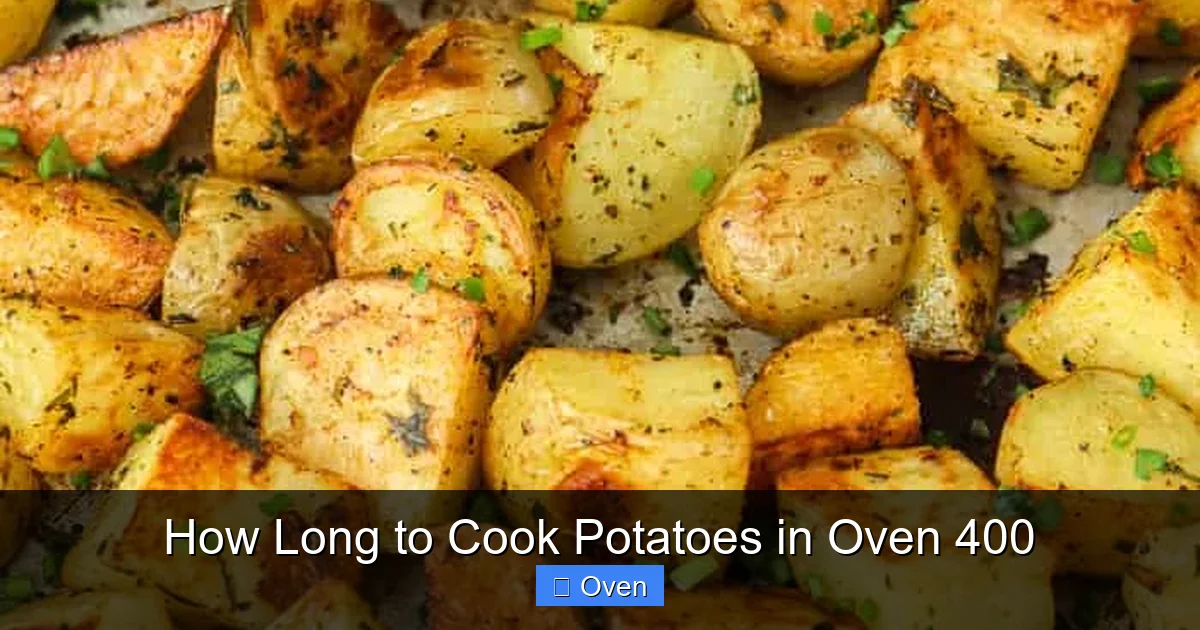
Master oven-baked potatoes at 400°F with this essential guide! Cooking time typically ranges from 45-60 minutes depending on potato type and size, but proper prep and doneness checks are crucial for success. Learn how to achieve that perfect crispy skin and tender interior every single time.
Key Takeaways
- Potato Type & Size Matter Most: Russets take 45-60 mins, smaller red/yellow potatoes 35-50 mins, sweet potatoes 50-70 mins. Always adjust based on actual size.
- Pierce Potatoes Thoroughly: Always poke 4-6 deep holes per potato with a fork to prevent dangerous bursting and ensure even cooking.
- Skip the Foil for Crispy Skin: Baking directly on the rack (or on a sheet pan) creates superior crispy skin. Foil traps steam, leading to soggy results.
- Check Doneness, Don’t Just Rely on Time: Use a fork or thermometer (internal temp 205-210°F) to confirm tenderness. Time is a guide, not a guarantee.
- Rest Before Serving: Let potatoes rest for 5-10 minutes after baking. This allows heat to distribute evenly for the fluffiest texture.
- Oven Accuracy is Key: Use an oven thermometer! Many home ovens run hot or cold, significantly impacting cooking time.
- Prep is Simple but Vital: Wash, dry, pierce, and optionally oil/salt the skin. Don’t skip drying – moisture is the enemy of crispiness.
Quick Answers to Common Questions
How long for small potatoes at 400°F?
Small potatoes (like small russets or red bliss, around 4-6 oz) typically take 35-45 minutes at 400°F. Always check for doneness with a fork starting at 30 minutes.
Do I need to wrap potatoes in foil?
No, and it’s not recommended for crispy skin! Baking directly on the rack allows air circulation and prevents steam buildup. Foil traps moisture, resulting in soft, steamed skin instead of crispy.
Can I microwave them first to speed up oven time?
You can par-cook in the microwave (5-7 mins per potato), but finish them in the 400°F oven for 15-20 minutes to crisp the skin and fully cook the center. Skipping the oven won’t give you proper texture.
How do I reheat a baked potato?
Reheat in a 350°F oven for 15-25 minutes until hot throughout, or wrap loosely in foil. Microwaving often makes the skin tough and the interior gummy – oven reheating preserves texture best.
Can I bake frozen potatoes at 400°F?
It’s not ideal. Frozen potatoes have excess ice that steams the skin. Thaw them completely in the fridge first, then dry thoroughly and bake as usual. Expect slightly longer cook times.
📑 Table of Contents
- The Magic of 400°F: Why This Temperature Wins for Oven Potatoes
- What Actually Determines Your Potato’s Cook Time?
- Your Step-by-Step Guide to Perfect Oven-Baked Potatoes at 400°F
- Troubleshooting Common Potato Problems at 400°F
- Beyond the Basics: Creative Ways to Enjoy Your 400°F Potatoes
- Conclusion: Your Foolproof Path to Perfect Potatoes
The Magic of 400°F: Why This Temperature Wins for Oven Potatoes
There’s something truly special about a perfectly baked potato. That shatteringly crisp skin giving way to a cloud of fluffy, buttery goodness inside is pure comfort food magic. And when it comes to achieving this perfection in your home oven, setting the temperature to 400°F (200°C) is often the sweet spot. But why 400? And crucially, how long to cook potatoes in oven 400 to get that ideal result every time?
400°F strikes a beautiful balance. It’s hot enough to rapidly crisp the skin and set the structure without burning it before the inside cooks through. It’s also gentle enough to allow the starch inside the potato to fully gelatinize, creating that signature light, airy texture we crave. Lower temperatures (like 350°F) take much longer and often result in denser potatoes with less crispy skin. Higher temperatures (425°F+) risk the skin charring long before the center is tender, especially with larger potatoes. 400°F is the Goldilocks zone for most standard baking potatoes.
But here’s the thing: the exact how long to cook potatoes in oven 400 isn’t a single magic number. It’s a range influenced by several key factors. Understanding these variables is the difference between a consistently amazing baked potato and one that’s either undercooked and hard or overcooked and mushy. This guide cuts through the confusion, giving you the knowledge and practical steps to nail it every single time, whether you’re cooking for one or a crowd.
What Actually Determines Your Potato’s Cook Time?
Before you even preheat your oven, know this: the clock starts ticking differently for every potato. Relying solely on a generic “50 minutes” guideline is a recipe for disappointment. Let’s break down the main factors that dictate your specific how long to cook potatoes in oven 400.
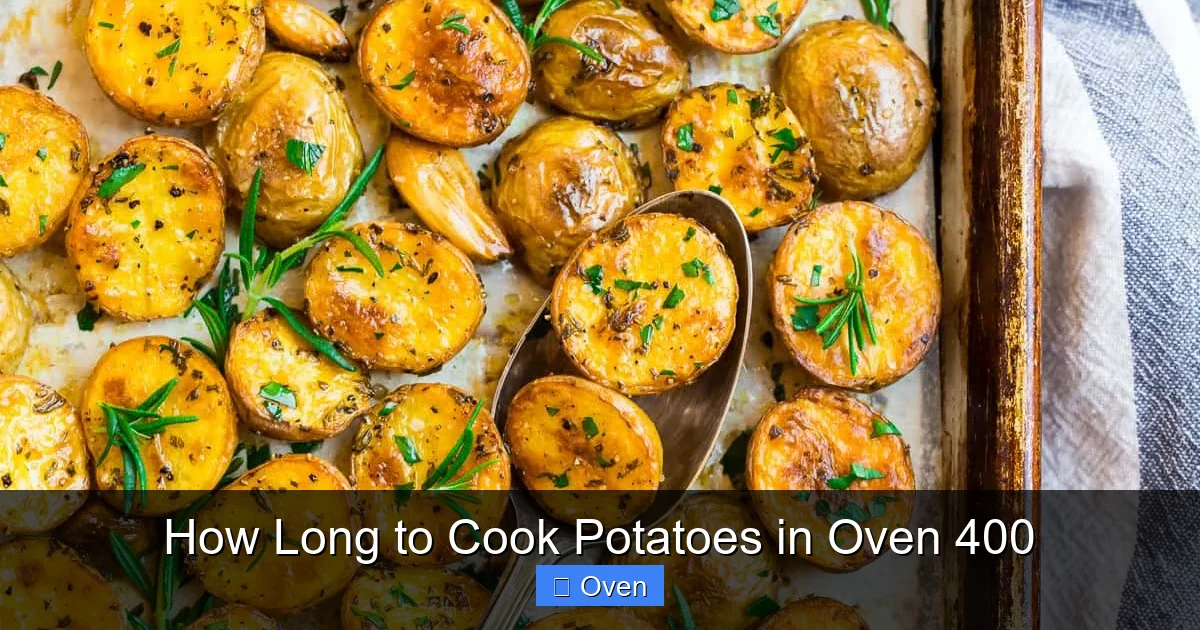
Visual guide about How Long to Cook Potatoes in Oven 400
Image source: wellplated.com
Potato Variety: The Biggest Game-Changer
Not all potatoes are created equal when it comes to baking. The type you choose fundamentally impacts the cooking time:
- Russet Potatoes (Idaho): The classic baked potato champion. High starch, low moisture. They take the longest – typically 45 to 60 minutes at 400°F. Their thick skin crisps beautifully, and the interior becomes incredibly fluffy. Ideal for loaded baked potatoes.
- Sweet Potatoes: Naturally sweeter and denser than russets. They generally need 50 to 70 minutes at 400°F. Their higher moisture content means they cook slightly slower. Look for deep orange flesh varieties for best results.
- Red Bliss or New Potatoes: Waxy, thin-skinned, and lower in starch. They cook much faster! Expect 35 to 50 minutes at 400°F. While they can be baked, they are often better suited for boiling or roasting whole with herbs. Baking them gives a unique, slightly firmer texture.
- Yukon Gold Potatoes: A fantastic middle ground. Moderate starch, buttery flavor, and thinner skin than russets. They usually bake in 40 to 55 minutes at 400°F. They offer a lovely balance of fluffy interior and decent skin crispness.
Always identify your potato type first. A russet will almost always take longer than a red bliss of similar size.
The Critical Role of Size and Shape
Even within the same variety, size matters immensely. A small russet (about 6 oz / 170g) might be done in 40 minutes, while a large one (12+ oz / 340g+) could easily need 65 minutes or more. Why? Heat penetrates from the outside in. A bigger potato simply has more mass for the heat to travel through to reach the center.
Shape also plays a part. A long, skinny potato might cook slightly faster than a short, fat one of the same weight, as the heat has a shorter distance to travel to the geometric center. When possible, try to select potatoes that are relatively similar in size for even cooking if baking multiple at once. If you have a mix, put the larger ones on the lower rack (closer to the heat source) and smaller ones higher up.
Preparation: The Foundation for Success
How you prep your potatoes before they hit the oven significantly influences the outcome and timing:
- Washing & Drying: Always scrub potatoes thoroughly to remove dirt. Crucially, dry them completely with a clean kitchen towel or paper towels. Any surface moisture will steam the skin instead of allowing it to crisp up, leading to sogginess and potentially longer cook times as the oven works to evaporate that water.
- Piercing is Non-Negotiable: This is the single most important prep step you cannot skip. Use a fork to pierce each potato deeply 4-6 times all over. Why? As potatoes heat up, moisture inside turns to steam. Without escape routes, that pressure builds until the potato violently bursts open, making a mess and potentially ruining the texture. Piercing allows steam to escape gently, ensuring even cooking and preventing explosions. Don’t just prick the skin lightly – go deep!
- Oil and Salt (Optional but Recommended): Rubbing the dried, pierced skin lightly with a neutral oil (like avocado or canola) and sprinkling with coarse salt is a game-changer. The oil helps conduct heat, promoting faster and more even crisping. The salt seasons the skin beautifully and enhances flavor. This step adds maybe 30 seconds to prep but makes a huge difference in the final texture and taste. Skip it only if you absolutely must have a very low-fat version.
Oven Realities: It’s Not Always What It Seems
Here’s a hard truth many home cooks don’t realize: your oven’s dial is often lying to you. Ovens can have hot spots (areas that run hotter) and cold spots, and the actual temperature inside can be significantly different from what the dial says. A common issue is ovens running 25-50°F cooler than set.
This is why using a reliable oven thermometer is one of the best investments you can make for consistent baking results, including perfect potatoes. Place it in the center of your oven rack. If it consistently reads lower than 400°F when you set it to 400°F, you know to set the dial higher next time (e.g., set to 425°F to get a true 400°F). Conversely, if it runs hot, set it lower. Ignoring this can mean your “400°F” oven is actually baking at 375°F, adding 10-15 minutes to your cook time, or worse, burning things at 425°F.
Your Step-by-Step Guide to Perfect Oven-Baked Potatoes at 400°F
Now that you understand the variables, let’s walk through the foolproof process for baking potatoes at 400°F. Follow these steps, and you’ll consistently achieve that ideal crispy skin and fluffy interior.
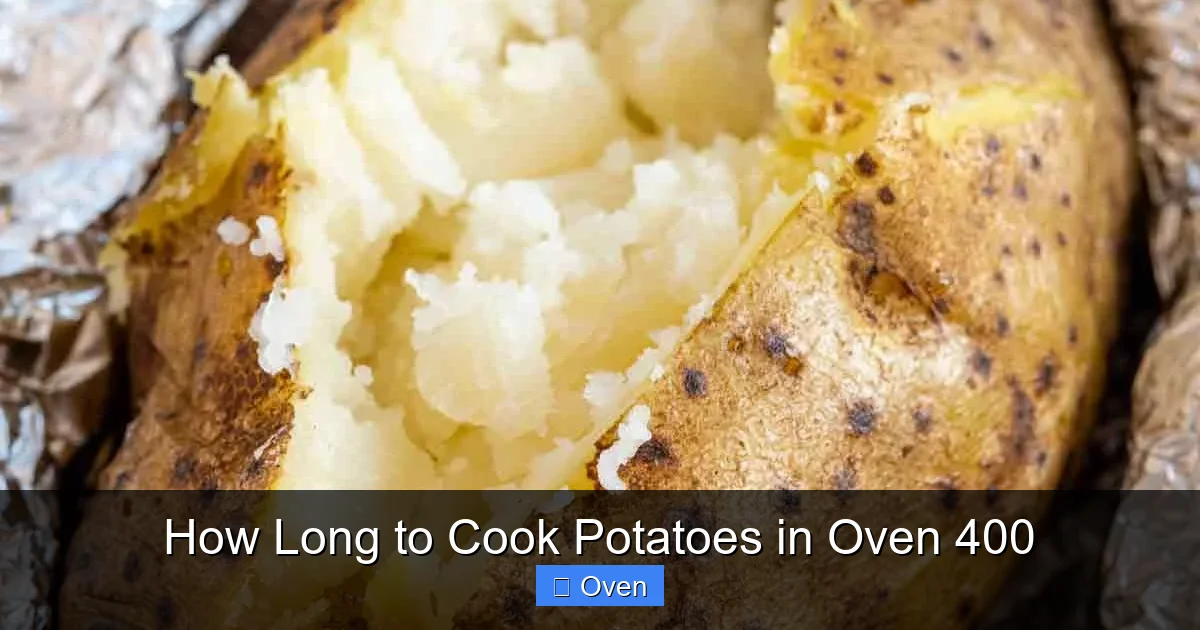
Visual guide about How Long to Cook Potatoes in Oven 400
Image source: i.pinimg.com
Prep Work: Setting the Stage
Start by preheating your oven to 400°F (200°C). Place an oven thermometer inside to verify the temperature. While it heats, wash your potatoes thoroughly under cool running water, scrubbing away any dirt with a vegetable brush. Pay special attention to the eyes. Once clean, dry them meticulously with a clean kitchen towel or paper towels. Any lingering water is the enemy of crisp skin.
Next, pierce each potato deeply 4-6 times all over with a fork. Don’t be shy – go through the skin and into the flesh. This steam venting is critical. If you’re using oil and salt (highly recommended), lightly rub each pierced potato with about 1/2 teaspoon of oil per potato, ensuring it gets into the fork holes. Sprinkle generously with coarse kosher salt or sea salt. Place the prepared potatoes directly on the center oven rack. Why not on a baking sheet? Baking directly on the rack allows hot air to circulate all around the potato, promoting even cooking and superior skin crispness from all sides. If you’re worried about drips (though there shouldn’t be much with pierced potatoes), place a foil-lined baking sheet on the rack below to catch any minimal oil or moisture.
The Baking Process: Patience is Key
Place the potatoes on the center rack and close the oven door. Resist the urge to open the door frequently to check them – every time you open it, you let out significant heat, extending the cooking time. Set a timer for the *minimum* expected time based on your potato type and size (e.g., 40 minutes for small russets, 50 for medium). Remember, how long to cook potatoes in oven 400 is a range, so start checking early.
About 10-15 minutes before your minimum time is up, start checking for doneness. This is where the real test begins, moving beyond just the clock.
The Golden Rule: How to Test for Perfect Doneness
Never rely solely on the timer. Always verify doneness using one or more of these methods:
- The Fork Test (Most Reliable): Carefully remove one potato (use oven mitts!). Insert a fork or thin metal skewer straight into the thickest part of the potato. It should slide in with zero resistance, meeting no resistance at all. If you feel any firmness or grittiness, it needs more time. The fork should also slide out easily.
- The Squeeze Test (Gentle Pressure): Using oven mitts, gently squeeze the potato (don’t crush it!). It should feel very tender and give slightly under pressure. The skin might feel crisp and slightly papery. Be cautious – the potato will be extremely hot inside!
- The Thermometer Test (Most Precise): For absolute certainty, especially with large russets or sweet potatoes, use an instant-read thermometer. Insert it into the very center of the potato. The internal temperature should read between 205°F and 210°F (96°C – 99°C). This is the sweet spot where the starch is fully gelatinized for maximum fluffiness.
If the potato isn’t done, return it to the oven and check again every 5-10 minutes. Cooking time can vary significantly, even between potatoes of similar size, due to oven hot spots or slight density differences.
The Crucial Resting Phase
Once your potatoes are perfectly tender, carefully remove them from the oven. This is not the time to serve them immediately! Place them on a cutting board or plate and let them rest, uncovered, for 5 to 10 minutes. Why is this step so important?
Resting allows the residual heat to continue gently cooking the very center and, more importantly, lets the internal structure settle. This results in a much fluffier, more even texture throughout. Cutting into a potato straight from the oven often releases a burst of steam and can cause the interior to collapse slightly, becoming dense or gummy. The brief rest ensures your potato holds its shape and delivers that cloud-like interior you’re after. Covering them during rest would trap steam and soften the crispy skin – keep them uncovered!
Troubleshooting Common Potato Problems at 400°F
Even with the best intentions, things can sometimes go slightly off track. Here’s how to diagnose and fix the most common issues with oven-baked potatoes at 400°F.
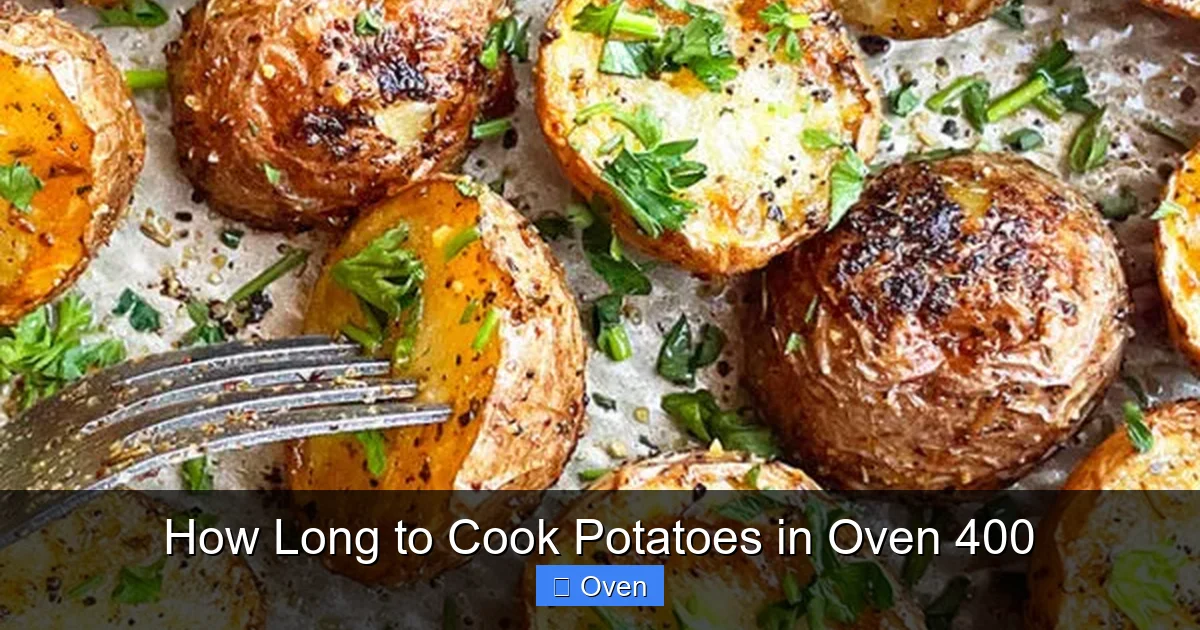
Visual guide about How Long to Cook Potatoes in Oven 400
Image source: onepotrecipes.com
Problem: Soggy, Soft Skin (Not Crispy)
This is the #1 complaint. The culprit is almost always moisture.
- Cause: Potatoes weren’t dried thoroughly before baking. Baking wrapped in foil (which traps all steam). Oven temperature too low.
- Solution: Always dry potatoes meticulously after washing. Never bake wrapped in foil if you want crispy skin – bake directly on the rack. Ensure your oven is truly at 400°F (use a thermometer!). Consider rubbing with a tiny bit more oil before baking. If skin is already soft, you can try placing the baked potatoes back in the oven for 5-10 minutes uncovered to recrisp, but prevention is best.
Problem: Potato is Burnt on the Outside, Raw Inside
This usually points to an oven temperature issue or potato size.
- Cause: Oven running significantly hotter than 400°F (check with thermometer!). Potato is very large. Baking at too high a temperature initially.
- Solution: Verify oven temperature with a thermometer and adjust dial accordingly next time. For very large potatoes, consider lowering the oven temp slightly (to 375-390°F) and extending the cooking time significantly (e.g., 75-90 mins for a huge russet) to allow heat to penetrate without burning the skin. Never start with a temperature higher than 400°F for standard baking.
Problem: Potato is Dense or Gummy Inside
This often happens when the potato is cut into too soon or undercooked.
- Cause: Potato wasn’t cooked long enough (didn’t reach 205-210°F internally). Potato was cut into immediately after baking, before resting.
- Solution: Always verify doneness with a fork or thermometer – don’t rely on time alone. Ensure the internal temp hits 205-210°F. Always let potatoes rest for 5-10 minutes before cutting or serving. This resting period is essential for achieving fluffiness.
Problem: Uneven Cooking (One Side Done, Other Raw)
Oven hot spots are the usual suspect.
- Cause: Oven has significant hot and cold spots. Potatoes placed too close together or touching the oven wall.
- Solution: Rotate the potatoes 180 degrees halfway through the estimated cooking time. Ensure potatoes aren’t touching each other or the oven walls – allow space for air circulation. If your oven is known for hot spots, consider investing in an oven thermometer to map them and adjust rack position accordingly for future bakes.
Problem: Potato Bursted Open During Baking
This is almost always due to insufficient piercing.
- Cause: Potatoes weren’t pierced deeply or frequently enough before baking. Steam had no escape route.
- Solution: Always pierce potatoes deeply 4-6 times all over with a fork before baking. Don’t just make shallow pricks. This simple step prevents messy explosions and ensures even cooking.
Beyond the Basics: Creative Ways to Enjoy Your 400°F Potatoes
Mastering the perfect plain baked potato is a fantastic foundation, but the beauty of baking them at 400°F is how versatile they become. Here are some delicious ways to elevate your spuds:
Classic Loaded Baked Potato
This is the ultimate comfort food. Once your potato is baked, rested, and split open, fluff the interior with a fork. Load it up with warm butter, a generous dollop of sour cream or crème fraîche, a sprinkle of sharp cheddar cheese (which will melt beautifully from the heat), crispy bacon bits, and chopped green onions. For extra richness, add a spoonful of chili or pulled pork. The key is layering the toppings so every bite is a flavor explosion.
Herb & Garlic Infused
Elevate the potato itself before baking. After piercing and drying, rub the skin not just with oil, but with a mixture of minced garlic and your favorite fresh herbs (rosemary, thyme, and parsley work wonderfully). The heat will infuse the oil and flavors into the skin and subtly permeate the flesh. Serve with a simple compound butter made with more of those herbs.
Potato “Fries” Alternative
Cut your baked russet potato (skin on or off, your choice) into thick steak fries after baking and resting. Toss them lightly with oil, salt, and maybe some smoked paprika or garlic powder. Spread them on a baking sheet and return to the 400°F oven for 10-15 minutes, flipping once, until they’re beautifully crisped on the outside. A fantastic, less greasy alternative to deep-fried fries.
Breakfast Potatoes Reinvented
Cube your baked potato (russet or Yukon Gold work well) after resting. Heat a skillet with a little oil or butter over medium-high heat. Add the potato cubes, along with diced onions, bell peppers, and your favorite breakfast spices (paprika, onion powder, black pepper). Cook, stirring occasionally, until the cubes are nicely browned and crispy on the outside. Top with a fried egg for the ultimate breakfast hash.
Simple & Elegant: Oil, Salt, and Pepper
Sometimes less is more. A perfectly baked potato, split open, fluffed with a fork, and topped with just a pat of high-quality butter, a generous grind of black pepper, and a flaky sea salt like Maldon. The natural sweetness and starchiness of the potato shine through. Serve alongside a simple green salad for a light, satisfying meal.
Conclusion: Your Foolproof Path to Perfect Potatoes
So, how long to cook potatoes in oven 400? The honest answer is: it depends. But armed with the knowledge from this guide, you’re no longer at the mercy of guesswork. You understand that the magic number lies within a range – typically 45-60 minutes for russets, 50-70 for sweet potatoes, and 35-50 for smaller varieties – but the true determinant is doneness, not the clock.
Remember the non-negotiables: wash and dry thoroughly, pierce deeply, skip the foil for crispy skin, verify tenderness with a fork or thermometer (aiming for 205-210°F internally), and always let them rest for 5-10 minutes. Factor in potato type, size, and crucially, your oven’s actual temperature (get that thermometer!). Master these elements, and you’ll consistently achieve that irresistible combination of shatteringly crisp skin and ethereally fluffy interior that defines the perfect baked potato.
Baking potatoes at 400°F is a simple technique, but simplicity demands precision. It’s not just about following a time; it’s about understanding the process and respecting the variables. Once you internalize these principles, you’ll find yourself reaching for the oven whenever you crave this humble yet extraordinary comfort food. No more dense centers, soggy skins, or exploded potatoes. Just reliable, delicious, oven-baked perfection, every single time. Now go preheat that oven – your perfect potato awaits!
Frequently Asked Questions
Why is my baked potato hard in the middle?
This means it’s undercooked. The internal temperature hasn’t reached 205-210°F. Always verify doneness with a fork (should slide in easily with no resistance) or a thermometer, rather than relying solely on time. Give it more oven time.
How can I make the skin extra crispy?
Dry the washed potatoes thoroughly, pierce deeply, rub with a light coating of oil, and bake directly on the oven rack (not on a sheet pan or in foil). Ensure your oven is truly at 400°F. The oil and direct heat circulation are key for maximum crispness.
What’s the best potato for baking?
Russet (Idaho) potatoes are the classic choice due to their high starch content, which creates the fluffiest interior and thickest, crispiest skin when baked properly. Yukon Golds are a great alternative for a slightly waxy, buttery flavor and good crispness.
Can I bake sweet potatoes at 400°F?
Absolutely! Sweet potatoes bake beautifully at 400°F. They typically take 50-70 minutes, depending on size. Follow the same prep steps: wash, dry, pierce, and bake directly on the rack. Check for tenderness with a fork or thermometer (205-210°F).
Why did my potato burst in the oven?
This happens because it wasn’t pierced enough before baking. Steam builds up inside as it heats and has no escape route, causing it to explode. Always pierce potatoes deeply 4-6 times all over with a fork before baking.
How long do baked potatoes last in the fridge?
Properly stored in an airtight container, baked potatoes will keep for 3-5 days in the refrigerator. Reheat them in the oven (preferred for texture) or microwave. The skin may soften upon reheating, but the interior stays tasty.