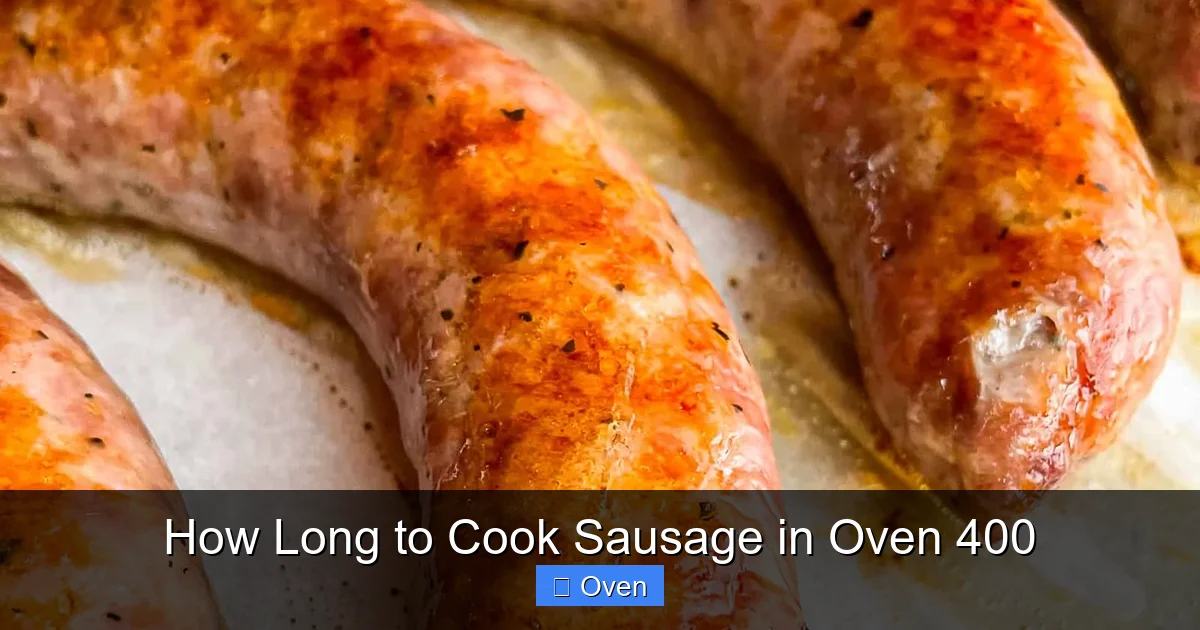
Mastering how long to cook sausage in oven 400 ensures juicy, perfectly cooked results every single time. Forget guesswork – this guide reveals exact timing based on sausage type, thickness, and your oven’s quirks, emphasizing internal temperature as the true doneness indicator. Stop dry, undercooked, or burnt sausages for good with these proven oven techniques.
Key Takeaways
- Internal Temperature is King: Always use a meat thermometer. 160°F (71°C) for pork/beef, 165°F (74°C) for poultry, is the safe, reliable endpoint – not time alone.
- Type & Thickness Dictate Time: Thin breakfast links cook in 12-15 mins, standard Italian/pork sausages need 18-22 mins, while thick bratwursts or chorizo can take 25-30 mins at 400°F.
- Prep is Crucial for Crispness: Pat sausages dry, space them on a rack over a tray (not directly on foil/pan), and consider a light oil spray for optimal browning and even cooking.
- Resting is Non-Negotiable: Let sausages rest for 5 minutes after the oven. This allows juices to redistribute, preventing a dry, disappointing bite when you cut in.
- Oven Hotspots Matter: Rotate the tray halfway through cooking and know your oven’s quirks. A reliable thermometer is your best friend for accuracy.
- 400°F is the Sweet Spot: This temperature crisps the casing beautifully without burning before the interior cooks through, unlike higher heats.
- Never Skip the Thermometer: Relying solely on time or color leads to inconsistent results. Invest in an instant-read thermometer – it’s essential for perfect sausage.
Quick Answers to Common Questions
Can I cook sausage directly on the baking sheet instead of a rack?
You can, but it’s not ideal. Cooking directly on the sheet traps rendered fat and juices underneath, steaming the sausages instead of roasting them. This leads to soggy, less crispy casings and potentially uneven cooking. A wire rack is highly recommended for the best texture.
Why are my sausages gray inside even though they’re cooked?
A slight gray or pink tinge in cooked pork, beef, or lamb sausage (at 160°F) is often normal! It’s usually due to the curing process (like in some chorizo or smoked sausages) or the presence of myoglobin, not undercooking. As long as the internal temperature is correct, it’s safe to eat. Poultry *must* be uniformly white/cooked through at 165°F.
Can I use aluminum foil on the pan under the rack?
Yes, but poke several holes in the foil first! This allows rendered fat to drip down into the pan below, preventing a soggy bottom on your rack and ensuring good airflow. Without holes, the foil can trap moisture and steam the sausages.
How do I know if my oven temperature is accurate?
Use an oven thermometer! Place it in the center of your oven rack and preheat. Compare the reading to your oven’s dial. Most home ovens are off by 25°F or more. Knowing your oven’s true temperature is crucial for accurate timing when figuring out how long to cook sausage in oven 400.
Can I bake frozen sausage?
It’s not recommended for best results. Frozen sausages take significantly longer to cook through, and the exterior can overcook or dry out before the center thaws and cooks. For safety and quality, thaw sausages in the refrigerator overnight before baking. If you must cook from frozen, add 50-100% more time and monitor the internal temperature very carefully.
📑 Table of Contents
- Why Oven 400 is Your Sausage’s Best Friend (and Why Timing is Everything)
- The Golden Rule: Internal Temperature Trumps Cooking Time
- Prepping for Perfection: Setting Up Your Oven & Sausages
- Cooking Times Demystified: It’s All About the Sausage
- Achieving Crispiness & Avoiding Common Pitfalls
- The Critical Resting Phase: Don’t Skip This Step!
- Troubleshooting & Pro Tips for Oven 400 Sausage Mastery
- Conclusion: Your Foolproof Path to Perfect Oven-Baked Sausage
Why Oven 400 is Your Sausage’s Best Friend (and Why Timing is Everything)
Let’s be honest: sausage is delicious. Whether it’s a hearty breakfast link, a spicy Italian, a smoky chorizo, or a juicy bratwurst, it’s a crowd-pleaser. But achieving that perfect balance – a crisp, golden-brown casing giving way to tender, juicy, fully cooked meat – can feel like a culinary gamble. You’ve probably been there: pulling sausages out too soon, only to find them pale and raw inside. Or leaving them in too long, resulting in dry, tough, or even burnt links that nobody wants to eat. The frustration is real. The good news? Your oven, set to a reliable 400°F (200°C), is actually one of the *best* tools for consistently perfect sausage. It provides even, ambient heat that cooks the sausage gently from all sides, minimizing the risk of the casing splitting or the exterior burning before the interior is done. But the million-dollar question remains: **how long to cook sausage in oven 400**? The answer isn’t a single magic number. It’s a combination of understanding your sausage, mastering your oven, and using the right tools. This guide cuts through the confusion, giving you the precise knowledge and practical steps to bake sausage perfection every single time. Forget guesswork; let’s get scientific (in the best, most delicious way possible).
The beauty of oven-baking sausage at 400°F lies in its simplicity and reliability. Unlike grilling, where flare-ups can char the outside instantly, or stovetop cooking, which requires constant attention and can lead to uneven results, the oven offers a controlled environment. The hot air circulates, gently rendering the fat and cooking the meat evenly. This method is also incredibly hands-off once the sausages are in the oven – perfect for when you’re juggling other parts of a meal. However, this simplicity hinges entirely on knowing **how long to cook sausage in oven 400** for *your specific sausages*. A tiny breakfast patty cooks vastly differently than a thick, stuffed Italian sausage. Relying on a generic “20 minutes” rule is a recipe for disappointment. The key to unlocking consistent success is understanding the factors that influence cooking time and, most importantly, learning to trust your thermometer over the clock. Let’s dive into the details that make all the difference.
The Golden Rule: Internal Temperature Trumps Cooking Time
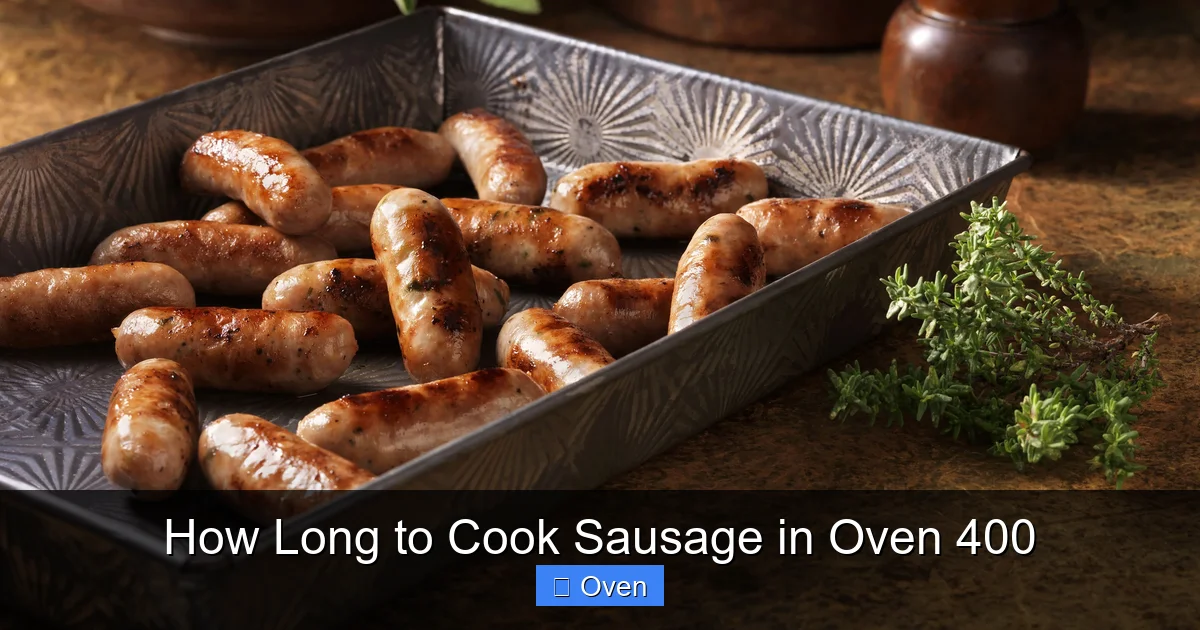
Visual guide about How Long to Cook Sausage in Oven 400
Image source: cdn.mos.cms.futurecdn.net
Here’s the absolute, non-negotiable truth you need to internalize: **Time is a guide, but internal temperature is the definitive indicator of doneness.** This is the single biggest mistake home cooks make when figuring out **how long to cook sausage in oven 400**. Sausages come in countless varieties – different meats (pork, beef, chicken, turkey, lamb), different fat contents, different thicknesses, different casings (natural, collagen, skinless), and even different starting temperatures (refrigerated vs. slightly warmer). A sausage that’s been sitting out for 30 minutes will cook faster than one straight from the fridge. A thin breakfast link is worlds apart from a thick, stuffed bratwurst. Your oven might have hot spots. All these variables mean that a fixed time simply cannot guarantee perfect results every time.
So, what *is* the magic number? It depends entirely on the type of meat:
* **Pork, Beef, Veal, Lamb Sausages (Italian, Bratwurst, Breakfast Links, Chorizo, etc.):** The safe internal temperature is **160°F (71°C)**. At this point, harmful bacteria are destroyed, and the sausage is juicy and tender. Don’t fear a slight pink tinge in the center for these types – it’s often just from the curing process or myoglobin and doesn’t indicate rawness once 160°F is reached.
* **Poultry Sausages (Chicken, Turkey):** These require a higher internal temperature of **165°F (74°C)** to ensure safety, as poultry carries different risks. Always hit this mark.
* **Pre-Cooked Sausages (Some Smoked or Fully Cooked Varieties):** Check the package! These often only need reheating to an internal temperature of **140°F (60°C)** or until heated through and crispy. Cooking them to 160°F+ will dry them out.
**Why a Thermometer is Your Essential Tool:** An instant-read meat thermometer (like a Thermapen or similar) is inexpensive and transforms your sausage game. Insert the probe into the thickest part of the sausage, avoiding the casing or bone if present. Wait for the reading to stabilize. This takes the guesswork out completely. You might pull a sausage out at 15 minutes because it hit 160°F, while another identical-looking one might need 22 minutes. Trust the thermometer, not the clock or the color (sausage can brown beautifully while still undercooked inside). This is the cornerstone of mastering **how long to cook sausage in oven 400**.
Prepping for Perfection: Setting Up Your Oven & Sausages
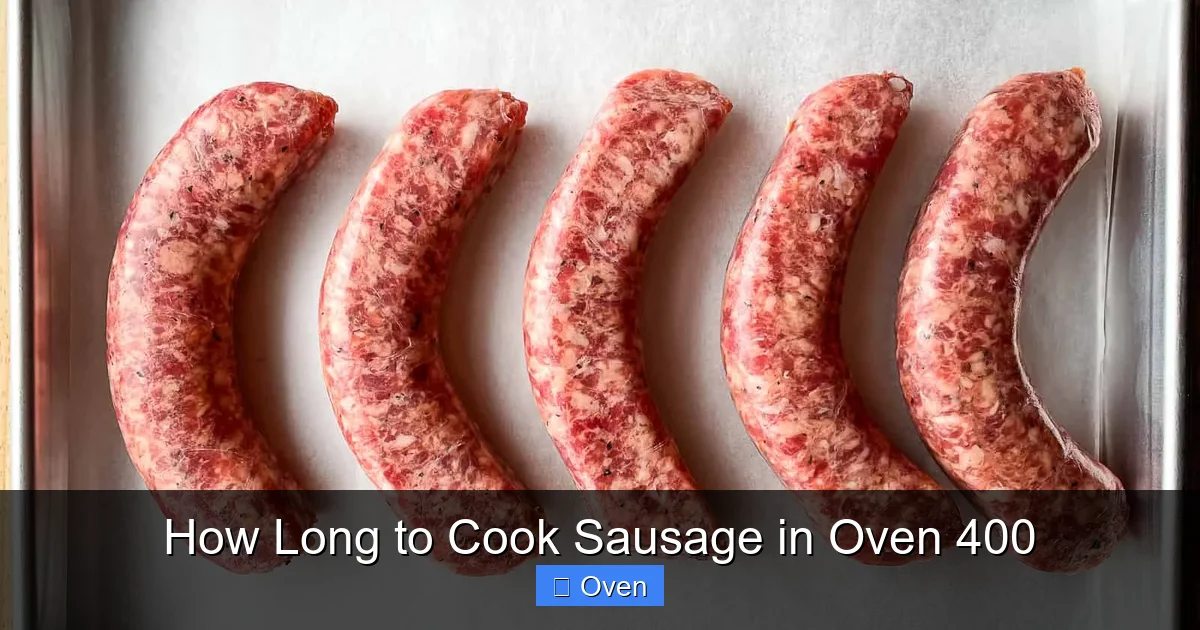
Visual guide about How Long to Cook Sausage in Oven 400
Image source: cookfasteatwell.com
You wouldn’t start a road trip without checking the map, right? Similarly, proper prep is critical for achieving the best results when figuring out **how long to cook sausage in oven 400**. Skipping these steps can lead to uneven cooking, soggy casings, or longer cook times than necessary. It’s the foundation for success.
Preheat is Non-Negotiable
This seems basic, but it’s often rushed. Always preheat your oven fully to 400°F (200°C) *before* you put the sausages in. Putting sausages into a cold or warming oven drastically increases the total cooking time and can cause the casing to split as the meat expands rapidly in uneven heat. A properly preheated oven ensures immediate, consistent cooking from the moment the sausages hit the rack. Give it at least 15-20 minutes to stabilize.
The Right Pan & Rack Setup
How you arrange the sausages on the tray makes a huge difference in texture and cooking speed:
* **Use a Rack:** This is the single best tip for crispy, evenly cooked sausage. Place a wire cooling rack (like a baker’s rack) inside a standard rimmed baking sheet (half-sheet pan). The rack elevates the sausages, allowing hot air to circulate *all* the way around them. This prevents the bottom from steaming in its own juices (which leads to sogginess) and ensures even browning and cooking. If you don’t have a rack, you *can* cook them directly on the pan, but the bottom will be less crisp, and you’ll need to flip them more carefully and potentially more often.
* **Avoid Crowding:** Give each sausage plenty of space! Arrange them in a single layer with at least 1 inch (2.5 cm) between each one. Crowding traps steam, which steams the sausages instead of roasting them, resulting in boiled-tasting, pale, and soggy links. It also significantly increases cooking time as the oven struggles to maintain temperature. If you have many sausages, use two pans or cook in batches.
* **Pan Choice:** A light-colored aluminum or stainless steel baking sheet works best. Dark pans absorb more heat and can cause the bottom to brown too quickly. Avoid glass pans as they heat slower and can lead to uneven cooking.
* **Optional: Light Oil Spray:** For extra crispness, especially on skinless sausages or if you prefer a deeper golden color, lightly spray the sausages with a high-smoke-point oil (avocado, canola, grapeseed) *after* patting them dry. Don’t drench them – a light mist is plenty.
Sausage Prep: The Drying Step
Before placing them on the rack, **pat the sausages thoroughly dry with paper towels**. Moisture on the surface is the enemy of browning. When the sausage hits the hot rack, that water turns to steam, cooling the surface and preventing the Maillard reaction (the chemical process that creates delicious browning and flavor). A dry surface ensures immediate, beautiful searing and crispness. This simple step can shave minutes off your total **how long to cook sausage in oven 400** time and dramatically improve texture.
Cooking Times Demystified: It’s All About the Sausage
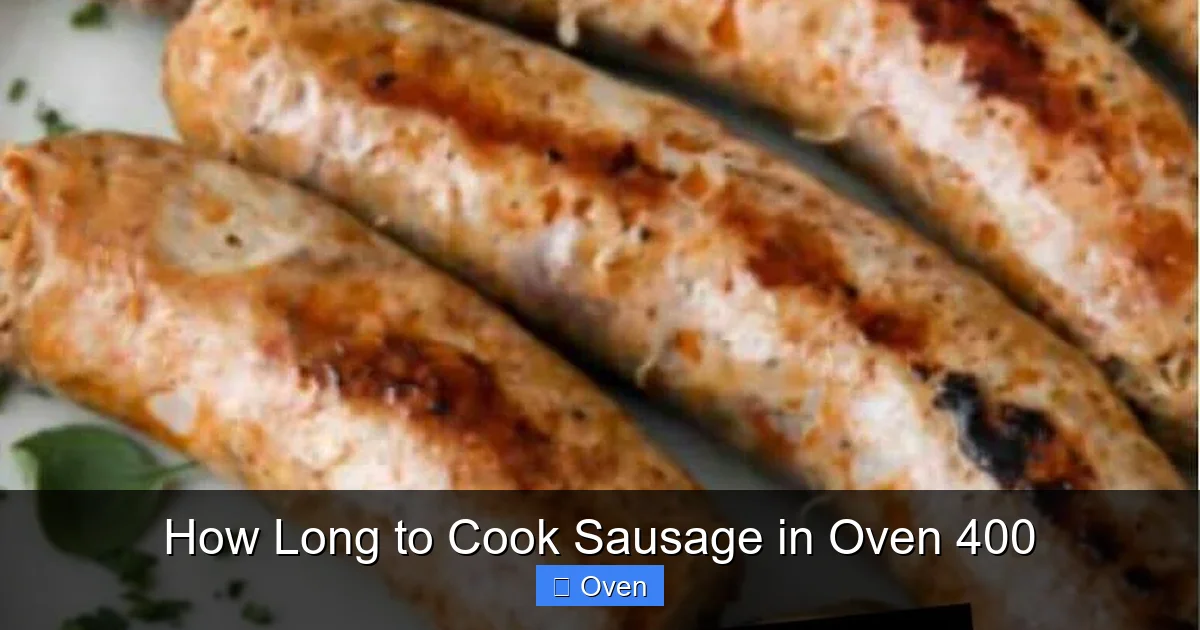
Visual guide about How Long to Cook Sausage in Oven 400
Image source: howtocookguides.com
Now we get to the heart of the matter: **how long to cook sausage in oven 400**. As emphasized, there’s no universal time. However, understanding the typical ranges based on common sausage types provides an excellent starting point. Remember, these are *estimates* for sausages starting from refrigerator temperature (around 40°F / 4°C). Always use your thermometer to confirm doneness!
Thin Breakfast Sausages (Links or Patties)
* **Typical Size:** 1/4 to 1/2 inch thick, 2-3 inches long (links) or 3-4 inches diameter (patties).
* **Estimated Time:** **12-15 minutes.**
* **Why:** Their small size means heat penetrates quickly. They cook very fast at 400°F. Watch them closely after the 10-minute mark. Overcooking leads to dryness instantly. Pork breakfast links usually hit 160°F within this timeframe. *Tip: If making patties, press a slight dimple in the center with your thumb before baking to prevent them from bulging.*
Standard Italian Sausages (Sweet or Hot) / Pork Sausages
* **Typical Size:** About 1 inch in diameter, 5-6 inches long.
* **Estimated Time:** **18-22 minutes.**
* **Why:** This is the most common category people ask about for **how long to cook sausage in oven 400**. The moderate thickness requires enough time for the center to reach 160°F without burning the casing. Natural casings crisp up beautifully at this temp. *Tip: If you like them extra crispy, you can broil for the last 1-2 minutes, but watch like a hawk to prevent burning.*
Bratwursts, Kielbasa, or Thick Chorizo
* **Typical Size:** 1.25 to 1.5 inches in diameter, 6-8 inches long.
* **Estimated Time:** **22-30 minutes.**
* **Why:** Their significant thickness means the heat takes longer to travel to the center. Rushing this leads to a burnt exterior and raw interior. Be patient; let the oven do its work. Thick chorizo, with its high fat content, might render more fat, so ensure your rack is over a pan to catch drips (prevents smoke and flare-ups). *Tip: For very thick sausages (over 1.5 inches), consider starting at 375°F for 15 minutes, then increasing to 400°F for the last 10-15 minutes to ensure even cooking without excessive browning.*
Chicken or Turkey Sausages
* **Typical Size:** Varies, but often similar to Italian sausages (1 inch diameter).
* **Estimated Time:** **20-25 minutes.**
* **Why:** While often similar in size to pork Italian sausages, poultry requires a higher internal temperature (165°F). They also tend to be leaner, making them slightly more prone to drying out if overcooked. The extra few minutes ensure safety without sacrificing too much moisture. *Tip: Brushing with a little olive oil or broth halfway through can help keep lean poultry sausages moist.*
Pre-Cooked Sausages (Smoked, Fully Cooked)
* **Typical Size:** Varies widely (smoked sausages, hot dogs, some kielbasa).
* **Estimated Time:** **10-15 minutes.**
* **Why:** These only need reheating and crisping. Cooking them too long dries them out significantly. The goal is an internal temperature of 140°F (60°C) or simply heated through with a nice brown color. *Crucial: Always check the package instructions!* Some may specify shorter times.
Factors That Can Shorten or Lengthen Time
* **Starting Temperature:** Sausages left at room temp for 20-30 minutes (still safe!) will cook 3-5 minutes faster than straight-from-fridge ones.
* **Oven Accuracy:** Use an oven thermometer! Many home ovens are off by 25°F or more. If yours runs hot, reduce time slightly; if cold, add a few minutes.
* **Oven Load:** Cooking multiple trays? The lower rack might cook slower. Rotate trays halfway.
* **Sausage Fat Content:** Higher fat (like chorizo) renders more, potentially speeding up cooking slightly but requiring a drip pan.
* **Casing Type:** Natural casings crisp faster than collagen or skinless. Skinless sausages might need the light oil spray mentioned earlier.
Achieving Crispiness & Avoiding Common Pitfalls
The dream outcome for oven-baked sausage is a casing that shatters delicately with your fork or bite, revealing succulent, flavorful meat inside. Achieving this crispness consistently is a common challenge when determining **how long to cook sausage in oven 400**. It’s also where many pitfalls occur. Let’s tackle how to get that perfect snap and avoid the usual mistakes.
The Crispness Secret: Dry Heat & Airflow
As mentioned in the prep section, the rack is paramount. Steaming is the enemy of crispness. When sausages sit directly in their rendered fat and juices on the pan bottom, they poach rather than roast. The wire rack solves this by allowing the rendered fat to drip away and hot air to circulate underneath. This dry heat is essential for the casing to dehydrate and crisp up properly. If you *must* cook without a rack (though highly discouraged), pour off any accumulated fat halfway through cooking and carefully flip the sausages to ensure the bottom gets direct heat.
Flipping: Yes, But Do It Right
Flipping sausages halfway through the estimated cooking time promotes even browning and cooking. However, do it gently! Use tongs, not a fork, which can pierce the casing and let precious juices escape, leading to dryness. Flip them carefully onto a clean part of the rack. If using a rack, you might only need one flip. If cooking directly on the pan, you might need to flip twice for even results. The goal is even color and cooking, not necessarily frequent flipping.
Broiling: A Double-Edged Sword
Want that extra-deep golden brown or char? Broiling for the last 1-2 minutes *can* work, but it’s risky. Broilers provide intense, direct top heat that can burn the casing incredibly fast while the interior is still undercooked. **Only broil if:** 1) Your sausages are *very close* to the target internal temperature (within 5-10°F), 2) You are standing right there watching every second, and 3) Your oven broiler is reliable (some are very uneven). It’s often safer to rely on the 400°F roast for even browning. If you do broil, move the rack to the top position and keep the oven door slightly ajar to prevent excessive heat buildup.
Common Pitfalls & How to Avoid Them
* **Soggy, Pale Sausages:** Caused by overcrowding, no rack (steaming), or insufficient preheating. *Fix:* Use a rack, don’t crowd, preheat properly, pat sausages dry.
* **Burnt Casing, Raw Inside:** Usually from oven temperature too high (above 400°F) or starting with a very cold sausage in a hot oven causing rapid exterior cooking. *Fix:* Stick to 400°F, ensure oven is fully preheated, let sausages sit at room temp for 20 mins before baking, **USE A THERMOMETER**.
* **Split Casings:** Often from rapid temperature change (cold sausage in hot oven) or piercing with a fork. *Fix:* Let sausages sit at room temp 20 mins before baking, handle gently with tongs only.
* **Dry, Tough Sausages:** Overcooking is the main culprit, especially with leaner meats like poultry. *Fix:* **STOP COOKING AT THE CORRECT INTERNAL TEMPERATURE (160°F/165°F)**, not when the timer goes off. Resting is also crucial (see next section).
* **Uneven Cooking:** Oven hot spots or not rotating the pan. *Fix:* Rotate the baking sheet 180 degrees halfway through the estimated cooking time. Know your oven’s quirks.
The Critical Resting Phase: Don’t Skip This Step!
You’ve done the hard work. The sausages are out of the oven, beautifully browned, and your thermometer reads that magic 160°F or 165°F. Your instinct might be to grab them immediately and dive in. **STOP!** This is where many people ruin perfectly cooked sausage. Resting is not optional; it’s a vital part of the **how long to cook sausage in oven 400** process that ensures juicy results.
Why Resting Matters
During the intense heat of the oven, the juices within the sausage are driven towards the center by the heat. When you remove the sausage from the oven, the internal temperature continues to rise slightly (carryover cooking) – usually by 5-10°F – as the residual heat redistributes. More importantly, if you cut into the sausage immediately, all those precious juices that have migrated to the center will gush out onto your cutting board or plate, leaving the meat dry and disappointing. Resting allows the juices to slowly redistribute and reabsorb back into the muscle fibers throughout the entire sausage. Think of it like letting a steak rest – the same principle applies perfectly to sausage.
How Long to Rest
For most oven-baked sausages at 400°F, **5 minutes** is the sweet spot. This is usually enough time for the juices to settle without the sausage cooling down so much that it loses its appealing warmth. You can tent them very loosely with foil if you’re worried about them getting cold, but don’t wrap them tightly, as this can trap steam and make the casing soggy. Place them on a clean plate or cutting board during this time. After 5 minutes, they’ll be perfectly warm, juicy, and ready to slice or serve whole. This short rest makes a *huge* difference in the final texture and moisture level – it’s the final touch for sausage perfection.
Troubleshooting & Pro Tips for Oven 400 Sausage Mastery
Even with the best intentions, things can occasionally go sideways when figuring out **how long to cook sausage in oven 400**. Here’s how to handle common issues and some pro tips to elevate your sausage game consistently.
My Sausages Are Still Undercooked After the Estimated Time!
* **Don’t Panic!** This happens, especially with thicker sausages or if your oven runs cool.
* **Action:** Return them to the oven immediately. Check the internal temperature every 2-3 minutes. They will continue cooking. It’s far better to add a few extra minutes than to serve undercooked sausage. Remember, carryover cooking will add a few degrees after removal.
My Sausages Are Browning Too Fast But Aren’t Done Inside!
* **Cause:** Oven might be running hot, or sausages were very cold, causing rapid exterior cooking.
* **Action:** Loosely tent the *top* of the sausages with a piece of aluminum foil. This will shield the top from direct radiant heat, allowing the interior more time to catch up without the exterior burning. Continue cooking and monitor internal temperature.
Can I Cook Different Types of Sausage Together?
* **Yes, but with caution.** The main issue is differing cooking times and internal temp requirements (poultry needs 165°F, pork/beef 160°F).
* **Strategy:** Group similar types together if possible (all pork Italian, all chicken). If mixing, put the thicker/longer-cooking ones (like brats) on one side of the rack and thinner ones (breakfast links) on the other. Start checking the thinner ones earlier. **Crucially, cook poultry sausages to 165°F regardless of what else is on the tray.** Don’t let the pork sausages hit 160°F and pull the whole tray if the chicken isn’t done yet.
Pro Tips for Next-Level Sausage
* **Marinate for Flavor (Optional but great):** For extra flavor, especially with leaner sausages, marinate them for 30 mins to 2 hours in the fridge before baking. Use olive oil, garlic, herbs, mustard, or a splash of vinegar/wine. Pat *very* dry before baking!
* **Add Flavor to the Pan:** Place sliced onions, bell peppers, or apple chunks on the bottom of the pan (under the rack). They’ll caramelize in the rendered fat, creating a delicious base for the sausages and amazing roasted veggies to serve alongside.
* **Baste for Moisture (Poultry/Lean Meats):** Halfway through cooking, brush chicken or turkey sausages with a little broth, apple cider, or melted butter mixed with herbs to keep them moist.
* **Know Your Oven’s Hot Spots:** After a few bakes, you’ll learn where the hottest and coolest spots are in your oven. Position sausages accordingly, or rotate the pan more frequently if needed.
* **Batch Cooking? Cool & Store:** Bake a big batch, let cool completely, then store in an airtight container in the fridge for 3-4 days. Reheat gently in a skillet with a splash of water or broth to revive moisture, or in a 300°F oven until warmed through. Perfect for quick future meals!
Conclusion: Your Foolproof Path to Perfect Oven-Baked Sausage
Mastering **how long to cook sausage in oven 400** isn’t about memorizing a single number; it’s about understanding the principles that lead to consistent, delicious results. You now hold the keys: the non-negotiable importance of internal temperature (160°F for pork/beef, 165°F for poultry), the critical role of proper prep (preheating, using a rack, patting dry), the influence of sausage type and thickness on timing, and the essential resting phase. Ditch the guesswork and the unreliable “poke test.” Invest in a good instant-read thermometer – it’s the single most valuable tool for sausage success, transforming uncertainty into confidence.
Remember, 400°F is the ideal sweet spot. It provides enough heat to render fat, crisp the casing beautifully, and cook the interior evenly without the risk of burning that higher temperatures bring. By following the estimated time ranges as a starting point (12-15 mins for thin links, 18-22 mins for standard Italian, 22-30 mins for thick brats), adjusting for your specific sausages and oven, and *always* verifying with that thermometer, you’ll consistently achieve sausage that’s juicy on the inside, perfectly crisp on the outside, and cooked to a safe, delicious perfection. The extra 5 minutes of resting might feel like an eternity when you’re hungry, but it’s the final step that guarantees those juices stay where they belong – in your sausage, not on your plate. So, preheat that oven, grab your thermometer, and get ready to bake sausage that will make everyone ask for seconds. Your oven is your secret weapon for sausage mastery – now go wield it!
Frequently Asked Questions
What is the absolute minimum time to cook sausage in a 400°F oven?
The absolute minimum time is around 12 minutes, but this only applies to very thin breakfast links or patties. For any standard or thicker sausage, 12 minutes is almost always insufficient to reach the safe internal temperature. Always prioritize the thermometer reading over the timer.
Can I cook sausage at a lower temperature for longer?
Yes, you can bake sausage at 350°F (175°C) for a longer time (typically 25-35 minutes for standard sausages). This method is gentler and less likely to split casings, but it won’t produce the same level of crispness on the exterior as 400°F. If crispness is your goal, 400°F is superior.
How do I prevent sausage casings from splitting in the oven?
Prevent splitting by ensuring your oven is fully preheated, letting sausages sit at room temperature for 20-30 minutes before baking (reduces thermal shock), handling them gently with tongs (never pierce with a fork), and avoiding overcrowding the pan which causes steam buildup.
Is it safe to eat sausage that’s slightly pink in the middle?
For pork, beef, veal, and lamb sausages, yes, as long as the internal temperature has reached 160°F (71°C). The pink color is often from curing agents or myoglobin and doesn’t indicate rawness at this temp. For poultry sausages (chicken, turkey), there should be no pinkness, and they must reach 165°F (74°C).
Can I use an air fryer instead of the oven for sausage?
Absolutely! Air fryers cook sausage very well at 400°F. Times are generally shorter – start checking thin sausages at 8-10 minutes and standard ones at 12-15 minutes. Always use the internal temperature (160°F/165°F) as your guide, as air fryer performance varies. Shake the basket or flip sausages halfway.
How should I store leftover baked sausage?
Cool baked sausage completely within 2 hours, then store in an airtight container in the refrigerator for up to 3-4 days. Reheat gently in a skillet with a splash of water or broth over medium-low heat, or in a 300°F oven until warmed through, to retain moisture. Avoid microwaving if possible, as it can make the casing tough.