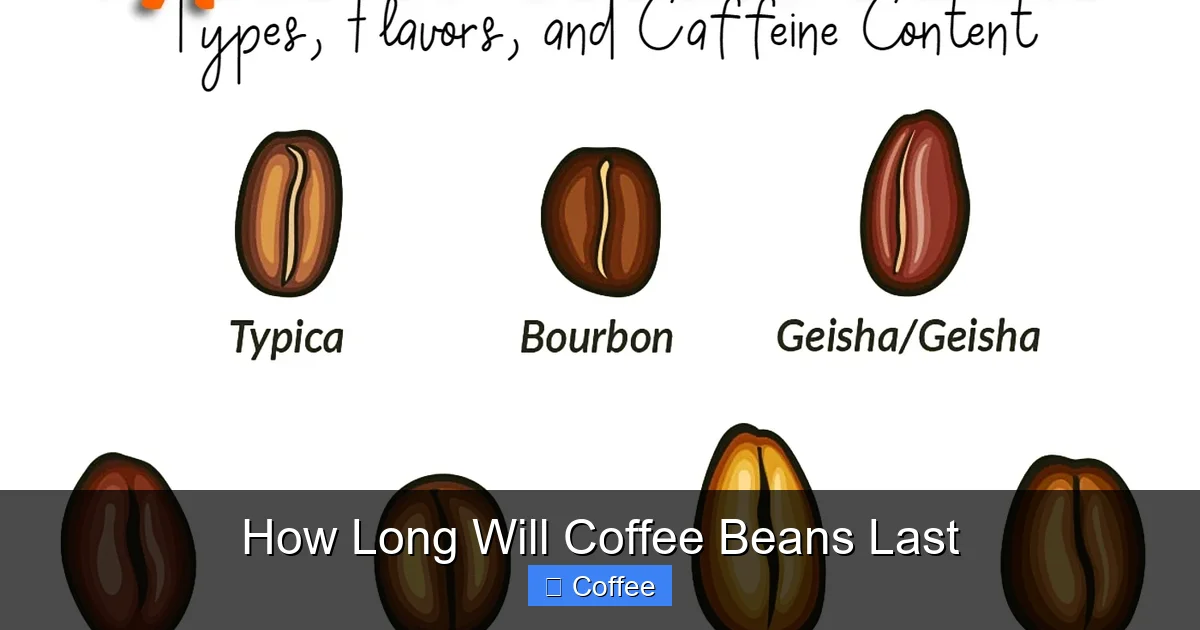
How long coffee beans last depends heavily on storage and roast date, not just expiration labels. Freshly roasted beans peak within 2-4 weeks but can stay drinkable for months with proper care. Avoid common mistakes like fridge storage to preserve that perfect cup.
Key Takeaways
- Roast date is king: Always check the roast date, not the “best by” date. Beans are freshest 2-4 weeks post-roast.
- Storage is critical: Keep beans in an airtight container, away from light, heat, and moisture. Oxygen is the enemy.
- Freezer extends life: For long-term storage (3-6 months), freeze beans in small, airtight portions to lock in flavor.
- Stale ≠ spoiled: Old beans won’t make you sick but taste flat. Look for loss of aroma, oily surface, or sour/bitter notes.
- Buy small batches: Purchase only what you’ll use in 2-3 weeks for peak flavor. Freshness fades fast after grinding.
- Avoid the fridge: Moisture and odors in refrigerators accelerate staling. Countertop storage is better for short-term.
Quick Answers to Common Questions
Can I use coffee beans after the expiration date?
Yes, but with caveats. Expiration dates often refer to peak quality, not safety. Beans stored properly may taste stale but won’t harm you. Always check for mold, off smells, or rancidity first.
Why do my beans taste bitter after a few weeks?
Bitterness usually signals advanced staling. Oxygen has oxidized the coffee oils, breaking down pleasant flavors into harsh compounds. This worsens with heat, light, or poor storage.
Is it safe to store coffee beans in the freezer?
Absolutely—if done right. Portion beans, use airtight freezer bags, and thaw in the fridge to avoid condensation. Never refreeze thawed beans.
How can I tell if coffee beans are still fresh?
Smell them! Crush a bean and inhale. Fresh beans have a strong, pleasant aroma (nutty, fruity, etc.). Weak, sour, or rancid smells mean they’re past prime.
Do light roasts last longer than dark roasts?
Generally, yes. Light roasts have denser cellular structure and higher acidity, which slows oxidation. Dark roasts develop more oils during roasting, making them slightly more perishable.
📑 Table of Contents
- Why Your Coffee Beans Don’t Last Forever (And What Really Happens)
- The Roast Date: Your Most Important Clue (Ignore “Best By” at Your Peril)
- Storage Secrets: How to Make Your Beans Last Longer
- Signs Your Beans Have Gone Stale (It’s Not Just About Time)
- How Long Will Coffee Beans Last? Real Timelines by Storage Method
- What to Do With Older Beans (Don’t Toss Them Yet!)
- Conclusion: Freshness Is a Habit, Not a Miracle
Why Your Coffee Beans Don’t Last Forever (And What Really Happens)
Let’s be real: that bag of coffee beans you bought three months ago? It’s probably not tasting like it did on day one. Coffee beans aren’t like canned goods or dried pasta—they’re alive with volatile compounds that fade over time. The moment coffee is roasted, a clock starts ticking. Oxygen, light, heat, and moisture begin breaking down those precious flavor molecules that give your brew its magic. Think of it like sliced apples turning brown—except instead of oxidation making your coffee unsafe, it just makes it… meh.
Many people assume “expiration dates” on coffee bags are the gospel truth. But here’s the kicker: those dates often refer to *peak quality*, not safety. Coffee beans won’t grow mold or make you sick if they’re a bit old (unless they’re visibly moldy, which is rare with proper storage). The real tragedy? Wasting money on stale beans that taste like cardboard. Understanding *why* beans degrade helps you fight back. It’s not about chasing forever-fresh coffee—it’s about knowing how long you realistically have to enjoy that vibrant, complex flavor before it flatlines.
The Roast Date: Your Most Important Clue (Ignore “Best By” at Your Peril)
Forget the “best by” date stamped on the bag. That’s often a conservative estimate set by manufacturers for liability reasons. The real freshness countdown starts with the roast date. This is the golden ticket to knowing how long your coffee beans will last. Reputable roasters always include it—usually near the top or bottom of the bag. If you can’t find it? Walk away. That’s a red flag.
Visual guide about How Long Will Coffee Beans Last
Image source: tankcoffee.com
Why Roast Date Beats Expiration Date
Here’s the science simplified: During roasting, coffee beans develop CO2 and aromatic compounds. Right after roasting, they’re bubbling with gas (that’s why fresh beans degas). This peak freshness window is incredibly short—often just 24-72 hours for espresso, slightly longer for filter coffee. As days pass, CO2 escapes, and oxygen sneaks in, oxidizing those delicate flavors. An expiration date might say “6 months,” but if the beans were roasted 5 months ago? You’re already in the flavor desert. Always prioritize roast date over any other label.
How Long After Roasting Is Coffee Truly “Fresh”?
This is where opinions vary, but here’s the sweet spot based on industry standards and home brewer experience:
- Peak Flavor (2-4 weeks post-roast): This is the magic zone. Beans have degassed enough to brew evenly but still burst with origin characteristics—fruity, floral, chocolatey notes shine. Light roasts often peak closer to 2 weeks; darker roasts might hit stride at 3-4 weeks.
- Good Flavor (4-8 weeks post-roast): Still enjoyable, but complexity fades. You might notice muted acidity or a slight “flatness.” Great for milk-based drinks where boldness matters more than nuance.
- Stale (8+ weeks post-roast): Flavor is dull, often with papery or woody notes. Acidity turns sour or bitter. At this stage, it’s usable but not exciting—better for cold brew or baking than your morning pour-over.
Remember: These timelines assume proper storage. Leave beans in their original bag (which often has a one-way valve) on a sunny counter? You’ll be in the “stale” zone by week 3.
Storage Secrets: How to Make Your Beans Last Longer
You can’t stop time, but you can slow down coffee’s aging process dramatically with smart storage. It’s not complicated—just counterintuitive for many. That beautiful glass jar on your counter? It’s probably speeding up staleness. Let’s fix that.
Visual guide about How Long Will Coffee Beans Last
Image source: coffee-prices.com
The Golden Rules of Coffee Bean Storage
Four enemies attack your beans: oxygen, light, heat, and moisture. Your goal? Isolate them from all four.
- Airtight is non-negotiable: Oxygen is the #1 flavor killer. Use containers with rubber gaskets (like CoffeeVac or Fellow Atmos) or heavy-duty freezer bags with most air squeezed out. Original bags with valves are okay for 1-2 weeks if resealed tightly.
- Darkness matters: UV light degrades coffee oils. Store containers in a cupboard—not on a sunny windowsill. Opaque containers are ideal; if using glass, keep it in a dark spot.
- Cool beats cold: Heat accelerates oxidation. Room temperature (68-72°F / 20-22°C) is perfect. Avoid storing near ovens, dishwashers, or in garages where temps swing wildly.
- Dry is essential: Moisture invites mold and stales beans fast. Never store beans in the fridge—it’s humid and full of food odors that beans absorb.
What About the Freezer? (Spoiler: Yes, It Works!)
For beans you won’t use in 3-4 weeks, freezing is your best friend. But do it wrong, and you’ll ruin them. Here’s the right way:
- Portion before freezing: Divide beans into 1-2 week servings. Once thawed, never refreeze—condensation from temperature changes destroys flavor.
- Use airtight, moisture-proof bags: Heavy-duty freezer bags (like Ziploc Freezer) or vacuum-sealed bags are ideal. Squeeze out all air before sealing.
- Thaw properly: Move frozen portions to the fridge 12-24 hours before use. This prevents condensation from forming on the beans as they warm up.
Pro Tip: Label bags with roast date and portion size. Frozen beans can last 3-6 months with minimal flavor loss—far longer than countertop storage.
Signs Your Beans Have Gone Stale (It’s Not Just About Time)
Time is a factor, but storage conditions play a bigger role in how long coffee beans last. Sometimes beans seem “old” after just 2 weeks because they were stored poorly. Learn to spot staleness beyond the calendar:
Visual guide about How Long Will Coffee Beans Last
Image source: chowhound.com
The Smell Test: Your Nose Knows Best
Fresh coffee beans smell intensely aromatic—think toasted nuts, citrus, or berries depending on the roast. Crush a bean between your fingers and inhale deeply. If it smells:
- Weak or “flat”: Like old paper or cardboard? Stale.
- Sour or vinegary: Could indicate improper storage (too humid) or very old beans.
- Rancid or paint-like: Oils have oxidized badly—toss these.
If the aroma is faint or unpleasant, your brew will be too.
Visual Clues: Look Before You Brew
Fresh beans have a matte finish. As they age:
- Excessive oiliness: Dark roasts naturally have oils, but if light/medium roasts look shiny or feel greasy, oxidation is advanced.
- Color changes: Beans turning significantly lighter (like faded wood) or darker than their original roast level signal staling.
- Mold (rare but serious): White or green fuzzy spots mean discard immediately—don’t risk your health.
The Taste Test: When All Else Fails
Brew a small cup. Stale coffee often tastes:
- Flat or lifeless: Missing the bright acidity or sweetness you expect.
- Bitter or ashy: Over-extraction due to degraded structure.
- Sour (not fruity): Like unripe fruit—a sign of advanced staling.
If it doesn’t taste vibrant, it’s past its prime—even if it’s “technically” safe.
How Long Will Coffee Beans Last? Real Timelines by Storage Method
Now for the million-dollar question: “How long will coffee beans last?” The answer depends entirely on how you store them. Here’s a realistic breakdown:
Countertop (Airtight Container, Cool/Dark Cupboard)
- Peak Flavor: 2-4 weeks post-roast
- Good Flavor: 4-8 weeks post-roast
- Useable but Stale: 8-12 weeks post-roast
This is the sweet spot for most home brewers. Buy beans you’ll use within 3-4 weeks, store them properly, and you’ll never taste stale coffee.
Original Bag (With Valve, Resealed Tightly)
- Peak Flavor: 1-2 weeks post-roast
- Good Flavor: 2-4 weeks post-roast
- Stale: 4+ weeks post-roast
Valves let CO2 out but don’t keep oxygen out long-term. Only ideal for very short-term storage.
Refrigerator (Airtight Container)
- Peak Flavor: 1-2 weeks post-roast
- Good Flavor: 2-3 weeks post-roast
- Stale: 3+ weeks post-roast
Avoid this! Fridge humidity and odors seep in, accelerating staling. The cold also causes condensation when beans warm up, ruining texture.
Freezer (Portioned, Airtight, Thawed Properly)
- Peak Flavor: 1-2 months post-freezing
- Good Flavor: 2-4 months post-freezing
- Useable: 4-6 months post-freezing
Freezing pauses the clock. Beans frozen at 1 week post-roast will taste fresher after 3 months than beans stored on the counter for 3 weeks.
What to Do With Older Beans (Don’t Toss Them Yet!)
Just because beans are past peak doesn’t mean they’re trash. Repurpose them to avoid waste:
Cold Brew: The Stale Bean Savior
Cold brew’s long, slow extraction (12-24 hours) mellows stale beans’ harsh notes. Their papery flavor blends into the smooth, low-acidity brew. Use a 1:8 coffee-to-water ratio—stale beans need more “oomph” to shine.
Baking & Cooking
Grind stale beans fine and add to:
- Chocolate cakes or brownies (coffee enhances cocoa)
- Rub for meats (adds depth to BBQ sauces)
- Granola or energy balls (masked by other flavors)
The heat of baking further diminishes stale notes.
DIY Scrubs & Air Fresheners
Mix ground stale beans with coconut oil for a body scrub (coffee exfoliates!). Or place whole beans in a bowl to absorb fridge odors—they’re natural dehumidifiers.
Conclusion: Freshness Is a Habit, Not a Miracle
So, how long will coffee beans last? Honestly? It’s not a fixed number—it’s a conversation between you, your storage habits, and that roast date. For the love of great coffee, prioritize roast dates over expiration labels. Store beans airtight, cool, and dark. Freeze extras in portions. And buy only what you’ll use in 2-3 weeks. Do this, and you’ll never suffer through a flat, lifeless cup again.
Remember: Coffee is a perishable agricultural product. It deserves the same care as fresh produce. That vibrant acidity in your Ethiopian pour-over? It’s fleeting. But with these simple steps, you can stretch that magic for weeks—or even months. Stop chasing “forever fresh” and start building habits that keep your brew tasting like it should. Your taste buds (and your wallet) will thank you.
Frequently Asked Questions
How long do unopened coffee beans last?
Unopened beans last 6-12 months if stored in a cool, dark place, but flavor peaks within 2-4 weeks of roasting. Always check the roast date—not the “best by” date—for true freshness.
Can old coffee beans make you sick?
Rarely. Stale beans taste bad but aren’t typically dangerous unless moldy. Discard beans with visible mold, slimy texture, or strong sour/vinegary odors.
Why shouldn’t I store coffee beans in the fridge?
Refrigerators are humid and full of food odors. Moisture accelerates staling, and beans absorb smells (like garlic or fish), ruining their flavor. Countertop storage in airtight containers is superior.
How long do ground coffee beans last compared to whole beans?
Ground coffee stales 5-10x faster than whole beans due to increased surface area exposed to oxygen. Use ground coffee within 1-2 weeks for best flavor; whole beans last 4-8 weeks with proper storage.
Do coffee beans expire?
Technically, no—they don’t “expire” like dairy. But they lose flavor rapidly due to oxidation. For enjoyable coffee, treat them as perishable: peak at 2-4 weeks, drinkable for 2-3 months with good storage.
Can I revive stale coffee beans?
Not really. Once flavor compounds oxidize, they’re gone. However, using stale beans for cold brew, baking, or cooking can mask off-flavors. Prevention (proper storage) is the only true solution.