
Black coffee contains virtually zero carbs, typically just 0.2 grams per 8-ounce cup. This makes it a perfect beverage for keto, paleo, and low-carb diets when consumed plain. However, adding milk, sugar, or flavorings drastically increases the carb count, so always check what you’re adding.
Key Takeaways
- Near-Zero Carbs: Plain black coffee has only about 0.2 grams of carbs per cup, making it almost carb-free.
- Keto & Low-Carb Friendly: Its minimal carb content allows black coffee to fit seamlessly into strict dietary plans like keto.
- Additives Are the Culprit: Milk, cream, sugar, syrups, and sweeteners are the primary sources of carbs in coffee drinks.
- No Significant Variation: Brew method (drip, French press, espresso) doesn’t change the carb count in pure black coffee.
- Decaf is the Same: Decaffeinated black coffee has an identical negligible carb profile to regular black coffee.
- Beware of “Healthy” Additions: Even alternatives like almond milk or sugar-free syrups can add small carbs; always verify.
- Hydration & Benefits: Enjoy black coffee for hydration, antioxidants, and energy without derailing your carb goals.
Quick Answers to Common Questions
Does black coffee have any carbs at all?
Yes, but an extremely small amount. An 8-ounce cup of plain black coffee contains about 0.2 grams of total carbohydrates, which is considered negligible for dietary tracking purposes.
Is black coffee keto-friendly?
Absolutely! With only about 0.2g of carbs per cup, black coffee fits perfectly within strict keto diet limits (typically under 20-50g net carbs per day). It’s a staple beverage for keto followers.
Does adding cream or milk add carbs to coffee?
Yes, significantly. Dairy milk and most plant-based milks (except carefully chosen unsweetened options like almond or soy) contain natural sugars (lactose or other carbs). Even a small splash can add several grams of carbs.
Is decaf black coffee the same carb-wise as regular?
Yes, identical. The decaffeination process removes caffeine but doesn’t affect the already minuscule carbohydrate content. Decaf black coffee also contains about 0.2g carbs per cup.
Do coffee flavorings like vanilla syrup add carbs?
Regular flavored syrups are loaded with sugar and add 5-7g of carbs per pump. Always opt for sugar-free syrups if you want flavor without the carbs, but check labels for hidden carbs like maltodextrin.
📑 Table of Contents
- The Surprising Truth About Carbs in Your Morning Brew
- What Science Says: The Carb Content of Pure Black Coffee
- Black Coffee: Your Keto and Low-Carb Diet Ally
- What Actually Adds Carbs to Your Coffee? (Spoiler: It’s Not the Coffee!)
- Debunking Common Black Coffee Carb Myths
- Practical Tips for Enjoying Low-Carb Coffee
- Conclusion: Savor Your Coffee, Know Your Carbs
The Surprising Truth About Carbs in Your Morning Brew
You wake up, stumble to the kitchen, and pour yourself that essential cup of coffee. It’s your ritual, your fuel, your moment of calm before the storm. But if you’re watching your carb intake – maybe you’re on keto, managing diabetes, or just trying to eat cleaner – a nagging question might pop up: “How many carbs are in this black coffee?” It seems like such a simple question, but the answer holds surprising power for your diet. The good news? For pure, unadulterated black coffee, the carb count is so low it’s practically a rounding error. We’re talking less than a single gram per standard cup. That’s right – your morning java, in its simplest form, is virtually carb-free. This makes it a superstar beverage for anyone counting carbs, whether you’re strictly keto or just aiming for a lower-carb lifestyle.
But here’s where things get tricky. While the coffee itself is innocent, what we *add* to it transforms it completely. That splash of milk, the teaspoon of sugar, the flavored syrup – these are the real carb culprits. Understanding the difference between the coffee bean’s natural composition and the additions we make is crucial. It’s the difference between a diet-friendly drink and a hidden carb bomb. This article dives deep into the science, clears up common misconceptions, and gives you the practical knowledge to enjoy your coffee without guilt or confusion. Whether you’re a black coffee purist or someone who likes a little customization, knowing exactly where carbs come from empowers you to make choices that align with your health goals.
What Science Says: The Carb Content of Pure Black Coffee
Let’s get straight to the numbers because that’s what matters most when you’re tracking. According to the USDA FoodData Central, a standard 8-ounce (240 ml) cup of plain, black coffee brewed from ground coffee beans contains approximately 0.2 grams of total carbohydrates. To put that in perspective, it’s less than the carbs in a single blueberry. This minuscule amount primarily comes from trace sugars and other complex carbohydrates naturally present in the coffee bean itself, but it’s so small it’s considered negligible for almost all dietary purposes.
Visual guide about How Many Carbs Are in Black Coffee
Image source: cdn.shopify.com
Why Is It So Low?
Coffee beans are seeds, and like most seeds, they contain some carbohydrates. However, the roasting and brewing process significantly reduces what ends up in your cup. During roasting, heat breaks down many complex carbs. Then, when you brew, hot water extracts primarily caffeine, acids, oils, and melanoidins (the compounds giving coffee its color and body), but very few actual carbohydrates make the journey into your mug. The soluble fiber and other complex carbs largely remain in the spent grounds. Think of it like steeping tea – you get the flavor and active compounds, but not the bulk of the plant material.
Brew Method Doesn’t Change the Math
Does using a French press instead of a drip machine, or pulling a shot of espresso, alter the carb count? The short answer is no, not significantly. While espresso is more concentrated (about 1 oz or 30 ml), the carb content per ounce is proportionally similar. A single 1-ounce shot of black espresso contains roughly 0.03 grams of carbs. An 8-ounce cold brew? Still hovering around that 0.2-gram mark. The core composition of the coffee solubles extracted remains consistent regardless of method. The biggest factor influencing the *taste* and *strength* is the coffee-to-water ratio, not the fundamental carb profile of the liquid itself. So, whether you’re sipping a large pour-over or a tiny ristretto, pure black coffee remains exceptionally low-carb.
Black Coffee: Your Keto and Low-Carb Diet Ally
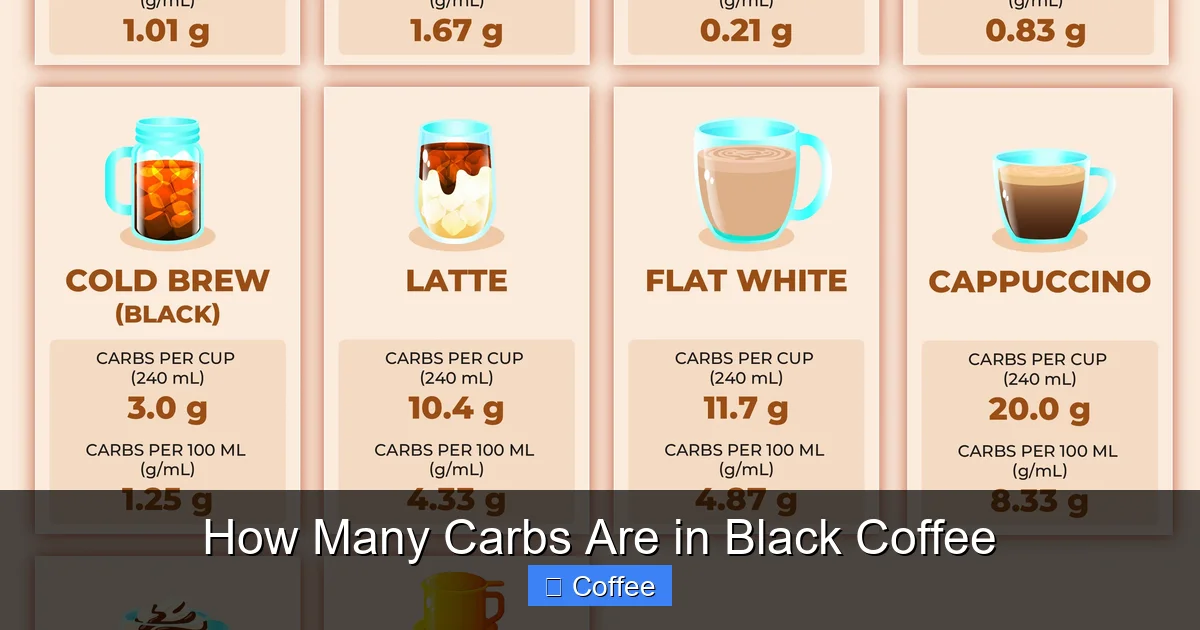
For anyone following a ketogenic diet (typically under 20-50g net carbs per day) or a general low-carb plan, black coffee is practically a dietary gift. Its near-zero carb count means you can enjoy multiple cups throughout the day without worrying about pushing yourself out of ketosis or exceeding your daily limit. This is a massive advantage compared to many other morning beverages. Orange juice? Around 26g carbs per cup. A typical store-bought latte? Easily 15-25g carbs or more, mostly from milk and sugar. Black coffee lets you have that comforting, energizing ritual without the carb cost.

Visual guide about How Many Carbs Are in Black Coffee
Image source: cdn.shopify.com
Beyond Carbs: Other Keto Considerations
While carbs are the primary focus, keto dieters also watch fat and protein. Pure black coffee contains virtually no fat or protein either – it’s essentially just water with dissolved coffee compounds. This makes it incredibly “clean” from a macronutrient standpoint. However, if you *do* add fats like butter or MCT oil for a “bulletproof” style coffee, remember those add calories and fat, but crucially, no significant carbs. This is why bulletproof coffee is a popular keto staple – it provides sustained energy from fat without spiking blood sugar. The key takeaway: black coffee itself is the perfect blank canvas for keto; it’s the additions that require careful consideration.
Benefits That Complement Low-Carb Living
Beyond being carb-free, black coffee offers benefits that synergize well with low-carb diets. It’s rich in antioxidants, particularly chlorogenic acid, which may help combat inflammation and support metabolic health – both important when adjusting to a lower-carb intake. The caffeine provides a well-documented energy and focus boost, which can be especially helpful during the initial “keto flu” adaptation phase. Furthermore, coffee can enhance fat burning and physical performance, aligning perfectly with the fat-adaptation goals of keto. Just remember to stay hydrated with water too, as coffee has a mild diuretic effect.
What Actually Adds Carbs to Your Coffee? (Spoiler: It’s Not the Coffee!)
This is where most confusion and carb surprises happen. The coffee itself is innocent. The carbs come from what you stir into it. Understanding these sources is vital for keeping your coffee low-carb.
Visual guide about How Many Carbs Are in Black Coffee
Image source: shunketo.com
Dairy and Non-Dairy Milks: The Biggest Offenders
Milk, whether dairy or plant-based, is the single largest source of carbs in most coffee drinks. Here’s the breakdown per typical serving (usually 2-4 oz added to a cup):
- Whole Milk (2 oz): ~2.5g carbs (mostly lactose sugar)
- 2% Milk (2 oz): ~2.4g carbs
- Skim Milk (2 oz): ~2.5g carbs
- Almond Milk (Unsweetened, 2 oz): ~0.5-1g carbs (varies by brand)
- Soy Milk (Unsweetened, 2 oz): ~1-1.5g carbs
- Oat Milk (Even Unsweetened, 2 oz): ~3-4g carbs (oats are high-carb!)
- Coconut Milk (Canned, full fat, 2 oz): ~1g carbs
That “splash” of whole milk in your latte? Easily adds 5-10g carbs before you even think about sugar. Oat milk, often marketed as “healthy,” is surprisingly high in carbs and can quickly blow your daily limit.
Sugars and Sweeteners: Obvious but Often Overlooked
Adding sugar is the most direct way to spike carbs:
- White Sugar (1 tsp): ~4g carbs
- Brown Sugar (1 tsp): ~4g carbs
- Honey (1 tsp): ~5.7g carbs
- Maple Syrup (1 tsp): ~5.3g carbs
Even “healthier” sweeteners like honey or maple syrup are still primarily sugar and add significant carbs. While artificial sweeteners (sucralose, aspartame) and natural zero-calorie options (stevia, monk fruit) add negligible to zero carbs, be cautious with sugar-free syrups – some contain fillers or maltodextrin that add a few grams.
Flavored Syrups and Creamers: Hidden Carb Havens
Those convenient flavored syrups (vanilla, caramel, hazelnut) and bottled coffee creamers are major carb traps. A single pump (about 0.5 oz) of a standard flavored syrup contains 5-7g of carbs, mostly from sugar. Many creamers are essentially sugar and oil emulsions – a tablespoon can easily pack 3-5g carbs. “Sugar-free” versions are better, but check labels for maltodextrin or other carb sources. Whipped cream topping? About 0.5g carbs per tablespoon, but the sugar content adds up.
Debunking Common Black Coffee Carb Myths
Misinformation about coffee carbs is rampant. Let’s clear up some persistent myths.
Myth 1: “Dark Roast Coffee Has Fewer Carbs Than Light Roast”
This is a common belief, but it’s not accurate regarding carb content. While dark roasts have slightly less caffeine and a different flavor profile due to longer roasting, the difference in actual carbohydrate content per cup is negligible – we’re talking hundredths of a gram. The roasting process affects acidity and bitterness more than the already minuscule carb levels. Choose your roast based on taste preference, not carb counting; it won’t move the needle.
Myth 2: “Instant Coffee Has More Carbs Than Brewed Coffee”
Generally, no. Plain, unsweetened instant coffee crystals are made by dehydrating brewed coffee. The carb content per serving (when reconstituted with water to make an 8oz cup) is very similar to regular brewed black coffee – around 0.2g. The key is ensuring it’s *plain* instant coffee. Many instant coffee products come pre-mixed with sugar, milk powder, or flavorings (like “cappuccino” or “latte” mixes), which drastically increase carbs. Always check the label for “100% instant coffee” if you want the low-carb version.
Myth 3: “Coffee ‘Cleanses’ or ‘Detoxes’ Your Body of Carbs”
This is pure pseudoscience. Coffee, even black, does not magically remove carbohydrates from your system or prevent their absorption. It might have a mild laxative effect for some people, but that’s not “detoxing” carbs. Your body metabolizes carbs consumed from food through normal digestive processes. Black coffee simply provides hydration and caffeine without adding significant carbs itself – it doesn’t interfere with the carbs you’ve already eaten.
Myth 4: “All ‘Black’ Coffee is Created Equal (Carb-Wise)”
Technically, pure black coffee from any source (drip, French press, espresso, pour-over, cold brew) has the same negligible carb count. However, be wary of terms like “black” on menus. A “black cold brew” is fine, but a “black iced coffee” might sometimes imply it’s just coffee and ice, while others might assume it includes milk. Always clarify if you’re ordering out. The only true guarantee of near-zero carbs is specifying “black, no additions.”
Practical Tips for Enjoying Low-Carb Coffee
Knowing the facts is great, but how do you apply this in real life? Here’s how to keep your coffee habit carb-conscious.
Master the Art of Black Coffee
The simplest, most reliable way to ensure near-zero carbs is to drink it black. If you’re new to black coffee, ease into it:
- Start by gradually reducing the amount of milk or sweetener you add each day.
- Try different brewing methods – a French press often has more body and oils, making black coffee taste richer and less harsh than drip.
- Experiment with high-quality, freshly ground beans. Better flavor means less need for additions.
- Add a tiny pinch of cinnamon or unsweetened cocoa powder for natural flavor without carbs.
Give your palate time to adjust; many people find they grow to prefer the pure, complex flavors of good black coffee.
Smart Substitutions When You Need More
If black coffee just isn’t your thing, make informed choices:
- Milk Alternatives: Choose unsweetened almond milk, unsweetened soy milk, or unsweetened coconut milk (carton, not canned). Avoid oat milk and rice milk due to high carbs. Measure it – don’t just “splash”!
- Sweeteners: Use liquid stevia, liquid monk fruit, or powdered erythritol. They add sweetness with zero carbs. Start with a tiny amount; they’re much sweeter than sugar.
- Creaminess: A small amount of heavy cream (1 tbsp = ~0.4g carbs) adds richness with minimal carbs. MCT oil is another keto-friendly option for energy.
- Flavor: Use sugar-free syrups (check labels for maltodextrin), a dash of vanilla extract, or spices like cinnamon, nutmeg, or cardamom.
Always read nutrition labels on any additive – “unsweetened” doesn’t always mean zero carbs.
Navigating Coffee Shops Like a Pro
Ordering low-carb at a cafe requires clear communication:
- Specify “black coffee” or “Americano” (espresso + hot water).
- If adding milk: “Unsweetened almond milk, please. Just a small splash (about 1 oz).”
- If adding sweetener: “Sugar-free vanilla syrup, one pump, please.” (Confirm it’s truly sugar-free).
- Avoid: Lattes, cappuccinos, mochas, frappes, and any drink described as “sweet” or “creamy” unless you’ve confirmed the ingredients.
- When in doubt, ask: “What’s in this? Does it have sugar or milk added?”
Don’t be shy – baristas hear all kinds of requests. Being specific helps them get it right.
Conclusion: Savor Your Coffee, Know Your Carbs
So, how many carbs are in black coffee? The definitive answer is virtually none – just a trace amount, approximately 0.2 grams per standard cup. This makes pure black coffee an exceptionally diet-friendly beverage, a true ally for anyone following keto, paleo, or simply aiming to reduce their carbohydrate intake. The power is literally in your hands: the coffee itself is innocent, but what you add transforms it.
The key to enjoying coffee without carb guilt is awareness. Understand that milk, sugar, syrups, and creamers are the primary sources of carbohydrates in your cup, not the coffee beans. By mastering black coffee, making smart substitutions when needed, and communicating clearly when ordering out, you can savor your daily brew without derailing your health goals. Embrace the ritual, enjoy the antioxidants and energy boost, and drink with confidence knowing you’ve got the facts. Your low-carb journey doesn’t have to mean giving up coffee – it just means drinking it wisely. Now, go enjoy that perfectly brewed, carb-conscious cup!
Frequently Asked Questions
Can I drink unlimited black coffee on a low-carb diet?
While black coffee itself has negligible carbs, drinking excessive amounts isn’t recommended. Focus on overall hydration with water too. Very high coffee intake can sometimes cause jitters, sleep issues, or digestive upset for sensitive individuals, but carb-wise, you can enjoy several cups daily without concern.
Why does my coffee sometimes taste sweet if it has almost no carbs?
The perceived sweetness comes from the coffee’s natural acids and complex flavor compounds, not actual sugar. High-quality beans, especially certain light roasts or specific origins, can have inherent fruity or floral notes that trick your palate into tasting sweetness, even with zero grams of sugar.
Does cold brew black coffee have different carbs than hot brewed?
No, the carb content is virtually identical. Cold brew is made with cold water over a longer steeping time, resulting in a smoother, less acidic flavor, but the fundamental composition of dissolved coffee solids – including the trace carbs – remains the same as hot-brewed black coffee.
Are there any health risks to drinking black coffee daily?
For most healthy adults, moderate black coffee consumption (3-4 cups per day) is safe and linked to health benefits. However, excessive intake can cause anxiety, insomnia, digestive issues, or increased heart rate in sensitive people. Those with certain medical conditions (like GERD or anxiety disorders) should consult their doctor.
What’s the carb count in a “black” iced coffee from a cafe?
This depends entirely on the cafe’s recipe. True “black” iced coffee should be just brewed coffee poured over ice, with ~0.2g carbs. However, some cafes might use cold brew concentrate (same carbs) or even add a splash of milk/sweetener without specifying. Always ask: “Is this just coffee and ice, or are there additions?”
Can I use coffee to help control blood sugar?
Black coffee itself doesn’t raise blood sugar due to its near-zero carb content. Some studies suggest coffee consumption *may* be associated with a lower risk of type 2 diabetes long-term, likely due to antioxidants. However, it’s not a treatment. People with diabetes must still carefully manage all carb sources, including anything added to coffee, and follow their healthcare provider’s advice.