
Most health experts recommend limiting caffeine to 200mg daily during pregnancy – roughly one 12oz cup of coffee. While occasional extra cups are unlikely harmful, consistent high intake may increase miscarriage or low birth weight risks. Always discuss your personal caffeine habits with your healthcare provider for tailored advice.
Key Takeaways
- 200mg daily is the safe limit: This equals about one standard 12oz cup of brewed coffee. Exceeding this regularly may pose pregnancy risks.
- Caffeine isn’t just in coffee: Soda, tea, chocolate, and some medications add hidden caffeine. Track your total daily intake from all sources.
- Your metabolism changes: Pregnancy slows caffeine processing, meaning it stays in your system longer and affects the baby more intensely.
- Decaf isn’t zero: Most decaf coffee still contains 2-15mg of caffeine per cup. Check labels and factor this into your daily total.
- Listen to your body: If coffee causes heartburn, anxiety, or disrupts sleep, reduce intake regardless of the “safe” limit.
- Cutting back gradually is best: Sudden caffeine withdrawal causes headaches. Swap one cup for decaf or herbal tea each week.
- Always consult your provider: Your individual health, pregnancy history, and metabolism mean personalized advice is essential.
Quick Answers to Common Questions
What is How Many Cups Of Coffee Can I Have While Pregnant?
How Many Cups Of Coffee Can I Have While Pregnant refers to essential knowledge and techniques.
📑 Table of Contents
- How Many Cups of Coffee Can I Have While Pregnant? Your Friendly Guide
- Why Caffeine Gets Complicated During Pregnancy
- The Official Guidelines: What the Experts Say
- Beyond the Cup: Hidden Caffeine Sources You Might Forget
- Practical Strategies: Enjoying Coffee Safely During Pregnancy
- When to Be Extra Cautious: Individual Factors Matter
- Talking to Your Healthcare Provider: Your Most Important Step
- Conclusion: Savoring Your Coffee, Safely and Joyfully
How Many Cups of Coffee Can I Have While Pregnant? Your Friendly Guide
So you’re pregnant, and that morning coffee ritual suddenly feels like a high-stakes decision. You love your brew – that rich aroma, the comforting warmth, the gentle nudge it gives your brain. But now, every sip comes with a wave of anxiety: “Is this safe? How many cups of coffee can I have while pregnant without harming my baby?” You’re not alone. Countless expecting moms grapple with this exact question, torn between a beloved habit and the desire to do everything perfectly for their growing little one.
It’s completely normal to feel this way. Pregnancy brings so many changes, and suddenly things you took for granted – like your daily latte – need careful consideration. The good news? You likely don’t have to give up coffee entirely. The key is understanding the *why* behind the guidelines and finding a safe, sustainable balance that works for *you* and your baby. This isn’t about deprivation; it’s about informed choices. Let’s cut through the confusion and get you the clear, evidence-based answers you deserve, so you can enjoy your coffee (within reason!) with peace of mind.
Why Caffeine Gets Complicated During Pregnancy
Your Body’s Metabolism Slows Down
Here’s the science bit, but keep it simple: When you’re pregnant, your body processes caffeine much slower than usual. Normally, caffeine might take a few hours to clear your system. During pregnancy, especially in the second and third trimesters, it can take up to 15 hours or more for your body to eliminate half the caffeine you consumed. This means caffeine sticks around longer, building up in your bloodstream and, crucially, crossing the placenta to reach your baby.

Visual guide about How Many Cups of Coffee Can I Have While Pregnant
Image source: cdn2.momjunction.com
Your Baby is Extra Sensitive
Your developing baby doesn’t have a mature liver to break down caffeine effectively. What might feel like a gentle pick-me-up for you can be a significant stimulant for your tiny fetus. High levels of caffeine exposure have been linked in some studies to potential issues like restricted fetal growth, low birth weight, and even a slightly increased risk of miscarriage or stillbirth, particularly when intake is consistently high (over 200-300mg daily). While the evidence isn’t always black-and-white, the precautionary principle makes sense – why take an unnecessary risk with something you can easily moderate?
The “Cup” Conundrum: It’s Not Just About the Number
This is where many moms get tripped up. When we ask “how many cups of coffee can I have while pregnant,” we’re often imagining a standard mug. But reality is messy:
- Brew strength varies wildly: A cup of strong French press packs way more caffeine than a weak pour-over. A single shot of espresso has about 63mg, while a 16oz “grande” latte from a coffee shop can easily hit 150-200mg just from the espresso.
- Cup size is deceptive: That “cup” at home might be 8oz, 12oz, or a giant 16oz travel mug. Coffee shop “cups” are almost always larger than a standard measuring cup.
- Other sources sneak in: That can of cola with lunch, the piece of dark chocolate as a snack, the cup of black tea in the afternoon – they all add up. Ignoring these means you could easily blow past the safe limit without realizing it.
Focusing solely on “cups” without considering caffeine content and other sources is a recipe for accidental overconsumption. Knowing the actual milligrams is far more useful.
The Official Guidelines: What the Experts Say
The 200mg Daily Limit: The Consensus
After reviewing decades of research, major health organizations worldwide agree on a clear recommendation: Limit your total daily caffeine intake to 200 milligrams (mg) or less during pregnancy. This is the golden rule you’ll hear from:

Visual guide about How Many Cups of Coffee Can I Have While Pregnant
Image source: i.pinimg.com
- The American College of Obstetricians and Gynecologists (ACOG): Their official committee opinion states that moderate caffeine consumption (less than 200mg per day) is not associated with an increased risk of miscarriage or preterm birth.
- The World Health Organization (WHO): Recommends pregnant women limit caffeine to less than 300mg per day, but many experts, including ACOG, lean towards the more conservative 200mg limit as the safest threshold, especially given newer research.
- The UK’s National Health Service (NHS): Explicitly advises pregnant women to limit caffeine to 200mg per day.
This 200mg limit is considered the threshold where the potential risks to the baby appear to be minimized based on current evidence. It’s not a magic number where risk suddenly appears, but rather a well-established safety boundary.
What Does 200mg of Caffeine Actually Look Like?
Translating milligrams into real-world drinks is crucial for answering “how many cups of coffee can I have while pregnant.” Here’s a practical breakdown:
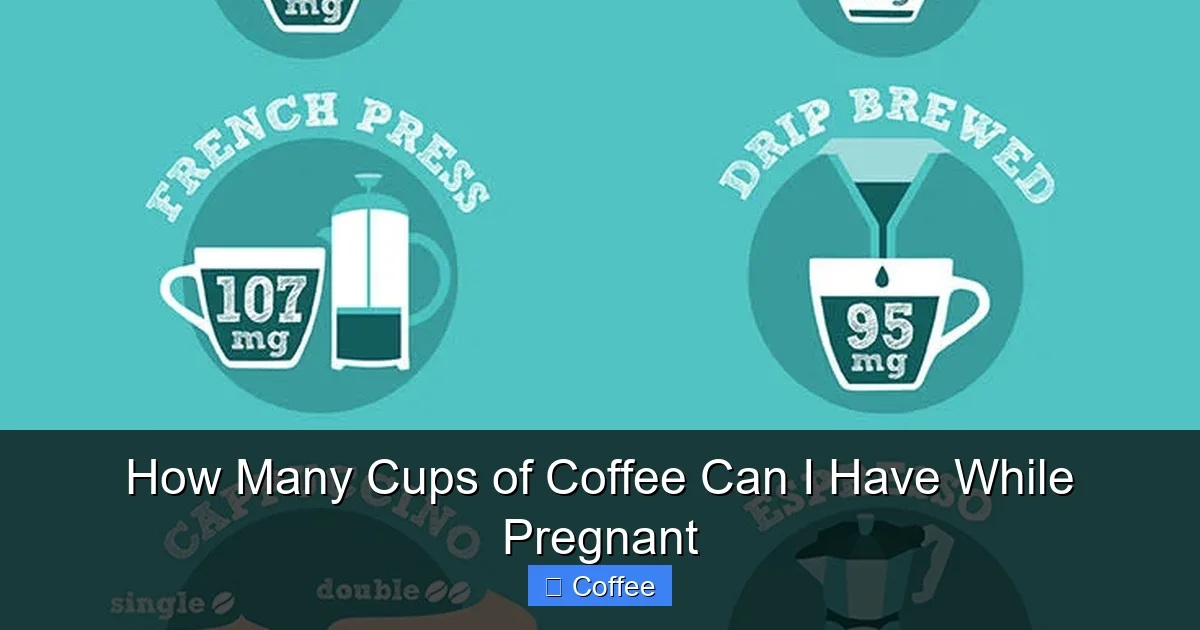
- Brewed Coffee (8oz / 240ml): Typically contains 80-100mg. One standard 8oz cup usually stays under 200mg. A 12oz cup often hits 120-150mg. A 16oz “large” can easily exceed 200mg (180-220mg+).
- Espresso (1 shot / 1oz): Contains about 63mg. Two shots (common in a latte or cappuccino) are roughly 126mg – still under 200mg, but close. Three shots would push you over.
- Decaffeinated Coffee (8oz): Isn’t zero! Usually contains 2-15mg. While negligible for most, it’s good to know if you’re having multiple cups.
- Black Tea (8oz): Contains 40-70mg. Green tea has 20-45mg.
- Cola (12oz can): Contains 30-40mg. Energy drinks are much higher (often 80-150mg+ per can) and should be avoided.
- Dark Chocolate (1oz / 28g): Contains 12-25mg. Milk chocolate has less (5-10mg).
Example: Your morning 12oz brewed coffee (140mg) + a can of cola at lunch (35mg) + a square of dark chocolate (20mg) = 195mg. You’re safely under 200mg. But add an afternoon cup of tea (50mg), and you’re suddenly at 245mg – over the limit.
Why the Focus on 200mg? The Research Behind the Number
The 200mg limit isn’t arbitrary. Large observational studies have shown associations between higher caffeine intake (consistently above 200-300mg/day) and adverse pregnancy outcomes:
- Miscarriage Risk: Some studies suggest a slightly increased risk with intake over 200mg/day, particularly in the first trimester.
- Low Birth Weight: Higher caffeine consumption has been linked to a small but statistically significant increase in the risk of babies being born weighing less than 5.5 lbs (2.5kg).
- Preterm Birth: Evidence is less consistent, but some studies point to a potential link with very high intake.
It’s vital to understand that these studies show associations, not definitive proof that caffeine causes these outcomes. Many other factors (genetics, overall health, nutrition, stress) play huge roles. However, because caffeine is a stimulant that crosses the placenta and we can control our intake, the medical community errs on the side of caution with the 200mg recommendation. It’s a manageable change with potentially significant benefits for peace of mind.
Beyond the Cup: Hidden Caffeine Sources You Might Forget
The Soda and Energy Drink Trap
That afternoon cola or sparkling water with caffeine might seem harmless, but it’s a major caffeine contributor. A standard 12oz can of cola has 30-40mg. Energy drinks are the real culprits – a single 8.4oz can of Red Bull has 80mg, and many popular brands pack 150-200mg+ into a single serving. Energy drinks should be strictly avoided during pregnancy due to high caffeine, sugar, and other stimulants. Always check the label – “caffeine-free” sodas are your safest bet.
Visual guide about How Many Cups of Coffee Can I Have While Pregnant
Image source: images.ctfassets.net
Tea: Not Just a Gentle Brew
While often seen as a healthier alternative, tea contains significant caffeine, especially black and green varieties. An 8oz cup of black tea averages 40-70mg – that’s half your daily limit right there. Herbal teas (like chamomile, peppermint, or rooibos) are naturally caffeine-free and excellent alternatives, but be wary of blends labeled “wellness” or “energy” that might contain guarana (a caffeine source) or black/green tea. Always read the ingredient list.
Chocolate: The Sweet Surprise
That square of dark chocolate you enjoy? It’s not just sugar and fat – it’s caffeine too! A 1oz (28g) piece of dark chocolate (70-85% cocoa) contains 12-25mg. Milk chocolate has less (5-10mg), but it adds up if you’re having several pieces. While an occasional treat is fine, be mindful if you’re also consuming coffee, tea, or soda. Baking chocolate is much higher (over 100mg per ounce) – avoid using it in large quantities.
Medications and Supplements: The Overlooked Culprit
Some over-the-counter medications, particularly headache or migraine remedies (like Excedrin), contain caffeine to enhance pain relief. Excedrin Migraine, for example, has 65mg per capsule. Even some weight-loss supplements or “energy boosters” might contain hidden caffeine or guarana. Always check the active ingredients list on any medication or supplement you take during pregnancy and discuss it with your doctor or pharmacist. Don’t assume “natural” means caffeine-free.
Practical Tip: Track Your Total Daily Caffeine
For one week, keep a simple log:
- Note every caffeinated item you consume (coffee, tea, soda, chocolate, meds).
- Estimate the caffeine content using the guidelines above or a reliable app (like “Caffeine Tracker”).
- Add it up at the end of each day.
This reveals your true intake and helps you identify where to cut back if needed. You might be surprised to find your “two cups of coffee” habit actually totals 250mg once you factor in tea and chocolate!
Practical Strategies: Enjoying Coffee Safely During Pregnancy
Master the Art of the Smaller, Stronger Cup
Instead of a large 16oz mug of weak coffee, try:
- Brew a smaller pot: Make just enough for an 8oz or 10oz cup. You’ll likely get a stronger, more flavorful brew with the same caffeine punch in a smaller volume.
- Opt for espresso-based drinks: A single shot (63mg) in a small latte or cappuccino (using mostly milk) gives you the coffee flavor and ritual with less total liquid and often less caffeine than a large brewed coffee. Skip the extra shots!
- Dilute your brew: Make your coffee a little stronger than usual, then add hot water (like an Americano) or extra milk/steamed milk to reach your desired volume. You get the taste with potentially less caffeine per sip.
This approach lets you savor the coffee experience without exceeding the 200mg limit.
Embrace the Gradual Swap to Decaf (It’s Not What You Think!)
Decaf coffee has come a long way. Modern water-processed decaf retains much of the flavor and aroma of regular coffee, with only 2-15mg of caffeine per 8oz cup. Here’s how to transition smoothly:
- Start with a 50/50 blend: Mix half regular and half decaf beans/grounds. Brew as usual. The flavor is very similar, and you instantly cut your caffeine intake in half.
- Gradually increase the decaf ratio: After a few days, try 25% regular / 75% decaf. Then move to 100% decaf. Your taste buds will adjust.
- Focus on the ritual: Pour your decaf into your favorite mug, add your usual milk/sweetener, and take that mindful moment to enjoy the warmth and aroma. It’s about the habit as much as the caffeine.
Many moms find they don’t miss the caffeine buzz once they adjust, especially when they prioritize sleep and manage stress.
Discover Delicious Caffeine-Free Alternatives
Sometimes, you crave the *experience* of a warm, comforting drink, not just the caffeine. Explore these satisfying options:
- Roasted Grain “Coffee” Drinks: Brands like Teeccino or Dandy Blend make herbal coffees from chicory root, barley, and other roasted grains. They have a rich, coffee-like flavor and body, often with added nutrients, and are naturally caffeine-free. Try them black or with milk.
- Warm Spiced Drinks: A mug of warm apple cider (unsweetened) with cinnamon and nutmeg, or a golden milk latte (turmeric, ginger, cinnamon, milk, and a touch of honey) are incredibly soothing and packed with antioxidants.
- High-Quality Herbal Teas: Invest in loose-leaf chamomile, peppermint, lemon balm, or fruity blends. The act of brewing and savoring a beautiful tea can be just as satisfying as coffee.
Experiment to find what feels special and comforting to you. This isn’t a downgrade; it’s discovering new favorites.
Listen to Your Body (and Your Baby)
The 200mg guideline is a population-level recommendation. Your individual response matters:
- Heartburn or Indigestion: Coffee is acidic and a common trigger. If it causes discomfort, switch to low-acid coffee, drink it with food, or try alternatives.
- Anxiety or Jitters: Even within the “safe” limit, caffeine might make you feel anxious or restless. If this happens, reduce your intake further – your well-being is paramount.
- Sleep Disruption: Caffeine stays in your system for hours. If you have trouble sleeping, avoid caffeine after noon. Prioritize rest during pregnancy.
- Baby’s Movements: Some moms report their baby becomes very active after they drink coffee. While usually harmless, if it’s concerning or disruptive, consider reducing intake.
Your body is your best guide. If coffee doesn’t feel good, ditch it, even if you’re under 200mg.
When to Be Extra Cautious: Individual Factors Matter
Your Unique Metabolism: Fast vs. Slow Processors
Genetics play a big role in how quickly you metabolize caffeine. Some people are “fast processors” (their bodies clear caffeine quickly), while others are “slow processors” (caffeine lingers much longer). Research suggests slow processors may be at higher risk for caffeine-related pregnancy complications, even at moderate intakes. While you can’t easily test this, if you know caffeine generally makes you jittery or keeps you up all night (even with small amounts), you might be a slow processor. In this case, being extra conservative (sticking to 100mg or less) is wise. Discuss your sensitivity with your provider.
History of Pregnancy Complications
If you have a history of miscarriage, preterm labor, or other pregnancy complications, your healthcare provider may recommend stricter caffeine limits (e.g., under 100mg/day) or complete avoidance, especially in the first trimester. Always follow your provider’s specific advice based on your medical history. Don’t rely solely on general guidelines if your situation is high-risk.
Other Health Conditions
Certain conditions can make caffeine more problematic:
- Anxiety Disorders: Caffeine can exacerbate anxiety. Managing stress is crucial in pregnancy, so reducing caffeine might be beneficial.
- Heart Conditions: While rare in pregnancy, caffeine can affect heart rate. Discuss with your provider if you have any cardiac concerns.
- Iron Deficiency Anemia: Caffeine (especially in coffee and tea) can inhibit iron absorption. If you’re anemic, avoid drinking caffeinated beverages with iron-rich meals; wait at least an hour.
Your overall health picture matters. Be transparent with your provider about all conditions.
The Critical First Trimester
Many providers advise being extra cautious with caffeine during the first trimester (weeks 1-12). This is when the baby’s major organs are forming, and the placenta is developing. While the 200mg limit still applies, some moms feel more comfortable minimizing caffeine significantly or eliminating it entirely during this sensitive window, especially if they’ve experienced early pregnancy loss before. Listen to your instincts and your provider’s guidance.
Talking to Your Healthcare Provider: Your Most Important Step
Don’t Guess – Discuss It!
This cannot be overstated: The single most important thing you can do is talk to your OB/GYN or midwife about your caffeine intake. Bring your caffeine log (if you made one) to your next appointment. Ask specifically:
- “Based on my health history and this pregnancy, what caffeine limit do you recommend for me?”
- “Are there any specific concerns for me regarding caffeine?”
- “What are the best caffeine-free alternatives you suggest?”
Your provider knows you – your metabolism, your pregnancy progress, your medical history – far better than any general guideline. They can give you personalized advice that generic articles cannot. This conversation is a normal and expected part of prenatal care.
Addressing Common Provider Concerns
Be prepared for your provider to ask about:
- Your typical daily intake: Be honest! They’re not there to judge, but to help.
- How you feel after consuming caffeine: Any anxiety, heart palpitations, or sleep issues?
- Other sources of caffeine: Soda, tea, chocolate, meds.
- Your reasons for drinking coffee: Is it the taste, the ritual, the energy boost? Understanding this helps them suggest alternatives.
Go into the conversation ready to share and listen. It’s a partnership for your health and your baby’s health.
When to Seek Immediate Advice
While moderate caffeine within guidelines is safe, contact your provider if:
- You accidentally consume a very high amount (e.g., multiple energy drinks).
- Caffeine consistently causes severe anxiety, rapid heartbeat, or panic attacks.
- You have concerns about your baby’s movements after consuming caffeine.
Better to ask and be reassured than to worry unnecessarily.
Conclusion: Savoring Your Coffee, Safely and Joyfully
So, how many cups of coffee can you have while pregnant? The clear, evidence-based answer is: **aim for no more than 200mg of caffeine per day, which is roughly equivalent to one standard 12oz cup of brewed coffee.** But remember, it’s not just about counting cups – it’s about understanding your total caffeine intake from all sources, listening to your body, and having that crucial conversation with your healthcare provider.
Pregnancy is a time of immense change, and it’s natural to feel cautious about things you once took for granted. The good news is that enjoying a moderate amount of coffee is generally considered safe and can still be a cherished part of your day. You don’t have to become a coffee hermit. By focusing on smaller portions, exploring decaf blends, discovering delicious alternatives, and tracking your total intake, you can find a balance that works for you.
The goal isn’t perfection; it’s informed, mindful choices that prioritize both your well-being and your baby’s healthy development. Cutting back might feel challenging at first, but many moms find they adapt quickly and even discover new favorite rituals. Be kind to yourself – this is about progress, not punishment. Talk to your provider, trust your instincts, and savor that cup (or half-cup!) of coffee with the confidence that you’re making the best choice for your growing family. You’ve got this, mama. Now, go enjoy that (appropriately sized) brew!
Frequently Asked Questions
What is How Many Cups Of Coffee Can I Have While Pregnant?
How Many Cups Of Coffee Can I Have While Pregnant is an important topic with many practical applications.