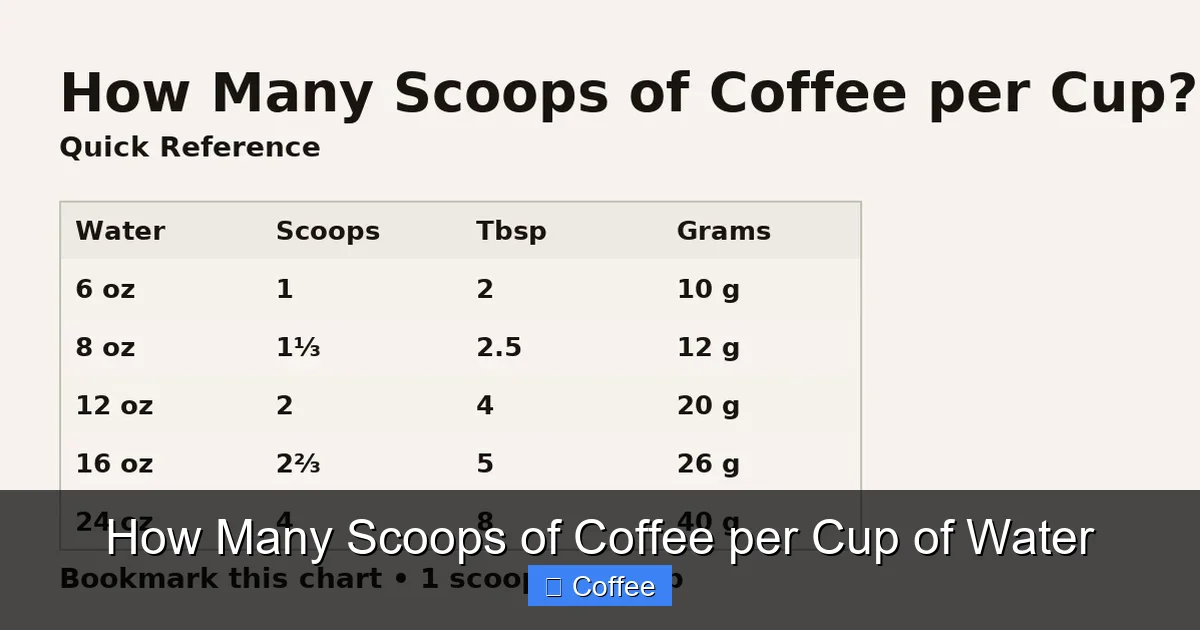
Finding the right coffee-to-water ratio is the secret to consistently great coffee, but there’s no single “perfect” answer. Most experts recommend starting with 1 to 2 tablespoons (or 1 coffee scoop) of ground coffee per 6 ounces (3/4 cup) of water, then adjusting based on your taste preferences and brewing method. Experimentation is key – your ideal strength is personal, and factors like grind size, water quality, and equipment matter too.
Key Takeaways
- Start with the Golden Ratio: Use 1-2 tablespoons (or 1 standard coffee scoop) of coffee per 6 ounces (3/4 cup) of water as your baseline for most brewing methods.
- Scoop Size Varies: A “scoop” isn’t universal; a standard coffee scoop holds ~2 tablespoons (10-12g), while a tablespoon is smaller. Weighing coffee (grams) is the most accurate method.
- Taste is Personal: Adjust the ratio up (stronger) or down (milder) based on your preference. Beginners often prefer the lower end (1 tbsp per 6oz), while coffee lovers might go higher (2 tbsp per 6oz).
- Water Quality Matters: Great coffee needs great water. Use filtered water if your tap water has strong flavors or minerals, as it significantly impacts extraction and taste.
- Brewing Method Changes Everything: Espresso, French press, pour-over, and drip coffee all require different ratios and grind sizes. Always check your specific brewer’s guidelines.
- Grind Size is Crucial: Finer grinds extract faster and need less coffee; coarser grinds extract slower and may need slightly more coffee for the same strength.
- Experiment & Take Notes: Don’t be afraid to tweak your ratio slightly each time. Keep a simple log (scoops, water, taste) to find *your* perfect cup.
Quick Answers to Common Questions
What’s the absolute easiest ratio to remember?
The simplest starting point is **1 level coffee scoop (or 1-2 tablespoons) for every 6 ounces of water**. This works well for most drip coffee makers and pour-over methods as a baseline for balanced coffee.
Can I use a regular tablespoon instead of a coffee scoop?
Yes, but be consistent. A level tablespoon holds roughly half a standard coffee scoop (~5-7g vs 10-12g). For a 6oz cup, use **1.5 to 2 level tablespoons** as your starting point, equivalent to one scoop. Avoid “heaping” tablespoons for accuracy.
Why does my coffee taste different even with the same scoop count?
Likely culprits are inconsistent grind size (blade grinders are bad for this), water temperature variations, or using different coffee beans (roast level, freshness, origin). Weighing coffee and water, using a burr grinder, and controlling water temp bring consistency.
Is 2 scoops per cup too strong?
It can be! Two scoops per 6oz cup (a 1:9 ratio) is very strong and often leads to bitterness from over-extraction, not just intensity. Most people find 1.25 to 1.5 scoops per 6oz is the upper limit for enjoyable strength without excessive bitterness. Start lower and adjust up gradually.
Should I adjust the ratio for different coffee beans?
Yes, subtly. Light roasts are denser and brighter; you might prefer a *slightly* higher ratio (more coffee) to balance acidity. Dark roasts are less dense and more bitter; a *slightly* lower ratio (less coffee) often prevents harshness. Let your taste guide the final adjustment.
📑 Table of Contents
- The Universal Coffee Dilemma: How Many Scoops Per Cup?
- The Golden Ratio: Your Starting Point for Great Coffee
- Why “Scoop” is a Tricky Word: Volume vs. Weight
- Making it Yours: Personalizing Your Coffee Strength
- Beyond the Scoop: Critical Factors You Can’t Ignore
- Brewing Method Matters: Ratios Across Different Coffee Makers
- Troubleshooting: When Your Ratio Isn’t Working
- Conclusion: Your Perfect Cup Awaits
The Universal Coffee Dilemma: How Many Scoops Per Cup?
Picture this: It’s early morning. The house is quiet. You stumble into the kitchen, craving that first, essential jolt of caffeine. You measure your water. You grab your coffee scoop. And then… hesitation. How many scoops of coffee per cup of water should you use? One? Two? Half? It’s a question that plagues coffee lovers everywhere, from the bleary-eyed beginner to the seasoned home barista. That perfect balance between rich, flavorful coffee and bitter, over-extracted sludge often hinges on this single, crucial decision.
You’re not alone in this confusion. Walk into any coffee forum or chat with fellow brewers, and the debate over the “right” coffee-to-water ratio is constant. Is it 1:15? 1:16? 1:17? Should you measure by volume (scoops, tablespoons) or weight (grams)? The answer, frustratingly for some, is that there isn’t one magic number etched in stone. However, there is a solid starting point, a framework of understanding, and a path to discovering your personal coffee nirvana. This article cuts through the noise. We’ll demystify the “how many scoops of coffee per cup of water” question, explaining the science, the variables, and giving you the practical tools to brew consistently delicious coffee, cup after cup. Forget guesswork; it’s time to brew with confidence.
The Golden Ratio: Your Starting Point for Great Coffee
When coffee professionals talk about the “ideal” coffee-to-water ratio, they often refer to what’s known as the “Golden Ratio.” This isn’t some ancient secret, but a widely accepted standard developed through decades of sensory evaluation and scientific measurement. The Specialty Coffee Association (SCA), a global authority, recommends a starting point of 1:16.67. Translated into everyday terms, this means approximately 60 grams of coffee for every 1000 grams (or milliliters) of water.
Visual guide about How Many Scoops of Coffee per Cup of Water
Image source: thecupcoffeehouse.com
What Does This Mean for Your Scoop and Cup?
Now, let’s make this practical for your kitchen. The most common measurement people use at home is the “cup” of water and the “scoop” of coffee. Here’s the crucial conversion:
- A standard “cup” of water for coffee brewing is almost always **6 fluid ounces (oz)**, which is **3/4 of a standard US measuring cup** (which holds 8oz). This is the industry standard reference point.
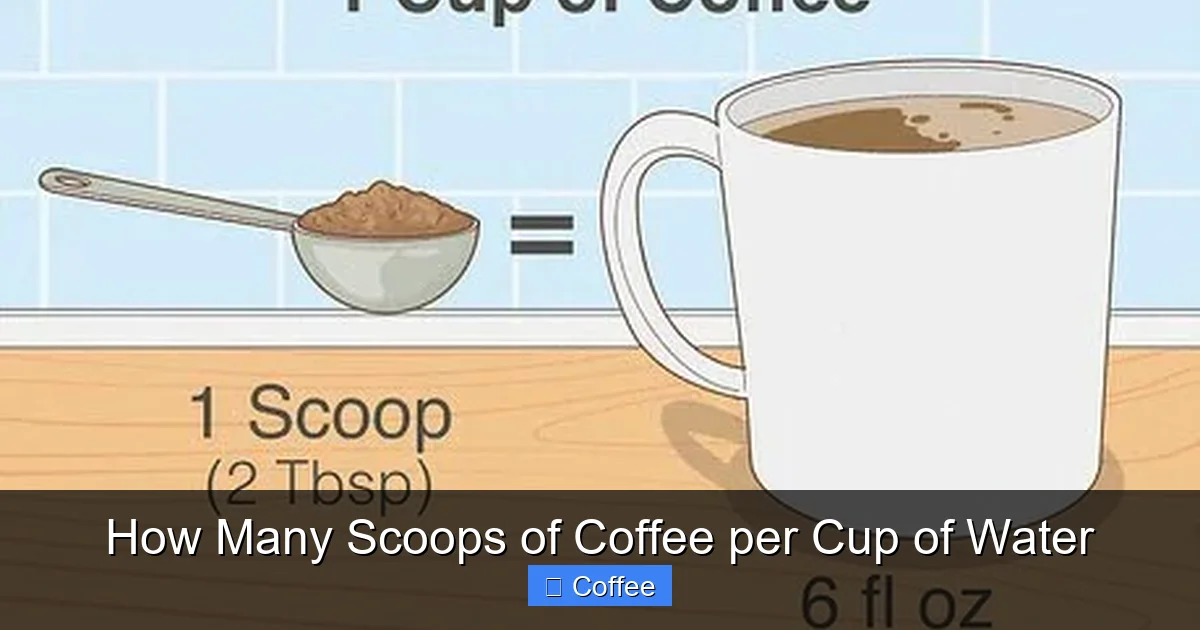
- A standard **coffee scoop** (the little plastic or metal one that often comes with a coffee maker) typically holds **about 2 level tablespoons**, which weighs approximately **10-12 grams** of medium-ground coffee.
Therefore, applying the SCA’s 1:16.67 ratio to a 6oz (180ml) cup of water:
- You need roughly **10.8 grams of coffee** (180ml water / 16.67 = ~10.8g coffee).
- Since one standard coffee scoop holds ~10-12g, **one level coffee scoop per 6oz cup of water** hits this target perfectly.
Why 6 Ounces, Not 8?
You might wonder why we use 6oz instead of the full 8oz measuring cup. It boils down to historical brewing standards and practicality. Most automatic drip coffee makers are calibrated to brew using 6oz “cups” as their unit of measurement (e.g., a “12-cup” maker makes 72oz total). Using 6oz as the standard cup size for ratio calculations ensures consistency across different brewing methods and avoids confusion when following recipes or machine instructions. If you’re brewing a full 8oz mug, simply scale up: **1.33 scoops per 8oz cup** (or roughly 1 scoop + 1 teaspoon).
So, the foundational answer to “how many scoops of coffee per cup of water” is: **Start with 1 standard coffee scoop (or 1-2 tablespoons) for every 6 ounces of water.** This is your reliable baseline. But remember, this is just the starting line, not the finish line. Your perfect cup awaits personalization.
Why “Scoop” is a Tricky Word: Volume vs. Weight
Here’s where things get messy for many home brewers. Relying solely on “scoops” or “tablespoons” introduces significant variability, which is the enemy of consistent coffee. Understanding why is key to mastering your brew.
Visual guide about How Many Scoops of Coffee per Cup of Water
Image source: wikihow.com
The Scoop Size Problem
Not all scoops are created equal:
- The Standard Coffee Scoop: As mentioned, the typical scoop bundled with coffee makers holds ~2 tablespoons (~10-12g). This is the most common reference.
- The Tablespoon: A standard US tablespoon holds about 15ml. However, the *weight* of coffee it holds depends entirely on the grind size and how heaped it is. A tablespoon of fine espresso grind weighs significantly more than a tablespoon of coarse French press grind. A level tablespoon of medium grind is roughly 5-7 grams.
- The “Heaped” Scoop: This is where chaos reigns. One person’s “heaped” is another’s “overflowing.” Is it a gentle mound? A volcano? This inconsistency makes “heaped scoops” highly unreliable for precision.
Why Weight is King (and How to Do It)
Coffee professionals overwhelmingly agree: **weighing your coffee and water in grams is the single most accurate and consistent method.** Here’s why:
- Eliminates Grind Size Variability: A gram is a gram, regardless of whether the coffee is finely ground or coarsely chopped. Volume measurements (scoops, tbsp) change drastically with grind size.
- Accounts for Bean Density: Different coffee beans (Arabica vs. Robusta, light roast vs. dark roast) have slightly different densities. A scoop of light roast beans weighs less than a scoop of dark roast beans, leading to under-extraction if you assume they’re equal.
- Precision for Small Batches: When brewing a single cup, the difference between 10g and 12g of coffee is significant. A kitchen scale (digital, 0.1g precision) is inexpensive ($10-$20) and transforms your brewing.
Practical Tip: If you invest in one tool for better coffee, make it a scale. Start with the Golden Ratio: **60g coffee : 1000g water**. For a single 6oz (180g) cup, that’s **~10.8g coffee**. Weigh your water first (tare your carafe/basket on the scale, add water to 180g), then weigh your coffee directly into the filter or brewer. It takes seconds and guarantees consistency. If you *must* use volume, stick to level measurements with a standard coffee scoop (not heaped!) and understand it’s an approximation.
Making it Yours: Personalizing Your Coffee Strength
Remember that Golden Ratio? It’s a fantastic starting point, but it’s not a commandment. The most important factor in “how many scoops of coffee per cup of water” is **your personal taste**. Coffee is deeply subjective. What’s perfect for your friend might be too weak or too strong for you.

Visual guide about How Many Scoops of Coffee per Cup of Water
Image source: img.brewedcaffeine.com
Finding Your Sweet Spot
Think of the ratio as a spectrum:
- Weaker/Milder Coffee (1:18 to 1:20): Use **less coffee** – roughly **3/4 to 1 scoop per 6oz water**. Ideal for those who prefer a lighter body, less caffeine per cup, or enjoy coffee with milk/cream where the coffee flavor shouldn’t dominate too heavily. Often preferred for delicate light roasts.
- Standard/Balanced Coffee (1:16 to 1:17): The **Golden Ratio zone**. **1 level scoop per 6oz water** is the classic starting point. Offers a good balance of flavor, body, and acidity for most palates and medium roasts.
- Stronger/Bolder Coffee (1:14 to 1:15): Use **more coffee** – roughly **1.25 to 1.5 scoops per 6oz water**. Creates a richer, more intense cup with more body and potentially more caffeine. Favored by those who like their coffee “full-bodied,” enjoy dark roasts, or drink it black. Be cautious: going too strong (e.g., 2 scoops per 6oz) often leads to bitterness from over-extraction, not just strength.
How to Experiment Like a Pro
Don’t just guess; brew systematically:
- Start at the Baseline: Brew a cup using 1 level scoop per 6oz water. Taste it critically.
- Adjust Incrementally: If it’s too weak, next time use **1.25 scoops** (or 1 scoop + 1/4 scoop). If it’s too strong/bitter, try **0.75 scoops**. Change only *one* variable at a time (ratio, *then* grind size, *then* brew time).
- Take Notes: Jot down: Ratio used (e.g., “1.25 scoops / 6oz”), Grind Size (e.g., “Medium-Coarse”), Brew Time, and most importantly, **Taste Notes** (“Too sour?”, “Bitter?”, “Just right?”, “Weak body?”). This log is invaluable.
- Consider the Roast: Light roasts are denser and often taste brighter/acidity-forward; you might prefer a slightly *higher* ratio (more coffee) to balance the acidity. Dark roasts are less dense and more bitter; you might prefer a slightly *lower* ratio (less coffee) to avoid excessive bitterness.
- Water Temperature Matters Too: Aim for water just off the boil (195°F – 205°F / 90°C – 96°C). Too cool = under-extracted (sour, weak). Too hot = over-extracted (bitter). A gooseneck kettle helps control pour temperature.
The goal isn’t just strength; it’s **balanced flavor**. A well-extracted cup at your preferred strength should have pleasant acidity (not sour), sweetness, and body, with bitterness only as a supporting note, not the main event. Trust your palate – it’s the ultimate guide.
Beyond the Scoop: Critical Factors You Can’t Ignore
While the coffee-to-water ratio is paramount, focusing *only* on scoops per cup ignores other elements that dramatically impact the final cup. Ignoring these can sabotage even the perfect ratio.
Water: The 98% Ingredient
Coffee is mostly water – typically 98-99%. It’s astonishing how often this is overlooked. The quality of your water is as important as the coffee itself.
- Tap Water Woes: Minerals (hardness), chlorine, chloramines, and other impurities in tap water can mute coffee flavors, create off-tastes (metallic, flat, chemical), or cause scaling in your brewer. If your tap water tastes good to drink, it’s probably okay for coffee, but often it’s not ideal.
- The Filtered Solution: Using a simple pitcher filter (like Brita) or under-sink filter removes chlorine and some impurities, significantly improving taste. For the best results, use **third-wave water** – filtered water with balanced minerals (like Third Wave Water or similar products), or even high-quality bottled spring water. Avoid distilled or reverse osmosis (RO) water alone, as they lack minerals needed for good extraction; if using RO, remineralize it.
- Practical Tip: Brew the same coffee ratio with tap water vs. filtered water. The difference in clarity and flavor is often shocking. Good water lets the coffee’s inherent flavors shine.
Grind Size: The Extraction Engine
Grind size controls the surface area of coffee exposed to water, directly dictating extraction speed and efficiency. Using the wrong grind size with your perfect ratio leads to disaster.
- Fine Grind (Espresso, Moka Pot): High surface area = fast extraction. Needs **less coffee** (stronger ratio, e.g., 1:2 or 1:3 coffee:water *by weight* for espresso) and **short brew time** (seconds). Too fine for drip = bitter sludge.
- Medium Grind (Drip Coffee, Pour-Over, Siphon): The “Goldilocks” zone for most home brewers. Balances surface area and flow rate. Uses the standard **1:16 ratio**. Too fine = over-extraction (bitter); too coarse = under-extraction (sour, weak).
- Coarse Grind (French Press, Cold Brew, Percolator): Low surface area = slow extraction. Needs **longer brew time** (minutes to hours) and often a **slightly higher coffee ratio** (e.g., 1:15) to compensate for slower extraction. Too coarse for French press = weak, watery coffee.
Critical Rule: **Always match your grind size to your brewing method.** If you change your brewer, you *must* adjust your grind size, and potentially your ratio slightly, to achieve balanced extraction. A burr grinder (not a blade grinder) is essential for consistent grind size.
Brew Time and Technique
How long water is in contact with coffee grounds (brew time) and how it’s applied (pouring technique) are crucial.
- Immersion (French Press, AeroPress): Coffee and water steep together for a set time (e.g., 4 minutes French Press). Ratio is key, but timing is precise. Over-steeping = bitterness.
- Percolation (Drip, Pour-Over): Water flows *through* the coffee bed. Ratio, grind size, *and* pour rate/technique matter. A slow, even pour (like in pour-over) extracts more evenly than a fast drip. Channeling (water finding paths of least resistance) in drip machines can cause uneven extraction.
Understanding these factors means you see “how many scoops of coffee per cup of water” as part of a larger ecosystem. Perfect ratio + bad water + wrong grind = bad coffee. Master the interplay.
Brewing Method Matters: Ratios Across Different Coffee Makers
Here’s the reality: **the ideal “scoops per cup” ratio changes significantly depending on how you brew your coffee.** What works for your drip machine won’t work for your French press or espresso maker. Let’s break it down.
Automatic Drip Coffee Makers
This is where the “1 scoop per 6oz cup” rule is most commonly applied and often built into the machine’s design (e.g., “12-cup” maker = 72oz water capacity).
- Standard Ratio: **1 level coffee scoop (or 1-2 tbsp) per 6oz water.** This is the baseline for balanced coffee.
- Why it Works: Drip machines use medium grind, have a standard brew time (~5-6 minutes), and water flows through the bed. The ratio accounts for this specific extraction process.
- Pro Tip: If your machine has a “strong” setting, it usually increases brew time or water temperature, *not* coffee amount. You might still need to add a bit more coffee (e.g., 1.25 scoops) for true strength. Always use the machine’s “cup” measurement (usually 6oz).
French Press (Immersion)
Steeping coarsely ground coffee in water for several minutes requires a slightly different approach.
- Standard Ratio: **1.25 to 1.5 scoops per 6oz water** (or roughly **1:15 to 1:16 by weight**). Many recipes use **30g coffee : 500g water** (which scales to ~10g per 6oz, slightly stronger than drip).
- Why Stronger? Coarse grind has less surface area, and immersion brewing is very efficient. A standard drip ratio (1 scoop/6oz) often yields coffee that’s too weak in a French press. The longer contact time also extracts more.
- Pro Tip: Use a coarse grind. Steep for 4 minutes, then plunge *slowly* and *immediately* decant the coffee into your mug to prevent over-extraction from the grounds still sitting in the liquid.
Pour-Over (V60, Chemex, Kalita Wave)
Manual brewing offers precision but demands attention to ratio, grind, and pour technique.
- Standard Ratio: **1:16 to 1:17 by weight is the sweet spot** (e.g., 20g coffee : 320g water for ~10oz brew). This translates to roughly **1 level scoop per 6oz water**, similar to drip.
- Why Similar to Drip? Both use medium grind and percolation. However, pour-over often allows for more control and potentially slightly higher extraction, so some prefer the 1:17 end for brightness.
- Pro Tip: The bloom (pouring a small amount of water first to release CO2) is crucial. Use water just off boil. Focus on an even, controlled spiral pour. Experiment with ratios within the 1:16-1:17 range to find your preference.
Espresso
This is a whole different beast. Espresso is a concentrated brew, not a “cup of coffee” in the traditional sense.
- Standard Ratio (Brewed Weight): **1:2 to 1:3 coffee:water *by weight*.** For example, 18g coffee in yields 36g espresso out (1:2) or 54g out (1:3). This is *not* scoops per cup of water!
- Why So Different? High pressure, very fine grind, and seconds-long brew time create intense concentration. A standard “cup” of espresso is 1-2 oz (30-60ml), not 6oz.
- Pro Tip: Espresso ratios are almost always measured by *weight* (dose in vs. yield out). Volume measurements (scoops) are highly unreliable due to extreme grind fineness and density variations. A scale is non-negotiable for espresso.
The key takeaway: **Always consult a reliable recipe specific to your brewing method.** Don’t assume the drip ratio works everywhere. Start with the method-specific baseline, then adjust to *your* taste.
Troubleshooting: When Your Ratio Isn’t Working
You’ve measured carefully, used the “right” ratio for your brewer, but your coffee still tastes off. Don’t panic! Here’s how to diagnose common problems related to the coffee-to-water ratio and its companions.
Problem: Coffee Tastes Sour, Weak, or Thin (Under-Extracted)
This usually means the water didn’t pull enough flavor and caffeine from the grounds.
- Likely Culprits:
- Ratio Too Low: Not enough coffee for the water. (Most common fix: **Increase coffee slightly** – try 1.25 scoops per 6oz).
- Grind Too Coarse: Water flows through too quickly, not enough contact time. (Fix: **Use a finer grind**).
- Water Too Cool: Below 195°F (90°C). (Fix: **Use water just off the boil**, invest in a thermometer).
- Brew Time Too Short: Especially in immersion brewers. (Fix: **Increase steep time** by 30-60 seconds).
- Action Plan: Start by increasing your coffee ratio by 1/4 scoop. If that doesn’t fix it, then adjust grind size finer. Check water temperature.
Problem: Coffee Tastes Bitter, Harsh, or Astringent (Over-Extracted)
This means too much flavor (and bitterness) was pulled from the grounds.
- Likely Culprits:
- Ratio Too High: Too much coffee for the water. (Most common fix: **Decrease coffee slightly** – try 0.75 scoops per 6oz).
- Grind Too Fine: Water struggles to flow through, leading to long contact time. (Fix: **Use a coarser grind**).
- Water Too Hot: Above 205°F (96°C). (Fix: **Let water cool slightly** after boiling).
- Brew Time Too Long: Especially in immersion brewers. (Fix: **Decrease steep time** by 30-60 seconds).
- Stale Coffee: Old beans lose complexity and can taste flat/bitter more easily. (Fix: **Use fresher beans**, ideally within 2-4 weeks of roast date).
- Action Plan: Start by decreasing your coffee ratio by 1/4 scoop. If that doesn’t fix it, then adjust grind size coarser. Check water temperature and brew time.
Problem: Coffee Tastes Muddy, Flat, or Lacks Clarity
This often points to issues beyond just the ratio.
- Likely Culprits:
- Bad Water: Chlorine, heavy minerals, or impurities masking flavors. (Fix: **Use filtered water**).
- Inconsistent Grind: Blade grinder creating fines and boulders, leading to uneven extraction. (Fix: **Invest in a burr grinder**).
- Dirty Equipment: Old coffee oils and mineral buildup in brewer, carafe, or filter. (Fix: **Clean your brewer regularly** with vinegar or dedicated cleaner).
- Low-Quality/Stale Beans: (Fix: **Source fresh, specialty-grade beans** from a reputable roaster).
- Action Plan: Switch to filtered water first – it’s often the biggest quick win. Then ensure your equipment is clean. Evaluate your beans.
Remember: **Change only ONE variable at a time** when troubleshooting. This way, you know exactly what fixed (or broke) the cup. Patience and systematic adjustment are your best friends.
Conclusion: Your Perfect Cup Awaits
So, how many scoops of coffee per cup of water? The journey to the answer is more valuable than a single number. We’ve uncovered that the reliable starting point is **one level standard coffee scoop (or 1-2 tablespoons) for every 6 ounces of water**. This Golden Ratio, born from specialty coffee science, provides the essential foundation for balanced extraction. But the true magic happens when you move beyond the baseline.
Coffee brewing is a delightful interplay of art and science. It’s understanding that a “scoop” is a variable unit, making a humble kitchen scale your most powerful tool for consistency. It’s recognizing that water quality is non-negotiable – that 98% ingredient deserves respect. It’s matching your grind size precisely to your brewing method, whether you’re plunging a French press or pulling an espresso shot. It’s embracing the fact that your perfect strength is uniquely yours, found through mindful experimentation and careful note-taking. Don’t fear a slightly stronger brew if that’s what brings you joy, or a milder cup if that suits your palate. The bitterness of over-extraction or the sourness of under-extraction are signposts, not failures, guiding you toward balance.
The most important scoop you’ll ever measure is the one that leads to a cup you truly love. Ditch the guesswork. Start with the Golden Ratio, weigh your ingredients, use good water, match your grind, and then – most importantly – taste critically and adjust. Your morning ritual deserves this attention. The quest for “how many scoops of coffee per cup of water” isn’t about finding a universal answer; it’s about discovering *your* answer, one delicious, intentional cup at a time. Now go brew something amazing.
Frequently Asked Questions
What is the standard coffee-to-water ratio?
The widely accepted standard, known as the Golden Ratio, is approximately 1:16.67 by weight (60g coffee to 1000g water). For practical home brewing using volume, this translates to **1 level standard coffee scoop (or 1-2 tablespoons) per 6 ounces of water** as the ideal starting point for most methods.
Why is weighing coffee better than using scoops?
Weighing in grams eliminates the major inconsistencies of volume measurements. Grind size, bean density (light vs. dark roast), and how “heaped” a scoop is drastically change the actual coffee weight. A gram is always a gram, ensuring precise, repeatable ratios cup after cup, which is crucial for balanced extraction.
How do I adjust the ratio for a French press?
French press typically requires a slightly stronger ratio than drip coffee due to the coarse grind and immersion brewing. Start with **1.25 to 1.5 standard coffee scoops per 6 ounces of water** (or roughly 1:15 to 1:16 by weight). Use a coarse grind and steep for 4 minutes before plunging slowly.
Can I use the same ratio for espresso?
No, espresso uses a completely different ratio because it’s a concentrated brew. Espresso ratios are measured by weight as **1:2 to 1:3 (coffee dose to espresso yield)**, meaning 18g coffee yields 36-54g espresso. This is not comparable to the “scoops per cup of water” used for brewed coffee methods like drip or French press.
What if my coffee tastes bitter even with the right ratio?
Bitterness usually indicates over-extraction. Beyond checking your ratio isn’t too high, focus on: using a **coarser grind size**, ensuring **water isn’t too hot** (let it cool 30 seconds off boil), and **shortening brew time** (especially for immersion methods). Also, ensure your coffee isn’t stale and your equipment is clean.
How much coffee for a 12-cup drip maker?
Most “12-cup” drip makers use a 6oz cup size, meaning 12 cups = 72oz water. Using the standard ratio, you’d need **12 level coffee scoops** (1 scoop per 6oz “cup”). Always check your machine’s manual, as some use different cup sizes, but 6oz per “cup” is the industry standard for ratio calculations.