
There’s no universal whistle count for lamb—it depends entirely on the cut, size, and your cooker type. Tough cuts like shoulder need 15-20 whistles, while delicate cuts like tenderloin cook in just 3-5. Always prioritize meat thickness and use natural pressure release for fall-apart tenderness.
Key Takeaways
- Cut determines timing: Tough cuts (shoulder, shanks) require 15-20 whistles; tender cuts (loin, chops) need only 3-5.
- Meat size matters: 2-inch cubes cook faster than large roasts—adjust whistles by 25% for size changes.
- Cooker type affects results: Stovetop cookers use whistle counts; electric models rely on preset timers (e.g., 30-45 mins).
- Natural release is crucial: Always let pressure drop naturally for 10-15 minutes to prevent toughness.
- Test doneness, not just whistles: Lamb should shred easily with a fork—not just hit a whistle target.
- Safety first: Never overfill your cooker (max 2/3 full) and ensure the vent is clear.
📑 Table of Contents
- Why “How Many Whistles?” Is the Wrong Question (At First!)
- Why Whistle Count Isn’t One-Size-Fits-All
- Lamb Cuts Decoded: Whistle Counts That Actually Work
- Pressure Cooker Types: Stovetop vs. Electric
- Step-by-Step: Cooking Lamb Like a Pro
- Troubleshooting: When Whistles Lie
- Pro Tips for Next-Level Lamb
- Conclusion: Ditch the Whistle Anxiety
Why “How Many Whistles?” Is the Wrong Question (At First!)
Hey there! So you’ve got a beautiful piece of lamb and a pressure cooker, and you’re standing there counting whistles like they’re Olympic medals. Sound familiar? We’ve all been there—staring at that little weight jiggling, wondering if this whistle means “done” or “disaster.” But here’s the truth: there’s no magic whistle number that works for every lamb recipe. It’s like asking, “How long do I bake a cake?” without knowing if it’s a cupcake or a wedding cake!
Lamb is incredibly versatile but also super sensitive. A tough shoulder roast needs serious time to break down collagen into gelatin, while a lean loin chop could turn to shoe leather in seconds. Pressure cooking is amazing—it cuts cooking time by 70%—but it demands respect. That whistle? It’s just a signal that pressure has built up. What really matters is how long that pressure cooks your specific cut. Let’s ditch the guesswork and learn how to cook lamb perfectly every time, whether you’re using a traditional stovetop cooker or a modern electric one.
Why Whistle Count Isn’t One-Size-Fits-All
Imagine trying to cook a tiny lamb chop and a massive leg roast for the same amount of time. Disaster, right? That’s why blanket “15 whistles for lamb” advice fails. Here’s what actually changes your whistle count:

Visual guide about How Many Whistles to Cook Lamb in Pressure Cooker
Image source: recipes.net
The Cut is King (or Queen!)
Lamb cuts fall into two camps: tough cuts (from active muscles) and tender cuts (less worked). Tough cuts like shoulder, neck, or shanks are packed with collagen—that’s good news for stews but bad news if undercooked. They need long, slow pressure to transform into melt-in-your-mouth goodness. Tender cuts like loin, rack, or leg steaks? They’re lean and delicate. Overcook them, and you’ll be chewing leather. Simple rule: more collagen = more whistles.
Size and Shape: The Silent Game-Changer
That 1-pound lamb stew? Different from a 4-pound roast. Pressure cooking time depends heavily on meat thickness, not just weight. A 2-inch cube cooks faster than a 4-inch slab because heat penetrates quicker. Why? Pressure cooking relies on steam transferring heat through the meat. Thicker pieces need more time for that heat to reach the center. Pro tip: Cut large roasts into uniform 2-3 inch chunks for even cooking. If your recipe says “15 whistles for a leg roast,” but you’re cooking diced shoulder, reduce whistles by 25%.
Your Pressure Cooker’s Personality
Not all pressure cookers are created equal! Traditional stovetop cookers (like Presto or Hawkins) use a weighted valve that “whistles” when pressure hits 15 PSI. Each whistle typically means 1-2 minutes of cooking time at full pressure. But electric pressure cookers (like Instant Pot) don’t whistle—they use digital timers. A “15-whistle” stovetop recipe usually translates to 30-45 minutes on “High Pressure” in an electric model. Confused? Don’t be! We’ll break down conversions later.
Lamb Cuts Decoded: Whistle Counts That Actually Work
Let’s get specific. Below is your cheat sheet for common lamb cuts, with whistle ranges based on standard 15 PSI pressure. Remember: these are starting points—always check doneness!
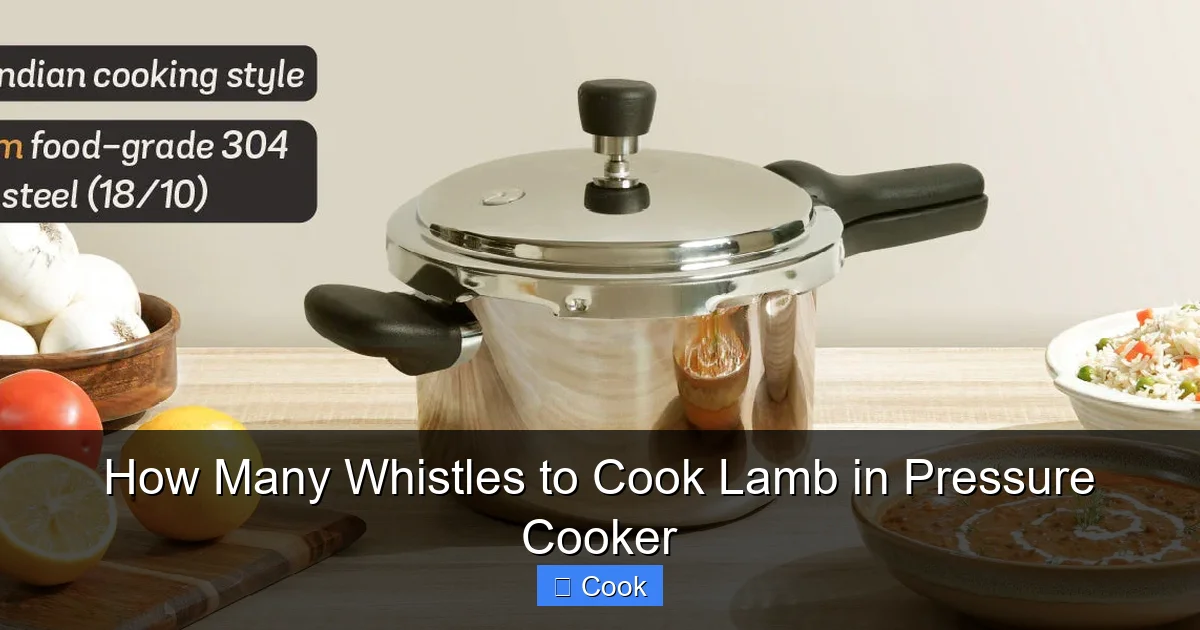
Visual guide about How Many Whistles to Cook Lamb in Pressure Cooker
Image source: potsandpans.in
Tough Cuts (Stews, Curries, Braises)
- Shoulder (Boneless or Chunks): 15-20 whistles. This cut is collagen heaven. Perfect for Rogan Josh or stews. Cut into 2-inch cubes. Example: For a 2-pound shoulder stew with tomatoes and spices, 18 whistles + 15-min natural release = fork-tender magic.
- Neck or Shanks: 20-25 whistles. Super tough but flavor-packed. Great for osso buco-style dishes. Pro tip: Brown shanks first for deeper flavor, then pressure cook with broth and veggies.
- Leg (for Stewing, Not Roasting): 18-22 whistles. Only use the lower leg (shin) for stews—the upper leg is too tender. Cut into large chunks.
Tender Cuts (Quick Cooks, Steaks, Chops)
- Loin Chops or Tenderloin: 3-5 whistles. Seriously! These cook in minutes. Warning: Overcooking = hockey puck. Best for marinated chops or quick curries. Example: 4 whistles for medium-rare loin chops with garlic and rosemary.
- Rack of Lamb: 5-7 whistles. Yes, you can pressure cook a rack! Wrap in foil with herbs, cook fat-side up. Finish under the broiler for crispy fat.
- Leg Steaks (Butterflied): 6-8 whistles. Thinner cuts cook fast. Ideal for kebabs or sliced in sandwiches.
The “Whistle Range” Rule
Why ranges? Because variables like altitude, meat temperature (fridge-cold vs. room-temp), and even humidity affect cooking. Start at the lower end of the range and check early. For tough cuts, if it’s not tender after 15 whistles, add 2-3 more. For tender cuts, pull them at 3 whistles even if the recipe says 5—better slightly underdone than ruined!
Pressure Cooker Types: Stovetop vs. Electric
This is where most confusion happens. Let’s clear it up:

Visual guide about How Many Whistles to Cook Lamb in Pressure Cooker
Image source: goodhomeservices.in
Stovetop Pressure Cookers (The Whistle Counters)
These are the classic pots with a rocking weight or jiggling valve. Here’s how to master them:
- Whistle timing: Once the weight starts rocking steadily (full pressure), that’s when you start counting whistles. Each “whistle” (or full rock of the weight) = ~1 minute.
- Heat control is critical: Too high = violent boiling (messy, uneven cooking). Too low = pressure drops (undercooked meat). Aim for a gentle, steady rock—like a calm ocean wave.
- Natural release is non-negotiable: Turn off heat and let the weight drop slowly (10-15 mins). Releasing pressure too fast shocks the meat, making it tough.
Electric Pressure Cookers (The Timer Titans)
No whistles here—just digital precision. But how do you convert “whistles” to minutes?
- The conversion: 1 whistle ≈ 2 minutes of active pressure cooking time. So 15 whistles = 30 minutes on “High Pressure.”
- Why the math? Electric cookers take 10-15 minutes to come to pressure (that’s NOT cooking time!). The timer starts once full pressure is reached. Stovetop whistles count only the active pressure time.
- Settings matter: Always use “Meat/Stew” or “High Pressure” mode. Avoid “Quick Release” for lamb—it’s a one-way ticket to toughness.
Hybrid Tip: The “Whistle Equivalent” Chart
Stuck with a stovetop recipe but using an Instant Pot? Here’s your lifeline:
- 5 whistles → 10 minutes High Pressure
- 10 whistles → 20 minutes High Pressure
- 15 whistles → 30 minutes High Pressure
- 20 whistles → 40 minutes High Pressure
- Plus: Always add 10-15 minutes natural release time to your total cook time.
Step-by-Step: Cooking Lamb Like a Pro
Ready to put it all together? Follow this foolproof method for perfectly tender lamb every time:
Prep is Everything
Don’t skip these steps—they make or break your dish:
- Pat dry: Wet meat won’t brown. Use paper towels!
- Sear first: Heat oil in the cooker (or a pan), then brown lamb in batches. This builds flavor no pressure cooker can replicate.
- Deglaze: After searing, add ½ cup liquid (wine, broth, water) and scrape up browned bits. This = flavor gold.
- Don’t overfill: Max 2/3 full. Lamb releases liquid as it cooks—leave room for expansion!
The Cooking Process (Stovetop Example)
- Heat 2 tbsp oil in cooker. Sear 2 lbs lamb shoulder chunks (2-inch) until browned. Remove.
- Sauté onions, garlic, ginger until soft. Add spices (cumin, coriander, turmeric).
- Return lamb to pot. Add 1 cup broth, 1 cup diced tomatoes, salt.
- Lock lid. Bring to high heat until full pressure (weight rocks steadily).
- Reduce heat to maintain gentle rocking. Cook for 18 whistles (≈18 mins).
- Turn off heat. Let pressure drop naturally for 15 minutes (weight settles).
- Carefully release remaining pressure. Check doneness: meat should shred easily.
Electric Cooker Shortcut
Same recipe? Do this:
- Sear lamb using “Sauté” function. Deglaze.
- Add all ingredients. Lock lid.
- Set to “Meat/Stew” or “High Pressure” for 30 minutes.
- Let pressure release naturally for 15 minutes, then quick-release any leftover.
Troubleshooting: When Whistles Lie
Even with perfect timing, things can go sideways. Here’s how to fix it:
Undercooked Lamb (Still Tough)
Why? Not enough time, low heat, or thick cuts. Fix: Re-lock lid and cook 2-3 more whistles (stovetop) or 5 more minutes (electric). Always add a splash of liquid first!
Overcooked Lamb (Mushy or Dry)
Why? Too many whistles, quick release, or wrong cut. Fix: For stews, blend excess liquid into a sauce. For steaks, slice thin against the grain. Prevention: Tender cuts = lower whistle count + natural release.
Pressure Won’t Build (No Whistles!)
Why? Leaky seal, overfilled pot, or insufficient liquid. Fix: Check gasket, reduce fill level, add ½ cup water. Never cook without at least 1 cup liquid.
The “Whistle Count vs. Doneness” Reality Check
Whistles are a guide—not a guarantee. Always test with a fork: If it pulls apart easily, it’s done. If it’s stringy or chewy, it needs more time. Lamb continues cooking as it rests, so pull it 5 minutes before you think it’s ready for stews.
Pro Tips for Next-Level Lamb
Ready to level up? These tricks transform good lamb into legendary:
Marinate for Maximum Flavor
Pressure cooking is fast—but marinating adds depth. Try:
- Mediterranean: Lemon juice, garlic, oregano, olive oil (2+ hours).
- Indian: Yogurt, ginger, garam masala, cumin (4+ hours).
- Middle Eastern: Pomegranate molasses, cumin, mint (overnight).
Pro tip: Pat marinated lamb dry before searing—wet meat steams instead of browns!
Resting is Non-Negotiable
After pressure release, let lamb rest 10 minutes before slicing. This lets juices redistribute. Cutting too soon = dry meat.
Boost Flavor Post-Cooking
Pressure cooking can mute spices. Finish with:
- Fresh herbs (mint, cilantro, parsley)
- A squeeze of lemon or vinegar
- Toasted nuts (pine nuts, slivered almonds)
- A swirl of yogurt or tahini
Freezer-Friendly Magic
Cooked lamb freezes beautifully! Portion stews in freezer bags, lay flat to freeze. Reheat gently on the stove—no microwave needed.
Conclusion: Ditch the Whistle Anxiety
So, how many whistles for lamb? The honest answer is: it depends—but now you know exactly what it depends on. Forget rigid rules. Focus on the cut, respect the size, master your cooker type, and always prioritize natural release. That first fork-tender bite of pressure-cooked lamb stew or succulent loin chop? It’s worth the learning curve.
Pressure cooking lamb isn’t about counting whistles like a metronome—it’s about understanding the dance between heat, pressure, and time. Start with the ranges we covered, check early, and adjust. Soon, you’ll develop your own intuition. And when that perfect whistle count clicks? You’ll wonder why you ever stressed about it. Now go cook something amazing—your taste buds (and dinner guests) will thank you!
Frequently Asked Questions
Can I cook frozen lamb in a pressure cooker?
Yes, but add 5-7 extra minutes to your cook time. Frozen meat lowers the pot’s temperature, delaying pressure buildup. Always ensure lamb is submerged in liquid and never fill beyond 1/2 capacity with frozen meat for safety.
What if I add vegetables to my lamb stew?
Add sturdy veggies (potatoes, carrots) with the lamb—they cook in the same time. Delicate veggies (peas, spinach) go in during the last 2-3 minutes of natural release or after cooking. Overcooked veggies turn to mush!
How do I know when the pressure cooker reaches “full pressure”?
On stovetop cookers, full pressure is when the weight/valve rocks steadily (not violently) and steam stops escaping. On electric models, the float valve rises and the display says “Pressure Cooking.” Never open before pressure fully releases!
Why can’t I use the same whistle count for beef and lamb?
Lamb is generally more tender than beef, especially from the leg or loin. Beef roasts (like chuck) often need 5-10 more whistles than equivalent lamb cuts. Always adjust based on the specific meat’s collagen content.
My electric cooker doesn’t whistle—how do I time it?
Use the whistle-to-minute conversion: 1 whistle ≈ 2 minutes of active pressure time. For example, 15 whistles = 30 minutes on “High Pressure.” Always include natural release time in your total cook window.
Is it safe to quick-release lamb?
Avoid quick-releasing lamb—it causes violent boiling that toughens meat and can force fat into the valve. Always use natural release (10-15 mins) for stews, roasts, or tough cuts. Only quick-release for delicate items like fish.