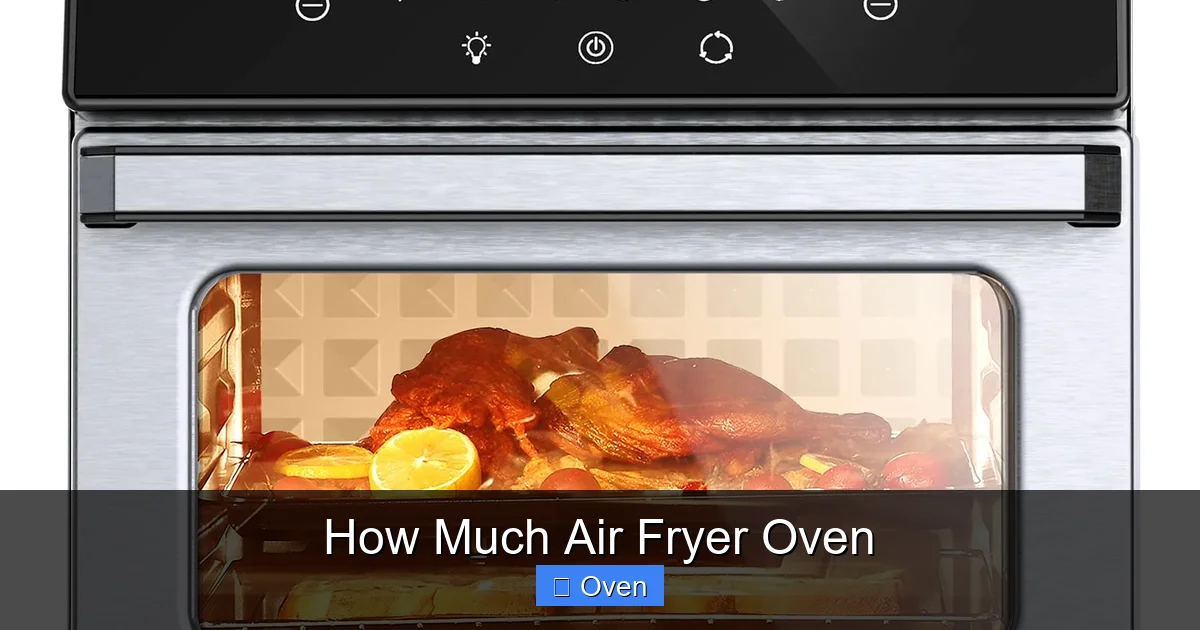
Air fryer oven prices range from $50 for basic models to over $300 for premium units, but the best value depends on your needs. Size, features like rotisserie or dehydrate functions, and brand reputation significantly impact cost. Choosing the right air fryer oven means balancing upfront price with long-term savings on energy and cooking time.
Key Takeaways
- Price Range is Wide: Expect to pay $50-$100 for compact, basic air fryer ovens, $100-$200 for mid-range models with more features, and $200-$350+ for large-capacity, premium units with advanced functions.
- Size Drives Cost: Larger capacity (8L+) costs significantly more than smaller models (3-5L). Match the size to your household – a family of 4+ needs at least 8L.
- Features Add Up: Rotisserie kits, dehydrate modes, smart connectivity, and multiple cooking presets increase the price. Prioritize features you’ll actually use.
- Energy Efficiency Matters: Higher wattage (1500W+) cooks faster but uses more power. Look for models with good insulation to save on long-term electricity costs.
- Brand & Build Quality: Established brands (Ninja, Cosori, Instant) often cost more but offer better durability, warranties, and customer support than unknown budget brands.
- Beware of Hidden Costs: Factor in potential accessory purchases (trays, racks) and consider the cost per use over the appliance’s lifespan for true value.
- Value Over Price: The cheapest air fryer oven might break quickly. Investing slightly more often delivers better performance, longevity, and overall satisfaction.
Quick Answers to Common Questions
What’s the absolute cheapest air fryer oven I can buy?
You can find basic 3-4L air fryer ovens for as low as $40-$50 from brands like Dash or generic Amazon sellers. However, these often have limited capacity, fewer features, and potentially lower build quality. They’re suitable only for very small households with minimal cooking needs.
Is a $100 air fryer oven worth it?
Yes, for many people! This price point typically gets you a capable 6-8L model from a reputable brand (like Cosori or Ninja) with digital controls, multiple presets (air fry, roast, bake), and decent build quality. It offers the best balance of capacity, features, and value for average households of 2-4 people.
Why are some air fryer ovens so expensive ($300+)?
Premium models ($200-$350+) offer large capacity (10L+), powerful wattage, advanced features (rotisserie, dehydrate, smart connectivity), superior build quality, and better energy efficiency. They often function as true multi-purpose countertop ovens capable of handling large family meals and replacing multiple appliances, justifying the higher cost for serious home cooks.
Do I need to buy extra accessories for my air fryer oven?
It depends on the model and your needs. Many mid-range and premium units include essential racks and sometimes a rotisserie kit. However, you might want to budget $15-$30 for extra racks (crucial for multi-level cooking), specialized trays (baking, dehydrating), or replacement parts. Check what’s included before purchasing.
How much does it cost to run an air fryer oven?
Air fryer ovens are generally energy-efficient. A typical 1500W model used for 30 minutes costs roughly $0.10-$0.15 in electricity (based on avg. $0.15/kWh rate). They are significantly cheaper to run for small-to-medium meals than heating a full conventional oven, leading to long-term savings.
📑 Table of Contents
- How Much Does an Air Fryer Oven Really Cost? Your Complete Price Guide
- Breaking Down the Air Fryer Oven Price Spectrum: From Budget to Premium
- What Makes One Air Fryer Oven Cost More Than Another? Key Cost Drivers
- Hidden Costs & Value: It’s Not Just the Sticker Price
- How to Choose the Right Air Fryer Oven for YOUR Budget (Without Regret)
- Real-World Examples: Matching Price to Need
- Conclusion: Investing Wisely in Your Air Fryer Oven
How Much Does an Air Fryer Oven Really Cost? Your Complete Price Guide
So, you’re thinking about getting an air fryer oven. Maybe you’ve seen the crispy fries, the juicy chicken, the perfectly roasted veggies popping up on social media. Or perhaps you’re just tired of soggy microwave meals and want a faster, healthier way to cook. The big question buzzing in your head is probably: “How much is this going to set me back?” It’s a smart question! Air fryer ovens have exploded in popularity, but the price tags can be confusing. One looks like a toaster oven, costs $60, and promises the world. Another, sleek and digital, sits proudly on a counter for $300. What gives? Why the huge difference? And crucially, how do you know you’re not overpaying or, worse, buying a dud that’ll end up in the back of a cabinet?
Let’s cut through the noise. The truth is, there’s no single “air fryer oven price.” It’s a spectrum, influenced by a bunch of factors you might not have considered. It’s not just about the sticker price either. Think about what you *really* need. Are you cooking for one? A family of five? Do you dream of rotisserie chicken or just want quick reheats? Are you obsessed with smart tech, or do you just want something simple that works? Understanding these details is the key to figuring out how much you should realistically spend. This guide isn’t about pushing you towards the most expensive model or the cheapest one. It’s about helping you find the *right* air fryer oven for *your* kitchen, *your* budget, and *your* cooking style. We’ll break down the price ranges, explore what drives the cost, and give you the practical tips to make a smart investment. Because let’s be honest, nobody wants to regret their purchase two weeks later.
Breaking Down the Air Fryer Oven Price Spectrum: From Budget to Premium
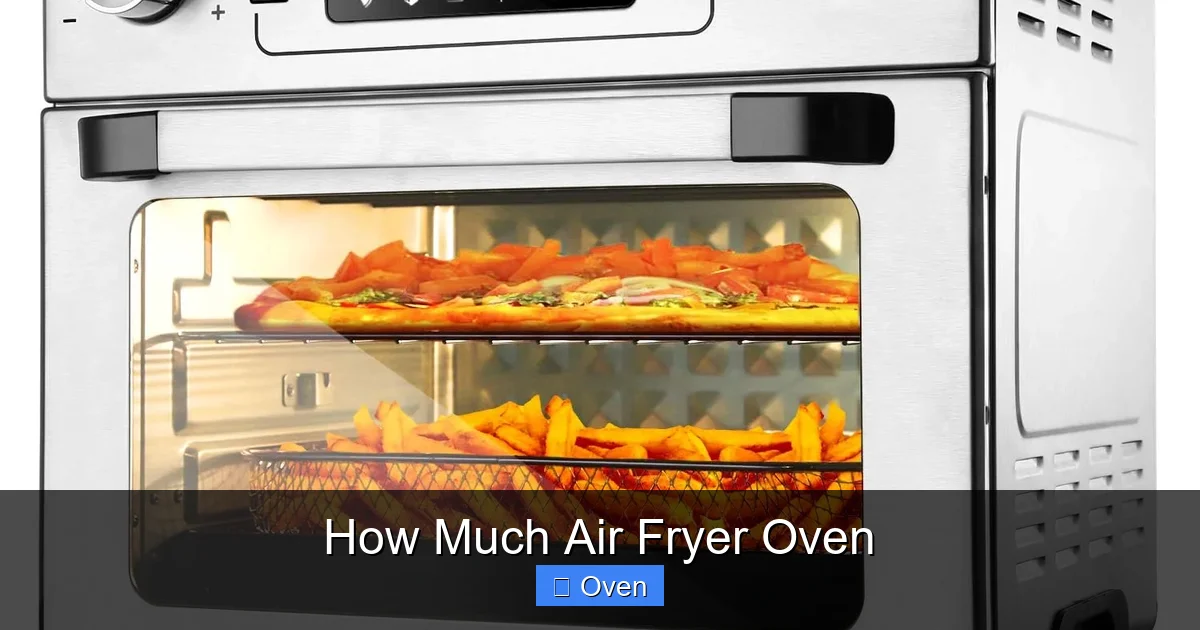
Visual guide about How Much Air Fryer Oven
Image source: images-na.ssl-images-amazon.com
Forget a single number. Air fryer oven pricing is a landscape with distinct territories. Knowing where you fit helps set realistic expectations.
The Budget Brigade: $50 – $100
This is the entry point. Think compact units, often 3-5 liters in capacity. Brands like Dash, Gourmia, and some generic Amazon finds dominate here. You’re getting the absolute core function: hot air circulation for faster cooking and crispiness compared to a standard oven. Don’t expect fancy extras. The controls are usually simple dials (time and temperature), maybe a basic preset or two like “fry” or “bake.” Build quality is often lighter plastic. The main appeal? Getting the air frying *concept* at a very low risk. It’s perfect if you’re cooking for one or two, have minimal counter space, and primarily want to reheat leftovers, cook frozen snacks, or make small batches of veggies. *Example:* A $65 4L model might perfectly handle a couple of chicken breasts or a small tray of roasted broccoli. However, be prepared for potential limitations: slower preheating, less consistent results on larger items, and possibly a shorter lifespan. It’s a “try it out” price point.
The Sweet Spot: $100 – $200
This is where most home cooks find their ideal balance of features, capacity, and value. Capacity jumps to 6-10 liters, comfortably serving 2-4 people. Brands like Ninja (Foodi series), Cosori (Pro series), and Instant Vortex are strong contenders here. You start seeing significant upgrades: digital controls with more presets (air fry, roast, bake, reheat, sometimes dehydrate or rotisserie), better build quality (sturdier materials, improved insulation), and often larger viewing windows. Wattage typically increases to 1500W-1800W, meaning faster cooking. This range offers the best “bang for your buck” for the average household. You get reliable performance, enough space for a whole chicken or a 12-inch pizza, and features that genuinely expand your cooking options beyond just air frying. *Example:* A $150 8L Cosori model might include 10+ presets, a rotisserie function (with kit), and a sleek design that looks good on your counter. This is the zone where you move from “just air frying” to genuinely versatile countertop cooking.
The Premium Playground: $200 – $350+
Here, you’re paying for top-tier capacity (10L+), advanced technology, and premium build. Think large families or serious home chefs. Brands like Breville (Smart Oven Air Fryer), Ninja (Foodi XL Pro), and high-end Cosori models sit here. Expect massive capacity (12L+), powerful wattage (1800W+), and a suite of sophisticated features: multiple cooking functions (air fry, bake, roast, broil, toast, dehydrate, proof, rotisserie), smart connectivity (app control, voice assistant compatibility), precise temperature control, and often superior insulation for energy efficiency. Build quality is robust, with stainless steel elements and durable components. You might also get included premium accessories like multiple racks, specialized trays, or even sous vide capabilities. *Example:* A $320 Breville Smart Oven Air Fryer might handle a 14-pound turkey, offer 13 precise functions, connect to your phone for remote monitoring, and have a convection fan system designed for professional-grade results. You’re paying for convenience, versatility, and durability that can genuinely replace multiple appliances.
What Makes One Air Fryer Oven Cost More Than Another? Key Cost Drivers
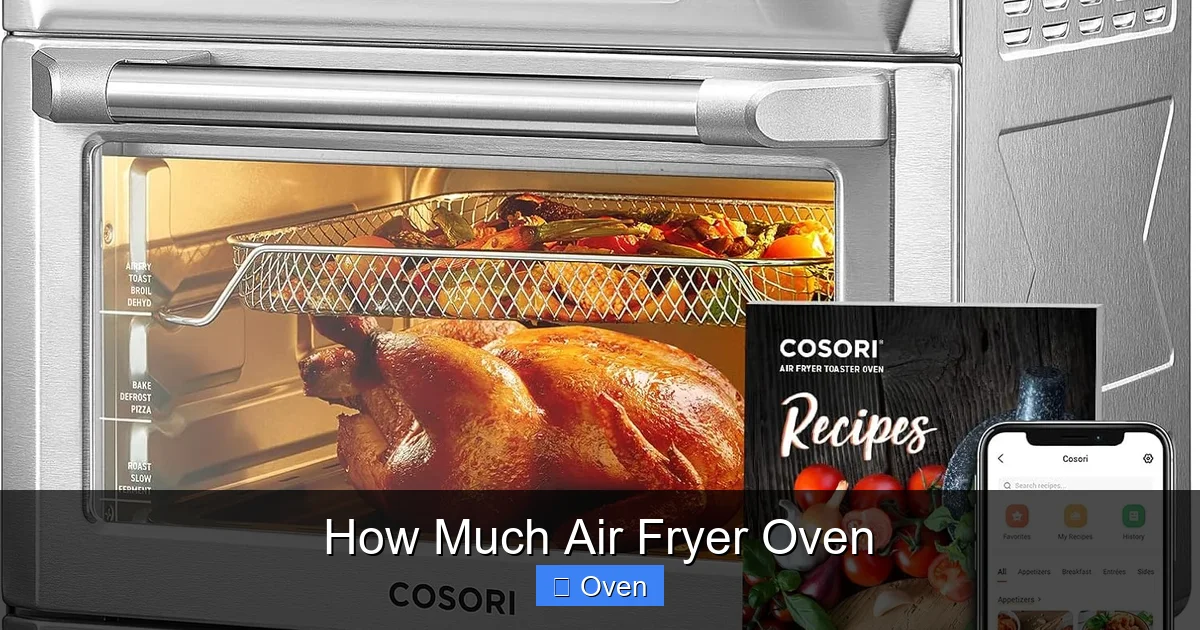
Visual guide about How Much Air Fryer Oven
Image source: images-cdn.ubuy.co.in
Why does that shiny $300 model cost six times more than the basic $50 one? It’s not just marketing. Several concrete factors push the price up.
Capacity: The Biggest Factor
This is paramount. A small 3L unit fits maybe 2 chicken breasts. An 8L unit handles a whole chicken or a large casserole. A 12L+ unit can roast a turkey. Larger capacity requires more powerful heating elements, a bigger fan, stronger construction, and more materials – all adding cost. If you regularly cook for more than two people, skimping on size leads to frustration and multiple batches, negating the time-saving benefit. Think about your typical meals. A family of four needs at least 8L; larger families or entertainers should look at 10L+. Paying more for adequate size is almost always worth it.
Features & Functionality: Beyond Basic Air Frying
Basic models do one thing: air fry. Premium models are multi-functional powerhouses. Each added function costs money to develop and implement:
* **Rotisserie:** Requires a motor, spit rods, and often a dedicated heating element. Adds $20-$50+ to the price.
* **Dehydrate:** Needs precise low-temperature control and often a dedicated fan setting. Common in mid-to-high range.
* **Smart Connectivity (WiFi/App):** Involves hardware, software development, and ongoing server costs. A significant premium feature.
* **Multiple Presets & Precision Controls:** Digital interfaces with numerous presets, accurate temperature probes, and adjustable convection speeds cost more than simple dials.
* **Specialized Cooking Modes:** Proofing dough, slow cooking, or sous vide integration add complexity and cost. Ask yourself: Which features will you *actually use* weekly? Don’t pay for a rotisserie if you never cook whole chickens.
Build Quality & Brand Reputation
Cheap plastic feels flimsy and may warp or melt over time. Sturdier materials (metal housing, high-grade plastics, better insulation) cost more but last longer and cook more evenly. Established brands (Ninja, Cosori, Breville, Instant) invest in R&D, quality control, and customer support. They often offer better warranties (1-2 years vs. 90 days for no-name brands). While you pay a brand premium, you often get reliability and peace of mind. A $120 Ninja might outlast and outperform a $70 generic model, making it cheaper in the long run.
Wattage & Energy Efficiency
Higher wattage (1500W-1800W+) means faster preheating and cooking, crucial for achieving that perfect crisp. However, it also means higher peak energy use. Premium models often counter this with better insulation and smart energy management, leading to lower *overall* energy consumption per meal compared to running a full oven. Look for units with good seals and thick walls – they retain heat better, cooking faster and using less power overall. A slightly higher upfront cost for efficiency can save money on your electric bill over years of use.
Hidden Costs & Value: It’s Not Just the Sticker Price
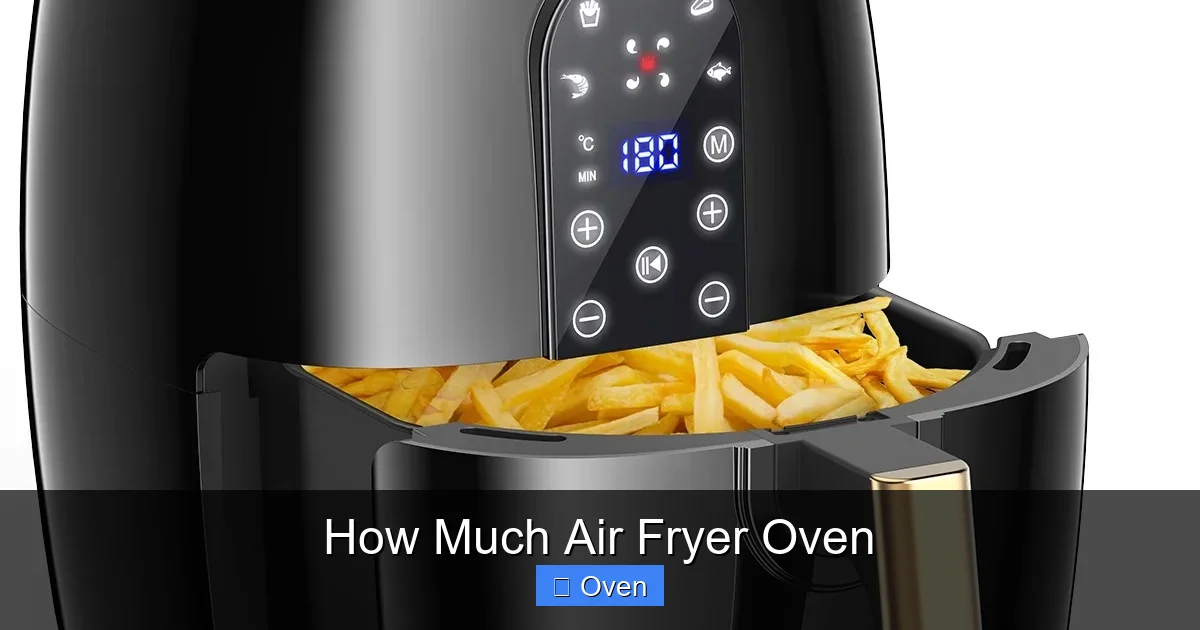
Visual guide about How Much Air Fryer Oven
Image source: i5.walmartimages.com
Focusing solely on the purchase price is a common mistake. True value considers the bigger picture.
Accessories: The Add-On Expense
That shiny new air fryer oven might come with just one basic rack. But what about:
* **Extra Racks:** Essential for cooking multiple items at once (e.g., fries on top, chicken below). Often sold separately for $10-$20.
* **Specialized Trays:** Drip trays, baking pans, or dehydrator trays. Can add $15-$30.
* **Rotisserie Kit:** If the model supports it, the kit (spit, forks, motor) might not be included, costing $20-$40.
* **Cleaning Tools:** Specific brushes or scrapers for hard-to-reach areas. Budget $5-$10.
Factor in $20-$50 for essential accessories, especially if you plan to use advanced functions. Check what’s included *before* you buy.
Energy Costs: The Long-Term Equation
Air fryer ovens are generally more energy-efficient than full-sized ovens, but efficiency varies. A basic 1200W model might take longer to cook, potentially using similar energy to a faster 1600W model. Premium models with good insulation often cook faster *and* use less total energy per meal. Calculate roughly: (Wattage / 1000) x Hours Used x Your Electricity Rate. A 1500W oven used 30 mins (0.5 hours) at $0.15/kWh costs about $0.11 per use. While small per use, it adds up. Investing in a more efficient model saves pennies per meal, but those pennies become dollars over years.
Durability & Lifespan: Cheap vs. Cost-Effective
That $60 air fryer oven might seem like a steal… until the heating element fails after 6 months. Budget models often use lower-quality components. A $150 model from a reputable brand, built with better materials and backed by a solid warranty, might easily last 3-5 years with proper care. Consider the cost per year: $60 for 1 year = $60/year. $150 for 4 years = $37.50/year. The pricier model is often the *cheaper* long-term investment. Read reviews focusing on longevity, not just initial performance.
Time Savings: The Intangible Value
A faster air fryer oven (higher wattage, better convection) means less time waiting for food. Cooking a whole chicken in 45 minutes instead of 75 minutes in a conventional oven is a huge time saver, especially on busy weeknights. While hard to quantify in dollars, the value of your time is real. A slightly more expensive model that consistently cooks faster delivers significant daily value.
How to Choose the Right Air Fryer Oven for YOUR Budget (Without Regret)
Now that you know the price drivers, how do you navigate the options?
Step 1: Honestly Assess Your Needs (The Most Important Step!)
* **Household Size:** 1-2 people? 3-4? 5+? This dictates minimum capacity (3-5L for 1-2, 6-8L for 3-4, 10L+ for 5+).
* **Cooking Habits:** Do you mostly reheat leftovers and cook frozen fries? Or do you roast whole chickens, bake cookies, dehydrate fruit, and make rotisserie? Be realistic about the features you’ll use weekly.
* **Counter Space:** Measure your available space! A large 12L unit needs significant real estate. Don’t buy something that won’t fit.
* **Must-Have Features:** List your non-negotiables (e.g., “must fit a 12-inch pizza,” “needs rotisserie for Sunday chicken,” “must have digital controls”).
* **Budget Reality:** Set a firm maximum price *including* essential accessories. Don’t get swayed by features you don’t need.
Step 2: Prioritize Within Your Price Range
* **Under $100:** Focus on core air frying performance and adequate size for your household. Sacrifice extra features. Prioritize decent wattage (1400W+) and basic build quality. *Best for:* Singles/couples, minimal cooking needs, tight budgets.
* **$100-$200:** This is the goldilocks zone for most. Prioritize capacity first, then essential features you’ll use (e.g., rotisserie if you cook whole poultry, dehydrate if you make jerky). Look for reputable brands with good warranties. *Best for:* Families of 2-4, versatile cooking, best overall value.
* **$200+:** Prioritize capacity for large families/entertaining, advanced features you’ll fully utilize (smart tech, multiple precise functions), and top-tier build quality/durability. *Best for:* Large families, serious home cooks, those wanting a true oven replacement.
Step 3: Research Relentlessly (Don’t Skip This!)
* **Read Detailed Reviews:** Look beyond star ratings. Sites like Wirecutter, Consumer Reports, and reputable cooking blogs test for performance, ease of cleaning, and durability. Search “[Model Name] long-term review”.
* **Watch Video Demos:** See the unit in action – how loud is it? How easy are the controls? Does the door open smoothly?
* **Check Warranty & Support:** A 1-year warranty is standard; 2 years is better. Research the brand’s customer service reputation. Can you easily get replacement parts?
* **Compare Included Accessories:** Does it come with enough racks? Is the rotisserie kit included? Factor in missing items.
* **Consider Resale Value:** Premium brands often hold value better if you upgrade later.
Step 4: Where & When to Buy
* **Major Retailers:** Amazon, Target, Walmart, Best Buy – good for selection, reviews, and often competitive pricing. Check return policies.
* **Brand Websites:** Sometimes offer exclusive bundles or extended warranties.
* **Sales are Key:** Black Friday, Cyber Monday, Prime Day, and end-of-season sales (January) offer significant discounts, especially on previous-year models. Sign up for retailer newsletters.
* **Refurbished Options:** Certified refurbished units from the brand or reputable sellers (like Best Buy Outlet) can offer premium models at mid-range prices, often with a warranty. A great way to save.
Real-World Examples: Matching Price to Need
Let’s put theory into practice with common scenarios:
The Busy Single Professional
* **Needs:** Quick meals for 1, small counter space, reheats, frozen snacks, maybe small chicken breasts. Minimal features.
* **Ideal Price Range:** $60-$90
* **Why:** A compact 3-4L model (e.g., Dash Compact Air Fryer Oven) fits perfectly. It handles single servings efficiently, is easy to store, and the lower price point is low-risk. Paying $200 for features they’ll never use is wasteful. Energy efficiency is still good for small loads.
The Family of Four (Two Adults, Two Kids)
* **Needs:** Cooking for 4 regularly, whole chickens, larger batches of veggies/fries, baking cookies, maybe rotisserie occasionally. Needs versatility and speed.
* **Ideal Price Range:** $120-$180
* **Why:** An 8L model (e.g., Ninja Foodi 8-in-1 Digital Air Fryer Oven, Cosori Pro II) hits the sweet spot. It has enough capacity, essential presets (air fry, roast, bake, reheat, dehydrate), often includes a rotisserie kit, and来自 reputable brands. The $150 investment delivers daily value through time savings and meal versatility, avoiding the frustration of an undersized unit. The energy efficiency over years justifies the price over a cheaper, less capable model.
The Entertaining Enthusiast / Large Family
* **Needs:** Cooking for 6+ regularly, roasting large turkeys/ham, baking multiple dishes simultaneously, using advanced functions (dehydrate, proof, rotisserie) often, durability for heavy use.
* **Ideal Price Range:** $220-$320
* **Why:** A 10L+ premium model (e.g., Breville Smart Oven Air Fryer Pro, Ninja Foodi XL Pro) is necessary. The large capacity, powerful wattage, multiple precise functions, and robust build handle the volume and complexity. While expensive upfront, its ability to replace a full oven for many tasks saves significant time and energy during large gatherings. The durability ensures it lasts for years of heavy use, making the cost per meal very reasonable. Skimping here leads to constant batch cooking and disappointment.
Conclusion: Investing Wisely in Your Air Fryer Oven
So, how much is an air fryer oven? The honest answer is: it depends entirely on *you*. The market offers everything from bare-bones $50 units to feature-packed $350+ powerhouses. But the real question isn’t the absolute price tag; it’s “How much should *I* spend to get the value I need?”
Remember, the cheapest air fryer oven isn’t necessarily the best value. A $70 model that breaks in a year or constantly disappoints with uneven cooking costs you more in frustration and replacement than a $150 model that reliably serves your family for four years. Conversely, spending $300 on a massive unit with smart features you’ll never use is just as poor a value decision.
The key is intentional purchasing. Take the time to honestly evaluate your household size, your actual cooking habits, and the features you’ll truly utilize. Prioritize capacity first – it’s the foundation. Then, within your realistic budget (including accessories!), focus on reputable brands known for durability and performance in your needed size range. Don’t be afraid to wait for a sale on a model that ticks your boxes.
An air fryer oven is more than just a gadget; it’s a tool to make your daily cooking faster, healthier, and more enjoyable. By understanding the factors that drive the price and aligning your purchase with your specific needs, you can find the perfect air fryer oven that delivers excellent value for years to come. It’s not about finding the absolute cheapest or the absolute most expensive; it’s about finding the *right* one for *your* kitchen. That’s the smart investment worth making.
Frequently Asked Questions
What is the average price for a good air fryer oven?
The average price for a well-reviewed, versatile air fryer oven suitable for a family of 3-4 is typically between $120 and $180. This range offers a good balance of capacity (6-8 liters), essential features (multiple presets, digital controls), and reliable build quality from reputable brands.
Are expensive air fryer ovens better?
Not necessarily “better” for everyone, but they often offer significant advantages. Expensive models usually have larger capacity, more powerful and precise heating, advanced features (like rotisserie or smart controls), superior build quality, and better energy efficiency. They are worth the investment if you need the capacity or features, but a mid-range model may be perfect for basic needs.
Can I get a large air fryer oven for under $150?
Yes, it’s possible! Several reputable brands like Ninja (Foodi series) and Cosori offer large-capacity air fryer ovens (8-10 liters) in the $130-$150 range, especially during sales. These models often include core features like multiple presets and digital controls, making them excellent value for families needing space without breaking the bank.
What features should I prioritize when buying an air fryer oven?
Prioritize capacity first – ensure it fits your typical meals (e.g., whole chicken, 12-inch pizza). Next, focus on essential functions you’ll use regularly (air fry, roast, bake are basics; rotisserie/dehydrate are nice extras). Then consider build quality, ease of cleaning, and brand reputation/warranty. Don’t pay for features you won’t use.
Is an air fryer oven cheaper to run than a regular oven?
Yes, significantly for small to medium meals. Air fryer ovens preheat much faster (5-10 mins vs. 15-20+ mins), cook faster due to concentrated hot air, and have a much smaller cavity to heat. This translates to lower energy consumption per meal, saving you money on your electricity bill over time compared to using a full-sized conventional oven.
How long do air fryer ovens typically last?
With proper care, a mid-range to premium air fryer oven from a reputable brand typically lasts 3-5 years, sometimes longer. Budget models may last 1-2 years. Factors affecting lifespan include build quality, frequency of use, cleaning habits (avoiding harsh abrasives), and whether it’s overloaded. Investing in a known brand often yields better longevity.