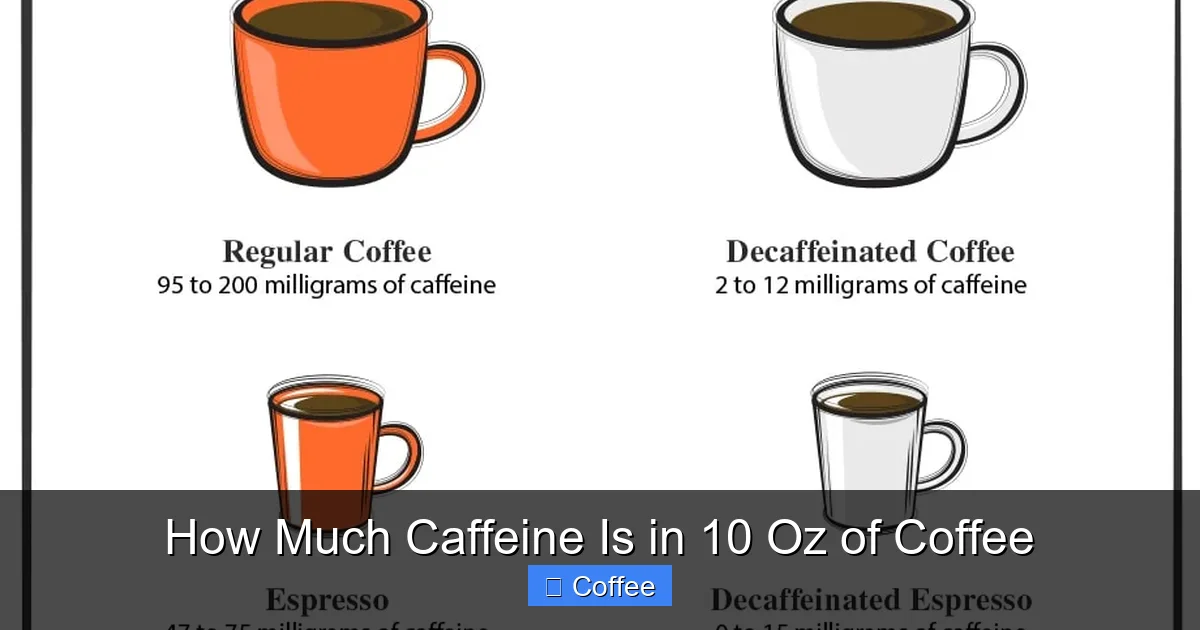
How much caffeine is in 10 oz of coffee varies wildly—from 30mg to over 200mg—depending on bean type, roast, and brewing method. A standard drip coffee averages 80-100mg, but your favorite latte or cold brew could pack significantly more or less. Understanding these variables helps you control your caffeine intake effectively.
Key Takeaways
- Caffeine ranges dramatically: Expect 30mg (light roast pour-over) to 200mg+ (dark roast espresso shot) in 10 oz—no universal number exists.
- Brewing method is key: Espresso concentrates caffeine (63mg/oz), while drip coffee spreads it thinner (8-10mg/oz).
- Bean type matters most: Robusta beans contain nearly double the caffeine of Arabica—check your blend!
- Roast level confuses people: Dark roasts have slightly less caffeine by weight than light roasts due to density loss.
- Decaf isn’t zero: 10 oz of decaf coffee still contains 2-15mg of caffeine on average.
- Track your sources: Add up caffeine from coffee, tea, soda, and chocolate to avoid accidental overconsumption.
Quick Answers to Common Questions
Is 10 oz of coffee a lot of caffeine?
It depends! A standard 10 oz drip coffee (80-100mg) is moderate—about the same as a small energy drink. But 10 oz of cold brew concentrate could exceed 200mg, which is high for one serving. Always consider your total daily intake.
Does darker roast coffee have more caffeine?
No, it’s a myth! Light roasts have slightly more caffeine by weight than dark roasts because dark roasts lose more mass during roasting. However, the difference is small (5-10%)—roast level affects flavor far more than caffeine.
How much caffeine is in 10 oz of decaf coffee?
Typically 2-15mg. Decaf removes 97% of caffeine, but trace amounts remain. It’s generally safe for most people, but those with extreme sensitivity should be aware.
Why does my coffee sometimes keep me awake and sometimes not?
This is likely due to caffeine variability! Factors like bean type (Robusta vs. Arabica), brew strength, and even your stress levels or hydration can change the effective dose. Track your brew methods to identify patterns.
Can I get caffeine from coffee without the jitters?
Yes! Use a moderate coffee-to-water ratio, avoid brewing too long/hot, choose Arabica beans, and consume with food. L-theanine (found in tea) can also smooth out caffeine’s edge—try a matcha latte!
📑 Table of Contents
- The Caffeine Conundrum: Why 10 Oz Isn’t One-Size-Fits-All
- Breaking Down the Numbers: Average Caffeine in 10 Oz Coffee
- What Makes Your Coffee Stronger or Weaker?
- Brewing Methods: Your Caffeine Control Knob
- Bean Types & Roasts: The Hidden Caffeine Factors
- Managing Your Caffeine Intake: Practical Tips
- Conclusion: Your Cup, Your Rules
The Caffeine Conundrum: Why 10 Oz Isn’t One-Size-Fits-All
You pour yourself a comforting 10 oz mug of coffee. You take that first warm sip. You feel the familiar buzz start to kick in. But have you ever stopped to wonder: Exactly how much caffeine is in this 10 oz of coffee? It seems like a simple question. The answer, however, is anything but simple. If you’ve ever felt unexpectedly jittery after your morning brew or wondered why your afternoon cup doesn’t give you the same lift, the culprit is likely caffeine variability.
Unlike a standardized pill, coffee is a living, breathing product shaped by countless factors. The type of bean growing on a mountain in Colombia plays a role. The roast master’s decisions in a local roastery matter. Even the water temperature in your kitchen affects the final cup. This means two 10 oz cups of coffee, brewed just minutes apart, could deliver wildly different caffeine doses. Understanding this variability isn’t just trivia—it’s essential for managing your energy, sleep, and overall well-being. Whether you’re a casual sipper or a dedicated coffee connoisseur, knowing how much caffeine is in 10 oz of coffee empowers you to make informed choices. Let’s dive into the deliciously complex world of coffee caffeine.
Breaking Down the Numbers: Average Caffeine in 10 Oz Coffee
When people ask “how much caffeine is in 10 oz of coffee,” they often expect a single number. The reality is a spectrum. Let’s cut through the confusion with realistic averages based on common brewing methods. Remember, these are estimates—your actual cup could be higher or lower.
Visual guide about How Much Caffeine Is in 10 Oz of Coffee
Image source: theknowledgeacademy.com
The Drip Coffee Baseline
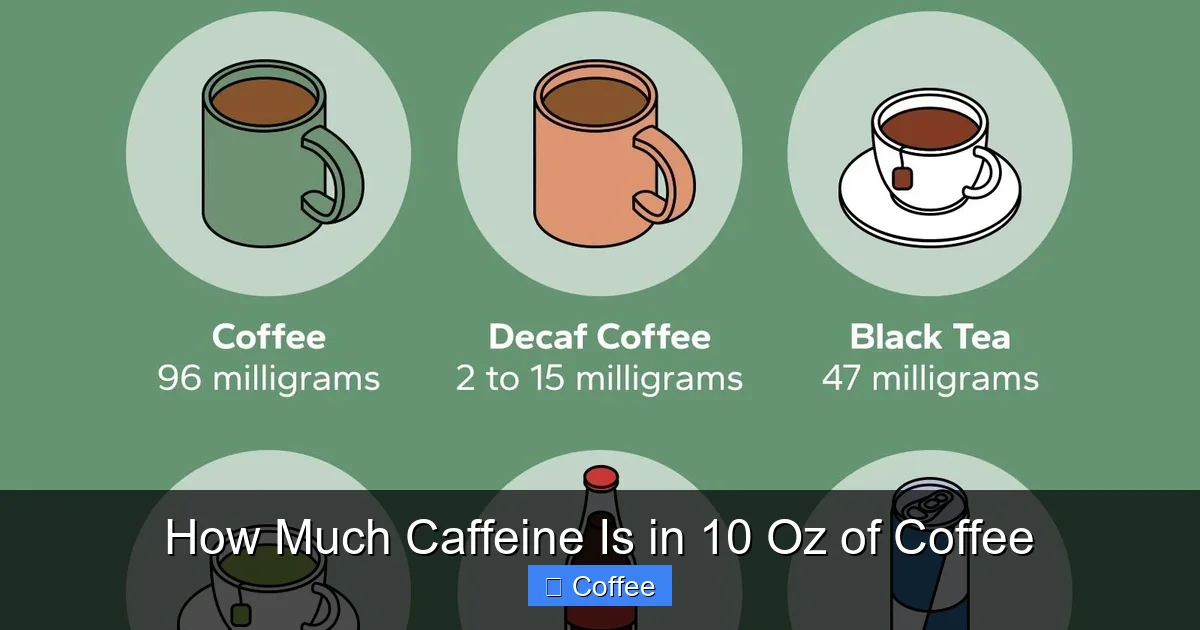
For many home brewers and office coffee pots, drip coffee is the standard. A typical 10 oz (about 300ml) cup of drip-brewed coffee made with medium-roast Arabica beans usually contains 80-100mg of caffeine. This is the figure you’ll often see on nutrition labels for “brewed coffee.” Why this range? It depends on the coffee-to-water ratio. A stronger brew (more scoops per pot) pushes it toward 100mg. A weaker brew (fewer scoops) drops it closer to 70mg. If you use pre-ground supermarket coffee with a standard 2 tablespoons per 6 oz water ratio, 10 oz will land squarely in the 85mg neighborhood.
Espresso: The Concentrated Powerhouse
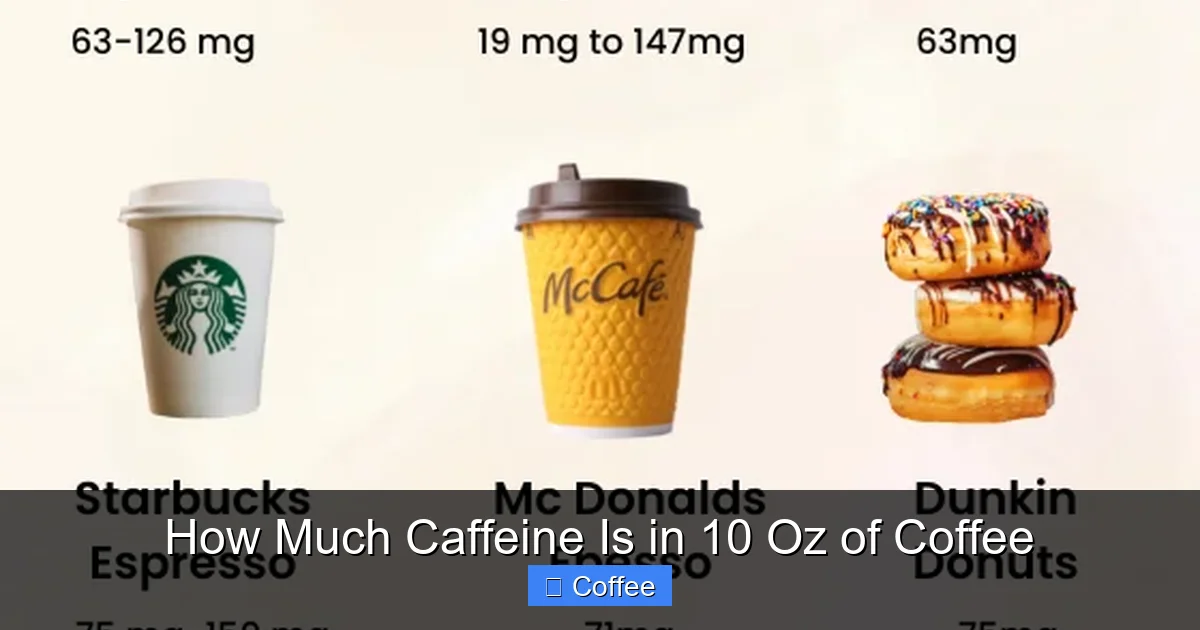
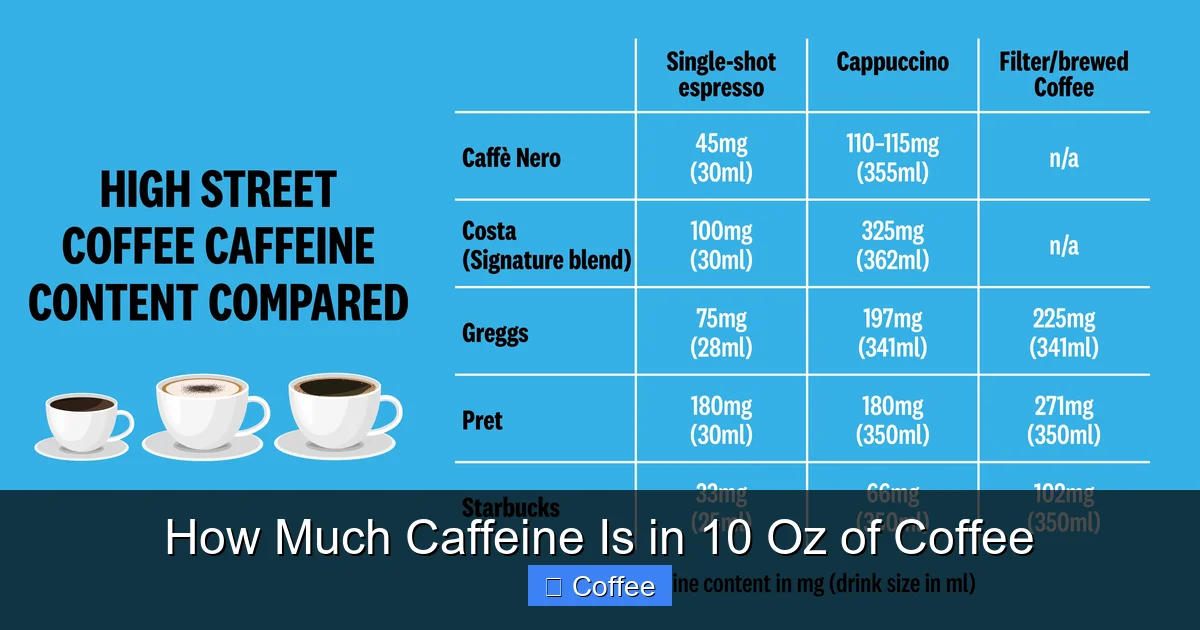
Espresso is where things get intense. A single 1 oz (30ml) shot of espresso packs roughly 63mg of caffeine. Since 10 oz equals about 3 shots (10 oz / 1 oz per shot = 10 shots? Wait, no—let’s correct that: 10 oz is approximately 300ml, and a standard shot is 1 oz or 30ml, so 10 oz would be roughly 10 shots? That doesn’t sound right for a typical serving. Actually, a standard “double shot” used in lattes is about 2 oz (60ml). So for 10 oz of liquid espresso (not an espresso-based drink), you’re looking at about 10 shots worth. But people rarely drink 10 oz of straight espresso! More realistically, a 10 oz latte contains about 2 shots (126mg caffeine), while a 10 oz americano (espresso + hot water) contains roughly 2-3 shots (126-189mg). The key takeaway: espresso-based drinks deliver significantly more caffeine per ounce than drip coffee. A 10 oz latte often has 120-150mg, while a 10 oz americano can hit 150-200mg.
Cold Brew: The Smooth but Potent Surprise
Cold brew coffee has surged in popularity for its smooth, low-acid flavor. But don’t be fooled by its mellow taste—it’s often a caffeine powerhouse. Because cold brew uses a high coffee-to-water ratio and steeps for 12-24 hours, it extracts caffeine very efficiently. A typical 10 oz serving of cold brew concentrate can contain 150-250mg of caffeine. Many cafes serve cold brew diluted with water or milk, which brings the caffeine down. A standard 10 oz “ready-to-drink” cold brew bottle or cafe serving (often diluted) usually lands between 100-150mg. Always check the label—concentrates are much stronger!
What Makes Your Coffee Stronger or Weaker?
Why is there such a huge range? Several interconnected factors determine the caffeine punch in your 10 oz cup. Understanding these helps you predict and control your intake.
Visual guide about How Much Caffeine Is in 10 Oz of Coffee
Image source: kteashop.com
The Coffee-to-Water Ratio: Your Primary Lever
This is the single biggest factor you control at home. More coffee grounds per ounce of water = more caffeine. The standard “golden ratio” is 1-2 tablespoons (7-15g) of coffee per 6 oz (180ml) of water. For 10 oz (300ml), that translates to roughly 1.7-3.3 tablespoons (12-25g) of coffee. If you use 3 tablespoons instead of 2, your 10 oz cup could have 25-30% more caffeine. Cafe brewers often use stronger ratios—up to 2.5 tablespoons per 6 oz—meaning your 10 oz cafe drip coffee might easily hit 100mg or more. Tip: Use a kitchen scale for precision. Weighing your coffee (grams) is far more accurate than volume (tablespoons), as grind size and bean density vary.
Grind Size: The Extraction Catalyst
How finely you grind your beans dramatically impacts caffeine extraction. Finer grinds have more surface area exposed to water, leading to faster and more complete extraction—including caffeine. A fine espresso grind extracts nearly all available caffeine in 25-30 seconds. A coarse French press grind extracts more slowly over 4 minutes, but still gets most of it. If you use an extra-coarse grind in a drip machine, you might under-extract, resulting in a weaker, less caffeinated cup. Conversely, grinding too fine for your brewer can cause over-extraction and bitterness, but it won’t necessarily add *more* caffeine—it just makes the existing caffeine taste harsher.
Water Temperature and Brew Time: The Extraction Duo
Hotter water extracts caffeine more efficiently. Ideal brewing temperature is 195°F-205°F (90°C-96°C). Water just off the boil (212°F/100°C) is perfect. If your water is too cool (below 190°F/88°C), extraction is slower and less complete, yielding less caffeine. Brew time also matters. Longer contact time between water and coffee allows more caffeine to dissolve. Drip coffee typically brews in 4-6 minutes. French press steeps for 4 minutes. Espresso forces hot water through grounds in 25-30 seconds but uses high pressure for intense extraction. Cold brew’s 12-24 hour steep compensates for cold water with massive time.
Brewing Methods: Your Caffeine Control Knob
Your chosen brewing method isn’t just about flavor—it’s a direct dial for caffeine strength. Here’s how popular methods compare for a 10 oz serving:
Visual guide about How Much Caffeine Is in 10 Oz of Coffee
Image source: mediauploads.data.world
Drip Coffee Makers: The Consistent Workhorse
As discussed, standard drip yields 80-100mg per 10 oz. Pros: Consistent, easy, good for batches. Cons: Less control over variables like water temp (many home machines don’t hit ideal temp). Pro Tip: Pre-heat your carafe with hot water before brewing. This maintains optimal temp longer, improving extraction and caffeine yield slightly.
French Press: Bold and Full-Bodied
French press typically produces a stronger cup than drip due to full immersion and metal filter (allowing oils through). Expect 90-120mg per 10 oz. The coarser grind helps prevent over-extraction bitterness, but the 4-minute steep ensures good caffeine pull. Pro Tip: Use a timer! Steeping longer than 4 minutes increases bitterness more than caffeine. Stir the crust (“cap”) that forms on top after 1 minute for even extraction.
Pour-Over (V60, Chemex): Precision and Clarity
Pour-over methods offer high control but often result in slightly lower caffeine than French press or drip for the same 10 oz volume. Why? The faster flow rate means less contact time. Expect 70-100mg per 10 oz. Light roasts used for pour-over might also have marginally more caffeine by weight. Pro Tip: Bloom your coffee (pour a small amount of water to let it degas for 30 sec) before the main pour. This ensures even saturation and better extraction.
AeroPress: Versatile and Quick
The AeroPress is a chameleon. Brew time (1-2 minutes) and pressure can be adjusted. A standard “inverted” method brew yields about 80-110mg per 10 ozPro Tip: Experiment with steep time. 60 seconds gives balanced flavor and caffeine; 90+ seconds increases strength but risks bitterness.
Espresso Machines: The Caffeine Concentrate
As covered earlier, straight espresso is off the charts for caffeine per ounce. But remember: a 10 oz drink made with espresso (like a latte) contains the caffeine from the shots, not the milk/water. 2 shots (standard for 10 oz latte) = ~126mg. 3 shots (some large lattes) = ~189mg. Pro Tip: Ask for “single shots” if you want less caffeine in your milk drink. Many cafes default to doubles.
Bean Types & Roasts: The Hidden Caffeine Factors
It’s not just how you brew—it starts with the bean itself. Two major factors here: the coffee species and the roast level.
Arabica vs. Robusta: The Caffeine Divide
This is the biggest genetic difference. Arabica beans (most specialty coffee, ~60-70% of global production) contain about 0.8-1.4% caffeine by weight. Robusta beans (common in instant coffee, espresso blends, and budget coffee) pack a punch with 1.7-4.0% caffeine by weight—nearly double! Why? Robusta evolved with more caffeine as a natural pest deterrent. If your coffee label mentions “Robusta” or it’s a cheap instant coffee, expect significantly more caffeine. A 10 oz cup made with a Robusta-heavy blend could easily exceed 150mg, even as drip coffee. Many espresso blends include 10-20% Robusta to boost crema and caffeine.
Roast Level: Dark vs. Light – The Great Misconception
Here’s where popular belief gets it wrong. Many think dark roast = more caffeine. Actually, light roasts have slightly MORE caffeine by weight than dark roasts. Why? During roasting, beans lose mass (water and CO2) but caffeine is very stable. A dark roast bean is less dense and has lost more mass, so a *scoop* of dark roast beans weighs less than a scoop of light roast beans. Since caffeine content is measured per bean (not per scoop), you get marginally more caffeine when using the same *volume* of light roast beans. However, the difference is small—typically 5-10% more caffeine in light roast for the same volume. The flavor impact (darker = more bitter, less acidic) is far more noticeable than the caffeine difference. Don’t switch roasts just for caffeine; choose based on taste preference.
Single-Origin vs. Blend: Does It Matter?
Generally, no—caffeine content is determined by the bean species and roast, not the country of origin. A light roast Ethiopian Arabica will have similar caffeine to a light roast Colombian Arabica. However, blends often include Robusta (as mentioned), which *does* significantly increase caffeine. Check the ingredient list if high caffeine is a concern.
Managing Your Caffeine Intake: Practical Tips
Knowing how much caffeine is in 10 oz of coffee is step one. Step two is using that knowledge to align with your health and energy needs. The FDA suggests 400mg as a generally safe daily limit for healthy adults, but sensitivity varies wildly.
Track Your Total Daily Caffeine
Coffee isn’t your only source! Factor in:
- Tea (black: 40-70mg/8oz, green: 20-45mg/8oz)
- Soda (cola: 30-40mg/12oz)
- Energy drinks (80-300mg/can)
- Chocolate (dark: 10-50mg/oz)
- Medications (some pain relievers contain caffeine)
Use a simple app or notebook for a few days. You might be surprised! If you drink two 10 oz coffees (160-200mg), a can of soda (35mg), and a piece of dark chocolate (25mg), you’re already at 220-260mg before lunch.
Timing Is Everything for Sleep
Caffeine has a half-life of 3-7 hours—meaning it takes that long for half the caffeine to leave your system. Consuming 100mg at 2 PM could leave 50mg in your system at 8 PM, potentially disrupting sleep. Rule of thumb: Stop caffeine 6-8 hours before bedtime. If you go to bed at 10 PM, your last coffee should be before 2-4 PM. Listen to your body—if you’re lying awake, cut back earlier.
Adjust Your Brew for Your Needs
Want less caffeine? Try these:
- Dilute it: Add hot water to drip coffee (making an americano) or milk to espresso.
- Use less coffee: Reduce scoops by 25% in your drip maker.
- Choose Arabica-only: Avoid blends with Robusta.
- Opt for lighter roast: Slightly higher caffeine per bean, but often brewed weaker for taste.
- Try half-caff: Mix regular and decaf beans (50/50).
Need a boost? Use a stronger ratio, add an extra shot to your latte, or switch to cold brew (check label first!).
Decaf: Not Quite Zero
Decaffeination removes 97% of caffeine, but not all. A 10 oz cup of decaf coffee typically contains 2-15mg of caffeine. While negligible for most, it matters if you’re extremely sensitive or avoiding caffeine completely for medical reasons (like pregnancy—consult your doctor). Swiss Water Process decaf is chemical-free but may retain slightly more caffeine than solvent-based methods.
Know Your Sensitivity
Genetics play a huge role. Some people metabolize caffeine quickly (feeling effects briefly), others slowly (effects last all day). Signs of too much caffeine: jitters, anxiety, rapid heartbeat, trouble sleeping, digestive upset. If you experience these, reduce intake gradually to avoid withdrawal headaches.
Conclusion: Your Cup, Your Rules
So, how much caffeine is in 10 oz of coffee? The unsatisfying but truthful answer is: it depends. It depends on the beans in your bag, the roast in your grinder, the method on your counter, and the care you take in brewing. It could be a gentle 70mg nudge or a potent 200mg jolt. The magic isn’t in finding one universal number—it’s in understanding the variables so you can craft your perfect cup.
Armed with this knowledge, you’re no longer at the mercy of guesswork. You can choose a light roast pour-over for a bright, moderate start to your morning. You can savor a robust espresso-based drink when you need serious focus. You can confidently order decaf knowing it’s not truly zero, but likely harmless for most. You can track your total daily intake to protect your sleep and steady your energy. Coffee is a ritual, a comfort, a tool—and now, it’s also a choice you make consciously. So next time you pour that 10 oz, take a moment. Consider the journey from bean to cup. Adjust your ratio, savor the aroma, and enjoy the buzz—on your own terms. Your perfect caffeine balance is waiting in your next brew.
Frequently Asked Questions
What’s the absolute lowest caffeine I can get in 10 oz of coffee?
The lowest would be a very weak brew of light roast Arabica beans using a long brew time method like cold brew (diluted) or a very coarse grind in a French press with minimal coffee. You might get down to 30-40mg. Decaf is the true low-caffeine option at 2-15mg.
Why do some coffee brands list different caffeine amounts?
Brands test their specific product—bean blend, roast, grind, and brewing instructions. A brand using Robusta-heavy espresso blend will list much higher caffeine than one using only light roast Arabica for pour-over. Always check the label for their tested value.
Does adding milk or sugar reduce caffeine?
No. Milk, sugar, or flavorings dilute the coffee’s flavor but don’t remove caffeine molecules. A 10 oz latte has the same caffeine as the espresso shots used to make it (e.g., 126mg for two shots), regardless of milk volume.
Is cold brew really stronger in caffeine?
Yes, typically. Cold brew concentrate is brewed with a very high coffee-to-water ratio (often 1:4 or 1:5) and steeped for 12-24 hours, extracting caffeine efficiently. A standard 10 oz serving (often diluted) usually has 100-150mg, significantly more than drip coffee’s 80-100mg.
How does instant coffee compare for caffeine in 10 oz?
Instant coffee is usually made from Robusta beans and is highly concentrated. One standard teaspoon (about 2g) of instant coffee makes ~6 oz with 60-80mg caffeine. For 10 oz, you’d use roughly 1.7 teaspoons, yielding 100-135mg—similar to or slightly higher than drip coffee.
Can I build a tolerance to coffee’s caffeine?
Yes, regular consumption leads to tolerance—your body adapts, so the same caffeine dose has less effect over time. Taking a 1-2 week break resets sensitivity. Tolerance also means withdrawal symptoms (headaches, fatigue) if you suddenly stop after daily use.