
Air fryers typically use 30-50% less energy than conventional ovens for similar small-batch cooking tasks. Their compact size, faster preheating, and shorter cook times make them significantly more efficient for everyday meals like fries, chicken, or veggies. However, for large roasts or baking, ovens remain necessary—choose the right tool to maximize savings.
Key Takeaways
- Lower Wattage, Faster Cooking: Air fryers (1,200-1,800W) heat smaller spaces quickly, while ovens (2,000-5,000W) waste energy preheating large cavities.
- Time is Energy: Air fryers cook 20-40% faster, reducing total energy use even with similar wattage.
- Size Matters: Cooking a single serving in a full oven is highly inefficient; air fryers shine for portions for 1-4 people.
- Preheating Penalty: Ovens often require 10-15 minutes of preheating energy; many air fryers skip this step.
- Real Savings: Switching to an air fryer for 5 hours/week could save $30-$70 annually on electricity.
- Not a Total Replacement: Ovens are still essential for large roasts, baking, or casseroles—use both wisely.
Quick Answers to Common Questions
Can I completely replace my oven with an air fryer?
Not for all tasks. Air fryers can’t handle large roasts, baking, or casseroles. They’re ideal for small-batch cooking, reheating, and crisping—but keep your oven for bigger jobs.
Do smaller air fryers use less energy than larger models?
Generally yes. A 2-quart model cooking for one person uses less energy than a 6-quart model doing the same task. Match the size to your typical portion.
Is preheating an air fryer necessary to save energy?
Rarely. Most foods (fries, chicken, veggies) cook fine without preheating. Skipping this step saves 0.2-0.5 kWh per use—add it up over time!
Do air fryers use more energy than microwaves?
For reheating small portions, microwaves are usually more efficient. But for crisping or cooking raw foods, air fryers outperform microwaves in quality and often energy use.
Can using an air fryer reduce my AC bill?
Absolutely! Ovens heat your kitchen significantly, forcing AC to work harder. Air fryers emit minimal ambient heat—great for summer cooking.
📑 Table of Contents
- Why Energy Use in the Kitchen Actually Matters
- How Air Fryers and Ovens Actually Work (The Energy Difference Starts Here)
- Wattage Showdown: Crunching the Numbers
- Cooking Time: The Silent Energy Killer (or Saver)
- Real-World Usage: When Air Fryers Save (and When They Don’t)
- Beyond Energy: Other Hidden Savings
- Practical Tips to Maximize Energy Savings
- Conclusion: Energy Efficiency Is a Choice, Not a Gimmick
Why Energy Use in the Kitchen Actually Matters
Let’s be honest: most of us don’t think about kilowatt-hours while making dinner. But that oven glowing in your kitchen? It’s likely one of your home’s biggest energy hogs. In fact, cooking accounts for nearly 10% of the average household’s electricity use. Now, with air fryers exploding in popularity, the big question is: how much energy does an air fryer use compared to an oven? The answer isn’t just about saving a few bucks on your electric bill—it’s about smarter cooking, reducing your carbon footprint, and even keeping your kitchen cooler on hot days.
You’ve probably seen the hype: “Air fryers save energy!” But is it true for your cooking habits? Maybe you’re using your air fryer for everything from reheating pizza to baking cookies. Or perhaps you’re still skeptical, wondering if that countertop gadget is just another gimmick. The reality is nuanced. Air fryers aren’t magic energy-savers for every situation—but for many everyday tasks, they’re shockingly efficient. Let’s cut through the marketing fluff and get real about watts, time, and what actually ends up in your wallet.
How Air Fryers and Ovens Actually Work (The Energy Difference Starts Here)
To understand energy use, we need to peek under the hood—or rather, inside the heating chamber. Both appliances rely on electricity to generate heat, but their designs lead to wildly different efficiency levels.

Visual guide about How Much Energy Does an Air Fryer Use Compared to an Oven
Image source: circaairfryer.com
The Oven: Heating a Small Room
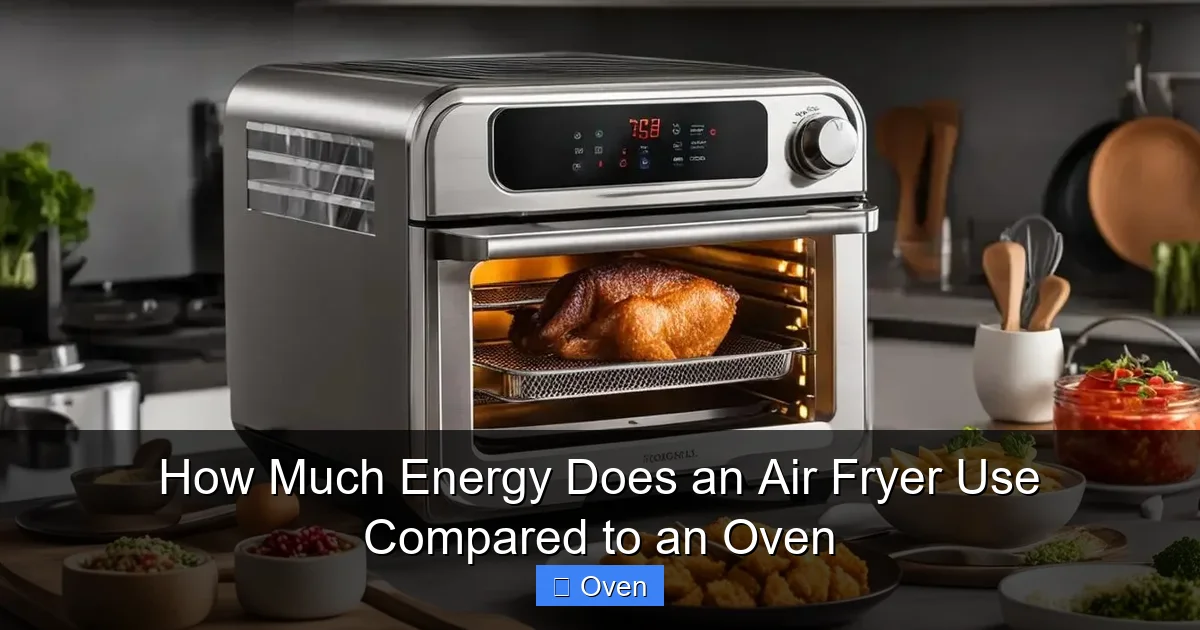
Traditional ovens work like mini furnaces. Electric coils (or gas burners) heat the entire cavity—a space often 3-5 cubic feet in size. Think about it: when you bake a single potato, you’re warming enough air to fill a closet! This requires massive energy just to reach temperature. Most ovens take 10-15 minutes to preheat to 350°F (175°C), burning through power before you even put food in. Then, maintaining that heat for 30-60 minutes means continuous energy draw, even if the door is closed. Convection ovens add a fan to circulate hot air, which speeds cooking slightly but uses extra power.
The Air Fryer: Turbocharged Efficiency
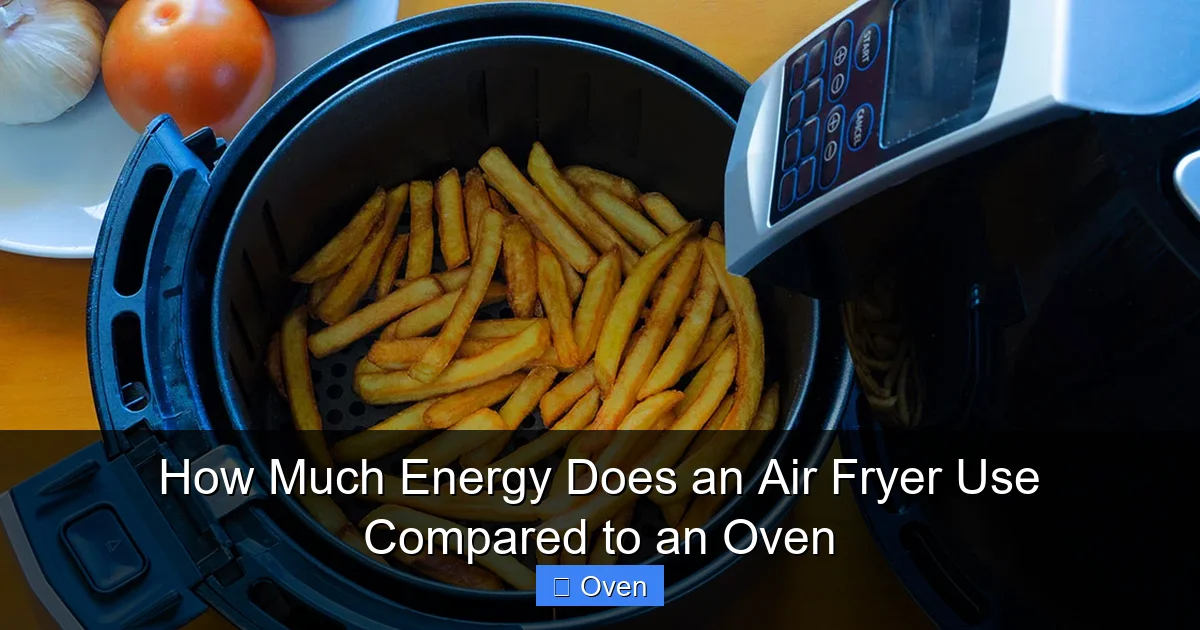
Air fryers flip the script. They’re essentially high-powered convection ovens in a compact package (usually 2-6 quarts). A heating element sits directly above the food, while a powerful fan blasts superheated air in a tight loop. This “rapid air technology” cooks food 20-40% faster by transferring heat more directly. Crucially, the small chamber—often just 1-2 cubic feet—heats almost instantly. Many models skip preheating altogether. For example, cooking frozen french fries might take 12-15 minutes in an air fryer versus 20-25 minutes in a conventional oven. Less time + smaller space = less energy, even if the wattage seems similar at first glance.
Wattage Showdown: Crunching the Numbers
Wattage (measured in watts) tells us how much power an appliance can use, but actual energy consumption depends on how long it runs. Let’s break it down.
Visual guide about How Much Energy Does an Air Fryer Use Compared to an Oven
Image source: airfryeraid.com
Typical Wattage Ranges
Most countertop air fryers operate between 1,200 and 1,800 watts. High-end models might hit 2,000W for intense searing, but 1,500W is the sweet spot for everyday use. In contrast, standard electric ovens range from 2,000 to 5,000 watts—with larger ranges often exceeding 4,000W just for the bake element. Gas ovens use less electricity (mainly for lights/fans), but we’ll focus on electric since air fryers are electric-only.
Energy Use in Action: A Real Example
Imagine roasting a 3-pound chicken. In a 3,000W oven, preheating takes 12 minutes (0.6 kWh), plus 60 minutes cooking (3 kWh)—totaling 3.6 kWh. An air fryer (1,500W) might skip preheating and cook it in 40 minutes: just 1 kWh. That’s a 72% reduction! Even for smaller tasks, the gap widens. Reheating 4 slices of pizza: oven (2,500W) for 15 minutes = 0.625 kWh; air fryer (1,400W) for 8 minutes = 0.187 kWh. You’d save 70% energy.
The Hidden Cost of “Just One More Minute”
Ovens suffer from “time creep.” Ever opened the door to check food, then left it running “just a few more minutes”? That’s pure energy waste. Air fryers, with their transparent baskets and faster cook times, reduce this temptation. Plus, their automatic shut-off features prevent accidental all-day operation.
Cooking Time: The Silent Energy Killer (or Saver)
Wattage alone doesn’t tell the whole story. How long an appliance runs is often the deciding factor in energy use—and here, air fryers have a massive advantage.
Visual guide about How Much Energy Does an Air Fryer Use Compared to an Oven
Image source: media.product.which.co.uk
Why Air Fryers Cook Faster
The secret is physics: hot air transfers heat faster when it’s moving rapidly and concentrated. Air fryers achieve this with:
- Proximity: Heating elements are inches from food, not feet away like in ovens.
- Forced convection: Fans create 360° airflow, eliminating cold spots.
- Small volume: Less air to heat means quicker temperature recovery after opening the door.
Result? Crispy chicken wings in 18 minutes (air fryer) vs. 25+ minutes (oven). Roasted veggies in 12 minutes vs. 20. These time savings compound into serious energy reductions.
The Preheating Trap
Preheating is where ovens bleed energy. That 10-15 minutes of idle heating? It’s often unnecessary for air fryers. Many manufacturers state preheating isn’t required—just set the time/temp and go. For tasks like reheating leftovers or cooking frozen foods, skipping preheating saves 0.2-0.5 kWh per use. Over a year, that adds up!
Batch Cooking Reality Check
Air fryers excel for small batches but struggle with large quantities. Trying to cook a thanksgiving turkey? Stick to the oven. But for 90% of weeknight dinners (think: 2 chicken breasts, a tray of asparagus, or homemade fries), the air fryer’s speed makes it the clear winner.
Real-World Usage: When Air Fryers Save (and When They Don’t)
Theory is great, but what happens in your actual kitchen? Let’s explore scenarios where air fryers shine—and where ovens still rule.
The Sweet Spot: Air Fryer Wins
- Reheating leftovers: Revive pizza, fries, or fried chicken in 5-8 minutes without drying them out. Ovens take 15+ minutes for the same result.
- Small protein portions: Salmon fillets, chicken tenders, or tofu cubes cook perfectly in 10-15 minutes.
- Roasted vegetables: Broccoli, Brussels sprouts, or zucchini get caramelized in half the oven time.
- Frozen convenience foods: Air fryers cook frozen fries, mozzarella sticks, or egg rolls 30% faster with better crispness.
In these cases, energy savings of 40-60% are typical. For a household using the air fryer 5 hours weekly instead of the oven, annual savings could hit $50-$70 (based on U.S. avg. electricity rate of $0.16/kWh).
Where Ovens Still Dominate
- Large roasts: A whole turkey or leg of lamb needs oven space and even heating.
- Baking: Cakes, casseroles, and breads require stable, ambient heat—air fryers can’t replicate this.
- High-volume cooking: Need to feed 6+ people? Multiple air fryer batches waste more energy than one oven load.
- Low-and-slow cooking: Braising or dehydrating often needs oven precision.
Here, forcing air fryer use might increase energy use (e.g., running two air fryers simultaneously vs. one oven).
The Hybrid Approach: Best of Both Worlds
Smart cooks use both appliances strategically:
- Start a large roast in the oven, then finish it in the air fryer for crispy skin.
- Use the oven for baking, but switch to air fryer for sides or reheating.
- Keep the oven off in summer—air fryers generate far less ambient heat.
This flexibility maximizes efficiency without sacrificing capability.
Beyond Energy: Other Hidden Savings
While electricity costs grab headlines, air fryers offer subtler perks that impact your wallet and lifestyle.
Reduced AC Costs (Yes, Really!)
Ovens radiate significant heat into your kitchen, forcing your air conditioner to work harder. In summer, this “heat penalty” can add 10-15% to cooling costs. Air fryers, being smaller and better insulated, emit minimal ambient heat. For hot climates, this alone could justify the switch.
Longer Appliance Lifespan
Running your oven less frequently reduces wear on heating elements and seals. While air fryers aren’t indestructible, spreading cooking load between appliances extends the life of both.
Time = Money (Especially for Busy Households)
Shaving 10 minutes off dinner prep might not seem like much—but multiply that by 200 meals a year, and you’ve gained 33 hours. That’s a full workday saved for hobbies, family time, or side hustles.
The Environmental Angle
Lower energy use directly translates to fewer carbon emissions. If 1 million households switched just 30% of oven cooking to air fryers, it could prevent ~50,000 tons of CO2 annually—equivalent to taking 10,000 cars off the road.
Practical Tips to Maximize Energy Savings
Ready to optimize? These strategies ensure you’re getting the most efficiency from your air fryer (and oven).
Air Fryer Pro Tips
- Skip preheating: For most foods (except delicate pastries), just set time/temp and start.
- Don’t overcrowd: Crowding lowers efficiency—cook in batches if needed, but avoid stacking.
- Use the right size: Match basket size to portion. A 3-quart model for 1-2 people wastes less energy than a 6-quart behemoth.
- Clean regularly: Grease buildup insulates the heating element, forcing it to work harder.
Oven Optimization Hacks
- Preheat only when necessary: Many recipes (like roasted veggies) don’t need it.
- Cook multiple items at once: Bake casseroles alongside roasted potatoes to utilize cavity space.
- Use residual heat: Turn off the oven 5-10 minutes early—it’ll finish cooking.
- Keep the door closed: Every peek drops temps by 25°F+, extending cook time.
The Verdict: It’s About Smart Pairing
Don’t ditch your oven—but do rethink when to use it. Reserve the oven for large batches, baking, and slow cooking. Let the air fryer handle weeknight dinners, reheating, and small roasts. Track your usage for a month: you’ll likely see lower bills and faster meals.
Conclusion: Energy Efficiency Is a Choice, Not a Gimmick
So, how much energy does an air fryer use compared to an oven? For the majority of everyday cooking tasks—reheating, roasting small proteins, crisping frozen foods—air fryers use 30-50% less energy. Their secret isn’t just lower wattage; it’s smarter design that minimizes wasted heat and time. But let’s be clear: they’re not a universal replacement. Ovens still reign supreme for baking, large roasts, and high-volume cooking.
The real win comes from using both appliances intentionally. Imagine your kitchen as a toolkit: you wouldn’t use a sledgehammer to hang a picture, right? Apply that same logic to cooking. When you align the tool with the task—air fryer for speed and efficiency, oven for scale and precision—you save money, reduce environmental impact, and actually enjoy the process more. Next time you’re tempted to fire up the oven for a single serving of sweet potato fries, remember: that little countertop hero might just be the most energy-savvy choice on your counter. It’s not about perfection; it’s about progress. Start small, track your savings, and watch the efficiency add up—one crispy, energy-smart meal at a time.
Frequently Asked Questions
How much electricity does a typical air fryer use per hour?
A standard 1,500W air fryer uses about 1.5 kWh per hour of runtime. However, most cooking tasks take 10-20 minutes, so actual hourly use is rarely reached. For example, 15 minutes of use consumes just 0.375 kWh.
Are air fryers more energy-efficient than toaster ovens?
It depends on size and usage. Small toaster ovens (800-1,200W) can be comparable for tiny portions, but air fryers usually win for speed and even cooking. Large toaster ovens often use more energy than air fryers for similar tasks.
Does the type of food affect energy savings?
Yes! Air fryers excel with foods needing high-heat crisping (fries, chicken, veggies). For moist foods like casseroles or baked goods, ovens may be more efficient due to better heat retention.
Can I save money by switching to an air fryer?
For households using ovens frequently for small meals, yes—savings of $30-$70 annually are realistic. Calculate your usage: if you replace 5 oven hours/week with air frying, savings add up fast at average electricity rates.
Do air fryers consume energy when plugged in but not in use?
Most modern air fryers have negligible standby power (under 0.5W). Unlike older appliances with digital clocks, they don’t “vampire draw” significant energy when idle.
Is convection mode on ovens as efficient as air fryers?
Convection ovens are 10-25% more efficient than conventional ovens by reducing cook time, but they still heat a large cavity. Air fryers remain more efficient for small portions due to their compact size and faster preheating.