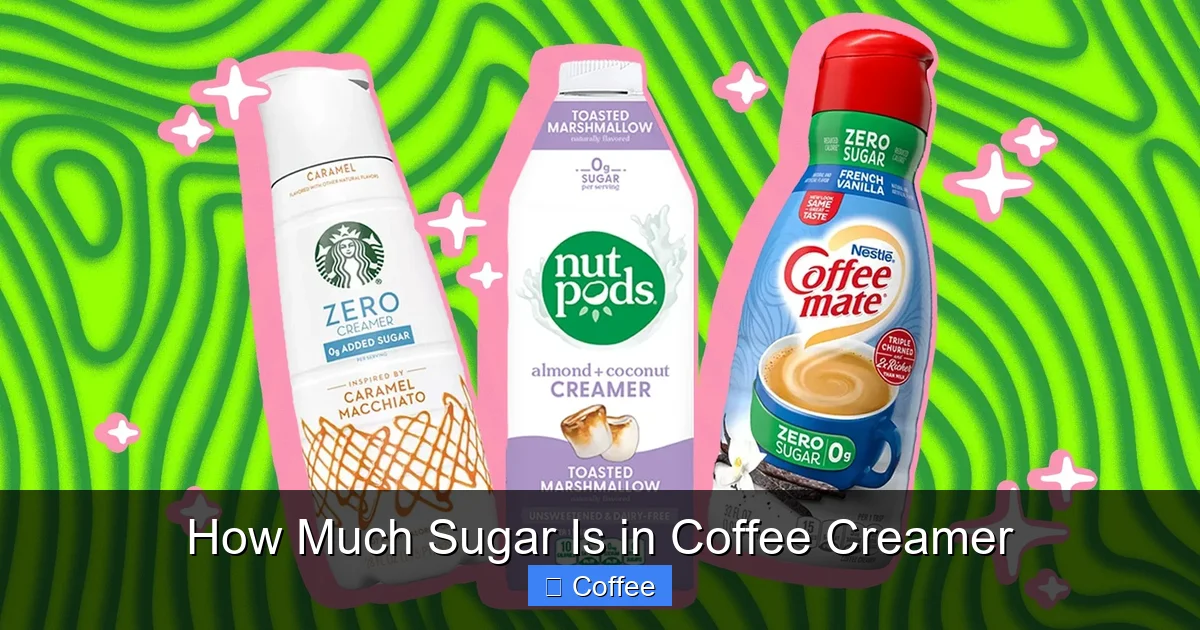
Most coffee creamers contain shockingly high sugar—often 5-10 grams per serving, hidden in “light” or “vanilla” versions. Reading labels and choosing unsweetened dairy or plant milks can slash your daily sugar intake significantly. Making your own creamer puts you in control of sweetness and ingredients.
Key Takeaways
- Average Sugar Shock: Many popular creamers pack 5-10g sugar per serving, adding up fast with multiple cups.
- “Light” Isn’t Always Light: Sugar-free versions often use artificial sweeteners, while “light” creamers may still contain significant sugar.
- Label Literacy is Key: Always check the “Added Sugars” line and serving size—many list 1-2 Tbsp servings, but people use more.
- Dairy & Plant Milks Win: Unsweetened milk, half-and-half, or almond/oat milk offer creaminess with minimal or zero added sugar.
- Spices > Sugar: Cinnamon, nutmeg, or vanilla extract add flavor without spiking blood sugar or calories.
- Homemade = Control: Whipping up your own creamer lets you use real ingredients and adjust sweetness to taste.
- Health Impact Matters: Regular high-sugar creamer use contributes to weight gain, blood sugar issues, and inflammation over time.
Quick Answers to Common Questions
Is sugar-free coffee creamer healthy?
Sugar-free creamers avoid sugar but often contain artificial sweeteners like sucralose, which may disrupt gut bacteria and increase sugar cravings. Unsweetened dairy or plant milks are generally healthier choices.
How much sugar is too much in coffee creamer?
Aim for 0-2g of added sugar per serving. Anything over 3g per serving (especially with multiple daily cups) contributes significantly to your daily limit and health risks.
Can I use honey or maple syrup in my coffee?
Yes, but use sparingly—1 tsp of honey has 5g sugar. While less processed than white sugar, it still impacts blood sugar. Cinnamon or vanilla extract are better zero-sugar flavor boosters.
Do “natural” creamers have less sugar?
Not necessarily. “Natural” is unregulated—many still contain evaporated cane juice or rice syrup. Always check the “Added Sugars” line on the label.
What’s the healthiest coffee creamer?
Unsweetened options win: half-and-half, whole milk, or unsweetened almond/oat milk. For flavor, add spices or extracts instead of sugary creamers.
📑 Table of Contents
- The Morning Ritual That Might Be Sabotaging Your Health
- The Sugar Shock: What’s Really in Your Creamer?
- Decoding the Label: Your Guide to Smarter Choices
- The Real Health Impact: Why Sugar in Creamer Matters
- Healthier Swaps: Creamy Coffee Without the Sugar Crash
- Make Your Own: The Ultimate Sugar Control
- Conclusion: Your Coffee, Your Rules
The Morning Ritual That Might Be Sabotaging Your Health
That first cup of coffee. It’s sacred. The steam rising, the rich aroma, the creamy splash of your favorite creamer turning bitter brew into liquid comfort. We’ve all been there, pouring that little cup of magic into our mug, maybe even adding a second scoop for good measure. But what if that comforting ritual is secretly loading you up on sugar you never even taste? You might be shocked to learn just how much sugar is lurking in your coffee creamer. It’s not just about the obvious sweetness of a vanilla or hazelnut flavor—sugar hides in plain sight, even in “light” or “original” versions. Understanding how much sugar is in coffee creamer is the first step to taking control of your morning routine and your health.
Most of us grab a creamer off the shelf without a second thought. We see “creamer,” “whitener,” or “coffee enhancer” and assume it’s mostly fat and flavor. The reality? For many popular brands, sugar is a top ingredient. A single serving—often just 1 or 2 tablespoons—can contain as much sugar as a small cookie. And let’s be honest: who *actually* stops at one serving? If you drink multiple cups a day, that sugar adds up faster than you think. This isn’t just about calories; it’s about blood sugar spikes, energy crashes, and long-term health impacts. The good news? Armed with knowledge, you can make smarter choices without sacrificing the creamy joy of your coffee. Let’s dive deep into the sugar content of coffee creamers and discover how to enjoy your brew without the hidden sweet trap.
The Sugar Shock: What’s Really in Your Creamer?
Let’s cut to the chase: how much sugar is in coffee creamer? The answer varies wildly, but the average for many mainstream liquid and powdered creamers is a startling 5 to 10 grams per serving. To put that in perspective, the American Heart Association recommends limiting added sugar to no more than 25 grams per day for women and 36 grams for men. One serving of creamer could eat up nearly half your daily limit before you’ve even finished breakfast! And remember, that “serving size” on the label is often unrealistically small—1 tablespoon for liquid creamers, 2 tablespoons for powder. Most people pour 2-4 tablespoons per cup, especially if they like their coffee extra creamy.
Visual guide about How Much Sugar Is in Coffee Creamer
Image source: i0.wp.com
Average Sugar Content Across Popular Types
Not all creamers are created equal when it comes to sugar. Here’s a quick reality check based on common varieties:
- Flavored Liquid Creamers (Vanilla, Hazelnut, Caramel): These are the biggest culprits. A single 1-tbsp serving often contains 5-8g of sugar. A 2-tbsp pour? That’s 10-16g—more than a teaspoon of pure sugar!
- “Original” or “Classic” Liquid Creamers: Don’t be fooled by the plain name. Many still pack 3-6g of sugar per serving, using sucrose or corn syrup for texture and subtle sweetness.
- Powdered Creamers (Regular & “Light”): Powdered versions are sugar bombs. A typical 2-tbsp serving can have 8-12g of sugar. Even “light” powdered creamers often contain 3-5g per serving—hardly “light” when you consider the serving size.
- Sugar-Free Creamers: These swap sugar for artificial sweeteners like sucralose or acesulfame potassium. While they have near-zero sugar, they come with their own debates about long-term health effects.
- Dairy-Based Creamers (Half-and-Half, Whole Milk): Naturally contain about 1g of sugar per tbsp from lactose, but zero *added* sugar. Unsweetened plant milks like almond or oat milk typically have 0-1g per tbsp.
The takeaway? Flavored and powdered creamers are the worst offenders. If you’re using these daily, you’re likely consuming far more sugar than you realize.
Hidden Sugars: The Sneaky Culprits You Don’t See
Sugar doesn’t always announce itself as “sugar.” Manufacturers use dozens of aliases to hide it in ingredient lists. Watch out for these common disguises:
- Corn Syrup, High-Fructose Corn Syrup (HFCS): Cheap, highly processed sweeteners linked to inflammation and metabolic issues.
- Maltodextrin: A starch-derived sugar that spikes blood glucose as fast as table sugar.
- Evaporated Cane Juice, Organic Cane Sugar: Just marketing spin for sucrose—no nutritional benefit over white sugar.
- Rice Syrup, Barley Malt: “Natural” sweeteners that still break down into simple sugars in your body.
Even “healthier” creamers boasting “no high-fructose corn syrup” might use evaporated cane juice or tapioca syrup—same sugar, different name. Always scan the “Added Sugars” line on the nutrition label first. If it’s over 2-3g per serving, think twice.
Decoding the Label: Your Guide to Smarter Choices
Walking down the coffee aisle can feel overwhelming. Rows of colorful bottles promise “creamy,” “indulgent,” and “guilt-free.” But the real story is in the fine print. Learning to read nutrition labels is your superpower for avoiding sugar traps. Start with the serving size—it’s usually smaller than what you actually use. Then, check the “Added Sugars” line. If it’s 5g or more per serving, that creamer is a sugar delivery system in disguise.

Visual guide about How Much Sugar Is in Coffee Creamer
Image source: kroger.com
Serving Size Sleight of Hand
Here’s a dirty secret: manufacturers design serving sizes to make products look healthier. A liquid creamer might list 1 tbsp as a serving, but the bottle contains 32 servings. If you pour 2 tbsp (a common amount), you’re actually consuming double the sugar listed. Powdered creamers are even trickier—2 tbsp might be the “serving,” but that’s often ¼ cup of powder. Always calculate based on *your* typical pour. Example: If a creamer has 6g sugar per 1 tbsp serving, and you use 2 tbsp, you’re getting 12g sugar per cup. For two cups? That’s 24g—almost your entire daily limit!
Ingredient List Intelligence
The ingredient list tells the truth the nutrition panel might hide. Ingredients are listed by weight, so the first few items make up the bulk of the product. If sugar (or one of its aliases) is in the top 3, run. A healthy creamer should lead with fats (like coconut oil or milk solids) and minimal sweeteners. For plant-based options, look for “unsweetened” on the label—this guarantees no added sugar. Also, watch for “natural flavors,” which can sometimes include hidden sugars. When in doubt, choose simplicity: fewer ingredients usually mean less sugar.
The Real Health Impact: Why Sugar in Creamer Matters
You might think, “It’s just coffee creamer—how bad can it be?” But consistent high sugar intake from seemingly small sources has serious ripple effects. That daily 10g of sugar from creamer adds up to over 3.5kg (7.7 lbs) of sugar per year! This isn’t just about weight gain—though that’s a common consequence. Sugar spikes your blood glucose, leading to energy crashes mid-morning. Over time, this strains your insulin response, increasing risks for type 2 diabetes, heart disease, and chronic inflammation. Even if you’re active, liquid sugar (like in creamers) is absorbed quickly, offering no fiber or nutrients to slow the rush.
Visual guide about How Much Sugar Is in Coffee Creamer
Image source: kroger.com
Blood Sugar Rollercoaster
Imagine this: You drink coffee with a sugary creamer at 8 AM. Blood sugar soars. Your pancreas pumps out insulin to clear it. By 10 AM, you’re crashing—tired, hungry, reaching for a pastry. This cycle repeats daily, training your body to crave more sugar and making stable energy nearly impossible. For people with insulin resistance or prediabetes, this is especially dangerous. Studies show that just one high-sugar meal can impair blood sugar control for hours. Choosing unsweetened creamers breaks this cycle, keeping your energy steady and reducing cravings.
Beyond the Scale: Hidden Health Costs
Sugar’s damage isn’t just metabolic. It fuels inflammation, linked to arthritis, acne, and even depression. It also feeds harmful gut bacteria, disrupting your microbiome. And let’s not forget dental health—sugar in liquid form coats teeth, accelerating decay. While creamer isn’t soda, its cumulative effect is real. A 2020 study found that adults consuming >10% of daily calories from added sugar had a 30% higher risk of dying from heart disease. Your morning creamer might seem insignificant, but over years, it contributes to this burden. Swapping to low-sugar options is a simple, powerful act of self-care.
Healthier Swaps: Creamy Coffee Without the Sugar Crash
The good news? You don’t have to give up creamy coffee. Plenty of delicious, low-sugar alternatives exist that taste great and support your health. The key is shifting from *added* sugar to natural richness and flavor. Start with the simplest swap: use real dairy or unsweetened plant milk. Whole milk or half-and-half adds luxurious creaminess with minimal sugar (just 1g per tbsp from natural lactose). Unsweetened almond, oat, or soy milk offers similar texture with zero added sugar—just check labels to confirm “unsweetened.” These options keep your coffee satisfying without the blood sugar spike.
Dairy & Plant Milk Powerhouses
Let’s compare popular options per 2-tbsp serving:
- Half-and-Half: 1g sugar, 40 calories, rich and velvety. Ideal for traditional coffee lovers.
- Whole Milk: 2g sugar (naturally occurring), 20 calories. Lighter than half-and-half but still creamy.
- Unsweetened Almond Milk: 0g sugar, 10 calories. Nutty flavor, great for low-calorie needs.
- Unsweetened Oat Milk: 1g sugar (from oats), 25 calories. Naturally sweet and barista-style foam.
- Unsweetened Coconut Milk (canned, light): 0g sugar, 45 calories. Tropical richness, perfect for lattes.
These choices deliver creaminess with little to no added sugar. For extra flavor, add a dash of cinnamon or vanilla extract—zero sugar, maximum taste!
Spices, Extracts, and Natural Sweetness
Why rely on sugar for flavor? Spices and extracts transform coffee with complexity and health benefits:
- Cinnamon: Adds warmth and sweetness without sugar. Studies show it may improve insulin sensitivity.
- Nutmeg or Cardamom: Earthy, aromatic notes that pair beautifully with coffee. Great for chai-inspired brews.
- Vanilla or Almond Extract: A few drops mimic sweet creamers with no sugar. Use sparingly—it’s potent!
- Unsweetened Cocoa Powder: For mocha lovers, adds richness and antioxidants.
Try this: Brew coffee with a pinch of cinnamon stirred in, then top with unsweetened almond milk. It’s cozy, satisfying, and sugar-free. You’ll wonder why you ever needed the bottled stuff!
Make Your Own: The Ultimate Sugar Control
If you’re serious about cutting sugar, homemade creamer is a game-changer. It takes 5 minutes, costs less than store-bought, and lets you customize every ingredient. No more guessing about hidden sugars or artificial additives. Plus, it’s fun to experiment with flavors! The base is simple: combine a fat source (like coconut oil or heavy cream) with a liquid (like unsweetened almond milk) and your chosen flavorings. Sweeten only if you want to—and use real maple syrup or honey sparingly.
Simple 3-Ingredient Creamer Recipes
Forget complicated recipes. These take under 5 minutes:
- Vanilla Almond Creamer: Blend 1 cup unsweetened almond milk, 2 tbsp coconut oil, and 1 tsp vanilla extract. Stores for 1 week refrigerated.
- Cinnamon Spice Creamer: Whisk 1 cup half-and-half, 1 tsp cinnamon, ½ tsp nutmeg, and a pinch of cloves. No sweetener needed!
- Unsweetened Oat Creamer: Simmer 1 cup rolled oats with 4 cups water for 15 mins. Strain, then blend with 2 tbsp raw cashews for creaminess.
Adjust ratios to your taste—more oil for richness, more milk for lightness. Store in a jar; shake before use. You’ll never go back to the bottle!
Customizing for Dietary Needs
Homemade creamers adapt to any lifestyle:
- Keto: Use heavy cream, MCT oil, and sugar-free sweeteners like stevia.
- Vegan: Stick to plant milks, coconut cream, and maple syrup (use minimally).
- Low-Calorie: Opt for unsweetened almond milk + a splash of half-and-half.
- Allergy-Friendly: Skip nuts with sunflower seed milk or oat milk.
The best part? You control the sweetness. Start with no added sugar, then add a tiny bit of honey if needed. Your taste buds will adjust quickly!
Conclusion: Your Coffee, Your Rules
So, how much sugar is in coffee creamer? Often, far more than you’d expect—5-10 grams per serving, hiding behind clever marketing and tiny serving sizes. But knowledge is power. By reading labels, choosing unsweetened dairy or plant milks, embracing spices, or making your own creamer, you can enjoy creamy, delicious coffee without the sugar sabotage. This isn’t about deprivation; it’s about upgrading your ritual. Imagine waking up to coffee that energizes you—not crashes you—and supports your long-term health. Small changes add up: swapping one sugary creamer serving for unsweetened milk saves 5g of sugar daily. That’s 1.8kg (4 lbs) of sugar avoided in a year! Your body—and your taste buds—will thank you. Start tomorrow: grab that unsweetened almond milk, sprinkle in some cinnamon, and savor coffee that truly serves you.
Frequently Asked Questions
Why do coffee creamers have so much sugar?
Manufacturers add sugar to mask the bitterness of coffee, enhance flavor, and create a smooth texture. Sugar also acts as a preservative and makes products addictive, encouraging repeat purchases.
Can I still enjoy flavored coffee without sugar?
Absolutely! Use spices like cinnamon, nutmeg, or cardamom, or add a few drops of pure vanilla/almond extract. These provide rich flavor without sugar or calories.
Are plant-based creamers healthier than dairy?
Not automatically. Many plant-based creamers are highly processed and high in sugar or unhealthy oils. Choose unsweetened varieties with simple ingredients (e.g., “almond milk, vanilla extract”) for the healthiest option.
How do I transition from sugary creamer to unsweetened?
Gradually reduce sugar: mix sugary creamer with unsweetened milk, then increase the milk ratio over 1-2 weeks. Add cinnamon or cocoa to distract your taste buds while they adjust.
Does sugar in coffee creamer affect weight loss?
Yes. Liquid sugar adds empty calories without satiety, making it easy to exceed daily calorie goals. Cutting creamer sugar can create a significant calorie deficit, aiding weight loss efforts.
Can I use regular milk instead of creamer?
Yes! Whole milk or half-and-half are excellent, low-sugar alternatives. They add creaminess with minimal added sugar (only natural lactose), making them far healthier than most bottled creamers.