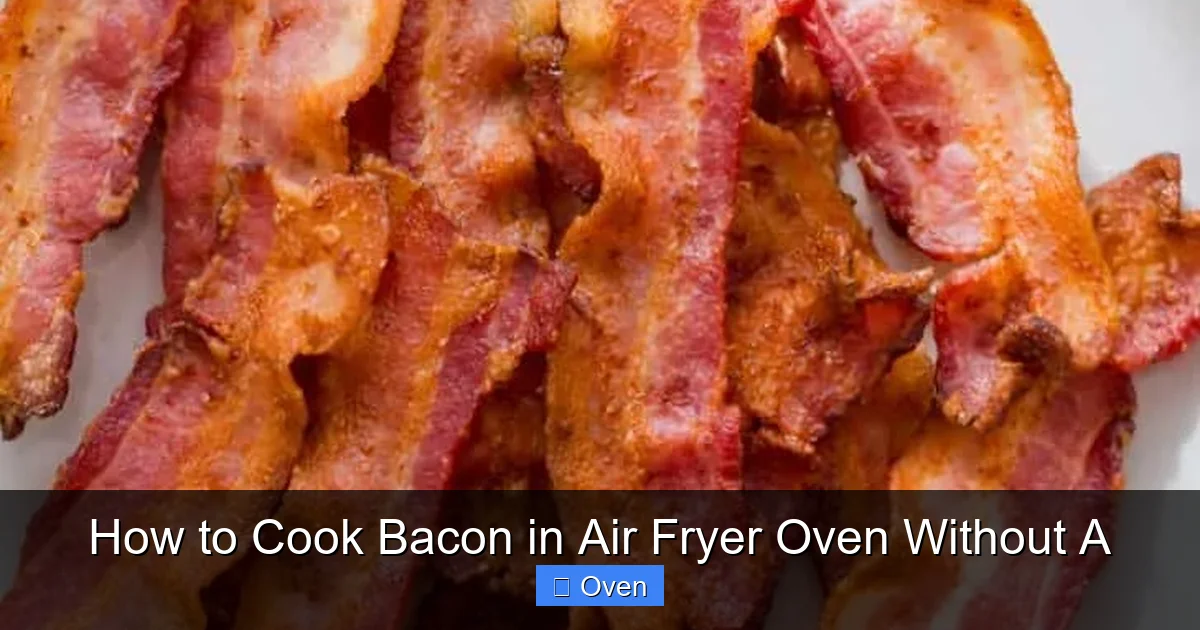
You absolutely can cook perfect bacon in your air fryer oven without any special racks or trays—just use what you already have! This guide reveals foolproof methods using aluminum foil, parchment paper, or the oven’s standard tray to achieve crispy, evenly cooked bacon with minimal cleanup. Say goodbye to splatters and soggy strips forever.
Key Takeaways
- Foil or parchment is your best friend: Line the air fryer tray with foil or parchment to prevent sticking and simplify cleanup—no special bacon racks needed.
- Space strips properly: Arrange bacon in a single layer with space between strips to ensure even cooking and maximum crispiness.
- Lower temperature prevents burning: Cook at 350°F (175°C) instead of higher settings to render fat slowly and avoid charred edges.
- Check early, often: Bacon cooks fast in air fryers—start checking at 8 minutes to prevent overcooking.
- Drain grease mid-cook: Carefully pour out excess grease after 5-6 minutes to keep bacon crispy and reduce splatter.
- Use residual heat: Let bacon rest on the tray for 2 minutes after cooking—it continues crisping perfectly.
- Safety first: Always use oven mitts and keep the air fryer away from cabinets—hot grease is no joke!
Quick Answers to Common Questions
Can I cook bacon in an air fryer oven without any liner?
Yes, but it’s riskier. Use the oven’s flat tray preheated and lightly oiled. Space strips well and drain grease at 5 minutes to prevent sticking. Foil or parchment is still recommended for easiest cleanup.
Why is my bacon rubbery instead of crispy?
This usually means it’s steamed, not fried. Causes include overcrowding the tray, skipping the grease-draining step, or cooking at too high a temperature. Always leave space between strips and drain fat mid-cook.
Can I reuse bacon grease from the air fryer?
Absolutely! Strain cooled grease through a coffee filter into a jar. Store in the fridge for up to 3 months. Use it to fry eggs, roast potatoes, or add flavor to sautéed greens.
How do I prevent bacon from curling?
Place a second piece of foil or parchment lightly on top of the bacon before cooking. The weight keeps strips flat. Remove it at the 8-minute mark for final crisping.
Is air fryer bacon healthier than pan-fried?
Yes! The rapid air circulation renders out more fat, so you end up with less grease on the bacon. Plus, no added oil is needed—just the bacon’s natural fat.
📑 Table of Contents
- Why Cook Bacon in Your Air Fryer Oven (Without Fancy Tools)?
- What You Actually Need (Spoiler: Probably Already in Your Drawer)
- Step-by-Step: Cooking Bacon Like a Pro (No Rack Required)
- Timing Cheat Sheet: Never Guess Again
- Troubleshooting: Fixing Common Bacon Blunders
- Cleanup Made Simple: The Real Game-Changer
- Why This Method Beats Traditional Cooking
- Conclusion: Your New Bacon Routine Starts Now
Why Cook Bacon in Your Air Fryer Oven (Without Fancy Tools)?
Let’s be real: Bacon is the ultimate comfort food. It’s crispy, salty, and smells like heaven. But cooking it traditionally? Messy. Splattery. And let’s not forget the smoke alarm serenade. Enter the air fryer oven—your new bacon bestie. The best part? You don’t need a special bacon rack or tray to nail it. If you’ve got an air fryer oven (those larger countertop models with multiple functions), you already have everything you need. No extra gadgets. No extra cost. Just perfectly cooked bacon in half the time of a regular oven.
Why choose an air fryer oven over a skillet or traditional oven? First, it’s faster. The concentrated hot air cooks bacon in 10-15 minutes flat. Second, it’s cleaner. No grease splatters on your stovetop or oven walls. Third, it’s hands-off. Set it and forget it (well, almost—more on timing later). And fourth? It’s healthier. The rapid air circulation renders out more fat than pan-frying, giving you crispier results with less grease. But here’s the kicker: Most air fryer oven owners don’t realize they can cook bacon without buying a separate bacon tray. That’s where this guide comes in. We’re ditching the specialty tools and using what’s already in your kitchen.
What You Actually Need (Spoiler: Probably Already in Your Drawer)
Forget hunting for that elusive “air fryer bacon rack.” You likely have three simple solutions already: aluminum foil, parchment paper, or the oven’s standard flat tray. These aren’t just alternatives—they’re upgrades. Why? Because they solve the #1 bacon problem: grease management. When bacon cooks, it releases liquid fat that pools on the tray. Without proper drainage, your bacon steams instead of crisps. Foil and parchment create a non-stick barrier while letting grease drip away. The standard tray works too—if you prep it right.

Visual guide about How to Cook Bacon in Air Fryer Oven Without A
Image source: recipethis.com
The Foil Method: Your Splatter-Proof Superpower
Aluminum foil is the unsung hero of air fryer bacon. Why? It’s heat-resistant, non-stick (when lightly oiled), and makes cleanup a 30-second affair. Here’s how to use it:
- Step 1: Tear off a sheet of heavy-duty foil large enough to cover the air fryer tray with 1-2 inches of overhang.
- Step 2: Crumple the foil gently to create a textured surface—this helps grease drain better than flat foil.
- Step 3: Lightly spray or brush the foil with oil (avocado or canola works best). This prevents sticking without adding extra grease.
- Step 4: Arrange bacon strips in a single layer, leaving space between them. Overcrowding = steamed bacon.
Pro tip: Fold the foil’s edges up slightly to create a “lip” that catches grease. When you drain the fat mid-cook (more on that soon), the lip keeps it contained. No more slippery trays!
Parchment Paper: The Non-Stick Dream
Parchment paper is foil’s quieter cousin—but just as effective. It’s naturally non-stick, so you skip the oil spray. Plus, it’s compostable (look for unbleached versions). Use it like this:
- Step 1: Cut parchment to fit your tray, leaving room for air circulation.
- Step 2: Place bacon directly on the parchment—no oil needed!
- Step 3: For extra drainage, poke tiny holes in the parchment with a fork before adding bacon.
Warning: Don’t use wax paper! It melts at high temps. And avoid “non-stick” sprays—they can damage your air fryer’s coating over time.
The Bare Tray Method: When You’re in a Pinch
No foil or parchment? No problem. Your air fryer oven’s standard flat tray works—if you treat it right. The key is preheating and spacing:
- Step 1: Preheat the tray in the air fryer for 3 minutes at 350°F (175°C).
- Step 2: Lightly oil the tray with a high-smoke-point oil (like avocado).
- Step 3: Place bacon on the tray, ensuring strips don’t touch.
This method risks more sticking, but preheating creates a “sear” that lifts strips easily. Still, foil or parchment is safer for beginners.
Step-by-Step: Cooking Bacon Like a Pro (No Rack Required)
Now for the fun part—actually cooking the bacon. The golden rule? Low and slow. Air fryers cook fast, but bacon needs gentle heat to render fat without burning. Here’s your foolproof timeline:

Visual guide about How to Cook Bacon in Air Fryer Oven Without A
Image source: recipesfromapantry.com
Prep Work: Setting Up for Success
Before you touch the bacon, do this:
- Pat strips dry: Moisture = splatter. Use paper towels to dab excess liquid from bacon.
- Choose your thickness: Regular-cut bacon cooks faster than thick-cut. Adjust timing accordingly (see chart below).
- Prep your liner: Foil, parchment, or oiled tray—get it ready while the air fryer preheats.
Never skip drying the bacon. That extra step prevents dangerous grease pops and ensures even cooking.
The Cooking Process: Timing Is Everything
Set your air fryer oven to 350°F (175°C). Why not higher? Higher temps char the edges before the center crisps. 350°F renders fat slowly, giving you uniform crispness. Here’s the play-by-play:
- Minutes 0-5: Bacon starts rendering. Fat pools on the tray.
- Minute 5-6: Carefully pull out the tray (oven mitts on!). Tilt it over a heatproof bowl and pour out excess grease. This is CRUCIAL—it prevents steaming.
- Minutes 6-10: Return tray to air fryer. Bacon should be golden with crisp edges.
- Minute 10+: Check every 60 seconds. Bacon goes from perfect to burnt fast!
Pro tip: For thick-cut bacon, add 2-3 minutes. For turkey bacon, reduce time by 2 minutes—it burns easily.
The Perfect Crispiness Test
How do you know it’s done? Look for these signs:
- Color: Deep golden brown (not pale yellow or blackened).
- Texture: Edges are curled and crisp; center bends without snapping.
- Sound: It stops sizzling loudly—that means fat has rendered out.
When in doubt, take it out early. Bacon crisps more as it cools on the tray. Overcooked bacon is sad bacon.
Timing Cheat Sheet: Never Guess Again
Air fryer ovens vary, but this chart covers most models. Always start checking early—your oven might run hot!
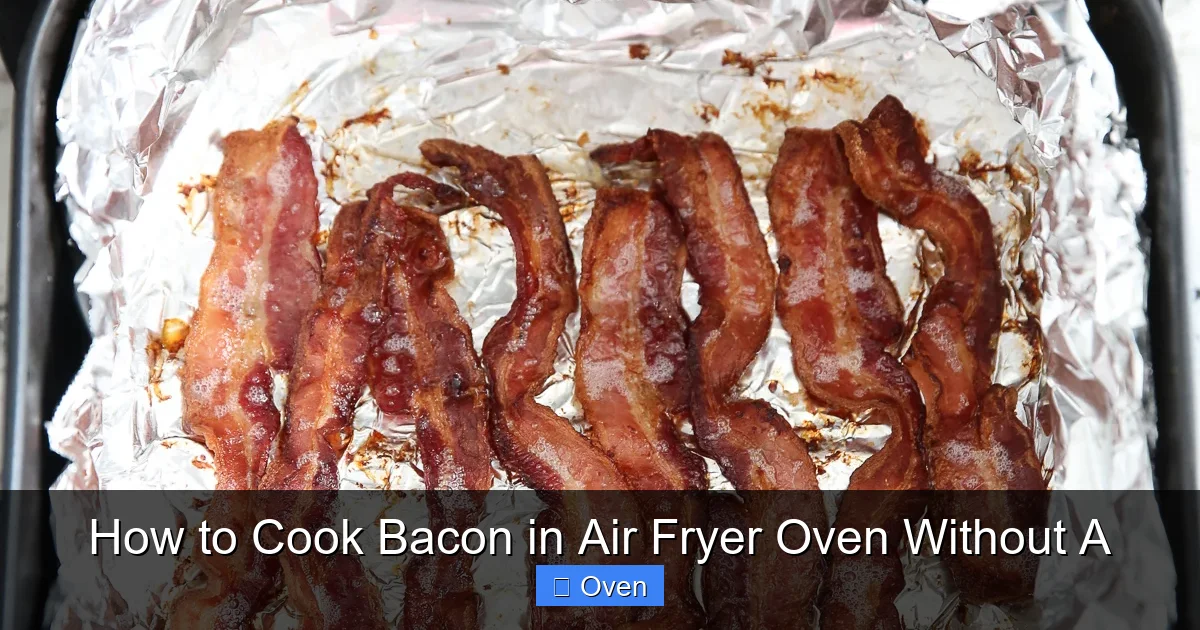
Visual guide about How to Cook Bacon in Air Fryer Oven Without A
Image source: ourbestbites.com
Regular-Cut Bacon (350°F / 175°C)
- 8-10 minutes: Chewy, tender (great for BLTs).
- 10-12 minutes: Classic crisp (most popular).
- 12-14 minutes: Extra crispy (for bacon bits).
Thick-Cut Bacon (350°F / 175°C)
- 10-12 minutes: Chewy center, crisp edges.
- 12-14 minutes: Fully crisp throughout.
Turkey Bacon (350°F / 175°C)
- 6-8 minutes: Crisp but not dry.
Remember: These are starting points. Check at the low end of the range. If it’s not done, cook in 60-second bursts.
Troubleshooting: Fixing Common Bacon Blunders
Even pros have off days. Here’s how to rescue your bacon:
Problem: Bacon Is Chewy, Not Crispy
Why it happens: Overcrowded tray, too high heat, or didn’t drain grease.
Fix it: Always space strips apart. Cook at 350°F max. Drain grease at the 5-minute mark. If it’s still chewy, cook 2 more minutes.
Problem: Bacon Is Burnt on the Edges but Raw in the Middle
Why it happens: Air fryer runs too hot, or strips are too thick.
Fix it: Lower the temp to 325°F (160°C) for thick-cut bacon. Flip strips at the 6-minute mark for even cooking.
Problem: Grease Is Splattering Everywhere
Why it happens: Bacon wasn’t dried, or tray was overloaded.
Fix it: Pat bacon dry next time. Use foil/parchment with upturned edges. Never fill the tray more than halfway.
Problem: Bacon Sticks to the Tray
Why it happens: Tray wasn’t preheated or oiled properly.
Fix it: For bare trays, always preheat 3 minutes. With foil/parchment, ensure it’s seated flat—no wrinkles.
Cleanup Made Simple: The Real Game-Changer
One reason people avoid cooking bacon? The cleanup. But with air fryer ovens and smart liners, it’s a breeze. Here’s how:
Foil Cleanup: 30 Seconds Flat
After draining grease, let the foil cool slightly. Then, fold it into a bundle and toss it. No scrubbing. No soaking. If grease hardened, run hot water over it—it’ll slide right off.
Parchment Cleanup: Eco-Friendly Win
Compost unbleached parchment (if your program accepts it). Otherwise, crumple and toss. Grease won’t stick to it, so no residue.
Bare Tray Cleanup: Still Easy
Soak the tray in hot, soapy water for 10 minutes. Grease dissolves quickly. For stubborn bits, use a baking soda paste—no steel wool!
Pro tip: Place a silicone mat under the tray while cooking to catch stray grease. Wipe it down with a paper towel later.
Why This Method Beats Traditional Cooking
Let’s compare air fryer oven bacon (no rack) to other methods:
- Vs. Skillet: No splatter burns, no constant flipping, and less active time.
- Vs. Oven: Cooks 2x faster, uses less energy, and doesn’t heat up your kitchen.
- Vs. Microwave: No rubbery texture—just perfect crispness.
Plus, you get rendered bacon fat for cooking! Strain it into a jar and use it for roasted veggies or frying eggs. Waste not, want not.
Conclusion: Your New Bacon Routine Starts Now
Cooking bacon in your air fryer oven without a rack isn’t just possible—it’s better. You get restaurant-quality crispness with minimal effort, zero splatter, and cleanup that takes less time than brushing your teeth. No fancy tools required. Just foil, parchment, or your trusty tray, plus these simple steps.
Remember: Pat bacon dry, space it out, cook at 350°F, and drain grease mid-cook. Check early, rest briefly, and enjoy. Whether it’s for Sunday brunch, a bacon-wrapped appetizer, or just because you deserve it, this method delivers every time. So next time you crave that salty, crispy goodness, skip the skillet and fire up your air fryer oven. Your taste buds (and your clean kitchen) will thank you.
Frequently Asked Questions
Can I use aluminum foil in my air fryer oven?
Yes, but use heavy-duty foil and avoid covering the entire bottom. Ensure it’s smooth with no sharp edges that could damage the heating element. Never let foil touch the sides or top of the oven.
Why does my bacon smoke in the air fryer?
Smoke usually means grease is dripping onto the heating element. This happens if you skip draining fat mid-cook or overcrowd the tray. Always drain grease at the 5-minute mark and keep strips spaced apart.
Can I cook frozen bacon in an air fryer oven?
Yes! Add 2-3 minutes to the cooking time. Pat frozen strips dry first to reduce splatter. They may release more liquid, so drain grease twice—at 5 minutes and again at 8 minutes.
How do I store leftover air fryer bacon?
Cool completely, then store in an airtight container in the fridge for up to 4 days. Reheat in the air fryer at 300°F for 2-3 minutes to restore crispness—never microwave!
Can I cook bacon and other foods together?
Not recommended. Bacon releases lots of grease that can coat other foods. If you must, place bacon on the bottom tray and heartier items (like potatoes) above it. Avoid delicate foods like fish.
Why is my air fryer oven making a loud noise while cooking bacon?
A loud humming or rattling often means grease is splattering inside. This happens if bacon isn’t dried properly or the tray is overcrowded. Pat bacon dry, space strips, and drain grease mid-cook to prevent it.